
British Columbia is, without exaggeration, one of the greatest mushroom foraging destinations on the planet. The combination of temperate rainforests, diverse elevation zones, massive tracts of crown land, and a long, wet autumn creates conditions that support an extraordinary variety of edible fungi. From the chanterelle-carpeted floors of Vancouver Island's old-growth forests to the pine mushroom grounds of the Interior, BC offers foraging experiences that rival anything in Europe or the Pacific Northwest of the United States.
This guide covers where to go, what to look for, when to find it, and how to forage responsibly in British Columbia.
British Columbia Foraging Calendar
What's fruiting in British Columbia — tap a month to see the species.
October in British Columbia
12 species fruiting
Cauliflower Mushroom
Sparassis crispa
★ Peak season right now
Ruffled, cauliflower-like cluster at the base of conifers. A single specimen can fill a basket. Best young — older specimens turn rubbery.
View this species on Dr. MycoTek →Conifer Lion's Mane
Hericium abietis
★ Peak season right now
BC's coastal version of lion's mane — same waterfall-shaped fruit body, growing on hemlock and fir instead of hardwoods. No deadly lookalikes.
View this species on Dr. MycoTek →Hedgehog Mushroom
Hydnum repandum
★ Peak season right now
Teeth instead of gills underneath — unmistakable. No deadly lookalikes. One of the safest species for new BC foragers.
View this species on Dr. MycoTek →King Bolete (Porcini)
Boletus edulis
Okanagan and Kootenays at higher elevations. Spongy pores, never gills. Confirm against bitter bolete (Tylopilus felleus).
View this species on Dr. MycoTek →Lobster Mushroom
Hypomyces lactifluorum
Bright orange parasite that consumes Russula and Lactarius hosts. Firm, seafood-flavoured flesh. Found coast to Interior.
View this species on Dr. MycoTek →Pacific Golden Chanterelle
Cantharellus formosus
★ Peak season right now
BC's signature wild mushroom. Vancouver Island, Sunshine Coast, and the Fraser Valley produce some of the world's best harvests. False gills, fruity apricot scent.
View this species on Dr. MycoTek →Pine Mushroom (Matsutake)
Tricholoma murrillianum
★ Peak season right now
BC's most commercially valuable wild mushroom — exported to Japan. Distinctive spicy-cinnamon aroma. Found with pine and hemlock in the Interior and North Coast. Confirm against the deadly Amanita smithiana.
View this species on Dr. MycoTek →Saffron Milk Cap
Lactarius deliciosus
★ Peak season right now
Orange cap, bleeds orange-red latex when cut, in pine plantations and conifer forests. Especially abundant in the Interior.
View this species on Dr. MycoTek →White Chanterelle
Cantharellus subalbidus
★ Peak season right now
Less common than the golden but prized for firm texture and mild flavour. Same habitat — Douglas fir + Western hemlock.
View this species on Dr. MycoTek →Wild Oyster Mushroom
Pleurotus ostreatus
★ Peak season right now
Mild coastal winters mean oysters fruit nearly year-round on fallen alder and cottonwood. Best texture from cool, wet flushes.
View this species on Dr. MycoTek →Chicken of the Woods (Pacific)
Laetiporus conifericola
Conifer-loving Pacific cousin of the eastern species. Some BC foragers report stomach upset — try a very small portion the first time.
View this species on Dr. MycoTek →Honey Mushroom
Armillaria mellea group
★ Peak season right now
Big clusters at the base of dying trees. Must be cooked very thoroughly — undercooked honeys cause digestive upset. Confirm against the deadly Galerina marginata.
View this species on Dr. MycoTek →Year at a glance
Regulations: Where You Can Forage in BC
Understanding BC's land management framework is essential before you head into the bush.
Crown Land
Ninety-four percent of the land in British Columbia is provincial Crown land — the province's own land-registry documentation puts private land at just 5% — making BC the most accessible province in Canada for wild foraging. And the province says it plainly on its official mushroom-picking page: "Mushroom picking is allowed on provincial Crown land without a permit, but it's illegal to pick mushrooms in a provincial or national park."
Key rules:
- Personal use harvesting does not require a permit in most areas.
- Commercial harvesting requires a permit issued by the Ministry of Forests. Commercial pine mushroom harvesting, in particular, is subject to specific regulations in some forest districts.
- Tenured areas (active forestry licences, woodlots, community forests) may have additional rules. Check with the local forest district office.
- Leave no trace. Pack out your garbage, stay on established trails where possible, and minimize disturbance to the forest floor.
Provincial Parks
Removal is prohibited by regulation, not just policy. Under the Park, Conservancy and Recreation Area Regulation (B.C. Reg. 180/90), section 32, "except as authorized by a park officer, a person must not... remove any natural resource or property from a park, conservancy or recreation area." That covers mushrooms, plants, rocks, and animals. Some parks have specific exemptions or traditional-use provisions — always check with the specific park before foraging.
Notable exception: Some provincial parks in the Interior allow personal-use berry picking. Mushroom picking permissions vary — ask before you pick.
National Parks
Parks Canada prohibits foraging in all national parks, including Pacific Rim, Glacier, Mount Revelstoke, Kootenay, Yoho, and Gwaii Haanas. Do not forage in national parks.
First Nations Territory
Much of BC is unceded Indigenous territory, and many First Nations communities have traditional harvesting rights and governance over natural resources in their territories. Always respect Indigenous rights and relationships with the land. If foraging near communities or on reserve land, seek permission. Some Nations have co-management agreements for non-timber forest products.
Municipal and Regional Parks
Rules vary by municipality and regional district. Metro Vancouver regional parks, for example, prohibit foraging. Check local bylaws.
Prime Foraging Locations
BC's diverse geography creates distinct foraging regions, each with its own specialties.
Vancouver Island
The crown jewel of BC foraging. Vancouver Island's west coast rainforests — particularly around Tofino, Port Renfrew, and the Carmanah Valley — produce some of the most prolific chanterelle harvests in North America. The old-growth and second-growth Douglas fir forests create ideal mycorrhizal habitat.
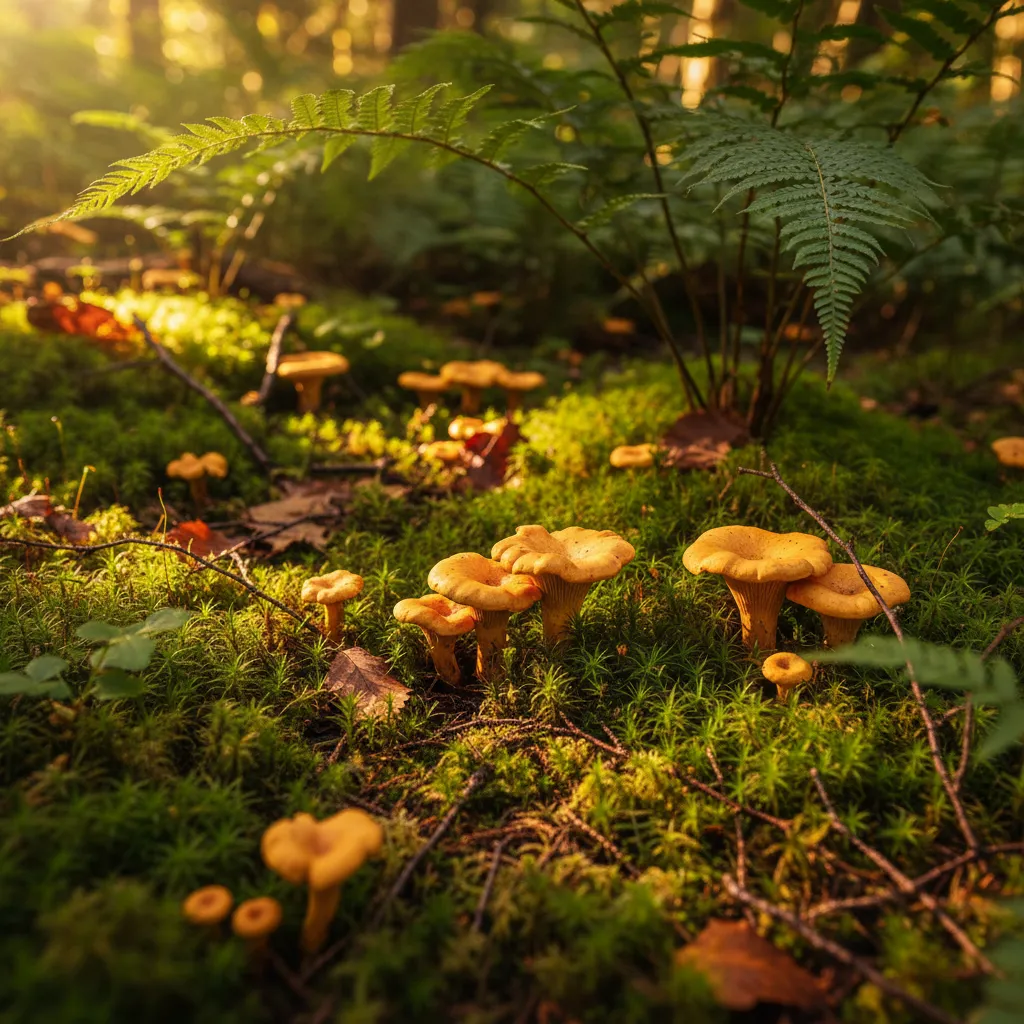
Best species: Golden chanterelles (September-November), white chanterelles, hedgehog mushrooms, lobster mushrooms (August-September), cauliflower mushrooms.
Access: Crown land is scattered throughout the island. Logging roads provide access to remote areas — many are active, so watch for truck traffic. The areas around Lake Cowichan, Port Renfrew, and Holberg are particularly productive and accessible.
Coordinates (general areas):
- Port Renfrew area: 48.55°N, 124.42°W
- Lake Cowichan area: 48.82°N, 124.05°W
- North Island (Holberg area): 50.64°N, 128.03°W
Sunshine Coast
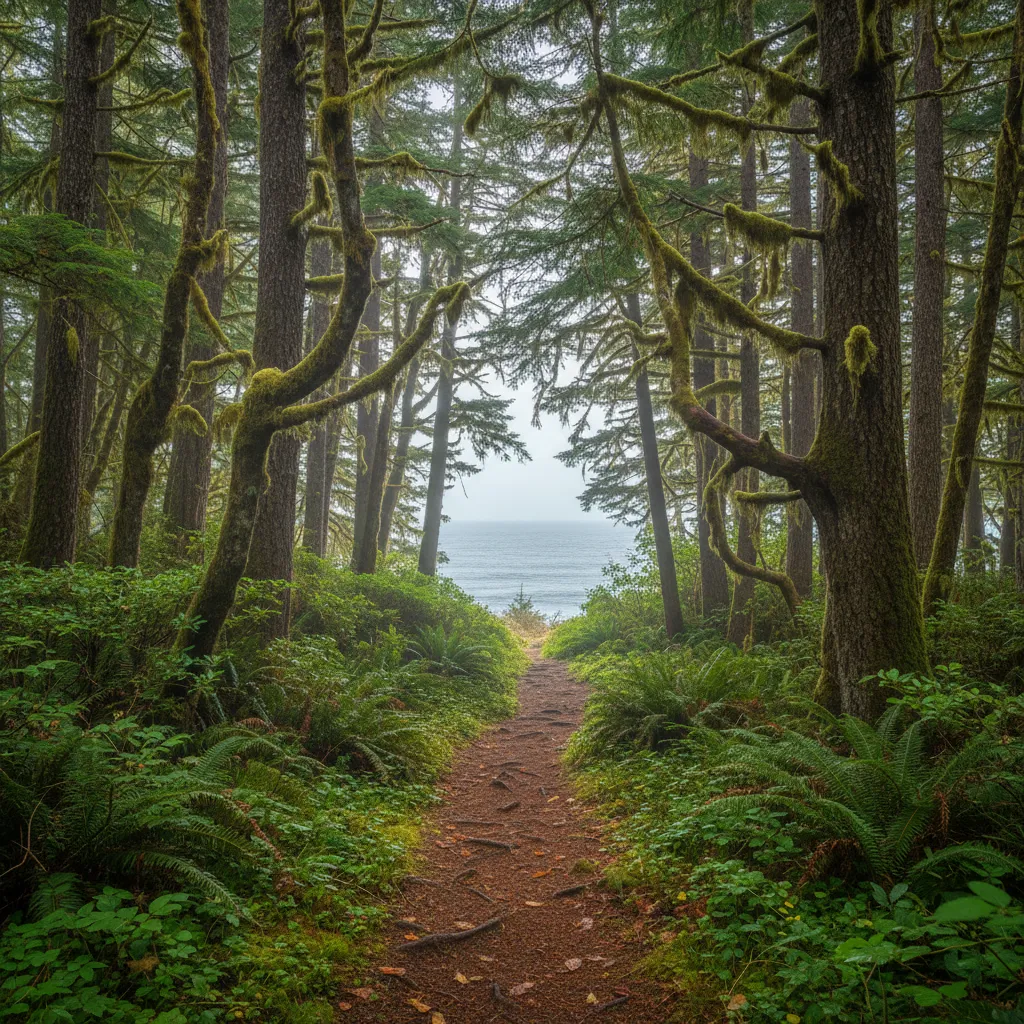
The Sunshine Coast — Gibsons, Sechelt, and Powell River — combines coastal rainforest with excellent crown land access. Less crowded than Vancouver Island and surprisingly productive.
Best species: Chanterelles, hedgehogs, lobster mushrooms, boletes, and excellent spring morel habitat in recently burned areas.
Access: BC Ferries from Horseshoe Bay to Langdale (Gibsons) or Earls Cove to Saltery Bay (Powell River). Forest service roads off Highway 101 lead to productive crown land.
Coordinates:
- Sechelt area forests: 49.48°N, 123.77°W
- Powell River backcountry: 49.87°N, 124.55°W
Whistler and Sea-to-Sky
The elevation gradient from Squamish to Pemberton creates diverse habitat spanning coastal rainforest to subalpine zones. Higher elevations produce species you won't find at sea level.
Best species: Chanterelles (lower elevations), king boletes / porcini (higher elevations, rare but present), lobster mushrooms, and excellent spring morel habitat.
Access: Forest service roads off Highway 99 and the Pemberton Valley area. Callaghan Valley and the Brandywine area are productive. Crown land is extensive in the backcountry.
Coordinates:
- Callaghan Valley: 50.14°N, 123.18°W
- Pemberton backcountry: 50.32°N, 122.82°W
Fraser Valley
The forests east of Vancouver — Mission, Harrison, Chilliwack, and Hope — offer accessible foraging within 1-2 hours of the city. The mix of Douglas fir, western red cedar, and hemlock supports good chanterelle and hedgehog habitat.
Best species: Chanterelles (October-November), hedgehog mushrooms, oyster mushrooms on fallen alder, and honey mushrooms.
Access: Forest service roads off Highway 7 (Lougheed Highway) and Highway 1. The Harrison Lake area and Chilliwack River Valley are productive. Watch for active logging.
Coordinates:
- Harrison area: 49.30°N, 121.78°W
- Chilliwack River Valley: 49.08°N, 121.42°W
Interior BC (Kamloops, Okanagan, Kootenays)
BC's Interior is different from the coast — drier, with pine and fir forests that support a distinct set of species. This is pine mushroom territory.
Best species: Pine mushrooms / matsutake (September-November, the most commercially valuable wild mushroom in BC), king boletes, morels (spring, especially in recent burn areas), chanterelles (at higher elevations).
Access: Extensive crown land and forest service road networks throughout the Interior. The areas around Revelstoke, Nelson, and the North Thompson Valley are particularly productive.
Pine mushroom notes: Pine mushrooms (Tricholoma murrillianum) grow in association with lodgepole pine, Douglas fir, and hemlock. They're BC's most commercially important wild mushroom, with significant exports to Japan. Commercial pickers have harvested pine mushrooms in the Interior and North Coast for decades. If you're foraging recreationally, be aware that you may encounter commercial pickers in prime areas.
Coordinates:
- Revelstoke area: 51.00°N, 118.20°W
- Kootenay Lake area: 49.68°N, 116.90°W
Haida Gwaii
The remote archipelago off BC's north coast is world-class foraging territory, though getting there requires commitment. The ancient temperate rainforests support exceptional chanterelle, hedgehog, and lobster mushroom populations, and the islands are far less picked-over than mainland and Vancouver Island sites.
Best species: Chanterelles (prolific), hedgehog mushrooms, lobster mushrooms, oyster mushrooms on alder. Some of the largest individual chanterelle specimens in BC have come from Haida Gwaii.
Access: BC Ferries from Prince Rupert to Skidegate, or flights to Sandspit or Masset. Crown land access is extensive, but always be mindful that Haida Gwaii is the traditional territory of the Haida Nation. Respect cultural sites and harvesting protocols.
Coordinates:
- Graham Island forests: 53.88°N, 132.12°W
- Moresby Island: 52.75°N, 131.65°W
Where to Go in BC: Region-by-Region Access Table
There is no provincial map of where mushrooms grow, and there never will be. The province publishes a Provincial Mushroom Picking Reference Map that shows recent wildfire perimeters and the areas where picking is closed, which tells you where you may not go rather than where the mushrooms are. Commercial pickers who have worked the same ground for decades do not publish their patches either, and you should not expect them to. So here is the honest substitute: the regions, the road and ferry networks that reach them, and the windows when each one produces. Coordinates are general areas, not patches. They put you in the right forest type at the right time of year, which is the part that actually matters. The rest is walking.
| Region | Nearest town | Access route | General coordinates | Primary target species | Peak window |
|---|---|---|---|---|---|
| Vancouver Island | Port Renfrew | Logging roads; many are active, watch for truck traffic | 48.55°N, 124.42°W | Golden chanterelle, hedgehog | Sep – Dec, chanterelle peak Oct |
| Vancouver Island | Lake Cowichan | Logging roads; many are active, watch for truck traffic | 48.82°N, 124.05°W | Golden and white chanterelle, lobster | Sep – Nov, lobster peak Sep – Oct |
| Vancouver Island | Holberg (North Island) | Logging roads; many are active, watch for truck traffic | 50.64°N, 128.03°W | Chanterelle, cauliflower mushroom | Sep – Nov, peak Oct |
| Sunshine Coast | Sechelt | BC Ferries Horseshoe Bay to Langdale, then forest service roads off Highway 101 | 49.48°N, 123.77°W | Chanterelle, hedgehog, lobster | Sep – Nov, peak Oct |
| Sunshine Coast | Powell River | BC Ferries Earls Cove to Saltery Bay, then forest service roads off Highway 101 | 49.87°N, 124.55°W | Chanterelle, hedgehog, late pine mushroom | Sep – Nov, pine to end of Oct |
| Sea-to-Sky | Whistler (Callaghan Valley) | Forest service roads off Highway 99 | 50.14°N, 123.18°W | Chanterelle at lower elevations, king bolete higher | Sep – Nov, bolete Jul – Oct |
| Sea-to-Sky | Pemberton | Forest service roads off Highway 99 through the Pemberton Valley | 50.32°N, 122.82°W | King bolete, lobster, spring morel in burns | Jul – Oct, morel Apr – Jun |
| Fraser Valley | Harrison | Forest service roads off Highway 7, the Lougheed Highway | 49.30°N, 121.78°W | Chanterelle, hedgehog, honey mushroom | Oct – Nov |
| Fraser Valley | Chilliwack | Forest service roads off Highway 1 into the Chilliwack River Valley | 49.08°N, 121.42°W | Chanterelle, oyster mushroom on fallen alder | Oct – Nov |
| Southern Interior | Revelstoke | Crown land forest service road network | 51.00°N, 118.20°W | Pine mushroom, king bolete | Sep – Oct |
| Southern Interior | Nelson (Kootenay Lake) | Crown land forest service road network | 49.68°N, 116.90°W | White chanterelle, pine mushroom | Sep – Oct, until the first heavy frosts |
| North Coast and Haida Gwaii | Masset (Graham Island) | BC Ferries Prince Rupert to Skidegate, or fly to Masset | 53.88°N, 132.12°W | Chanterelle, hedgehog, lobster | Aug – Oct, peak Sep |
| North Coast and Haida Gwaii | Sandspit (Moresby Island) | Fly to Sandspit, or BC Ferries to Skidegate | 52.75°N, 131.65°W | Chanterelle, hedgehog, lobster | Aug – Oct, peak Sep |
Two cautions on the access column. Many of these roads are working forestry roads, not recreation routes, so loaded trucks have right of way and radio channels matter. And none of this overrides the land status: picking is allowed on provincial Crown land without a permit but is illegal in provincial and national parks, so check boundaries on iMapBC before you park. See the regulations section above for the full picture.
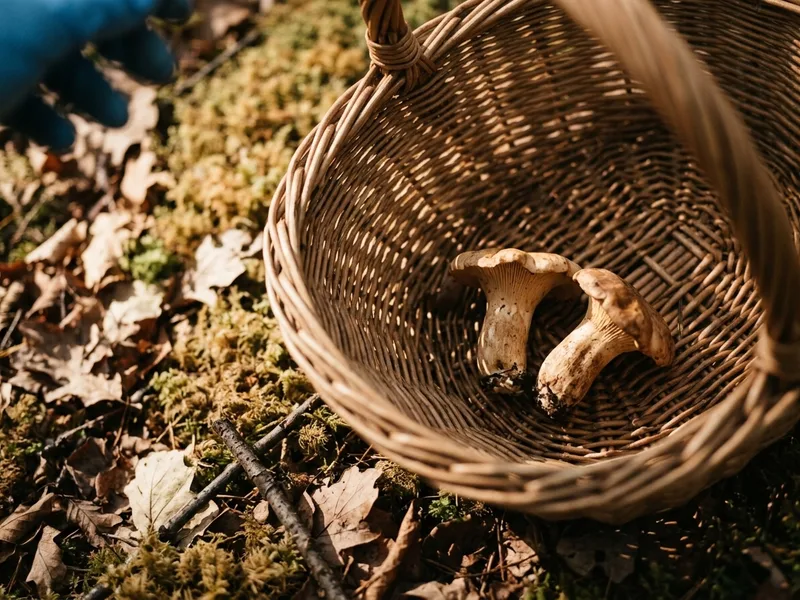
Wicker Foraging Basket
An open weave lets spores drop back through as you walk, which a plastic bag does not, and it stops a soft cap being crushed under everything picked after it. Size it to the walk, not the best day you have ever had.
When you buy through our links, it supports our mycology research at no extra cost to you.
Reading a Burn Map for Spring Morels
Morels are the one BC species where a map genuinely does predict the harvest, because the trigger is not habitat you have to learn, it is an event you can look up. The pattern is already covered in the spring section above, drawing on the US Forest Service guide to morels of western North America: the first spring after a fire is the strong one and the second postfire year drops off sharply. That gives you a narrow, findable target. Here is how to turn it into a destination.
Pull last summer's perimeters. Start with the BC Wildfire Service wildfire situation map, then go to the historical fire perimeters dataset in the BC Data Catalogue for mapped outlines of previous seasons. You want fires that burned the summer before the spring you are planning, not two or three summers back.
Filter for size and forest type. A large fire through Interior pine and fir gives you far more productive edge than a small grass fire. The Southern Interior and the Sea-to-Sky and Pemberton backcountry, both in the table above, are where BC's commercial morel camps have historically set up.
Cross-reference elevation and aspect. Lower and south-facing ground warms first, so it fruits first. Within a single burn you can follow the season uphill over several weeks, starting low and early and working up as the snowline retreats. That turns one fire into a month of picking rather than one weekend.
Check road access before you commit. A perimeter that looks perfect is worthless if the only road in was itself burned out, washed out or deactivated, and post-fire areas are frequently closed outright for danger trees and rehabilitation work. Overlay the Provincial Mushroom Picking Reference Map, which marks recent wildfire perimeters alongside the areas where picking is closed, and respect every closure you find. Burned stands drop limbs and whole trees without warning, especially in wind.
Expect one good year. Plan to pick a given burn hard in its first spring and then move to a newer one. For the natural, non-burn side of the season, and for how this plays out in the rest of the country, see our guide to morel foraging in Canada.
Species by Season
BC's foraging season is long — roughly April through December — thanks to the mild coastal climate.
Spring (April - June)
Morels (Morchella species) — The big spring prize. Natural morels appear in riparian areas and disturbed ground throughout the province. But the real morel bonanza happens in wildfire burn areas — the year after a significant forest fire, the burned ground can produce staggering quantities of morels. Commercial morel camps set up in Interior BC burn zones each spring. The pattern is well documented: the US Forest Service's guide to morels of western North America notes that the gray morel "is found abundantly the first spring or summer after a wildfire and in reduced numbers the second postfire year," and a boreal burn-harvest study it reviews found pickers averaging 19.8 pounds of morels per person per day. Check BC Wildfire Service maps from the previous summer to identify promising burn areas.
Oyster mushrooms — Wild Pleurotus species fruit on dead alder and cottonwood from spring through fall. Common throughout the coast.
Dryad's Saddle / Pheasant Back — Large polypore on hardwood stumps, appearing in May and June. Young specimens are edible.
Summer (July - August)
Lobster mushrooms (Hypomyces lactifluorum) — Bright orange parasitized Russula mushrooms. Found in coastal and interior forests from July through September. One of BC's most distinctive and delicious wild mushrooms.
Chicken of the woods (Laetiporus species) — Bright orange shelf mushroom on hardwoods. Less common in BC than in eastern Canada but found throughout the southern coast and Interior. For detailed identification and cooking guidance, see our chicken of the woods guide.
Boletes — Various species, including occasional king boletes (Boletus edulis complex) at higher elevations. The Okanagan and Kootenays produce the best bolete foraging in BC.
Fall (September - December)
This is the main event. BC's fall mushroom season is one of the most productive in the world.
Golden chanterelles (Cantharellus formosus) — The Pacific golden chanterelle is BC's most popular edible wild mushroom. It fruits prolifically from September through November (sometimes into December in mild years) in Douglas fir forests throughout the coast. A single foraging trip can yield several kilograms. The aroma is fruity and floral, the texture is firm, and the flavour is delicate and peppery.
White chanterelles (Cantharellus subalbidus) — Less common than golden chanterelles but prized for their firm texture and mild flavour. Found in similar habitats.
Hedgehog mushrooms (Hydnum repandum and H. umbilicatum) — Cream to orange-coloured mushrooms with teeth (spines) instead of gills on the underside. Excellent eating, easy to identify, and common in coastal forests alongside chanterelles. One of the safest wild mushrooms for beginners — no toxic look-alikes.
Pine mushrooms / Matsutake (Tricholoma murrillianum) — BC's most commercially valuable species. Found in Interior and North Coast forests from September through November. Distinctive spicy-cinnamon aroma, firm white flesh, and a flavour prized in Japanese cuisine. Commercially harvested and exported to Japan for decades.
Cauliflower mushroom (Sparassis crispa) — Large, ruffled, cauliflower-like fungus growing at the base of conifers. Spectacular eating when young. Found throughout BC's coastal and Interior forests.
Honey mushrooms (Armillaria species) — Prolific fall mushrooms in dense clusters on dead and dying trees. Common throughout BC. Always cook thoroughly — and confirm against the deadly Galerina marginata, which colonizes the same dead wood.
Winter (December - March)
BC's mild coastal winter allows some foraging even in the coldest months.
Velvet shank (Flammulina velutipes) — The wild ancestor of enoki mushrooms. Grows on dead hardwood in clusters through fall and winter, tolerating freezing temperatures. Found throughout the Lower Mainland and Vancouver Island.
Turkey tail (Trametes versicolor) — Available year-round on dead hardwood. Too tough to eat fresh but excellent dried and brewed as tea. Read about turkey tail mushroom benefits.
Oyster mushrooms — Wild oysters may fruit on dead alder and cottonwood through mild coastal winters.
BC Fall Mushroom Calendar by Region
The coast and the Interior run on different clocks, so a province-wide calendar only gets you so far. The windows below come from month-by-month iNaturalist observations in each region: they show when foragers actually find each species, not a guarantee for any given year.
| Species | South Coast and Vancouver Island | Sea-to-Sky and Sunshine Coast | Southern Interior (Okanagan, Kootenays) | North Coast and Haida Gwaii |
|---|---|---|---|---|
| Pacific golden chanterelle | Sep – Dec (peak Oct) | Sep – Nov (peak Oct) | Rarely reported | Aug – Oct (peak Sep) |
| White chanterelle | Sep – Nov (peak Sep) | Sep – Oct | Sep – Oct, until the first heavy frosts | Rarely reported |
| Pine mushroom (matsutake) | Late Oct – Nov, local | Late Oct – Nov | Sep – Oct | Late Aug – Oct |
| Hedgehog | Sep – Dec (peak Nov) | Sep – Nov (peak Oct) | Aug – Oct (peak Sep) | Aug – Oct |
| Lobster | Aug – Nov (peak Sep – Oct) | Jul – Oct (peak Sep) | Jul – Oct (peak Sep) | Aug – Sep |
| Cauliflower mushroom | Sep – Nov (peak Oct) | Sep – Nov (peak Oct) | Uncommon | Sep – Oct |
| King bolete | Aug – Oct (peak Oct) | Jul – Oct | Jul – Oct (peak Sep) | Aug – Oct |
| Yellowfoot (winter chanterelle) | Sep – Jan (peak Oct – Dec) | Oct – Jan (peak Nov) | Uncommon | Aug – Nov |
What starts a flush. Rain drives the season. A BC Ministry of Forests review of the wild mushroom trade notes that supply "may be determined by rainfall", and that a dry July, August and September made 1993 a poor pine mushroom year everywhere except Terrace and the Nass Valley. The same review traces the pine mushroom season moving south and west through the fall: from mid-to-late August around Terrace and the Nass Valley, to September and October in the West Kootenays, to the end of October on Vancouver Island and around Powell River, with the southern season normally over by the end of November. In the Kootenays, white chanterelles are picked from early fall "until the first heavy frosts," while the south coast keeps producing chanterelles, hedgehogs and yellowfoot into December and beyond.
Out east, the season runs on a different calendar: see our Ontario foraging guide and Nova Scotia foraging guide.
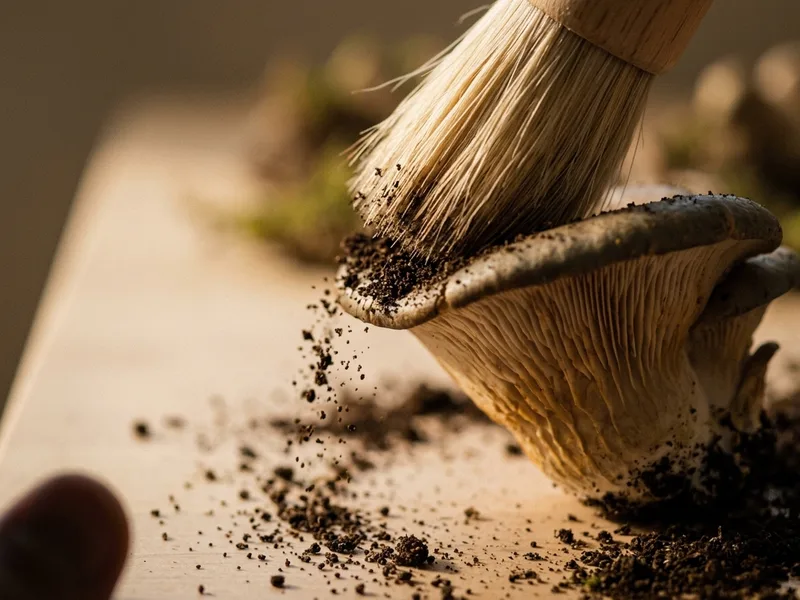
Redecker Natural Pig Bristle Mushroom Brush
Soft enough to take soil off a cap without tearing the skin. Mushrooms absorb water, so brushing dry beats rinsing every time, and anything you plan to dry has to be cleaned this way.
When you buy through our links, it supports our mycology research at no extra cost to you.
Pine Mushrooms (Matsutake) in BC
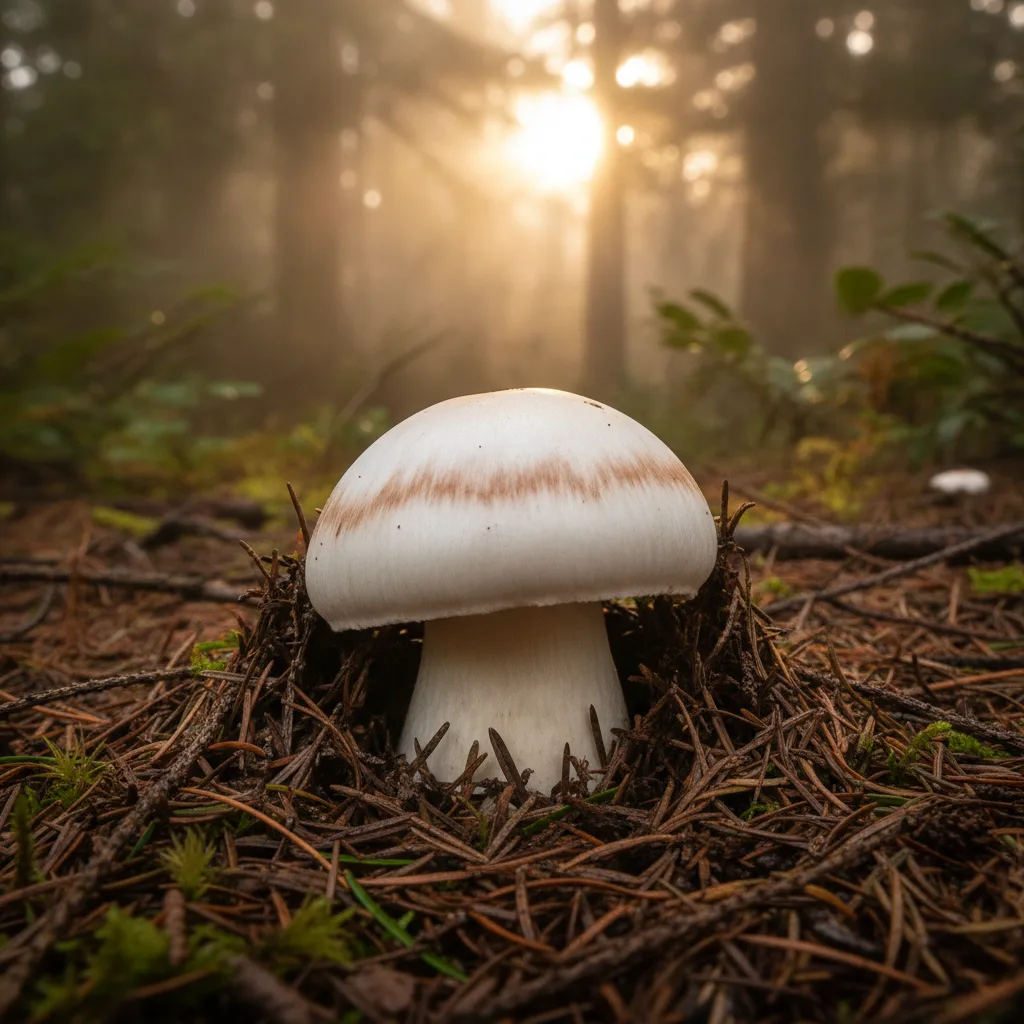
The pine mushroom is the species BC pickers talk about most, and the one where a mistake is most dangerous. BC's pine mushroom is Tricholoma murrillianum: a 2017 study in Mycologia split the western species from the eastern T. magnivelare, the name you'll still see in older field guides.
Identifying Pine Mushrooms
Smell comes first. A pine mushroom's odour is spicy and cinnamon-like, which UBC's Beaty Biodiversity Museum guide sums up as "cinnamon red hots and dirty gym socks." No cinnamon smell, no pine mushroom. Then check the rest:
- Flesh: firm, dense and rubbery, with a solid stem that is firmly attached.
- Veil and ring: the young gills are covered by a thick cottony veil, which leaves a prominent ring on the stem.
- Colour: white, developing "pale cinnamon to pinkish-brown or yellow-brown stains or fibrils or scales on cap and stem" (E-Flora BC). Below the ring, the stem is often speckled cinnamon brown.
- Buttons: young pine mushrooms are often still hidden. The BC Ministry of Forests notes the mushroom "is typically found under a thick layer of moss or leaf litter," so look for duff that has lifted or cracked before any cap shows.
Where They Grow: Coast vs Interior
Coast or Interior, pine mushroom ground looks surprisingly alike. A Ministry of Forests study of six commercial pine mushroom areas, spanning coastal and interior forest zones from the Nass and Bella Coola valleys to Nakusp, the Chilcotin Plateau, Pemberton and Boston Bar, found the same pattern everywhere: soils that were well or rapidly drained, coarse (sand to loamy sand) and drier and poorer than the surrounding forest. Western hemlock was the most consistent tree, with lodgepole pine and Douglas fir sometimes present. On the coast, E-Flora BC notes that it favours sandy pine forests. The Ministry's harvest review lists salal, evergreen huckleberry, kinnikinnick, boxwood and prince's pine as understorey plants that point to pine mushroom sites, often in stands 100 to 200 years old.
The Northwest Commercial Pick
Every fall, the country around Terrace, the Nass Valley and the Skeena hosts one of BC's big commercial pine mushroom picks. The Ministry of Forests describes the season there as starting in mid-to-late August and running to mid-to-late October, with pickers selling to buyers at roadside stands or depots in local towns, where the mushrooms are sorted into grades. The pine mushroom harvest has historically been "exported almost exclusively to Japan." A regional report on the Skeena-Bulkley pick describes pickers arriving "from August through October" and camping in the forest or at the roadside.
These are First Nations territories. Under the Nisg̱a'a Final Agreement, the Nisg̱a'a Lisims Government manages non-timber forest resources on Nisg̱a'a Lands, and its 2025 notice to mushroom pickers states that all mushroom harvesters must buy a Botanical Forest Product permit from the Lands and Resources Department in Gitlaxt'aamiks. Elsewhere in the Northwest, including Gitxsan, Kitsumkalum and Kitselas territories, contact the Nation before you pick.
Picking Etiquette
- Never rake. The "Don't rake the duff" rule in the sustainable foraging section below matters most on pine mushroom ground, where raking for hidden buttons tears up the forest floor the next crop depends on.
- Ease out the whole mushroom so you can check the base (see the comparison below), then fill the hole and put the moss and duff back the way you found it.
- Leave the smallest buttons to grow for another few days.
- Respect camps and territory. Stay clear of pickers' camps, follow any Nation permit rules, and ask before picking near communities or on reserve land.
Pine Mushroom vs Amanita smithiana
Amanita smithiana shares pine mushroom forests and is documented in BC. Check every feature on every mushroom:
| Feature | Pine mushroom (T. murrillianum) | Amanita smithiana (deadly) |
|---|---|---|
| Smell | Strong, spicy, cinnamon-like | Mild or unpleasant |
| Flesh and stem | Firm, dense, rubbery; tough stem that resists crushing | Softer flesh; stem crushes easily |
| Stem base | Solid and firmly attached | Widens near soil level, then tapers to a narrow, parsnip-shaped base; snaps off if wiggled |
| Cap | White, with cinnamon to pinkish-brown stains, fibrils or scales | White to light tan, often with white to brownish warts; cottony veil tufts may hang from the edge |
| Veil and ring | Thick cottony veil leaving a prominent ring | White, crumbly or powdery veil that rubs off the stem and cap edge |
| Habitat | Conifer duff under hemlock, pine and Douglas fir | The same forests: Douglas fir, western hemlock, pines and Sitka spruce |
Sources: Mushrooms Up! (UBC), Vancouver Mycological Society and E-Flora BC.
The stakes are high. The Vancouver Mycological Society calls A. smithiana "a frequent cause of very serious mushroom poisoning in British Columbia," and published case reports from southwestern BC and the Pacific Northwest describe people who mistook toxic mushrooms for pine mushrooms and went on to kidney failure. A UBC-led case report describes stomach symptoms first, "followed by acute renal failure," and a 2009 review notes the kidney damage is delayed, developing over the days after the meal. If in doubt, don't eat it, and call the BC Drug and Poison Information Centre (numbers in the deadly mushrooms section below).
BC Edible Mushroom Identification Chart
A quick-reference chart for BC's most-foraged edibles. Treat it as a starting point — confirm every find against multiple features and a regional field guide, and remember that BC is one of the few places in Canada where the deadly death cap (Amanita phalloides) is established.
| Species | Season | Where to Look | Key ID Features | Watch Out For |
|---|---|---|---|---|
| Pacific golden chanterelle | Sep - Dec | Douglas fir forest, coast | False gills (blunt ridges), fruity smell, peppery flavour | Woolly chanterelle (scaly cap, GI upset) |
| White chanterelle | Sep - Nov | Same habitat as goldens | All-white, false gills, dense flesh | None serious once ridges confirmed |
| Hedgehog mushroom | Sep - Dec | Coastal conifer forest | Spines (teeth) under the cap, not gills | None — the spines are definitive |
| Morel | Apr - Jun | Riparian ground; prior-year burn zones | Honeycomb cap, completely hollow interior | False morel (chambered inside, brain-like cap) |
| Pine mushroom (matsutake) | Sep - Nov | Interior & North Coast pine/fir | Spicy-cinnamon smell, firm white flesh, cottony veil | Deadly Amanita smithiana — same habitat, no cinnamon smell |
| Lobster mushroom | Jul - Sep | Coastal & interior forest floor | Hard orange-red crust over white flesh | Only take firm, bright specimens |
| Cauliflower mushroom | Sep - Nov | Base of conifers | Ruffled, noodle-like cream mass | None serious |
| King bolete | Jul - Oct | Higher elevations, Okanagan/Kootenays | Pores not gills, white netting on fat stem | Bitter bolete; avoid red-pored boletes |
| Honey mushroom | Sep - Nov | Clusters on dead/dying trees | White spore print, ring on stem, always cook | Deadly Galerina — spore print every batch |
| Velvet shank | Nov - Mar | Dead hardwood, coastal winters | Orange sticky cap, black velvety stem base | Deadly Galerina again — spore print (white vs rusty) |
| Yellowfoot (winter chanterelle) | Sep - Jan | Rotting conifer wood and moss, coast | Hollow yellow-brown stem, brown funnel cap, vein-like ridges not gills | Deadly Galerina on the same rotting wood (true gills, rusty spore print) |
| Admirable bolete | Aug - Nov | On or near rotting conifers, especially hemlock | Maroon velvety cap, yellow pores, grows on wood | Boletus fibrillosus (grows on the ground); avoid red-pored boletes |
| Shrimp russula | Aug - Nov | Conifer forest | Red-purple cap, fishy shrimp-like smell, stem browns when scratched | Other red-capped russulas; insist on both the smell and the browning |
| Saffron milk cap | Aug - Nov | Under conifers | Orange cap, orange latex that slowly stains green | Other milk caps with white latex; confirm orange milk |
| Bear's head tooth | Aug - Nov | Dead conifer logs and stumps | White cascading spines from branched stalks, no gills | Coral tooth (Hericium coralloides), also edible; confirm spines, not gills |
| Western chicken of the woods | Jul - Oct | On mature conifers | Orange shelves, yellow pore surface, no gills | Poisonings reported; never eat raw, young soft edges only, cook well |
| Oyster mushroom | Year-round, peaks Apr - Jun and Sep - Nov | Dead alder and cottonwood | Shelf caps, gills running down a short stem, white-lilac spore print | Angel wings (thin, white, on conifer wood; avoid) |
| Shaggy mane | Sep - Nov | Lawns, roadsides, disturbed ground | Tall shaggy white cylinder, gills turn to black ink | Common ink cap (reacts with alcohol); pick young and all-white |
Download the free printable chart (PDF) – 8.5x11, made to print and tuck into your foraging basket.
The printable uses the same format as our Ontario and Nova Scotia charts. For deeper ID on two of the species above, see the chicken of the woods guide and the shaggy mane guide.
Two BC-specific safety habits: never gather all-white gilled mushrooms (death caps and destroying angels both occur here — death caps especially in urban Victoria and Vancouver under planted oaks and hornbeams), and smell-test every matsutake — Amanita smithiana shares the habitat and has poisoned experienced pickers.
The stakes are real. Per a BC Centre for Disease Control fact sheet, "the BC Drug & Poison Information Centre reports on average 200 calls per year related to wild mushroom exposures," and 20% of those calls resulted in moderate, severe, or potentially toxic illness.
Growing Gourmet and Medicinal Mushrooms
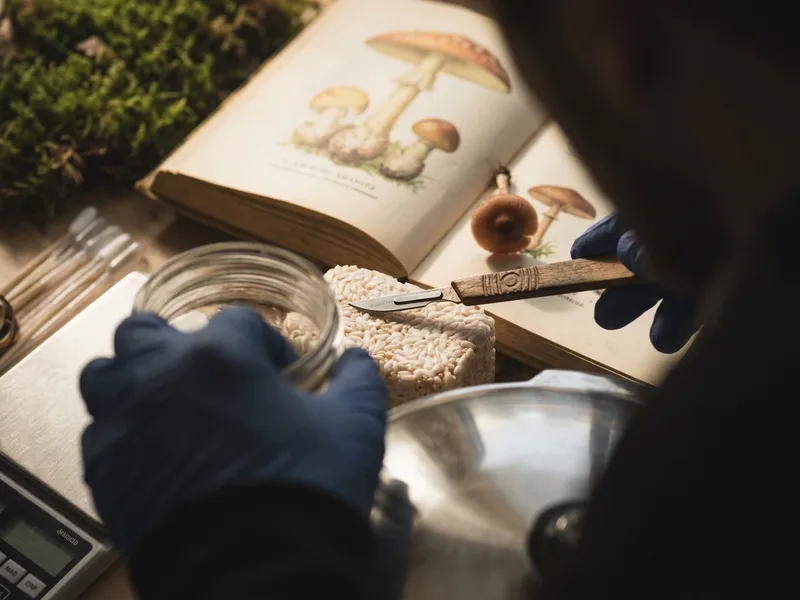
Most people who forage for a season start wondering whether they can grow the same species deliberately. This is the standard cultivation reference, with substrate, spawn and fruiting conditions worked through species by species. A different book from a field guide and worth owning alongside one.
When you buy through our links, it supports our mycology research at no extra cost to you.
Deadly Mushrooms in British Columbia
Of all the poisonous mushrooms in BC, a handful can kill, and several grow right beside the edibles in the chart above. The one that surprises people is the death cap (Amanita phalloides). The BC Centre for Disease Control says it is not native to BC forests: it "was imported on the roots of trees planted in boulevards in Victoria and Vancouver." BCCDC's death cap brochure names imported beech, chestnut, hornbeam and English oak among its hosts, along with native Garry oak, so look for it in city and suburban yards, streets and parks rather than deep in the bush.
| Deadly species | Where it turns up in BC | Mistaken for | The feature that separates them |
|---|---|---|---|
| Death cap (Amanita phalloides) | Urban and suburban Victoria, Vancouver and the Fraser Valley, under imported trees and Garry oak | Asian straw (paddy straw) mushroom and edible Asian Amanitas | White gills plus a sac-like cup (volva) at the base; dig up the whole stem |
| Amanita smithiana | Conifer forest, often on pine mushroom ground | Pine mushroom | No cinnamon smell, soft flesh, parsnip-shaped base, powdery veil (see the comparison above) |
| Deadly Galerina (Galerina marginata) | Rotting conifer and hardwood logs and wood chips, common across BC | Honey mushroom, velvet shank | Rusty-brown spore print (those edibles print white) |
| Conocybe filaris | Lawns, grassy areas and wood-chip beds over buried wood | Other little brown lawn mushrooms | Small, fragile brown cap with a ring on a thin stem; don't eat little brown mushrooms at all |
| False morels (Gyromitra species) | On the ground under conifers, especially pine, in spring | Morels | Wrinkled, brain-like lobes instead of pits; chambered or cottony inside (true morels are completely hollow) |
Sources: BCCDC, Vancouver Mycological Society, which notes that Galerina species and Conocybe filaris "contain the same deadly poisons as Death Caps," and E-Flora BC species pages for Galerina marginata and Gyromitra esculenta.
If you suspect a mushroom poisoning, call the BC Drug and Poison Information Centre at 1-800-567-8911 or 604-682-5050, or call 911 immediately. Don't wait for symptoms, and bring the mushroom (or a photo and any leftovers) with you. BCCDC advises going straight to an emergency room with specimens and details of where the mushrooms were found, because getting help early matters.
Essential Gear for BC Foraging
BC's forests are wet, dense, and sometimes remote. Gear up accordingly.
Rain gear. This isn't optional. BC's fall foraging season coincides with the rainy season. A good waterproof jacket and pants are essential. Your feet will get wet — waterproof boots help, but accept that wet feet are part of the BC foraging experience.
A GPS device or phone with offline maps. BC's forest service road networks are complex, and cell service is nonexistent in most foraging areas. Download offline maps (Gaia GPS, Avenza Maps, or Google Maps offline) before you leave. A physical compass is good backup.
A sturdy wicker foraging basket or mesh bag. Never plastic bags. Airflow keeps mushrooms fresh and allows spores to disperse as you walk.
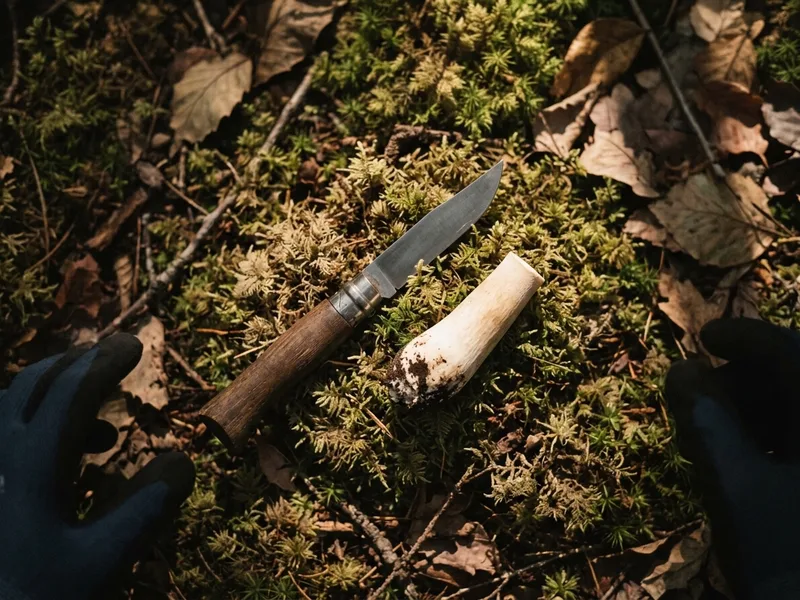
A good knife. An Opinel No. 8 is the classic forager's knife — the carbon steel blade takes a razor edge, and the twist-lock keeps it safe in your pocket.
A field guide. Mushrooms of British Columbia by Andy MacKinnon and Kem Luther is the definitive regional guide. All That the Rain Promises and More by David Arora is a beloved Pacific Northwest classic that's highly relevant to BC.
Bear spray. BC's forests are bear country, particularly in fall when bears are feeding heavily before hibernation. Carry bear spray and make noise on the trail.
A first aid kit. Forest service roads are remote. Help may be far away. Carry basics including a whistle and emergency blanket.
Brush and paper bags. For cleaning and separating species in the field. Keeping different species separate prevents cross-contamination of debris and makes identification easier at home.
What to take with you
Foraging needs very little kit, and the three things that matter each do a different job: carry the find without crushing it, cut it without damaging what is left behind, and clean it dry.
Sustainable Foraging Practices
BC's wild mushroom populations are not inexhaustible, and sustainable harvesting is essential to ensure future seasons remain productive.
Take only what you'll use. The chanterelle flush is exciting, but harvesting 20 pounds when you'll eat 5 is wasteful. Wild mushrooms are a shared resource.
Use a knife. Cut mushrooms at the base rather than pulling them from the ground. This minimizes disturbance to the mycelium and soil.
Carry a mesh bag or basket. This allows spores to disperse as you walk through the forest, helping replenish mushroom populations.
Don't rake the duff. Some commercial harvesters rake the forest floor to find buried pine mushrooms. This damages the mycelial network and the forest floor ecosystem. Pick what's visible on the surface or pushing through the duff naturally.
Rotate your spots. Don't return to the same patch every week. Give areas time to produce new fruit bodies.
Respect closures. If an area is closed for ecological, cultural, or safety reasons, stay out. Temporary closures exist for a reason.
Share knowledge carefully. The foraging community debates this endlessly, but the general consensus is: share knowledge about species and techniques freely, share specific GPS coordinates carefully. Oversharing "honey holes" can lead to overharvesting of productive sites.
Opinel No. 08 Mushroom Knife
A curved blade cuts the stem cleanly at the base instead of tearing the mycelium out with it, and the boar bristle brush is set into the handle so cleaning happens in the field rather than at the sink.
When you buy through our links, it supports our mycology research at no extra cost to you.
Getting Started
If you're new to foraging in BC, here's a practical starting path:
Join a club or foray. The Vancouver Mycological Society, South Vancouver Island Mycological Society, and Sunshine Coast Mycological Society all run regular forays led by experienced identifiers. This is the fastest and safest way to learn. Between forays, follow the iNaturalist feed — naturalists have logged more than 780,000 fungi observations in British Columbia as of September 2026, by far the most of any province, and it shows what's fruiting near you in real time.
Start with easy species. Chanterelles, hedgehog mushrooms, and lobster mushrooms are all distinctive, delicious, and relatively safe for beginners. Save the more challenging identifications for later.
Get a good field guide. No app replaces a physical book when you're deep in the bush with no cell service.
Go with experienced people. Your first several trips should be with someone who knows what they're doing. Offer to drive, bring lunch, and carry the heavy basket — experienced foragers love to teach when you show genuine interest and respect.
Start close to home. You don't need to drive to Tofino for your first foray. The forests within an hour of Vancouver, Victoria, or any BC city produce excellent mushrooms.
A western pocket guide beats a national one here. See the mushroom books worth owning for which to buy first.
From Foraging to Growing
Here is the thing nobody selling mushroom kits will tell you: four of the best mushrooms in this guide cannot be farmed at all. Pine mushroom, chanterelle, hedgehog and lobster are not going to happen in your basement, and that is not a skill problem. Chanterelles, hedgehogs and pine mushrooms are mycorrhizal, meaning they live in partnership with the roots of living conifers and will not fruit without a mature host tree and the soil community around it. Lobster is stranger still, a parasite that colonises another mushroom, usually a russula, and only exists because its host does. Nobody commercially cultivates any of the four. If you want them, you go to the forest in the autumn, which is the whole reason this guide exists.
What that means practically is that growing at home is not a substitute for foraging. It is the other half of the calendar. The species that do grow reliably indoors are a completely different list: the wood-rotting saprophytes, which digest dead wood and straw and need no partner tree at all. Those will fruit in a BC basement in February while the chanterelle ground is under snow.
BC's climate is unusually well suited to two of them. Oysters and shiitake both fruit best in the cool, damp range that a coastal BC house sits in naturally through the shoulder seasons, roughly 13 to 20°C for blue oysters and a similar band for shiitake. That is the range most of North America has to work to hit and the south coast gets for free. Humidity is the same story: the thing growers elsewhere buy equipment to solve is the weather here.
If you want to try one bag and see what happens, start with a kit. The Lion's Mane Kit ($36) fruits in white cascading clusters and cooks like crab or scallop, and the Blue Oyster Kit ($36) is the fastest and most forgiving thing we sell, usually pinning within a couple of weeks of opening. Both are ready to fruit out of the box with no sterile work.
If you want volume, go to grain spawn and your own substrate. Permafrost Blue Oyster Grain Spawn 5 lb ($39) is our best-selling spawn at 184 bags sold, and it is a cold-tolerant strain, which is exactly the right choice for an unheated BC garage or basement through autumn and winter. Chill 3790 Shiitake Grain Spawn 5 lb ($39) is the cool-weather shiitake strain, for supplemented sawdust blocks or outdoor logs. Grain spawn ships in 5 lb increments only, so 5 lb is the smallest order. One 5 lb bag inoculates a meaningful amount of substrate, far more than a single kit.
New to this entirely? Our walkthrough on how to grow oyster mushrooms covers a first grow start to finish, and the full grow kit and spawn ranges are worth a look before you choose.
Frequently Asked Questions
What edible mushrooms grow in BC?
BC has arguably Canada's richest edible fungi list: Pacific golden and white chanterelles, hedgehog mushrooms, pine mushrooms (matsutake), king boletes, lobster mushrooms, cauliflower mushrooms, morels (especially in burn zones), honey mushrooms, and winter velvet shank. For beginners, chanterelles, hedgehogs, and lobster mushrooms are the classic safe starting trio — distinctive, abundant, and free of deadly look-alikes when checked properly.
When is mushroom season in BC?
The main event is September through November, when fall rains hit the coastal forests — chanterelles, matsutake, hedgehogs, and boletes all peak. Spring (April-June) is morel season, spectacular in the year after a wildfire. On the mild south coast, the season effectively never fully closes: velvet shank and oysters fruit through winter, making BC's foraging window the longest in Canada.
Where can I go mushroom picking near Vancouver or Victoria?
You don't need to go far. Within an hour of Vancouver, the Fraser Valley's second-growth forests and the Sea-to-Sky corridor produce chanterelles and hedgehogs; from Victoria, the South Island's Douglas fir forests (Sooke and beyond) are classic chanterelle ground. Stick to Crown forest land — not municipal parks, where picking is generally prohibited — and join the Vancouver Mycological Society or South Vancouver Island Mycological Society for guided forays that show you real habitat legally and safely.
Are there death cap mushrooms in BC?
Yes — BC is the Canadian hotspot for death caps (Amanita phalloides). The BC Centre for Disease Control notes this is "not a mushroom found naturally present in BC forests" — it arrived on the roots of imported European trees and is now established in urban and suburban Victoria and Vancouver, fruiting under planted oaks, hornbeams, and lindens. It has killed here: in October 2016, a 3-year-old boy died after eating a death cap foraged from a residential street in Victoria — the first recorded death cap fatality in BC, as documented in the BC Medical Journal. Death caps are greenish-yellow to bronze capped with white gills, a stem ring, and a cup-like volva at the base. The practical rule: never eat any wild gilled mushroom with white gills until you're experienced enough to rule out Amanitas completely.
When is chanterelle season in BC?
On the coast, Pacific golden chanterelles usually start in September and peak in October. On the south coast and Vancouver Island they often keep fruiting into December, and the Ministry of Forests notes the commercial pick running until November or December around Sechelt and the south coast mountains. The North Coast and Haida Gwaii run earlier and shorter, roughly August to October with a September peak. Goldens are rarely reported in the southern Interior, where white chanterelles are the Kootenay chanterelle and end with the first heavy frosts. The regional calendar above breaks it down by area.
Is there a BC mushroom picking map?
There is no official map of where mushrooms grow. What the province does publish is a Provincial Mushroom Picking Reference Map, linked from its mushroom picking page, which shows recent wildfire perimeters and restricted areas where picking isn't allowed. For land status, the province points pickers to iMapBC for park, reserve and Crown land boundaries, and BC Parks lists park locations, since picking in provincial parks is prohibited. To learn habitat, browse iNaturalist observations near you and join a local mycological society foray.
Can you sell wild mushrooms you pick in BC?
Picking itself needs no licence: the province says individuals and commercial operations can both pick on Crown land without a permit. Selling is regulated mostly at the buyer's end. The BC Centre for Disease Control calls wild mushroom harvesting "an unregulated activity in Canada", reminds farmers' market vendors and managers that they are responsible for the wild mushrooms they sell, and recommends recording each mushroom's scientific name and who identified it. Packing or labelling fresh produce for interprovincial trade or export can require a Safe Food for Canadians licence from the CFIA. On Nisg̱a'a Lands, all pickers need a Nisg̱a'a permit. Never sell a mushroom you haven't identified with certainty.
Do I need a permit to pick mushrooms on BC crown land?
No. The province states plainly that mushroom picking is allowed on provincial Crown land without a permit, and since about 94% of BC is Crown land, that covers most of the province. Picking in a provincial or national park is illegal regardless. There are three things to watch beyond that. Commercial pine mushroom harvesting is subject to specific rules in some forest districts and may require a Ministry of Forests permit. Tenured areas such as active forestry licences, woodlots and community forests can carry extra conditions, so check with the local forest district office. And First Nations territories have their own protocols, including a Nisg̱a'a permit requirement for all pickers on Nisg̱a'a Lands. Full detail is in the regulations section above.
Can I grow pine mushrooms or chanterelles at home?
No, and the reason is biological rather than a question of difficulty. Pine mushrooms, chanterelles and hedgehogs are mycorrhizal: they grow in partnership with the roots of living conifers and will not fruit without a mature host tree and the forest soil community that goes with it. Lobster mushrooms are parasitic on other mushrooms, so they need their host to exist first. Nobody farms any of the four commercially anywhere in the world, which is exactly why wild pine mushrooms carry the price they do. The mushrooms that do grow at home are the wood-rotting species, which digest dead wood and straw and need no partner tree: oysters, shiitake, lion's mane, king oyster and chestnut. See From Foraging to Growing above for the species that suit BC's cool damp climate best.
British Columbia's forests offer some of the finest mushroom foraging anywhere in the world. The diversity of species, the vastness of the accessible land, and the sheer productivity of the Pacific coast rainforest ecosystem make this province a forager's paradise. Go slow, learn carefully, forage responsibly, and enjoy one of the most rewarding ways to connect with BC's extraordinary natural landscape.
If the off-season has you missing fresh mushrooms, you can grow gourmet species year-round at home. Browse our grow kits and spawn to keep the harvest going. And if you're also interested in foraging in eastern Canada, check out our mushroom foraging in Ontario guide.