
Turkey tail (Trametes versicolor) is one of the most common mushrooms in Canadian forests — and one of the most rewarding to cultivate deliberately. If you have ever walked a trail in Ontario or British Columbia and noticed rings of thin, banded brackets fanning out across a fallen log, you may have seen turkey tail or a look-alike. That description alone is not enough to identify a wild mushroom. Learning how to grow turkey tail mushrooms gives you a steady, renewable supply of one of the most studied medicinal fungi in the world, and it is far more forgiving than fussier species like shiitake.
This guide covers both ways to grow it: the slow, low-effort outdoor log method, and the faster indoor sawdust-block method. Turkey tail is a vigorous colonizer, so whichever route you choose, your odds of success are excellent.
Why Grow Turkey Tail?
Turkey tail is not a culinary mushroom — it is far too thin and leathery to eat like an oyster or a portobello. It is grown for the medicinal harvest. The brackets are dried and simmered into a long decoction (tea) or processed into a dual extract. Turkey tail has been used in traditional medicine for centuries and is studied today for its polysaccharides, particularly PSK and PSP, which are the subject of ongoing immune-support research. We grow it; we do not make health claims about it — that distinction matters.
Pet owners sometimes encounter the same species while researching turkey tail for dogs. That guide separates the veterinary research and safety questions from the cultivation process covered here.
For a home cultivator, turkey tail has three big advantages:
- It can grow vigorously on suitable wood. Clean starting material and the right preparation still matter; do not assume it can make a contaminated grow usable.
- It is not picky about wood. Where shiitake demands oak, turkey tail happily takes oak, maple, birch, beech, alder, poplar, and aspen.
- A log keeps producing for years. An established log may produce for several years. Keep it shaded, check moisture and follow seasonal care; harvest timing depends on conditions.
Turkey Tail at a Glance
| Factor | Detail |
|---|---|
| Species | Trametes versicolor |
| Difficulty | Easy — beginner-friendly |
| Best substrates | Hardwood logs; supplemented hardwood sawdust |
| Colonization | 6–12 months (logs); 2–4 weeks (blocks) |
| Fruiting temperature | 15–21°C |
| Use | Dried for tea and extracts (medicinal, not culinary) |
Two Ways to Grow Turkey Tail
You have two practical options. Outdoor logs take the least effort and the most patience — you inoculate once, then let nature run for a year before the first harvest. Indoor sawdust blocks are faster and give you a controlled harvest in about two months, but they require sterilization equipment. Beginners in Canada with a bit of yard space should start with logs. Growers who already pressure-cook substrate for other species can fold turkey tail straight into their existing routine.
| Hardwood logs (outdoor) | Sawdust blocks (indoor) | |
|---|---|---|
| Time to first harvest | 6–12 months | ~2 months |
| Equipment needed | Drill, wax, plug spawn | Pressure canner, grow bags, grain spawn |
Worth knowing before you buy dowels: a hundred plugs covers three or four logs, while the same spend on millet grain spawn carries more mycelium and inoculates more wood. See plug spawn vs grain and sawdust spawn for the arithmetic, or skip logs entirely with a ready-to-fruit grow kit. | Effort after setup | Nearly none — occasional soaking | Daily humidity/air checks during fruiting | | Harvest pattern | Every spring and fall for 4–6 years | One or two flushes per block | | Contamination risk | Very low | Moderate (sterile technique required) | | Best for | Yard space + patience | Fast, controlled, repeatable crops | | Cost per harvest | Lowest over time | Higher, but predictable |
Growing Turkey Tail on Hardwood Logs
This is the classic method, and it mirrors the process in our guide to growing mushrooms on logs.
Choose and Cut Your Logs
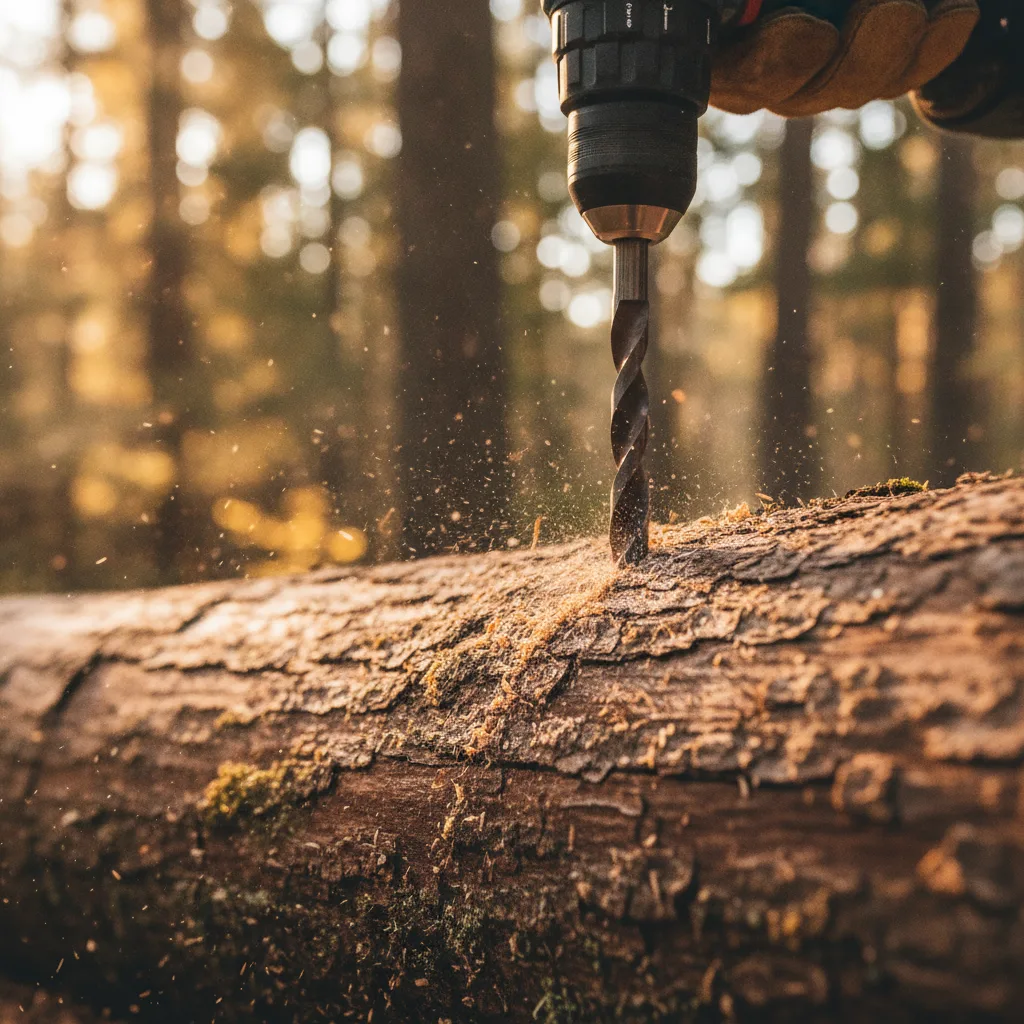
Cut fresh, healthy hardwood in late winter or early spring while the tree is still dormant and the bark is tight. Oak, sugar maple, birch, beech, alder, and poplar all work well. Aim for logs 8–15 cm in diameter and about 1 metre long. Let the cut logs rest for two to four weeks before inoculating — freshly felled wood carries natural anti-fungal compounds that fade over a couple of weeks. Do not let them dry out completely, though; turkey tail needs moist wood.
Inoculate the Logs
Drill 8 mm holes about 2.5 cm deep in a diamond pattern: rows spaced 10 cm apart along the log, with holes every 15 cm and each row offset from the last. Push plug spawn into each hole and tap it flush with a mallet, or use a palm inoculator to pack in sawdust spawn. A 1-metre log usually takes 30–40 plugs.
Seal and Stack the Logs
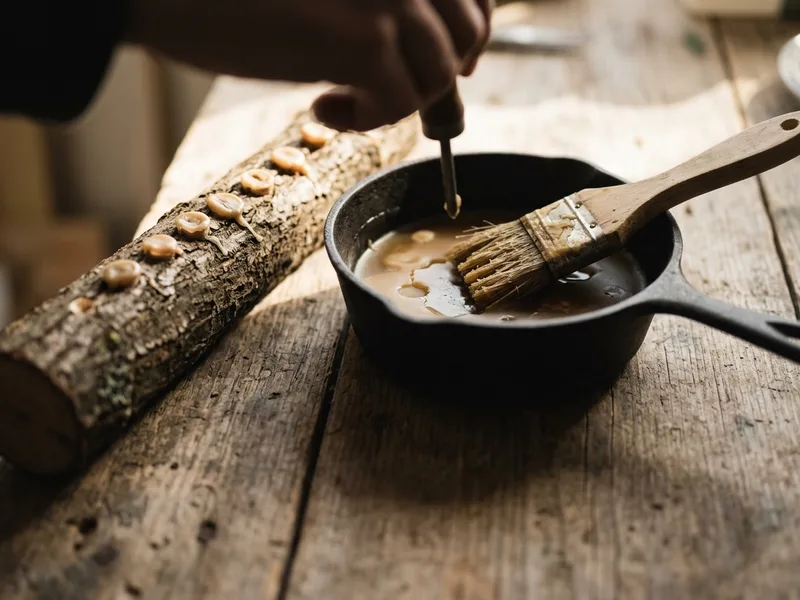
Melt food-grade cheese wax or beeswax and brush a dab over every inoculation hole. This locks moisture in and keeps competing fungi and insects out. Stack the sealed logs in a shaded, sheltered spot — the north side of a building, under conifers, or against a fence all work. The logs must never bake in direct Canadian summer sun.
Colonize and Wait
This is where patience comes in. Turkey tail mycelium spreads through the log over 6 to 12 months. During dry summer stretches, soak or hose the logs occasionally so they never fully dry out. You will know colonization is well underway when you see white mycelium at the cut ends.
Fruiting and Harvest on Logs
Turkey tail fruits on its own schedule — usually in autumn and again in spring, triggered by cool temperatures and rainfall. The thin, banded brackets emerge along the log in overlapping rosettes. A healthy log produces for four to six years. There is no precise "harvest window" the way there is with a culinary mushroom; pick the conks while they are still firm and vivid rather than waterlogged or bug-eaten.
Turkey Tail Season in Ontario
If you are timing an outdoor grow — or wondering when your logs will finally fruit — it helps to know the natural turkey tail fruiting season in Ontario. Wild turkey tail produces its main flush in fall, roughly September through November, when cool nights and steady rain arrive. A smaller secondary flush often follows in spring, from late April into June. Inoculated logs follow the same rhythm: expect your first real harvest in the autumn after the log finishes colonizing.
You will see turkey tail brackets on logs and stumps in Ontario year-round, because the dried conks persist through winter. But there is a difference between visible and fresh: winter brackets are faded, brittle, and often bug-eaten. For drying and tea, harvest fresh growth — flexible, vividly banded, with a clean white to pale cream pore surface underneath. If your log fruits in October, take the brackets before hard frosts and freeze-thaw cycles degrade them.
A practical Ontario calendar for the log method:
| Month | What to do |
|---|---|
| February–March | Cut logs while trees are dormant |
| April–May | Inoculate and wax; stack in shade |
| June–August | Colonization; soak logs during dry spells |
| September–November | First fruiting window (year one or two) |
| December–March | Logs rest; nothing to do |
| Following spring | Secondary flush on established logs |
Growing Turkey Tail on Sawdust Blocks Indoors
If you want a harvest in weeks instead of a year, grow turkey tail indoors on supplemented hardwood sawdust. This route needs a pressure canner or sterilizer, but it gives you a fast, predictable crop. Here is the full timeline from mixing substrate to harvest:
| Stage | Duration | Conditions |
|---|---|---|
| Substrate prep + sterilization | 1 day | 15 PSI for 2.5 hours, then cool overnight |
| Inoculation | 1 hour | Still-air box or flow hood |
| Colonization | 2–4 weeks | 21–24°C, dark |
| Pinning after fruiting conditions | 5–10 days | 15–21°C, 85–95% RH, fresh air, indirect light |
| Bracket development to harvest | 2–3 weeks | Same as pinning |
| Total | ~2 months |
Prepare the Substrate
Use the weighed recipe below, then adjust for moisture already in your ingredients. The finished mix should hold together when squeezed and release only a few drops. The bulk substrate guide explains how to measure recipes.
An example mix of approximately 3 kg before adding spawn:
- 1 kg hardwood fuel pellets
- 180 g wheat bran (about 15% of the combined dry ingredients)
- About 1.8 L water, adjusted for moisture already in the pellets and bran
Pour the water over the pellets, wait 20–30 minutes for them to swell and crumble, then mix the bran through until everything is evenly dark and moist. Target moisture is about 60% — a squeezed handful should clump firmly and weep one or two drops, no more. Too wet and you invite bacteria; too dry and colonization stalls.
Sterilize the Blocks
Because supplemented sawdust is contamination-prone, you must sterilize it rather than pasteurize. Load the substrate into filter-patch grow bags and pressure cook at 15 PSI for 2.5 hours, then let the bags cool completely to room temperature. See our substrate sterilization guide for the full procedure.
Inoculate With Spawn
Working inside a still-air box or in front of a flow hood, add turkey tail grain spawn at about 8–10% of the substrate weight. If you are propagating your own culture, start it on agar or liquid culture — our spawn-making guide covers the process. Seal the bag and mix the spawn through evenly.
Let the Blocks Colonize
Incubate the bags at 21–24°C in the dark. Turkey tail colonizes quickly for a medicinal species — expect full white coverage in two to four weeks. The surface often develops small dark "stress" zones; that is normal for this species.
Trigger Fruiting
Once fully colonized, cut a window in the bag or open the top, and move the block to fruiting conditions: 15–21°C, 85–95% humidity, bright indirect light, and plenty of fresh air. Turkey tail demands strong fresh-air exchange — starved of oxygen, it produces lumpy white antler shapes instead of proper fanned brackets. Within a couple of weeks you will see the characteristic concentric, multicoloured rosettes form.
Harvesting and Drying Turkey Tail
Harvest the brackets by cutting them cleanly from the substrate or log with a knife or scissors. They should be firm and flexible, not slimy or crumbling. Brush off any debris.
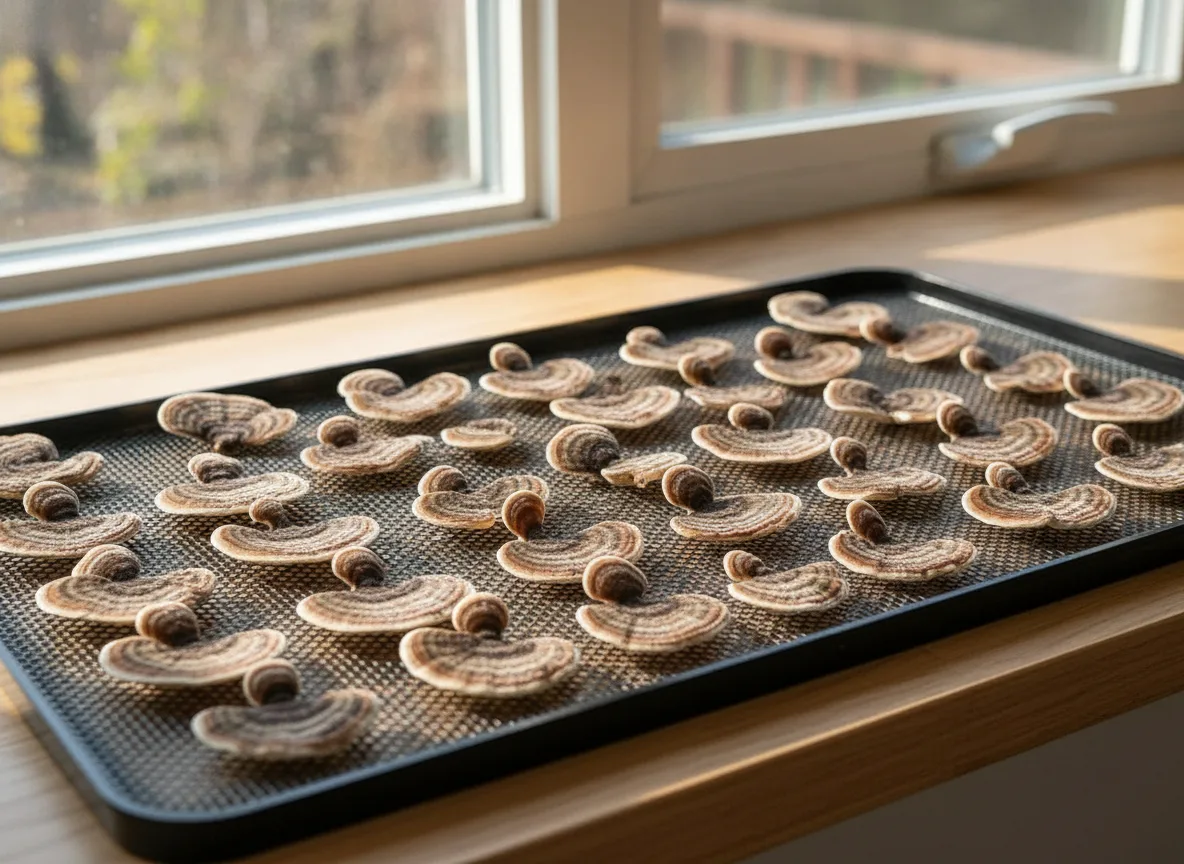
Drying is essential — turkey tail is always used dry. Spread the brackets in a single layer in a dehydrator at 45–50°C for 6–10 hours, or air-dry them in a warm, well-ventilated room until they snap cleanly. Store the dried conks in an airtight jar away from light. Properly dried, they keep for a year or more. To use them, simmer the dried brackets gently for at least an hour to draw out the water-soluble compounds.
Common Problems
Lumpy white growth instead of flat brackets. This is almost always too little fresh air (high CO₂). Increase ventilation in your fruiting space.
Logs not fruiting after a year. Either the logs dried out during a hot summer or they were inoculated too late in the season. Keep logs shaded and moist, and be patient through a second autumn.
A different fungus on your log. True turkey tail has a pored, pale underside. "False turkey tail" (Stereum species) has a smooth underside and will sometimes colonize wild wood. If the underside is smooth, that log was outcompeted — start fresh with well-sealed inoculation holes.
Frequently Asked Questions
How long does it take to grow turkey tail mushrooms?
It depends on the method. On hardwood logs, expect 6 to 12 months of colonization before the first flush, after which the log fruits every spring and fall for several years. On supplemented sawdust blocks indoors, colonization takes 2 to 4 weeks and fruiting follows within another 2 to 3 weeks — roughly two months from start to harvest.
Can you grow turkey tail indoors?
Yes. Indoor cultivation on sterilized, supplemented hardwood sawdust is faster and more predictable than the log method. The main requirements are a pressure cooker or sterilizer for the substrate and a fruiting space you can keep humid (85–95%) and well-ventilated at 15–21°C.
What is the best wood for growing turkey tail?
Turkey tail is unusually flexible. Oak, maple, birch, beech, alder, poplar, and aspen all produce good results, which makes it easier than shiitake for most Canadian growers. Use freshly cut, healthy hardwood and avoid softwoods like pine or cedar entirely.
When is turkey tail season in Ontario?
Wild turkey tail in Ontario fruits mainly from September through November, with a smaller flush in late spring. The dried brackets stay visible on logs all winter, but for tea you want fresh growth — flexible, brightly banded, with a pale pored underside. Inoculated logs follow the same schedule, fruiting in the first or second autumn after inoculation.
Is homegrown turkey tail safe to use for tea?
If you grow it from a verified turkey tail culture on clean hardwood substrate, you know exactly what you have — which is safer than foraging, where look-alikes exist. Always dry the brackets fully and simmer them in a long decoction. As with any functional mushroom, treat it as a supplement and speak to a healthcare professional about your own situation.
Start Your Turkey Tail Grow
Turkey tail is the ideal first medicinal mushroom: tough, generous, and genuinely hard to fail with. Start a log this spring and you will be harvesting for years, or run a few sawdust blocks if you want a crop this season. Browse our millet grain spawn, live cultures, and grow kits to get going, or read the complete guide to growing mushrooms in Canada for the bigger picture.
Need help with a Nature Lion kit? Start with the kit care guide, or email info@naturelion.ca with a photo and your start date. Dr. MycoTek is another option for growing questions and notes.
Kit for a log grow
Cheese Wax or Beeswax Pellets
Sealing each plug keeps moisture in and competitors out while the mycelium runs. Food-grade cheese wax melts at a workable temperature; ordinary candle wax is too brittle and flakes off outdoors.
When you buy through our links, it supports our mycology research at no extra cost to you.