
If you want to grow a serious crop of oyster mushrooms without a pressure cooker, a still-air box, or any lab equipment at all, bucket tek is where you start. It is the single most popular low-tech cultivation method in the hobby — and for good reason. A five-dollar bucket, a bale of straw, and a bag of grain spawn will produce flush after flush of fresh oyster mushrooms, often right on a patio or in a garage.
This guide walks through bucket tek from drilling the bucket to harvesting your mushrooms. It pairs well with our broader oyster mushroom growing guide, which compares bucket tek against kits, bags, and other methods.
What Is Bucket Tek?
Bucket tek is a method for growing oyster mushrooms in a five-gallon bucket using pasteurized straw as the substrate. You drill holes around the bucket, layer pasteurized straw with grain spawn inside it, let the mushroom mycelium colonize the straw, and then mushrooms fruit out of the drilled holes in dense clusters.
The reason bucket tek works without sterile technique comes down to one thing: oyster mushrooms are aggressive. Their mycelium colonizes straw so fast that it simply outraces the competing moulds and bacteria that pasteurization did not kill. You are not aiming for a perfectly sterile substrate — you are aiming for a head start, and oysters take it from there.
Why Bucket Tek Works So Well for Beginners
- No expensive equipment. No pressure canner, no flow hood. A drill and a big pot are the only "gear."
- Forgiving. Straw only needs pasteurization, not sterilization, and oyster mycelium tolerates imperfect technique.
- High yield. A full bucket holds a lot of substrate and fruits from dozens of holes, so a single bucket can produce several pounds of mushrooms across multiple flushes.
- Self-regulating temperature. The thermal mass of a packed bucket buffers temperature swings, which is genuinely helpful in a Canadian garage or basement.
What You Need
- A clean five-gallon food-safe bucket with a lid — a new bucket is best, or a well-scrubbed used one
- A drill with a 1.5–2 cm (about ⅝–¾ inch) bit
- Oyster mushroom grain spawn — Blue Oyster is the best choice for most Canadian conditions
- Wheat or oat straw — a single small bale is enough for several buckets
- A large pot, drum, or cooler for pasteurizing the straw
- A spray bottle for misting during fruiting
If you would rather skip straight to fruiting, a pre-colonized grow kit is the fastest route — but bucket tek is the better teacher, because you see the whole life cycle.
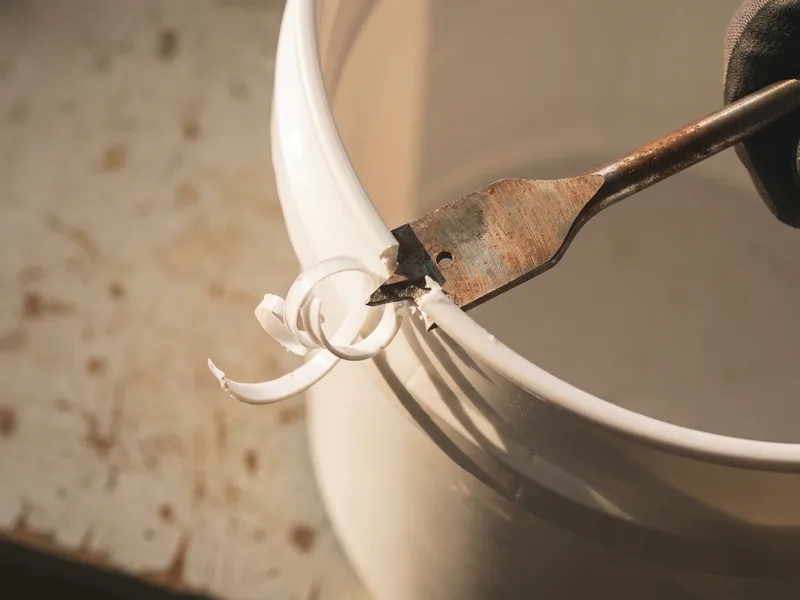
Spade Bit, 5/8 to 3/4 Inch
A 1.5 to 2 cm spade or paddle bit cuts the fruiting holes. Drill from the outside in and go slowly: fast drilling melts the plastic and leaves a ragged lip you will be deburring by hand.
When you buy through our links, it supports our mycology research at no extra cost to you.
Where to Get Spawn
Spawn is the one input you cannot improvise, and its quality decides how fast your bucket colonizes. For most Canadian rooms, basements, and garages, Blue Oyster Mushroom Spawn is the workhorse — it fruits reliably in the cool 10–21°C range. Black Oyster Mushroom Spawn is a great alternative with firm, dark-capped clusters and similar cool tolerance. For this method, measure spawn at 10% of the cooled, drained straw’s wet weight. If a bucket contains 8–10 kg of drained straw, it needs 0.8–1 kg of spawn. A 5 lb (2.27 kg) bag covers two such buckets with some left over; weigh your own straw rather than estimating from bucket count. You can compare all varieties in our mushroom spawn shop.

1 bag

6 blocks
Grow from spawn
Spawn Starter Bundle
5 lb of grain spawn plus six hardwood blocks at a forgiving 16.7% spawn rate.
How to Grow Oyster Mushrooms in a Bucket
Drill the Bucket
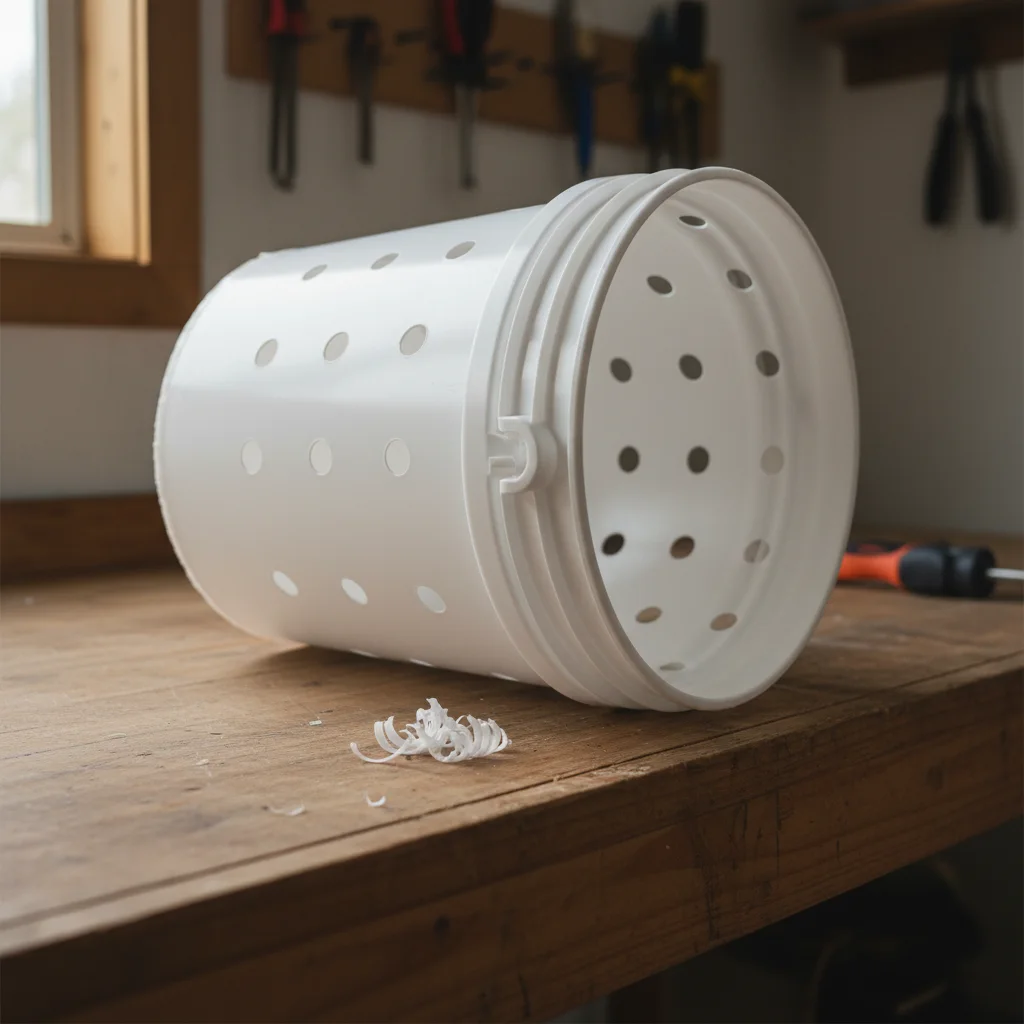
Drill 1.5–2 cm holes all around the sides of the bucket in a staggered grid — roughly 10–15 cm apart in every direction, with each row offset from the one above it. Four or five rows of five or six holes is typical. These holes do two jobs: they let fresh air reach the mycelium, and they give the mushrooms an exit point to fruit from. Keep the fruiting holes above the base and provide small drainage holes so water cannot pool. Rinse the drilled bucket clean.
Drilling the bucket
A clean food-grade 20 L pail with a lid plus a 1.5–2 cm bit is all bucket tek has ever needed, and if you already own a drill it is the cheapest route into growing there is. Budget about 20 minutes to drill and deburr. Take the time to keep the grid even: ragged or unevenly spaced holes pin unevenly, and a sharp plastic edge will find your knuckles at harvest.
What to buy
Two items, and a hardware store will do for both. These are here because people ask what to look for, not because the cheap option is wrong.
Pasteurize the Straw
Chop the straw into 5–10 cm lengths so it packs tightly, then pasteurize it. The quickest method is hot-water pasteurization: submerge the chopped straw in water held at 65–80°C for 60–90 minutes. Pasteurization reduces competing organisms while leaving the straw friendly to oyster mycelium. We cover hot-water and cold-water lime pasteurization in full in our dedicated guide on how to pasteurize straw — follow that process, then come back here.
Drain the pasteurized straw and let it cool to below 27°C. It should feel like a wrung-out sponge — damp, but not dripping when squeezed. Straw that is too wet invites bacterial souring; too dry and the mycelium stalls.
Layer Straw and Spawn
Work on a clean surface and wash your hands first. Add a 10 cm layer of pasteurized straw to the bottom of the bucket and press it down firmly. Sprinkle a handful of grain spawn across the surface, then add another packed layer of straw, then more spawn — repeat all the way up. Aim for a spawn rate of about 10% of the cooled, drained straw’s wet weight; a more generous rate colonizes faster and resists contamination better. Finish with a straw layer on top and press the whole column down firmly. Good contact between straw and spawn is what drives fast colonization.
Seal and Colonize the Bucket
Put the lid on the bucket and move it somewhere dark and room-temperature — 18–24°C is ideal. Colonization takes about two to three weeks. During this time the mycelium spreads as a web of white threads through the straw. You will start to see white mycelium peeking out of the drilled holes — that is your signal that the bucket is nearly fully colonized. White, faintly mushroom-smelling growth is healthy. Patches of green, black, or sooty grey, or a sour smell, mean contamination took hold.
Move to Fruiting Conditions
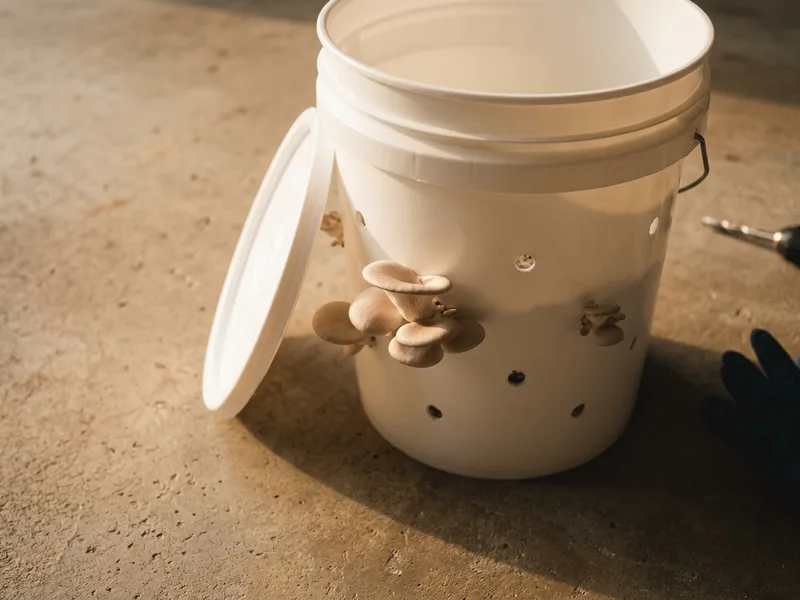
Once the straw is colonized and white mycelium shows at most of the holes, move the bucket to a fruiting spot: bright indirect light, fresh air, and humidity around 85–95%. Take the lid off, or leave it loosely resting on top. Mist the drilled holes two or three times a day with clean water — you want the surface moist, never soaked. Within a week, small pins will form at the holes and rapidly swell into recognizable oyster clusters.
Harvest Your Mushrooms
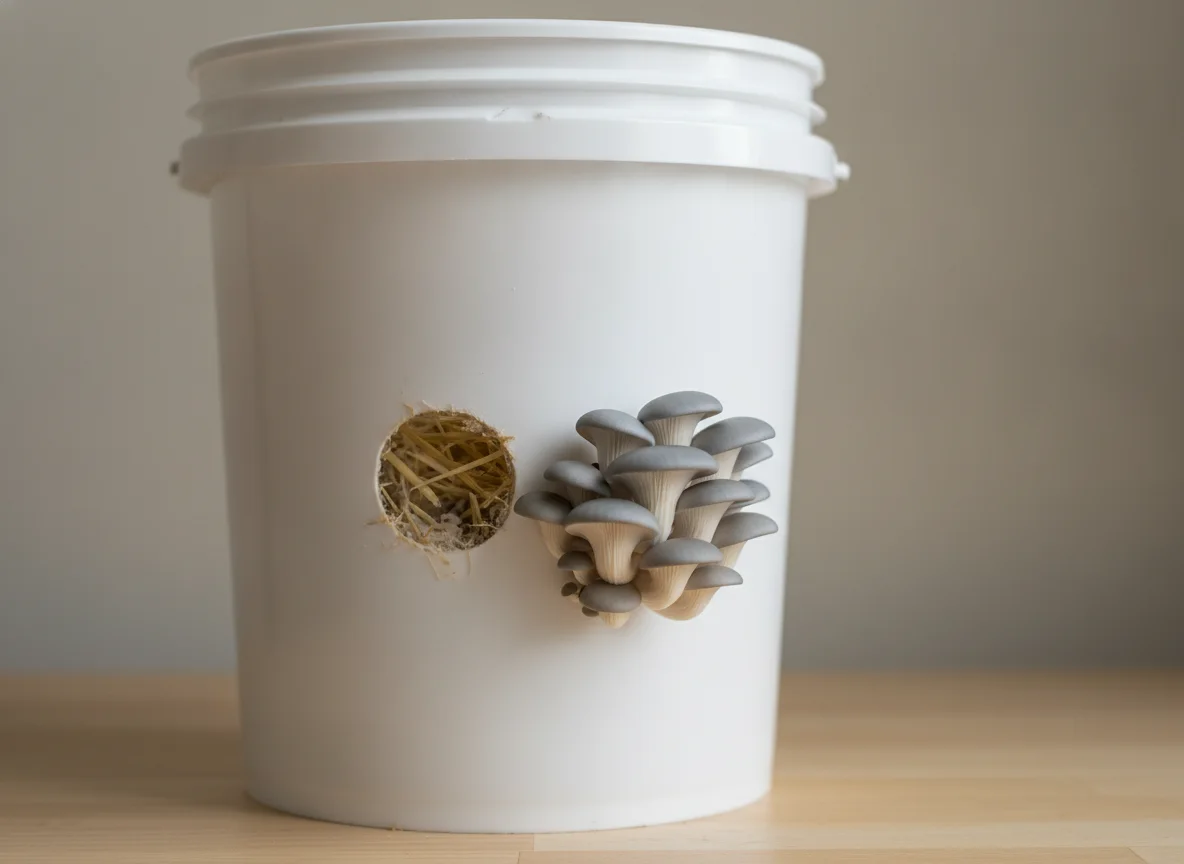
Harvest each cluster when the cap edges are still curled slightly downward — before they flatten out and turn upward. Twist the whole cluster off at the base rather than cutting, so you do not leave a stub to rot. A well-run bucket fruits from many holes at once, so expect to harvest over a few days as different clusters mature.
Getting Multiple Flushes
A bucket is not done after one harvest. After the first flush, keep misting and give the bucket a few days of rest — a second flush usually appears within one to two weeks. If the straw feels light and dry, rehydrate the whole bucket: submerge it in cold water for a couple of hours, drain it fully, and return it to fruiting conditions. Most buckets give two or three solid flushes, and an attentive grower can sometimes coax a fourth before yields taper off. When flushes become small and sparse, retire the spent straw — it makes excellent garden compost.
How Much Will a Bucket Yield?
A well-packed five-gallon bucket holds roughly 8–10 kg of wet pasteurized straw. Here is what a realistic harvest looks like across flushes:
| Flush | Typical yield (fresh) | When to expect it |
|---|---|---|
| First flush | 700–900 g | 1–2 weeks after moving to fruiting conditions |
| Second flush | 300–450 g | 1–2 weeks after the first harvest |
| Third flush | 150–250 g | 1–2 weeks later, often after a rehydration dunk |
Total yield of 1.2–1.6 kg per bucket is a solid result for a first grow. In cultivation terms this is measured as biological efficiency — fresh mushroom weight as a percentage of the substrate's dry weight. Hobby buckets typically land in the 50–75% range, while dialled-in growers with fresh spawn and well-pasteurized straw can push past 100%. If your first bucket comes in under these numbers, the troubleshooting section below covers the usual causes.
Food-Grade 5 Gallon Bucket with Lid
Food-grade HDPE matters because you are keeping damp organic matter in it for weeks. A plain pail from a hardware store is perfectly good and usually cheaper; a screw-on gamma lid is a convenience, not a requirement.
When you buy through our links, it supports our mycology research at no extra cost to you.
Troubleshooting Bucket Tek
Green or black mould. This is Trichoderma or another competitor that beat the oysters. Common causes are under-pasteurized straw, straw that was too wet, or too little spawn. Discard a heavily contaminated bucket — do not try to fruit it — and increase your spawn rate next time. For photos and a full identification walkthrough, see our guide to green mould contamination.
Long, leggy stems with tiny caps. Not enough fresh air. High CO₂ makes oysters stretch toward oxygen. Move the bucket somewhere more open or improve ventilation in the room.
Pins forming but drying out and aborting. Humidity is too low. Mist more often, or set the bucket inside a loose humidity tent of clear plastic to hold moisture around the holes.
No pins after two weeks in fruiting conditions. The bucket may need more fresh air and light to trigger pinning, or the room may be outside the species' temperature range. Confirm you are using a cool-tolerant variety like Blue Oyster if your space sits in the 15–20°C range.
Pins forming under the lid or out the bottom instead of the side holes. The mycelium fruits wherever it finds fresh air, so gaps at the lid or bottom drainage holes can out-compete your drilled holes. Snug the lid down, keep drainage holes clear, and make sure the drilled holes get regular misting and airflow so they stay the most attractive exit.
Dry, crusty substrate surface at the holes. If the straw visible in the holes looks pale and papery, the surface has dried past the point where pins can form. Step up misting to three or four times a day, or tent the bucket loosely with clear plastic (with gaps for airflow) to hold humidity. If the whole bucket feels light, do a full cold-water dunk for a couple of hours, drain, and return it to fruiting.
Frequently Asked Questions
How long does bucket tek take?
From start to first harvest, budget about four to five weeks: two to three weeks for the mycelium to colonize the straw, then roughly one to two weeks in fruiting conditions for pins to form and mature. After that, each additional flush comes every one to two weeks.
Can you do bucket tek without drilling holes?
Drilling is strongly recommended. The holes provide the fresh-air exchange the mycelium needs and give the mushrooms a defined place to fruit. Without holes, oysters will still try to fruit — but they will force their way out of the lid gap or any seam, producing fewer, more deformed clusters. Allow about 20 minutes to drill, smooth the edges and clean the bucket.
What is the best spawn for bucket tek?
Oyster grain spawn is the standard choice because grain spawn colonizes straw quickly and evenly. For most Canadian growers, Blue Oyster is the best variety — it fruits well in the cool 10–21°C range typical of homes, basements, and garages. Pink Oyster is an excellent summer option if your space stays above 20°C.
Can I grow bucket tek outdoors in Canada?
Yes — bucket tek is well suited to Canadian summers. Set the colonized bucket in full shade on a porch or under a tree, where ambient humidity often does much of the misting for you. Avoid direct sun, which dries and overheats the bucket, and bring it in or insulate it once nights turn cold in the fall.
How many holes should I drill, and what size?
Aim for 20–30 holes of 1.5–2 cm (about ⅝–¾ inch) in a staggered grid, roughly 10–15 cm apart, keeping the fruiting holes above the base, with small drainage holes below. Fewer, larger holes produce fewer but bigger clusters; more, smaller holes spread the harvest out. Anywhere in that range works — hole count is not what makes or breaks a bucket.
Can I use hardwood pellets instead of straw?
Yes. Hardwood fuel pellets hydrated with boiling water are a tidy, low-odour alternative to straw and need no separate pasteurization step. They pack denser than straw, so expect slower colonization but comparable yields. We cover the full process in our guide to growing mushrooms on hardwood pellets.
Can I reuse the bucket for the next grow?
Absolutely — the bucket is the reusable part of bucket tek. Empty the spent straw into the compost, scrub the bucket with hot soapy water, rinse well, and let it dry fully before refilling. If the previous grow contaminated, add a wipe-down with diluted bleach (about 1:10) and a thorough rinse before reuse.
When exactly should I harvest?
Watch the cap edges. Harvest the whole cluster while the edges still curl slightly downward or have just flattened — once they flip upward and the edges ripple, the mushrooms are past their best and will start dropping spores. Checking twice a day near the end matters: oysters can go from perfect to overgrown in 24 hours.
Start Your First Bucket
For more home projects, browse the home-growing guide. Record the straw and spawn weights, mixing date and each harvest. Photos on your phone or an optional oyster grow diary can help you compare attempts.
Bucket tek is the method that turns curious beginners into committed mushroom growers. It is cheap, it is hard to truly fail, and the payoff — a bucket bristling with fresh oyster clusters — is genuinely satisfying. Pick up some oyster grain spawn and growing supplies to get started, or read the complete guide to growing mushrooms in Canada for the full picture.
Need help with a Nature Lion kit? Start with the kit care guide, or email info@naturelion.ca with a photo and your start date. Dr. MycoTek is another option for growing questions and notes.