
Newfoundland & Labrador and Prince Edward Island are very different foraging landscapes — but they share enough Atlantic character to cover in one guide. Newfoundland has extensive boreal forest, a long cool fall, and a thriving (if quiet) foraging tradition. Labrador adds subarctic taiga and tundra-edge species to the mix. PEI is mostly farmland with surviving fragments of Acadian forest — limited public land, but rich pasture and shelterbelt edges that produce shaggy manes and giant puffballs in good years.
This guide covers where you can legally forage across NL and PEI, what's in season month by month, and the toxic lookalikes to know.
Newfoundland & Labrador + PEI Foraging Calendar
What's fruiting in Newfoundland & Labrador + PEI — tap a month to see the species.
October in Newfoundland & Labrador + PEI
10 species fruiting
Giant Puffball
Calvatia gigantea
Pasture and field edges — PEI's farmland is actually quite productive for puffballs in good years. Pure white inside is essential.
View this species on Dr. MycoTek →Hedgehog Mushroom
Hydnum repandum
★ Peak season right now
NL's mixed-wood forests. Spines instead of gills — no deadly lookalikes. Best species for new Atlantic Canada foragers.
View this species on Dr. MycoTek →King Bolete (Porcini)
Boletus edulis
Spruce-fir forests across Newfoundland and southern Labrador. Cool maritime climate produces firm, dense specimens. Spongy pores, never gills.
View this species on Dr. MycoTek →Lion's Mane
Hericium erinaceus
★ Peak season right now
At the eastern edge of its Canadian range — rare in Newfoundland, occasional in surviving PEI hardwood remnants. White waterfall shape; no deadly lookalikes.
View this species on Dr. MycoTek →Saffron Milk Cap
Lactarius deliciosus
Pine plantations and natural pine stands in southern NL and the PEI National Park area (adjacent Crown / municipal land only).
View this species on Dr. MycoTek →Shaggy Mane
Coprinus comatus
Lawns, gravel road edges, disturbed soil. Common in both NL settlements and PEI farmland edges. Eat the same day you pick.
View this species on Dr. MycoTek →Wild Oyster Mushroom
Pleurotus ostreatus
★ Peak season right now
Fallen aspen and balsam poplar throughout Newfoundland's mixed-wood forest. Best texture from cool fall flushes.
View this species on Dr. MycoTek →Birch Bolete
Leccinum scabrum
Fruits only near birch. Found through NL's interior and Labrador's southern birch stands.
View this species on Dr. MycoTek →Chaga
Inonotus obliquus
Year-round on living birch in Newfoundland's interior and southern Labrador. Strong populations on yellow and white birch. Harvest sparingly.
View this species on Dr. MycoTek →Honey Mushroom
Armillaria mellea group
★ Peak season right now
Clusters at the base of dying hardwoods and conifers. Cook very thoroughly. Confirm against the deadly Galerina marginata on the same wood.
View this species on Dr. MycoTek →Year at a glance
The Legal Framework
Newfoundland and Labrador
Crown Land
Approximately 88% of Newfoundland and Labrador is provincial Crown land, administered by the Department of Fisheries, Forestry and Agriculture. Personal-use harvesting of non-timber forest products — including mushrooms — is generally permitted on Crown land without a permit.
Key rules:
- Personal use does not require a permit. Commercial harvesting requires authorisation.
- Forest tenure agreements cover much of the boreal Crown land — watch for active logging.
- Leave no trace.
Provincial Parks
NL provincial parks generally prohibit the removal of natural objects, including mushrooms. Notable examples: Gros Morne (also a national park), Terra Nova (also a national park), and the provincial parks at Notre Dame, Butter Pot, and elsewhere.
National Parks
Gros Morne, Terra Nova, and Torngat Mountains National Parks strictly prohibit foraging.
Indigenous Territory
Newfoundland and Labrador encompass the traditional territories of the Mi'kmaq (Ktaqmkuk on the island), the Innu (Nitassinan in Labrador), the Inuit (Nunatsiavut in northern Labrador), and the Southern Inuit (NunatuKavut). Respect Indigenous harvesting rights and protocols.
Prince Edward Island
Public Land
PEI has very limited Crown land — most land is privately owned. The Province of PEI manages some forested areas including the Bonshaw Hills, the Brookvale area, and the Forest Heritage Lands. Personal-use foraging is generally permitted on provincial Crown land but public land is scarce, so private-land permission is essential for most PEI foraging.
Provincial Parks
PEI provincial parks generally prohibit the removal of natural objects.
National Park
Prince Edward Island National Park (Greenwich, Cavendish, Brackley-Dalvay) strictly prohibits foraging.
Private Land
Permission required. PEI's Trespass to Property Act applies. The good news: many rural PEI landowners are generous about granting foraging access if you ask respectfully — particularly for shaggy manes and puffballs that pop up on their pasture edges.
Indigenous Territory
PEI is Mi'kma'ki — the traditional unceded territory of the Mi'kmaq Nation, covered by the Peace and Friendship Treaties.
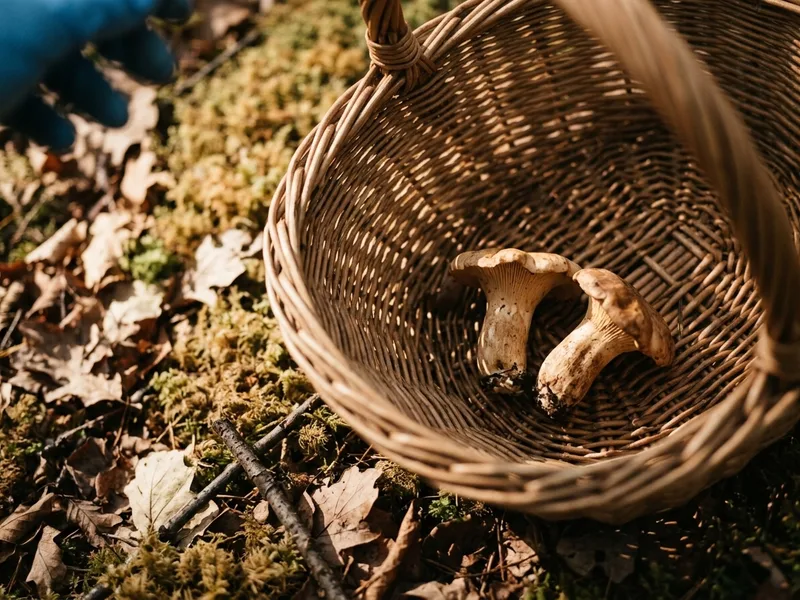
Wicker Foraging Basket
An open weave lets spores drop back through as you walk, which a plastic bag does not, and it stops a soft cap being crushed under everything picked after it. Size it to the walk, not the best day you have ever had.
When you buy through our links, it supports our mycology research at no extra cost to you.
Foraging Regions
Newfoundland Interior — Boreal Forest
Central and northern Newfoundland — Grand Falls-Windsor, Gander, Bonavista Peninsula interior, Baie Verte Peninsula. Black spruce, balsam fir, white birch, yellow birch. The most productive foraging zone in Atlantic Canada outside of mainland Nova Scotia.
Best species: Chanterelles, king boletes, hedgehogs, lobster mushrooms, honey mushrooms, chaga on birch.
Avalon Peninsula
Eastern Newfoundland around St. John's and the Avalon. Mixed-wood forest with strong oceanic influence. Cooler, foggier, with extended fall fruiting.
Best species: Chanterelles, hedgehogs, oysters on fallen aspen, shaggy manes around settlements.
Labrador
Subarctic boreal in the south (Happy Valley-Goose Bay, the Churchill River valley), taiga and tundra-edge to the north. Black spruce, balsam fir, dwarf birch. Short, intense season — July through early September.
Best species: Black morels in burns, king boletes, birch boletes, chaga on yellow and white birch, occasional hedgehogs in southern Labrador mixed-wood.
PEI — Farmland and Acadian Remnants
Most of PEI is cleared farmland with shelterbelts and small woodlots. The surviving Acadian forest patches (Bonshaw Hills, parts of the Forest Heritage Lands) hold chanterelles and hedgehogs in good years. Pasture edges across the province are productive for shaggy manes and giant puffballs.
Best species: Shaggy manes, giant puffballs, chanterelles in surviving forest patches, occasional yellow morels in old orchard areas.
What to take with you
Foraging needs very little kit, and the three things that matter each do a different job: carry the find without crushing it, cut it without damaging what is left behind, and clean it dry.
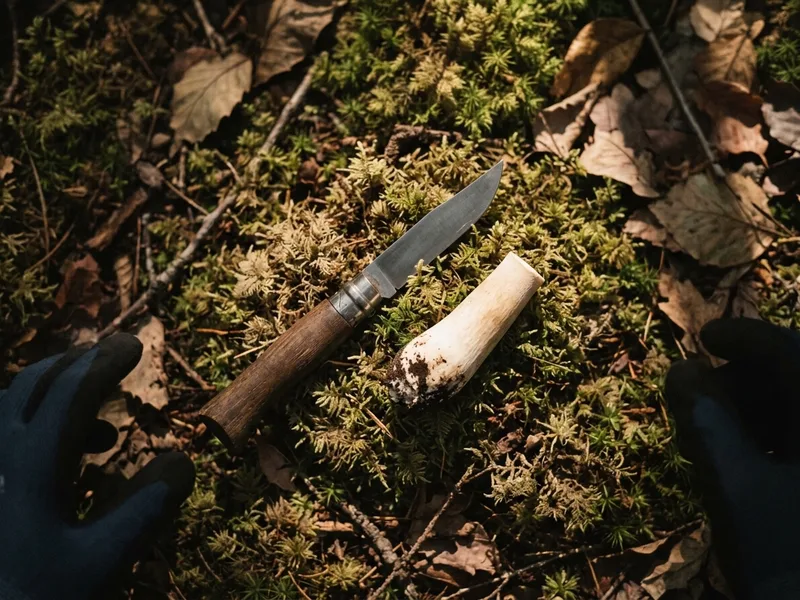
Opinel No. 08 Mushroom Knife
A curved blade cuts the stem cleanly at the base instead of tearing the mycelium out with it, and the boar bristle brush is set into the handle so cleaning happens in the field rather than at the sink.
When you buy through our links, it supports our mycology research at no extra cost to you.
Species by Season
Spring (May - June)
Black Morels (Morchella angusticeps) — Central Newfoundland mixed-wood forests, especially in the year after a wildfire. Cool spring delays peak compared to mainland Canada.
Yellow Morels (Morchella esculenta) — Limited but present in southern Newfoundland orchard country and PEI shelterbelt edges.
Wild Oyster Mushrooms (Pleurotus ostreatus) — Fallen aspen and balsam poplar in NL's mixed-wood forests. If you can't get out, you can grow oysters at home year-round with a grow kit or grain spawn.
Summer (July - August)
Golden Chanterelles (Cantharellus cibarius) — Newfoundland's signature wild edible. Mossy slopes under balsam fir and yellow birch. The central interior produces excellent harvests. Rare in PEI but possible in surviving Acadian forest remnants.
King Bolete (Porcini) (Boletus edulis) — Spruce-fir forests of NL and southern Labrador. Cool maritime climate produces firm, dense specimens.
Birch Bolete (Leccinum scabrum) — Only fruits near birch. Found through NL's interior and Labrador's southern birch stands.
Lobster Mushroom (Hypomyces lactifluorum) — Less common in Atlantic Canada than in the central provinces, but present in NL's mixed-wood forest.
Fall (September - November)
Saffron Milk Cap (Lactarius deliciosus) — Pine plantations in southern NL.
Hedgehog Mushroom (Hydnum repandum) — NL's mixed-wood forests. Spines, not gills — no deadly lookalikes.
Honey Mushrooms (Armillaria group) — Clusters on dying hardwoods and conifers. Cook thoroughly. Confirm against the deadly Galerina marginata.
Shaggy Mane (Coprinus comatus) — Lawns and gravel road edges. Common in both NL settlements and PEI farmland edges.
Giant Puffball (Calvatia gigantea) — Pasture and field edges — PEI's farmland is genuinely productive for puffballs in good years.
Lion's Mane (Hericium erinaceus) — Eastern edge of its Canadian range. Rare in NL, occasional in PEI hardwood remnants.
Winter and Year-Round
Chaga (Inonotus obliquus) — Newfoundland's interior and southern Labrador hold excellent chaga populations on yellow and white birch. Year-round, easiest after leaf-fall. Harvest sparingly.
Toxic Look-alikes Every Atlantic Forager Must Know
False Morel (Gyromitra esculenta) — Brain-like cap (not honeycomb), solid or chambered inside (true morels are completely hollow). Contains gyromitrin — there is no safe home preparation.
Destroying Angel (Amanita bisporigera and A. virosa) — All-white mushroom with cup-like volva at the base and a ring on the stem. White spore print. Found across NL and PEI mixed forests. Causes irreversible liver failure.
Galerina marginata — Small brown mushroom in clusters on dead wood, often alongside honey mushrooms. Same amatoxins as the destroying angel.
Jack-O'-Lantern (Omphalotus illudens) — Orange clusters on hardwood stumps. Sometimes confused with chanterelles or chicken of the woods. Has true gills (not pores or false gills), grows from wood, glows faintly in the dark.
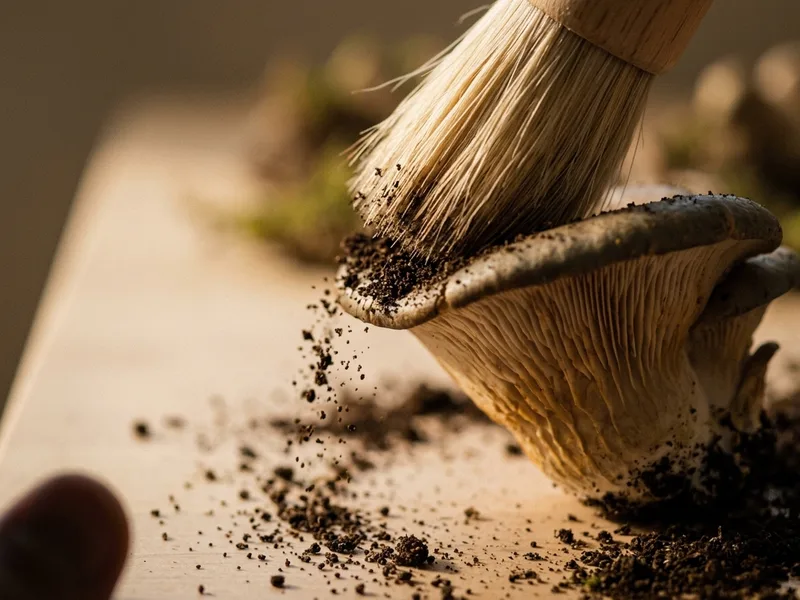
Redecker Natural Pig Bristle Mushroom Brush
Soft enough to take soil off a cap without tearing the skin. Mushrooms absorb water, so brushing dry beats rinsing every time, and anything you plan to dry has to be cleaned this way.
When you buy through our links, it supports our mycology research at no extra cost to you.
Community and Resources
- Foray Newfoundland and Labrador — annual foray weekend, the main organised gathering for NL foragers.
- Mycological Society of Atlantic Canada (MSAC) — regional society covering all four Atlantic provinces. Forays and an annual fall mushroom show.
- iNaturalist — Filter to Newfoundland and Labrador or to Prince Edward Island to see what's currently fruiting in your region.
- Mushroom Observer — Specialised mushroom platform.
Growing Gourmet and Medicinal Mushrooms
Most people who forage for a season start wondering whether they can grow the same species deliberately. This is the standard cultivation reference, with substrate, spawn and fruiting conditions worked through species by species. A different book from a field guide and worth owning alongside one.
When you buy through our links, it supports our mycology research at no extra cost to you.
Sustainable Foraging
- Take only what you'll use.
- Leave a third behind.
- Don't rake the duff.
- Cut, don't pull.
- Vary your spots within a season.
Edible and Medicinal Mushrooms of New England and Eastern Canada
A photographic key to the species you will actually meet in eastern Canada, organised by what the mushroom looks like rather than by taxonomy. The regional focus is the point: a guide written for another continent shows you the wrong look-alikes.
When you buy through our links, it supports our mycology research at no extra cost to you.
Getting Started in NL or PEI
- Connect with Foray Newfoundland and Labrador or the Mycological Society of Atlantic Canada.
- Start with the foolproof species — chanterelles, hedgehogs, shaggy manes, giant puffballs. All have no deadly lookalikes when properly identified.
- Get a regional field guide. Mushrooms of Northeast North America by George Barron is the standard reference for both NL and PEI.
- Use iNaturalist to confirm IDs and see what's currently fruiting.
- Three independent confirmations before eating any new species.
If the off-season has you missing fresh mushrooms, you can grow gourmet species year-round at home — long Atlantic winters mean indoor cultivation is a 12-month proposition. Browse our grow kits, grain spawn, and growing supplies. And see our companion guides for Nova Scotia, New Brunswick, Quebec, and Ontario.