
Nova Scotia is one of Canada's quietly excellent foraging destinations. The Acadian forest — a transitional mix of red spruce, balsam fir, yellow birch, sugar maple, beech, and hemlock — produces an extraordinary mushroom diversity, the mild maritime climate extends the season later than central Canada, and Cape Breton's subalpine highlands add a layer of cooler-climate species you won't find in the warmer mainland. Add the long-established Annapolis Valley orchard country for spring morels and you have a province that punches well above its size for wild edible mushrooms.
This guide covers where you can legally forage in Nova Scotia, what's in season month by month, and the toxic lookalikes to know.
Nova Scotia Foraging Calendar
What's fruiting in Nova Scotia — tap a month to see the species.
October in Nova Scotia
12 species fruiting
Chicken of the Woods
Laetiporus sulphureus
Bright orange shelves on hardwoods. Young soft edges only — older specimens cause stomach upset.
View this species on Dr. MycoTek →Giant Puffball
Calvatia gigantea
Pasture and field edges. Must be pure white inside — yellow or olive means past edible.
View this species on Dr. MycoTek →Golden Chanterelle
Cantharellus cibarius
Nova Scotia's signature wild edible. Mossy slopes in mixed Acadian forest — especially under yellow birch, hemlock, and red spruce. Cape Breton produces some of the heaviest harvests in the Maritimes.
View this species on Dr. MycoTek →Hedgehog Mushroom
Hydnum repandum
★ Peak season right now
Acadian mixed forests. Spines instead of gills underneath — no deadly lookalikes. Excellent species for new Nova Scotia foragers.
View this species on Dr. MycoTek →Hen of the Woods (Maitake)
Grifola frondosa
★ Peak season right now
Mainland hardwood country — at the eastern edge of this species' Canadian range. Returns to the same oak year after year.
View this species on Dr. MycoTek →King Bolete (Porcini)
Boletus edulis
Spruce-fir forests of the Cape Breton Highlands and the mainland interior. Spongy pores, never gills. Confirm against bitter bolete.
View this species on Dr. MycoTek →Lion's Mane
Hericium erinaceus
★ Peak season right now
Beech, maple, and oak hardwoods. Waterfall-shaped fruit — no deadly lookalikes.
View this species on Dr. MycoTek →Saffron Milk Cap
Lactarius deliciosus
Pine plantations and natural pine stands. Bleeds orange-red latex when cut.
View this species on Dr. MycoTek →Shaggy Mane
Coprinus comatus
★ Peak season right now
Lawns, gravel road edges, disturbed soil. Eat the same day you pick.
View this species on Dr. MycoTek →Wild Oyster Mushroom
Pleurotus ostreatus
★ Peak season right now
Fallen aspen, beech, and maple throughout the season. Mild maritime winters mean late-season flushes are routine.
View this species on Dr. MycoTek →Chaga
Inonotus obliquus
Year-round on living birch — Cape Breton and the mainland interior hold good chaga populations on yellow and white birch. Harvest sparingly.
View this species on Dr. MycoTek →Honey Mushroom
Armillaria mellea group
★ Peak season right now
Clusters at the base of dying hardwoods. Cook very thoroughly. Confirm against the deadly Galerina marginata on the same wood.
View this species on Dr. MycoTek →Year at a glance
The Legal Framework
Crown Land
About one-third of Nova Scotia is provincial Crown land, administered by the Department of Natural Resources and Renewables. Personal-use harvesting of non-timber forest products — including mushrooms — is generally permitted on Crown land without a permit.
Key rules:
- Personal use does not require a permit. Commercial harvesting requires authorisation.
- Active forestry tenures cover significant Crown land — be mindful of logging operations.
- Leave no trace.
Provincial Parks
Nova Scotia Provincial Parks generally prohibit the removal of natural objects, including mushrooms. Notable examples: Kejimkujik (also a national park), Cape Chignecto, and the Cabot Trail provincial parks.
Adjacent Crown land usually offers similar habitat without the no-harvest rules.
National Parks
Kejimkujik National Park and Cape Breton Highlands National Park strictly prohibit foraging.
Private Land
Permission required. Nova Scotia's Protection of Property Act applies.
Mi'kma'ki
Nova Scotia is entirely within Mi'kma'ki — the traditional unceded territory of the Mi'kmaq Nation, covered by the Peace and Friendship Treaties. Respect Mi'kmaw harvesting rights and protocols. If on reserve land, seek permission from the band council.
Three Foraging Regions
Cape Breton
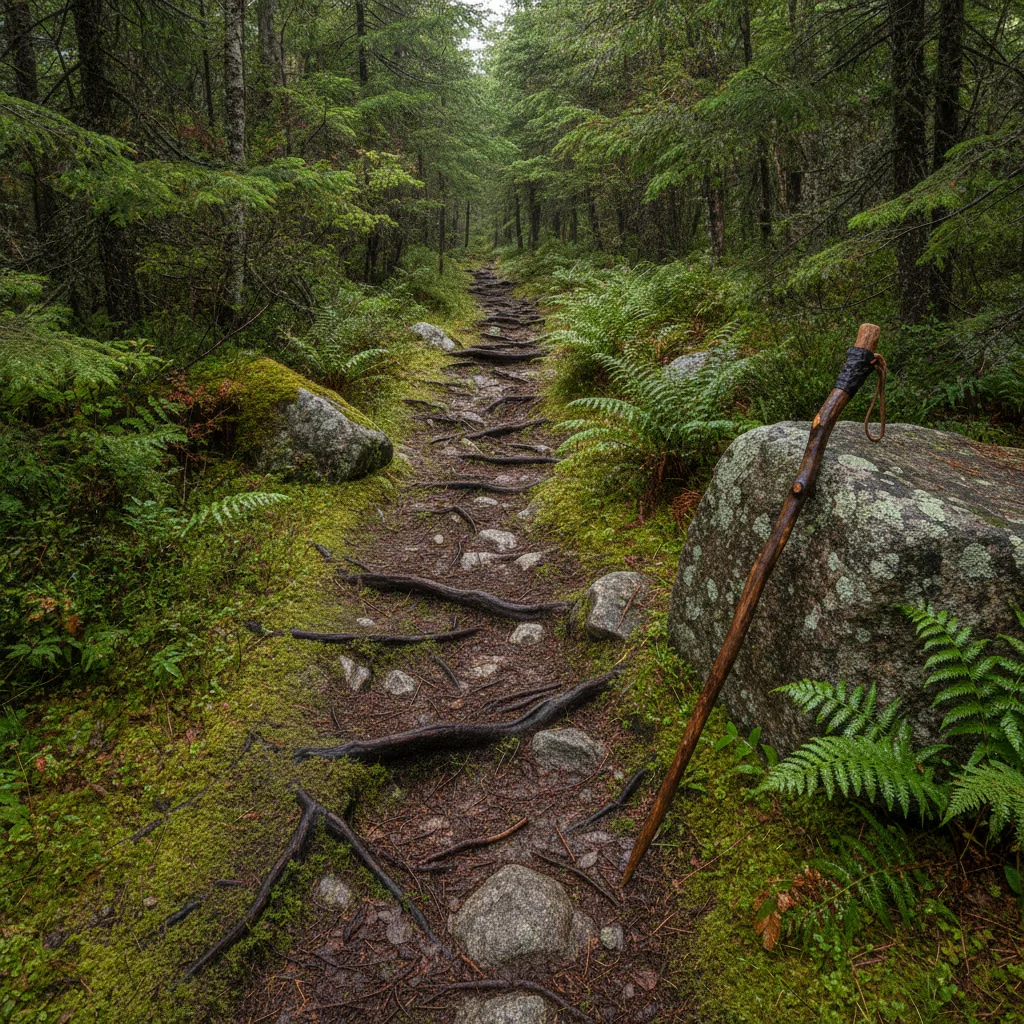
The northern half of Cape Breton — Cape Breton Highlands, Inverness County, Margaree Valley — has the most boreal-influenced forest in Nova Scotia and some of the heaviest chanterelle and lobster mushroom flushes. Cooler summers, longer fall, more boreal conifer.
Best species: Golden chanterelles (heavy flushes through August and September), lobster mushrooms, hedgehog mushrooms, king boletes at higher elevations, lion's mane, chaga.
Mainland Highlands and Acadian Interior
The mainland's inland areas — the Cobequid Hills, Pictou County, Antigonish, the South Shore interior, the Kejimkujik area — sit firmly in the Acadian forest zone. Mixed sugar maple, yellow birch, hemlock, and red spruce make for diverse foraging.
Best species: Chanterelles, black trumpets in beech-maple stands, chicken of the woods, hen of the woods at the eastern edge of its range, lion's mane, hedgehogs, honey mushrooms.
Annapolis Valley and Coastal Lowlands
The Annapolis Valley's apple orchard country is morel territory in spring — old orchards (working or abandoned), cottonwood bottomlands along the Annapolis and Cornwallis rivers, and dying elms produce excellent yellow morel flushes. The rest of the coastal lowlands trend toward pasture mushrooms (shaggy manes, giant puffballs) and pine-plantation species (saffron milk caps).
What to take with you
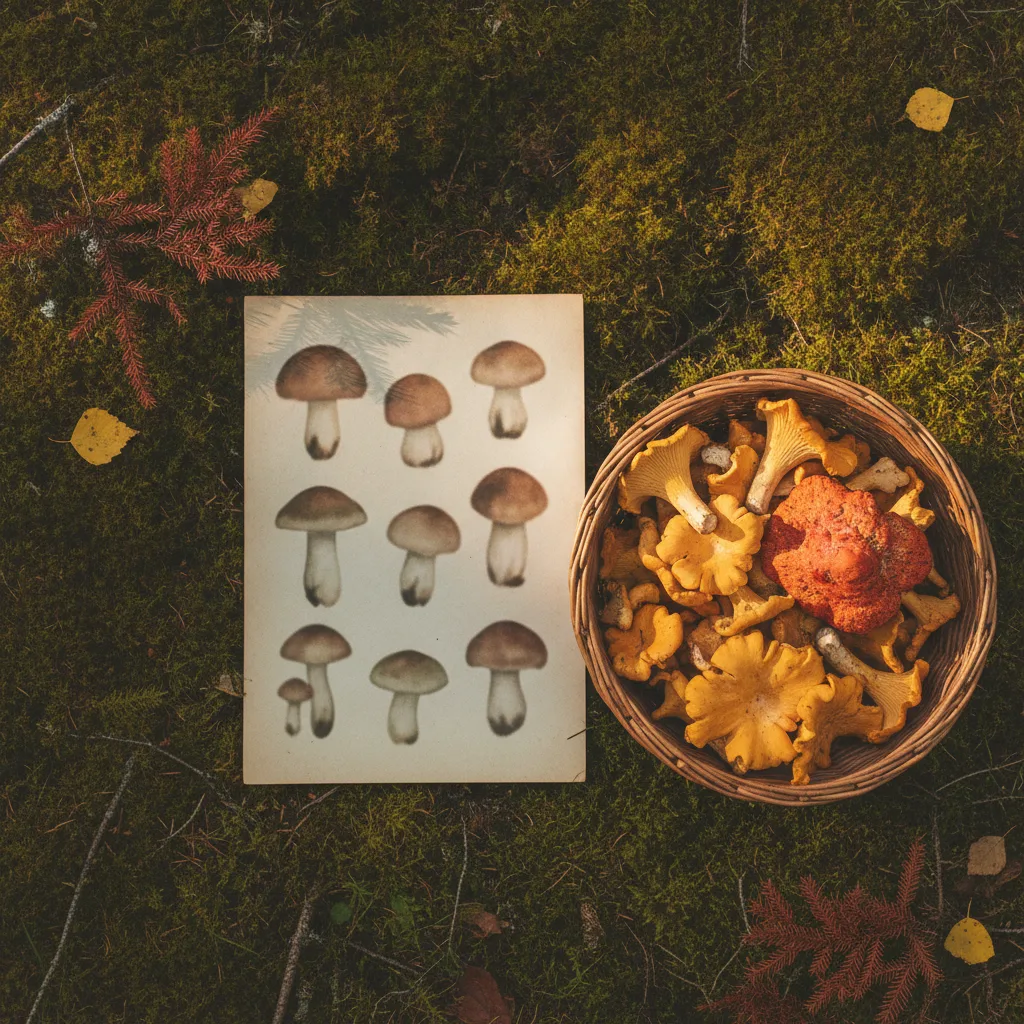
Foraging needs very little kit, and the three things that matter each do a different job: carry the find without crushing it, cut it without damaging what is left behind, and clean it dry.
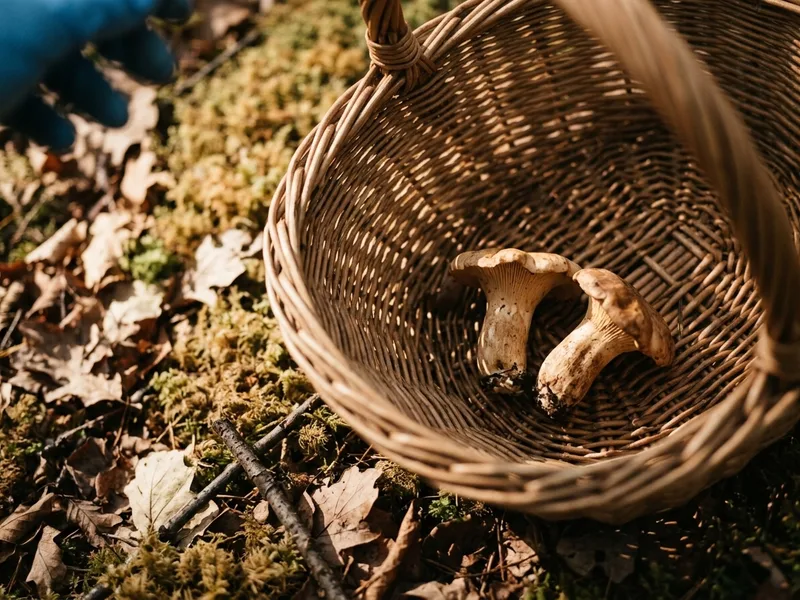
Wicker Foraging Basket
An open weave lets spores drop back through as you walk, which a plastic bag does not, and it stops a soft cap being crushed under everything picked after it. Size it to the walk, not the best day you have ever had.
When you buy through our links, it supports our mycology research at no extra cost to you.
Species by Season
Spring (May - June)
Yellow Morels (Morchella esculenta) — Annapolis Valley orchard country is Atlantic Canada's morel hub. Old apple orchards, cottonwood flats, and dying elm areas. Always cook thoroughly.
Black Morels (Morchella angusticeps) — Less common in NS than yellow morels. Mixed-wood Acadian forests and burn areas.
Dryad's Saddle (Cerioporus squamosus) — Polypore on dead hardwoods. Young, cucumber-scented specimens only.
Wild Oyster Mushrooms (Pleurotus ostreatus) — Spring flushes on fallen aspen and maple. If you want fresh oysters year-round, you can grow them at home with a grow kit or grain spawn.
Summer (July - August)
Golden Chanterelles (Cantharellus cibarius) — NS's signature wild edible. Mossy slopes in mixed Acadian forest, especially under yellow birch and red spruce. Cape Breton's chanterelle flushes can fill a basket in an afternoon.
Black Trumpets (Craterellus cornucopioides) — Beech-maple forests of the mainland uplands. Dark and easy to miss — slow down and scan.
Chicken of the Woods (Laetiporus sulphureus) — Hardwoods. Young soft edges only.
Lobster Mushroom (Hypomyces lactifluorum) — Common across the Acadian forest. Bright orange, firm, seafood-flavoured.
Fall (September - November)
This is Nova Scotia's main season — the mild maritime fall keeps the woods productive well into November.
King Bolete (Porcini) (Boletus edulis) — Spruce-fir forests of the Cape Breton Highlands and the mainland interior. Confirm against bitter bolete.
Saffron Milk Cap (Lactarius deliciosus) — Pine plantations and natural pine stands. Strong Eastern European tradition in some Halifax-area foragers.
Hedgehog Mushroom (Hydnum repandum) — Acadian mixed forests. Spines, not gills — no deadly lookalikes.
Hen of the Woods (Maitake) (Grifola frondosa) — Mainland hardwood country, at the eastern edge of this species' Canadian range. Returns to the same oak year after year.
Lion's Mane (Hericium erinaceus) — Hardwoods. Waterfall-shaped — no deadly lookalikes.
Honey Mushrooms (Armillaria group) — Clusters on dying hardwoods. Cook thoroughly. Confirm against the deadly Galerina marginata.
Shaggy Mane (Coprinus comatus) — Lawns and gravel road edges. Eat the same day.
Giant Puffball (Calvatia gigantea) — Pasture and field edges. Pure white inside is essential.
Winter and Year-Round
Chaga (Inonotus obliquus) — Cape Breton and the mainland interior hold good populations on yellow and white birch. Easiest to spot after leaf-fall. Harvest sparingly.
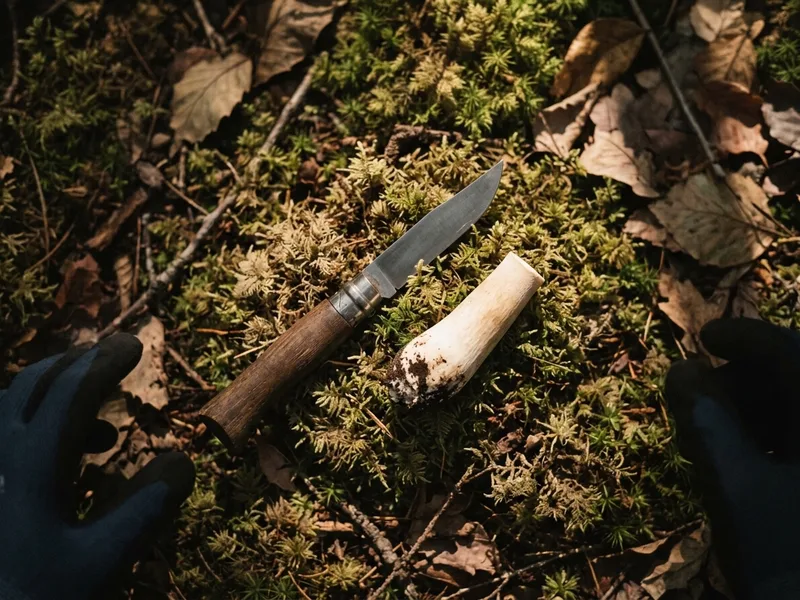
Opinel No. 08 Mushroom Knife
A curved blade cuts the stem cleanly at the base instead of tearing the mycelium out with it, and the boar bristle brush is set into the handle so cleaning happens in the field rather than at the sink.
When you buy through our links, it supports our mycology research at no extra cost to you.
Edible Mushrooms of Nova Scotia: Identification Chart
A quick-reference chart for the province's most-foraged edible species. Confirm every find against multiple features and a regional field guide — this table is a starting point, not a green light.
Download the free printable chart (PDF) – 8.5x11, made to print and tuck into your foraging basket.
| Species | Season in NS | Habitat | Key ID Features | Dangerous Look-alike | Edibility |
|---|---|---|---|---|---|
| Golden chanterelle (Cantharellus cibarius group) | Mid-Jul – Sep, peak Aug | Mossy slopes in mixed Acadian forest under yellow birch and red spruce; Cape Breton Highlands flush heavily | Egg-yolk yellow; false gills (blunt, forking ridges) running down the stem; apricot smell; solid white flesh | Jack-o'-lantern (true sharp gills, dense clusters on wood) | Choice |
| Lobster mushroom (Hypomyces lactifluorum) | Late Jul – Sep | Mixed Acadian forest floor, often near hemlock and spruce, common across the mainland and Cape Breton | Hard, pimpled orange-red crust over dense white flesh; no visible gills; seafood smell | Deteriorated or soft specimens; pick only firm, bright ones | Good; cook well |
| Hedgehog mushroom (Hydnum repandum, H. umbilicatum) | Sep – Nov | Mossy conifer and mixed Acadian forest | Orange-tan cap with soft spines underneath instead of gills | None; the spines are definitive | Choice |
| Black trumpet (Craterellus fallax) | Jul – Sep | Beech and sugar maple stands of the mainland uplands, mossy slopes | Grey-black, thin-fleshed trumpet; no true gills; smoky-sweet smell | None serious in Nova Scotia | Choice |
| King bolete / porcini (Boletus edulis group) | Sep – Oct | Spruce-fir forest of the Cape Breton Highlands and the mainland interior | Brown bun cap; white-then-olive pores; fine white netting on a thick stem; flesh does not stain blue | Bitter bolete (pink pores, dark netting); avoid all red-pored or blue-staining boletes | Choice |
| Birch bolete (Leccinum scabrum group) | Jul – Oct | Under yellow and white birch, common in Acadian mixed woods | Grey-brown cap; white-to-grey pores; tall stem covered in dark scabby tufts | Bitter bolete; avoid red-pored boletes; boletes of Nova Scotia should always be cooked thoroughly | Edible; cook well, some people react |
| Chicken of the woods (Laetiporus sulphureus) | Jun – Oct | Living and dead hardwoods, especially oak and maple | Bright orange overlapping shelves with a sulphur-yellow pore surface; no gills | None direct; specimens on conifers can upset the stomach, so identify the host tree | Good; young soft edges only, cook well |
| Hen of the woods / maitake (Grifola frondosa) | Sep – Nov | Base of mature oaks in mainland hardwood country, at the eastern edge of its range | Grey-brown ruffled, spoon-shaped fronds from a single branching base | Black-staining polypore (bruises black) | Choice |
| Oyster mushroom (Pleurotus ostreatus, P. pulmonarius) | May – Nov, flushing after rain | Dead and dying hardwoods: aspen, maple, beech | Shelf-like white-to-tan caps; gills running down a short off-centre stem; anise smell; white-lilac spore print | Angel wings (thin, on conifers; avoid) | Good |
| Shaggy mane (Coprinus comatus) | Sep – Nov | Lawns, gravel road edges, disturbed soil across the coastal lowlands | Tall shaggy white cylinder; gills dissolve into black ink with age | Common ink cap (reacts badly with alcohol); pick only young, all-white specimens | Good; cook the day you pick it |
| Giant puffball (Calvatia gigantea) | Aug – Oct | Pastures, field edges, Annapolis Valley farm country | Soccer-ball-sized white sphere; flesh pure white and uniform when sliced | Amanita egg-stage buttons; slice top to bottom to check for a hidden cap outline | Good; only while pure white inside |
| Honey mushroom (Armillaria group) | Sep – Nov | Dense clusters on and around dying hardwoods, stumps, buried roots | White spore print; ring on stem; dark hairs at cap centre | Deadly galerina (rusty-brown spore print); spore print every batch | Edible with caution; always cook well |
| Winter chanterelle / yellowfoot (Craterellus tubaeformis) | Sep – Nov, often into Dec | Wet mossy conifer ground, bog edges, rotting wood | Small brown funnel cap; hollow yellow-orange stem; blunt forked ridges underneath | None serious | Good |
| Cape Breton matsutake (Tricholoma magnivelare) | Sep – Oct | Sandy soil under jack pine and spruce, Cape Breton and the Eastern Shore | Thick white cap with cinnamon-brown streaks; cottony ring; firm stem; strong spicy cinnamon smell; no volva | White Amanitas (destroying angel has a sac at the base and no spicy smell); dig the whole base | Choice |
| Annapolis Valley morel (Morchella esculenta group) | Early May – early Jun | Old apple orchards, cottonwood flats, dying elms in the Annapolis Valley | Honeycomb-pitted cap fully attached to the stem; completely hollow from tip to base when sliced | False morel (wrinkled not pitted; chambered inside, never hollow) | Choice; always cook |
| Lion's mane / bear's head tooth (Hericium erinaceus, H. americanum) | Sep – Nov | Wounds on living hardwoods and fallen beech and maple logs | Cascading white spines; bear's head branches like coral; no cap, gills or pores | None; nothing dangerous resembles it in Nova Scotia | Choice |
| Chaga (Inonotus obliquus) | Year-round; easiest after leaf-fall | Living yellow and white birch, Cape Breton and the mainland interior | Black, cracked, burnt-looking exterior with a rusty-orange interior | Birch burls (wood-hard, no orange interior) | Tea and extract only; harvest sparingly |
| Turkey tail (Trametes versicolor) | Year-round | Dead hardwood logs and stumps | Thin, flexible, banded multicolour fans; white pore surface underneath | False turkey tail (smooth brown underside, no pores) | Tea and extract only; too tough to eat |
The two habits that matter most in Nova Scotia: slice every puffball and button vertically (destroying angels grow here), and take a spore print of anything gilled growing on wood before honey mushrooms go in the basket.
Cannot find them in the woods: grow them at home
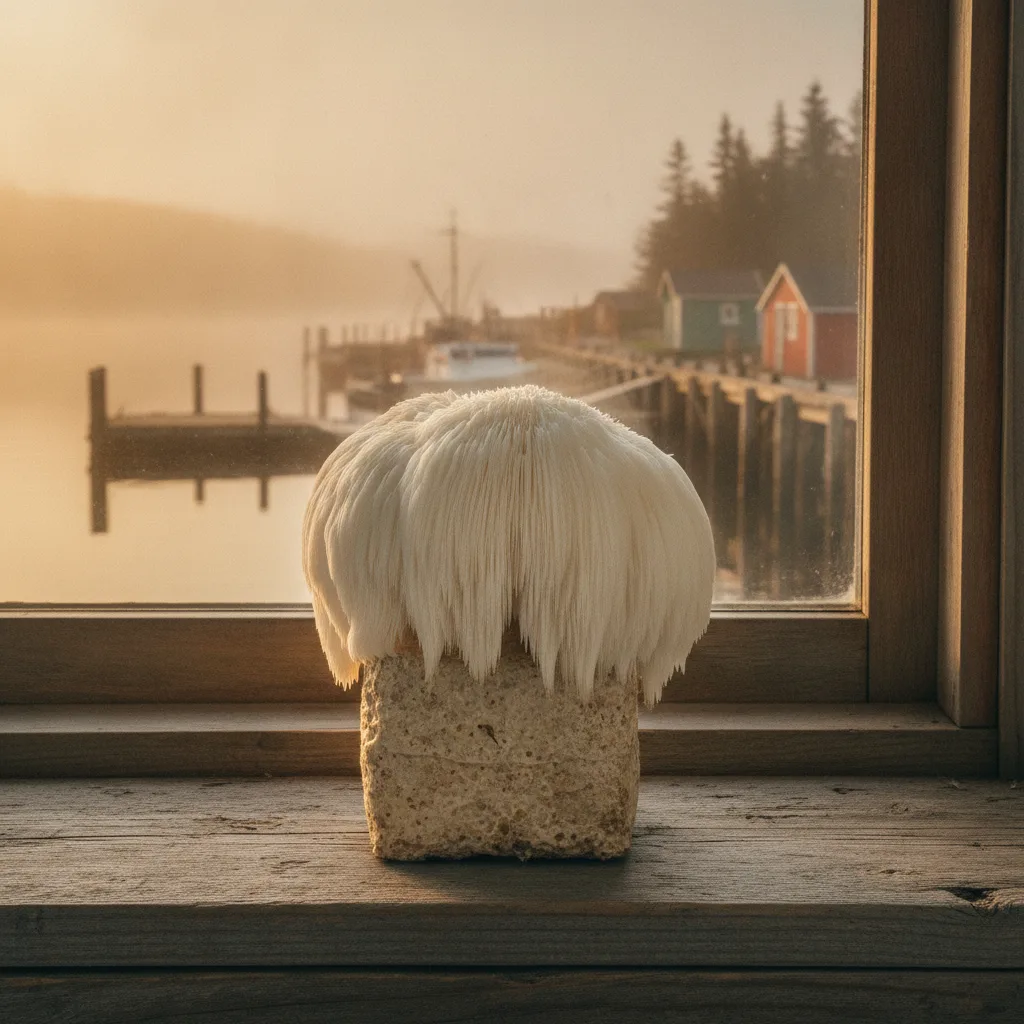
Nova Scotia's season is long by Canadian standards, but the woods still go quiet from December to May, and species like lion's mane and hen of the woods take patience to find. Several mushrooms on this chart fruit reliably indoors in a couple of weeks from a ready-to-grow kit: the Lion's Mane Kit, the Blue Oyster Kit, and the Chestnut Mushroom Kit all fruit on a kitchen counter with nothing more than a daily misting.
If you have a shady corner of the yard, an outdoor bed is the Maritime forager's off-season project. Vintage Wine Cap Grain Spawn 5 lb turns a wood-chip bed into a spring-to-fall patch, and Big Balls Lion's Mane Grain Spawn 5 lb inoculates hardwood logs that produce for years. Browse all grow kits and grain spawn, or read the companion New Brunswick foraging guide for the other side of the Acadian forest.
Toxic Look-alikes Every Nova Scotia Forager Must Know
False Morel (Gyromitra esculenta) — Brain-like cap (not honeycomb), solid or chambered inside (true morels are completely hollow). Contains gyromitrin — there is no safe home preparation. Don't eat false morels.
Destroying Angel (Amanita bisporigera and A. virosa) — All-white mushroom with cup-like volva at the base and a ring on the stem. White spore print. Found in Nova Scotia mixed forests. Causes irreversible liver failure.
Galerina marginata — Small brown mushroom in clusters on dead wood, often alongside honey mushrooms. Same amatoxins as the destroying angel.
Jack-O'-Lantern (Omphalotus illudens) — Orange clusters on hardwood stumps. Sometimes confused with chanterelles or chicken of the woods. Has true gills (not pores or false gills), grows from wood, glows faintly in the dark. Causes severe gastrointestinal poisoning.
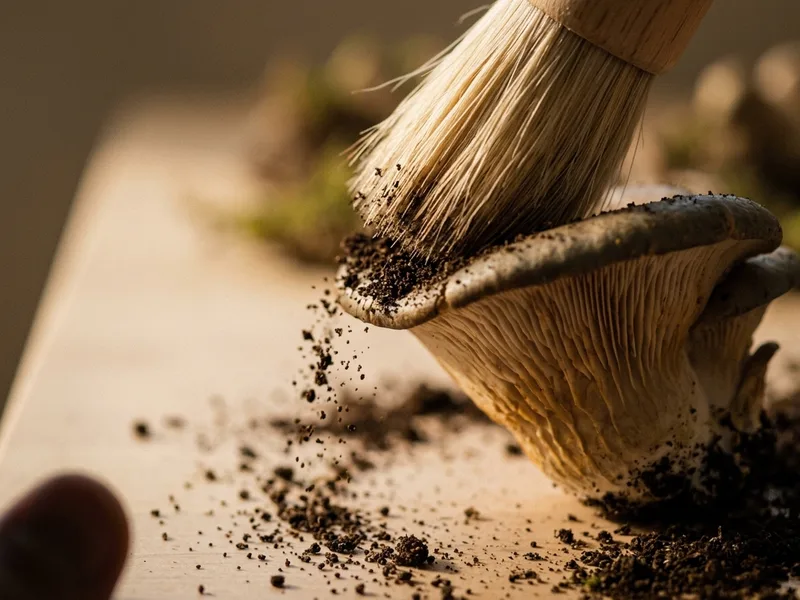
Redecker Natural Pig Bristle Mushroom Brush
Soft enough to take soil off a cap without tearing the skin. Mushrooms absorb water, so brushing dry beats rinsing every time, and anything you plan to dry has to be cleaned this way.
When you buy through our links, it supports our mycology research at no extra cost to you.
Community and Resources
- Mycological Society of Atlantic Canada (MSAC) — covers all four Atlantic provinces. Forays through the season and an annual fall mushroom show.
- Cape Breton Mushroom Foray — annual foray weekend in the Cape Breton Highlands.
- iNaturalist — Strong Atlantic Canada participation. Filter the Nova Scotia feed to see what's currently fruiting.
- Mushroom Observer — Specialised mushroom platform.

Growing Gourmet and Medicinal Mushrooms
Most people who forage for a season start wondering whether they can grow the same species deliberately. This is the standard cultivation reference, with substrate, spawn and fruiting conditions worked through species by species. A different book from a field guide and worth owning alongside one.
When you buy through our links, it supports our mycology research at no extra cost to you.
Sustainable Foraging in Nova Scotia
- Take only what you'll use.
- Leave a third behind.
- Don't rake the duff.
- Cut, don't pull.
- Vary your spots within a season.
Getting Started in Nova Scotia
- Join the Mycological Society of Atlantic Canada or the Cape Breton Mushroom Foray. One foray with experienced identifiers teaches more than a year of reading.
- Start with the foolproof species — chanterelles, hedgehogs, lobster mushrooms, lion's mane, shaggy manes, giant puffballs. All have no deadly lookalikes when properly identified.
- Get a regional field guide. Mushrooms of Northeast North America by George Barron and Mushrooms of the Atlantic Coast by Mary E. Smith are both excellent.
- Use iNaturalist's Nova Scotia feed to see what's currently fruiting before each trip.
- Three independent confirmations before eating any new species — guide + community ID + experienced friend.
Seasons and species overlap heavily across the region, so the Atlantic Canada foraging guide covers what is shared between Nova Scotia, New Brunswick and PEI.
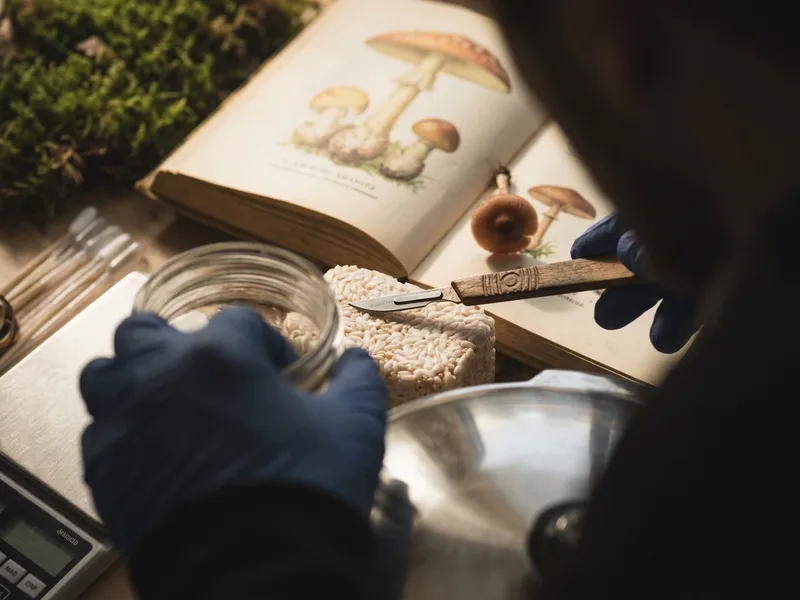
Edible and Medicinal Mushrooms of New England and Eastern Canada
A photographic key to the species you will actually meet in eastern Canada, organised by what the mushroom looks like rather than by taxonomy. The regional focus is the point: a guide written for another continent shows you the wrong look-alikes.
When you buy through our links, it supports our mycology research at no extra cost to you.
Frequently Asked Questions
What edible mushrooms grow in Nova Scotia?
Nova Scotia's Acadian forest produces golden chanterelles (the provincial signature), king boletes, hedgehog mushrooms, lobster mushrooms, lion's mane, hen of the woods, shaggy manes, giant puffballs, and honey mushrooms, with morels in the Annapolis Valley each spring. The best beginner species are hedgehogs, lobster mushrooms, lion's mane, and chanterelles — all have distinctive features and no deadly look-alikes when properly identified.
When is chanterelle season in Nova Scotia?
Golden chanterelles fruit from mid-July through September, peaking in August after soaking rains. Look on mossy slopes in mixed Acadian forest under yellow birch and red spruce; Cape Breton's flushes are famously productive. The smaller winter chanterelle (yellowfoot) extends the season on wet conifer ground through November.
Are there death cap mushrooms in Nova Scotia?
The classic death cap (Amanita phalloides) is not established in Nova Scotia — it's a West Coast concern. But the province has equally deadly relatives: the destroying angels (Amanita bisporigera and A. virosa), all-white mushrooms of mixed forests, plus Galerina marginata on dead wood. Amatoxin poisoning from any of them destroys the liver, so the ID discipline is identical: slice buttons vertically, check for a volva, and spore print gilled wood-growers.
Is it legal to forage mushrooms in Nova Scotia?
Yes, for personal use on Crown land, which covers roughly a third of the province. Provincial and national parks prohibit removing natural material, and private woodlots — most of southern and central NS — require the owner's permission, which rural landowners frequently grant if asked. Harvesting for sale is a different matter and may require permits.
Is there a mushroom identification chart for Nova Scotia?
Yes. The chart above covers 18 of the most-foraged Nova Scotia mushrooms, from chanterelles and lobster mushrooms to Cape Breton matsutake and Annapolis Valley morels, with season, habitat, key features, and the dangerous look-alike for each. You can download it as a free printable PDF sized for a standard 8.5x11 sheet, and it pairs with the toxic look-alike section for the species you must never confuse.
When is lobster mushroom season in Nova Scotia?
Lobster mushrooms fruit from late July through September across the Acadian forest, with the heaviest flushes in August after a few days of rain. Look on the forest floor near hemlock and spruce on both the mainland and Cape Breton, and take only firm, bright orange specimens; soft or dull ones are past their best. Cook them well; the dense flesh holds up to searing and stews.
Can I forage in Cape Breton Highlands National Park?
No. Cape Breton Highlands National Park, like Kejimkujik, prohibits harvesting mushrooms or any other natural material under the national park regulations, and provincial parks along the Cabot Trail apply the same rule. The good news is that Crown land in Inverness and Victoria counties and the Margaree Valley offers the same highland habitat, and personal-use harvesting there needs no permit as described in the legal section above.
If the off-season has you missing fresh mushrooms, you can grow gourmet species year-round at home — Nova Scotia winters are long but indoor cultivation runs 12 months. Browse our grow kits, grain spawn, and growing supplies. And see our companion guides for New Brunswick, Ontario, and Quebec.