
Oyster mushrooms go wrong in one specific way: they come out of the pan limp, grey and squeaky instead of browned and crisp. It is almost never the recipe. It is that they were crowded in the pan and salted too early, so they stewed in their own water rather than searing in it.
They are roughly 90% water, which is more than most mushrooms, and all of that has to leave before browning can start. Get that one thing right and every recipe below works. Get it wrong and none of them do.
Here is the method, the differences between the varieties, and ten ways to use them once you can cook them properly.
Why Oyster Mushrooms Turn Out Soggy
Four causes, in the order they actually bite.
The pan is crowded. This is the big one. Mushrooms release water as they heat, and a full pan cannot evaporate it fast enough, so the temperature drops and they simmer. Cook in two batches rather than one crowded batch, every time. A 30 cm skillet handles about 225 g.
They were salted at the start. Salt pulls water out through osmosis, flooding the pan before any surface has browned. Salt at the end.
They were washed. Oyster mushrooms absorb water readily, and a wet surface has to be boiled dry before it can brown. Brush them instead.
They were not fresh. This is the one growers know and shoppers do not. A cluster picked that morning is firm and sears quickly. The same cluster a week later has already lost structure, and no technique recovers it.
How to Clean and Prepare Oyster Mushrooms
Cultivated oyster mushrooms are usually cleaner than field-grown mushrooms. The main job is removing the firm base where the cluster attached to straw or a hardwood block.
- Separate the cluster into manageable sections.
- Trim off the tough central base and any visible substrate.
- Brush away loose particles with a pastry brush or dry towel.
- Tear large caps along their natural fibres.
- If washing is necessary, rinse briefly and dry immediately rather than soaking.
Do not peel the caps or remove the gills. Both are edible. Very thick stems from mature Blue or Pearl Oysters can be chopped finely for duxelles, stock, or soup instead of discarded.
For better browning, spread cleaned mushrooms on a towel for 10-15 minutes before cooking. A wet surface cools the pan and delays caramelization. Start with a wide, properly heated skillet and cook in batches when necessary.
The Dry Pan Method
Many recipes promise crisp mushrooms and deliver a soft, steamed result. The technique matters more than the coating or the seasoning.
Start the pan dry. Preheat a heavy skillet over medium-high heat with no oil at all, then lay the torn mushrooms in a single layer and leave them alone. They will squeak, then release their water, and that water will boil off. Only once the pan is dry again and the undersides have begun to colour do you add fat.
Adding oil at the start is not wrong exactly, but it makes the window narrower: the oil cools, the water floods in anyway, and you spend the first few minutes deep-frying in mushroom liquid. Going in dry removes the guesswork.
The sequence, start to finish:
- Heat a dry 30 cm skillet over medium-high until a drop of water skitters.
- Add about 225 g of torn mushrooms in one layer. Two batches beats one crowded pan.
- Leave them undisturbed 2-4 minutes. Press gently with a spatula for contact.
- Wait for the liquid they release to evaporate completely.
- Flip once the first side is deeply golden.
- Now add butter or oil, then garlic and other aromatics.
- Salt at the very end, off the heat.
If the pan fills with liquid, do not add fat and do not lower the heat. Keep going until it evaporates.
Tear, do not slice. Torn edges are irregular and fibrous, so they catch more heat and brown better than a clean knife cut. Oyster clusters also come apart naturally along the grain.
In the oven instead: toss torn pieces with a little oil and roast at 220°C (425°F) on a preheated sheet pan, spaced apart, turning once. Convection helps. Crowding still steams them.
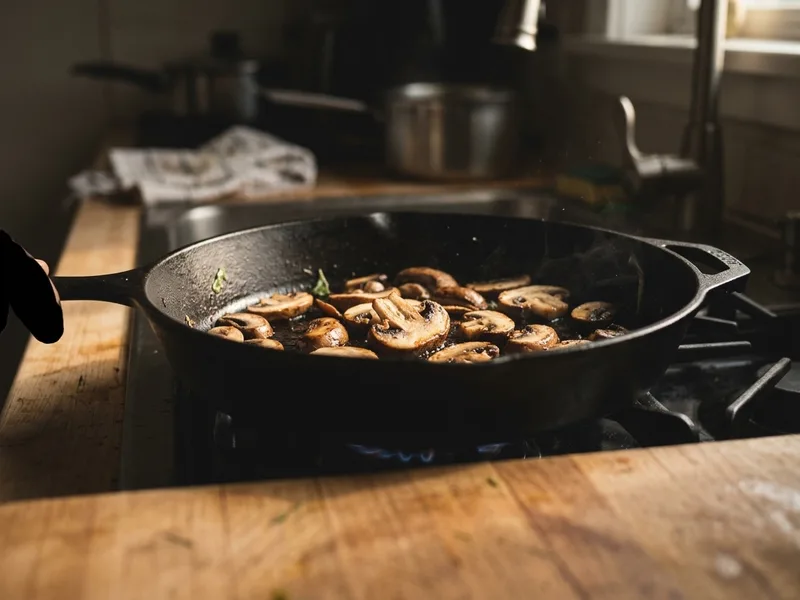
Lodge 12-Inch Cast Iron Skillet
Heat capacity is the whole argument. A thin pan drops temperature the moment wet mushrooms hit it, which is how you end up simmering them; a heavy cast iron base holds its heat and keeps browning. A 30 cm pan also gives you room to cook 225 g in a single layer, which is the other half of the problem solved.
When you buy through our links, it supports our mycology research at no extra cost to you.
Match the Oyster Variety to the Recipe
Oyster mushrooms share a family resemblance, but they are not interchangeable in every dish. Cap thickness, moisture, and flavour determine whether a variety is better torn into tacos, grilled whole, or sliced into medallions.
| Variety | Texture and Flavour | Best Uses |
|---|---|---|
| Blue Oyster | Tender caps, mild savoury flavour | Garlic butter, soup, risotto, pasta |
| Pearl/White Oyster | Delicate and clean tasting | Omelettes, stir-fries, cream sauces |
| Pink Oyster | Thin, fast-cooking, distinctly savoury | Mushroom bacon, tacos, crispy toppings |
| Black Oyster | Firm caps with good browning | Grilling, searing, sandwiches |
| King Oyster | Thick, dense stem and small cap | Vegan scallops, skewers, steaks, braises |
Blue and Pearl Oysters are the all-purpose choices. They tear easily, brown well, and remain tender in soup. Pink Oysters lose much of their bright colour when cooked, but their thin caps crisp beautifully. Cook them soon after harvest because they have the shortest shelf life.
King Oysters require a different cutting approach. Slice the stem crosswise into thick coins and score each side for scallop-style searing, or slice lengthwise for steaks. For more ideas built around their dense stems, see our King Oyster growing guide.
Growing Versus Buying Oyster Mushrooms
Freshness changes the way oyster mushrooms cook. Recently harvested caps are firm and dry enough to sear quickly. Older mushrooms lose moisture, soften at the edges, and can develop a stronger aroma.
At a market or grocery store, choose clusters with intact caps, dry surfaces, and a mild earthy smell. Avoid packages with pooled liquid, slimy stems, or heavily cracked edges. A little white fuzz at the base can be mushroom mycelium rather than mould, but coloured growth is a reason to pass.
Growing at home gives you the shortest possible harvest-to-pan time. An oyster mushroom grow kit is the simplest route for a kitchen harvest. Growers who want larger batches can use oyster grain spawn on pasteurized straw or hardwood pellets. Our guides to growing oyster mushrooms and pasteurizing straw cover both approaches.
A first kit flush can provide more mushrooms than one meal needs. Plan one fresh recipe, then preserve or batch-cook the remainder before quality drops.
Ten Ways to Cook Oyster Mushrooms
With the method above, all of these work. They are ordered roughly from simplest to most involved.
1. Pan-Seared with Garlic Butter
The simplest and arguably the best way to eat oyster mushrooms.
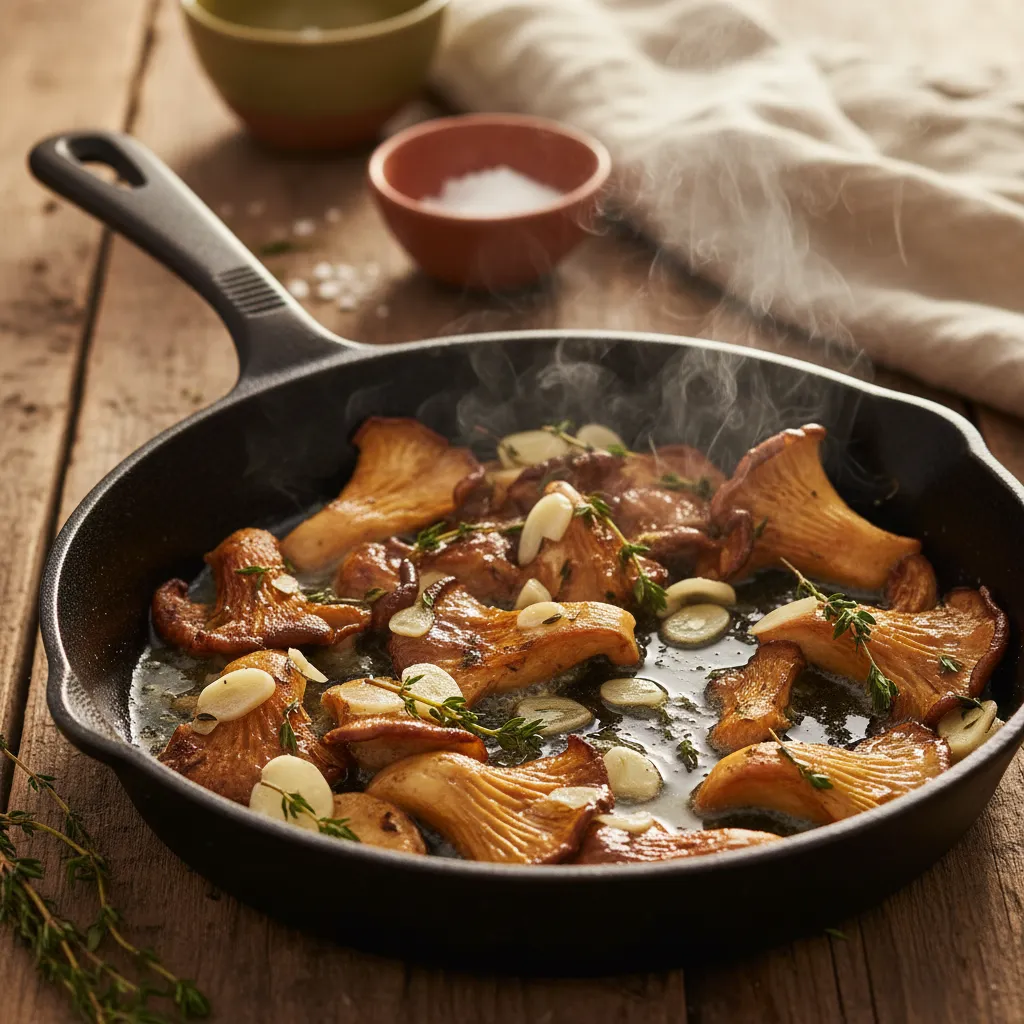
Tear mushrooms into bite-sized strips (don't cut, because tearing creates more surface area for browning). Heat a generous amount of butter in a cast iron skillet over medium-high heat. Add mushrooms in a single layer, and do not crowd the pan. Let them cook undisturbed for 3-4 minutes until golden brown on the bottom. Flip, add minced garlic and a pinch of salt, cook another 2-3 minutes. Finish with a squeeze of lemon and fresh parsley.
Key tip: Don't move them around. Let them sit and develop colour. Crowding the pan steams them instead of searing.
2. Oyster Mushroom Tacos
Tear mushrooms into strips and sear in oil over high heat until crispy on the edges. Season with cumin, chili powder, smoked paprika, garlic powder, salt, and a splash of lime juice. Pile into warm corn tortillas with pickled onions, avocado, cilantro, and your favourite hot sauce.
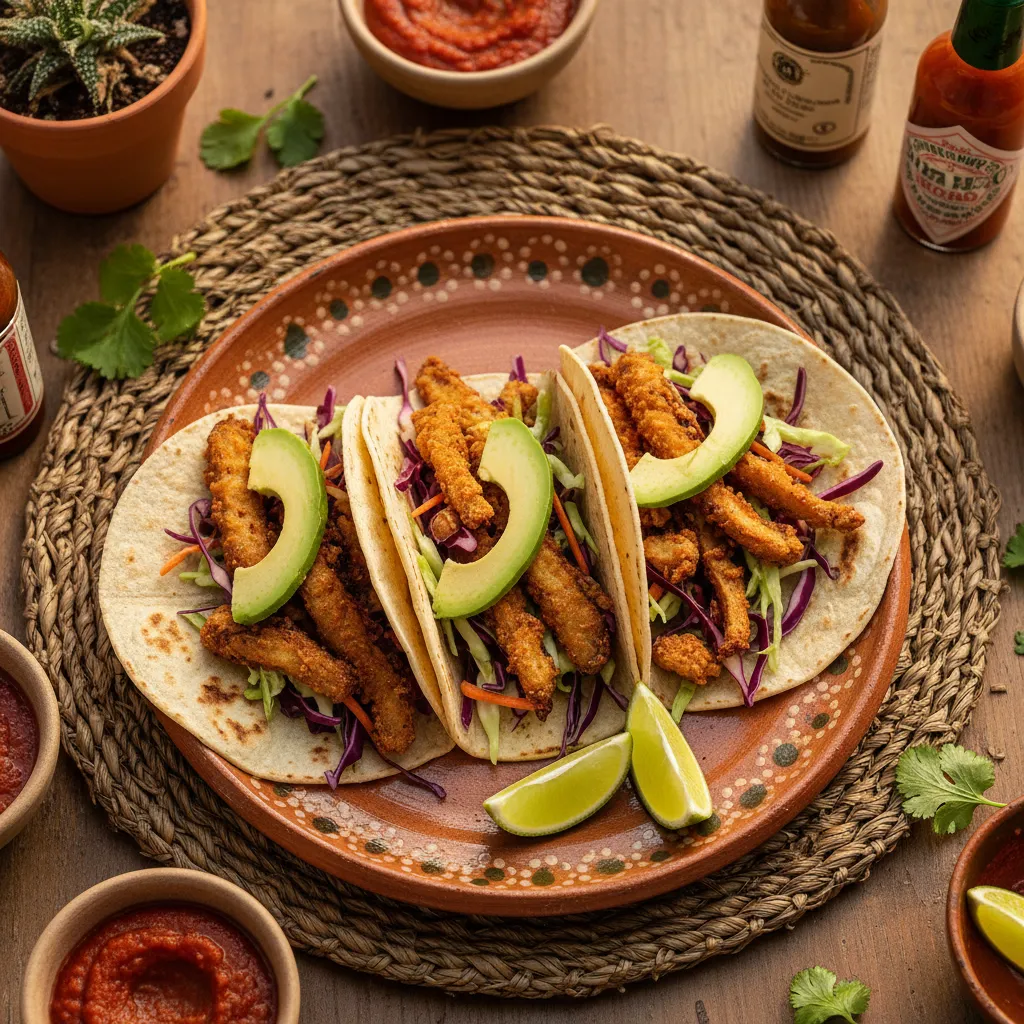
The meaty texture of seared oyster mushrooms makes them one of the best plant-based taco fillings.
3. Cream of Mushroom Soup
Dice onion and sauté in butter until soft. Add roughly chopped oyster mushrooms and cook until they release their liquid and begin to brown. Add a couple of minced garlic cloves and a sprig of thyme. Sprinkle with flour, stir for a minute, then gradually add chicken or vegetable stock (about 4 cups for a large batch). Simmer 15 minutes. Blend half the soup for a chunky texture (or all of it for smooth). Stir in heavy cream, season with salt and pepper.
This beats any canned version by a wide margin.
4. Mushroom Risotto
Sauté diced onion in olive oil and butter. Add arborio rice, stir to coat, then add white wine and stir until absorbed. Begin adding warm mushroom or vegetable stock one ladle at a time, stirring frequently. Halfway through (about 10 minutes), add pan-seared oyster mushrooms that you've cooked separately. Continue adding stock until the rice is creamy and al dente, about 18-20 minutes total. Finish with butter, parmesan, and fresh thyme.
Cooking the mushrooms separately preserves their texture and colour instead of letting them get lost in the rice.
5. Stir-Fried with Soy and Ginger
Tear mushrooms into strips. Heat a wok or large skillet over high heat with sesame oil. Add mushrooms and cook without stirring for 2 minutes. Add sliced garlic, fresh grated ginger, and a sliced chili (optional). Toss for another minute. Deglaze with soy sauce and a dash of rice vinegar. Serve over steamed rice or noodles, garnished with green onions and sesame seeds.
Ready in under 10 minutes, and a genuinely good weeknight dinner.
6. Mushroom "Bacon"
This one converts skeptics. Tear oyster mushrooms into thin strips, the thinner the better. Toss with a small amount of oil, soy sauce, smoked paprika, maple syrup, and a pinch of black pepper. Spread in a single layer on a parchment-lined baking sheet. Bake at 375°F (190°C) for 20-25 minutes, flipping halfway, until deeply browned and crispy.
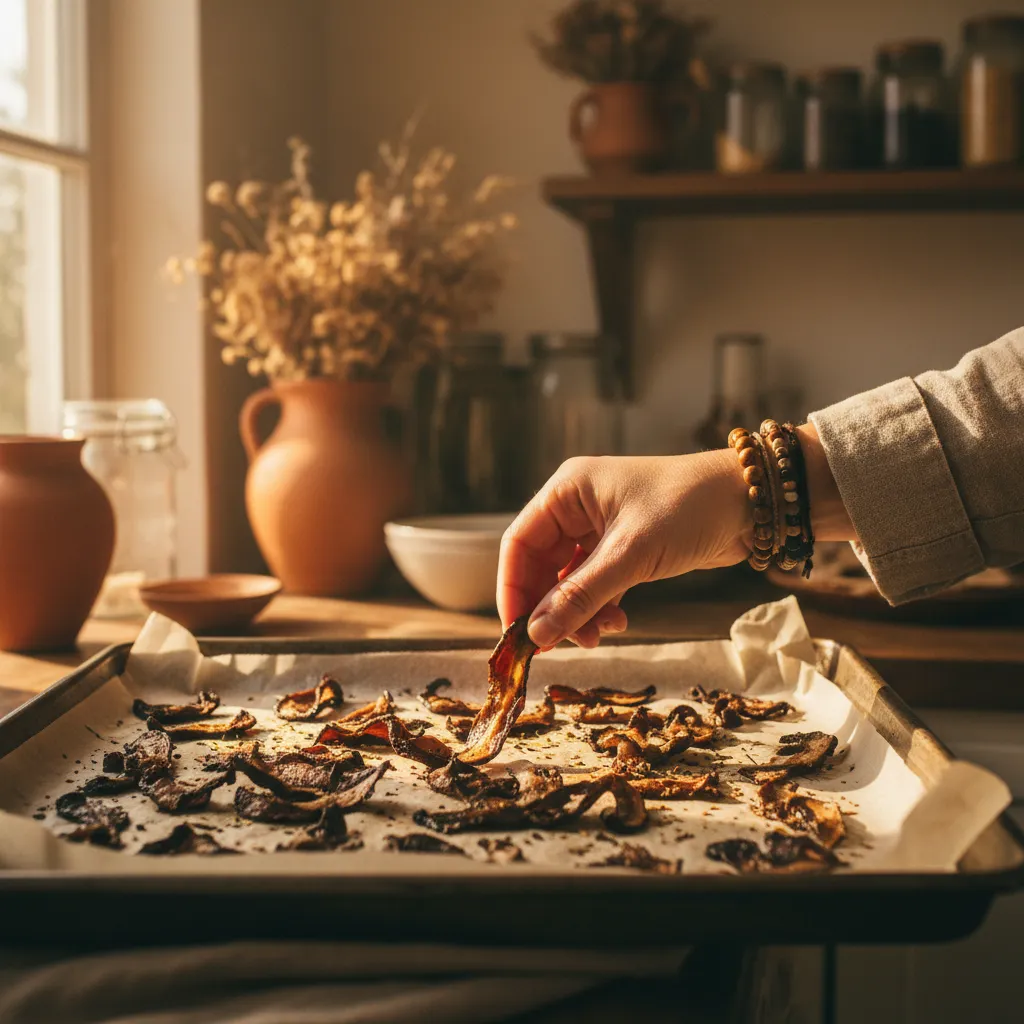
The edges should be crispy and the centres slightly chewy. The smoky-sweet flavour is addictive. Pink Oyster mushrooms are especially good for this, since their natural flavour leans savoury and slightly bacon-like to begin with.
7. Pasta with Oyster Mushrooms and Herbs
Cook your favourite pasta (tagliatelle or pappardelle work beautifully). Meanwhile, sear torn oyster mushrooms in olive oil and butter until golden. Add garlic, red chili flakes, and fresh herbs: thyme, parsley, and a bit of rosemary. Toss the drained pasta into the pan with a splash of pasta water. Add parmesan and a drizzle of good olive oil. Season with salt, pepper, and lemon zest.
Simple, elegant, and ready in 20 minutes.
8. Mushroom Omelette
Sauté sliced oyster mushrooms in butter with a pinch of salt until lightly browned. Set aside. Beat 3 eggs with a splash of water, pour into a buttered non-stick pan over medium heat. When the edges set, add the mushrooms, grated gruyère or swiss cheese, and fresh chives to one half. Fold and cook another minute until the cheese melts.
A great way to use small harvests, since even a handful of mushrooms makes an excellent omelette.
9. Grilled Oyster Mushrooms
Keep larger oyster mushroom clusters intact for grilling. Brush with olive oil, season with salt, pepper, and garlic powder. Grill over medium-high heat for 3-4 minutes per side until charred and tender. Drizzle with balsamic reduction or chimichurri sauce.
The grill adds a smoky depth that complements oyster mushrooms beautifully. These make an impressive side dish or burger topping.
10. Mushroom Duxelles
Finely mince oyster mushrooms (a food processor works, but pulse rather than puree). A mandoline slicer is also handy for getting uniform thin slices for the mushroom bacon recipe above. Sauté minced shallots in butter until soft. Add the mushrooms and cook over medium heat, stirring occasionally, until all moisture evaporates and the mixture is dry and concentrated, about 15-20 minutes. Season with salt, pepper, and fresh thyme. Add a splash of sherry or white wine and cook until absorbed.
Duxelles is a classic French preparation that's incredibly versatile: spread it on toast, use it as a filling for beef Wellington, stuff it into ravioli, or stir it into sauces and gravies. It freezes well in small portions.
How to Store Oyster Mushrooms
Store unwashed mushrooms in a paper bag or a container lined with a dry towel in the refrigerator. Paper manages condensation better than a sealed plastic bag. Blue, Black, and Pearl Oysters often keep for five to seven days when very fresh; Pink Oysters are best used within two or three days.
Check the bag daily and replace a damp towel. Do not store mushrooms beside strong-smelling foods because their porous tissue can pick up aromas.
For longer storage:
- Cook and refrigerate: Seared mushrooms keep three to four days and reheat well in a hot skillet.
- Freeze after cooking: Cool browned mushrooms completely, freeze them on a tray, then transfer to a container. Add them directly to soup, pasta, or stir-fries.
- Dehydrate: Tear into even pieces and dry until brittle. Rehydrate for soup or grind into a savoury seasoning powder.
- Make duxelles: Cook out all moisture, cool, and freeze in small portions for sauces and fillings.
Freezing raw oyster mushrooms can produce a soft texture because ice crystals damage their cells. Cooking first gives a better result.
Easy Flavour Pairings
Oyster mushrooms are mild enough to work across cuisines. Build a dish by choosing one fat, one aromatic group, and one bright finishing element.
- French-inspired: Butter, shallot, thyme, white wine, lemon
- East Asian: Sesame oil, ginger, garlic, soy sauce, rice vinegar
- Mexican-inspired: Neutral oil, cumin, smoked paprika, lime, cilantro
- Italian-inspired: Olive oil, garlic, chili flakes, parsley, parmesan
- Plant-based smoky: Oil, tamari, maple syrup, smoked paprika
- Canadian autumn: Butter, sage, apple cider, roasted squash, aged cheddar
Acid added at the end keeps a rich mushroom dish from tasting heavy. Lemon juice, vinegar, wine, or pickled vegetables all work. Fresh herbs should also go in late so their flavour stays distinct.
Frequently Asked Questions
Can You Eat Oyster Mushrooms Raw?
Cooking is recommended. Heat improves texture and flavour and makes mushrooms easier to digest. A properly browned oyster mushroom tastes far better than a raw one.
Which Part of an Oyster Mushroom Is Edible?
The caps, gills, and most stems are edible. Trim only the tough cluster base and any attached substrate. Finely chop firm stem pieces for soup, stock, or duxelles.
Why Are My Oyster Mushrooms Rubbery?
They may be overcooked at low heat, crowded in the pan, or past peak freshness. Use high enough heat to brown them, cook in a single layer, and stop once the edges are crisp and the centres are tender.
How Much Do I Need Per Person?
Allow roughly 100-150 g of fresh oyster mushrooms per person for a substantial side dish, or 50-75 g when they are one ingredient in pasta, risotto, tacos, or soup.
Can I Substitute Oyster Mushrooms for Button Mushrooms?
Yes in most sautés, soups, pasta dishes, and omelettes. Oyster mushrooms are more delicate, so tear them into larger pieces and give them room to brown. King Oyster is the better substitution when a recipe needs a firm, meaty shape.
Grow Your Own
The freshest oyster mushrooms are the ones you grow yourself. Our Oyster Mushroom Grow Kits produce multiple flushes of fresh mushrooms right on your kitchen counter. Or pick up some oyster spawn and grow on straw, hardwood pellets, or logs. Read our complete oyster mushroom growing guide for the full process.
Food Safety Source
- Health Canada: Food Safety Tips for Mushrooms, on selecting, cleaning, refrigerating, and freezing fresh mushrooms. Health Canada recommends refrigeration in a paper bag or original ventilated packaging, using fresh mushrooms promptly, and cooking mushrooms before freezing.
Have a mushroom-growing question? Ask Dr. MycoTek for AI help with your grow. Sign in to use your free monthly allowance.