
Mushroom coffee has gone from niche curiosity to mainstream wellness product. But if you've never tried it, you probably have questions. Does it taste like mushrooms? Is it actually coffee? What's the point?
Here's the straightforward answer: mushroom coffee is real coffee blended with mushroom extract powder. You get the caffeine and flavour you're used to, plus functional compounds from medicinal mushrooms that have been used in traditional wellness practices for centuries.
What Is Mushroom Coffee?
Mushroom coffee is exactly what it sounds like: coffee beans blended with concentrated mushroom extracts. It's not a mushroom-flavoured beverage and it's not a coffee substitute — it's genuine coffee with an added layer of functional ingredients.
The concept isn't new. In Finland during World War II, when coffee imports were cut off, people brewed Chaga mushroom as a coffee replacement. Today's mushroom coffee takes a different approach: rather than replacing coffee, it enhances it by combining high-quality coffee beans with carefully extracted mushroom compounds.
The mushroom component is typically a fine powder made from species like Lion's Mane, Chaga, Turkey Tail, Reishi, or Cordyceps. Each species has its own profile of bioactive compounds — beta-glucans, polysaccharides, triterpenes, and other constituents that have been valued in traditional medicine systems across Asia and Northern Europe for hundreds of years. Coffee Studies has a good primer on which mushrooms are used and what the research actually shows.
Our mushroom coffee blends use 100% Arabica coffee beans paired with Canadian-grown mushroom extracts. No fillers, no artificial flavours, and no compromise on coffee quality.
How Mushroom Coffee Is Made
Understanding how mushroom coffee is produced helps explain why it tastes like coffee and not like a plate of sautéed mushrooms. The process involves several steps that concentrate the beneficial compounds while leaving behind the flavours and textures you'd associate with culinary mushrooms.
Growing and Harvesting
The mushrooms used in coffee blends are typically grown on hardwood substrates or grain-based media under controlled conditions. Species like Lion's Mane and Turkey Tail are cultivated on supplemented hardwood sawdust, while Chaga is wild-harvested from birch trees in northern forests. The growing conditions matter — they influence the concentration of bioactive compounds in the final product.
Extraction Process
Raw mushroom powder on its own isn't particularly bioavailable. The cell walls of fungi are made of chitin — the same tough material found in crustacean shells — which the human digestive system can't break down efficiently. That's why quality mushroom coffee uses extracted mushroom powder rather than simply ground-up dried mushrooms.
Hot water extraction is the most common method. Dried mushrooms are simmered in hot water for extended periods (often 8-12 hours), which pulls out water-soluble compounds like beta-glucans and polysaccharides. The liquid is then concentrated and spray-dried into a fine powder.
Dual extraction is the gold standard. This combines hot water extraction with an alcohol (ethanol) extraction step. The alcohol pulls out compounds that aren't water-soluble, such as triterpenes found in Reishi and Chaga. Dual-extracted mushroom powders contain a fuller spectrum of bioactive constituents.
Blending
The extracted mushroom powder is blended with ground coffee beans at carefully calibrated ratios. Most commercial mushroom coffees use between 500mg and 1500mg of mushroom extract per serving. The goal is to deliver a meaningful dose of mushroom compounds without altering the coffee's flavour profile. Getting this ratio right is what separates a good mushroom coffee from one that tastes off.
What Does Mushroom Coffee Taste Like?
This is the question everyone asks first, and the honest answer might surprise you: mushroom coffee tastes like coffee.

Not mushroom-flavoured coffee. Not earthy broth pretending to be coffee. Just coffee — perhaps with a slightly smoother, rounder flavour profile than what you're used to. Some people describe it as less acidic or less bitter, with a subtle depth that regular coffee doesn't have. But the dominant flavour is always coffee.
The reason is simple: the extraction process strips away the savoury, umami characteristics of raw mushrooms. What remains are the bioactive compounds — beta-glucans, polysaccharides, triterpenes — which are largely flavourless at the concentrations used in coffee blends.
Here's what to expect with each species:
- Lion's Mane coffee — Virtually indistinguishable from regular coffee. Perhaps marginally smoother. Our Lion's Mane Mushroom Coffee is a great starting point if you're sceptical about the flavour.
- Chaga coffee — Adds a very subtle, slightly vanilla-like undertone. Chaga coffee is often the most approachable for newcomers.
- Turkey Tail coffee — Clean, neutral flavour contribution. Our Turkey Tail Mushroom Coffee lets the coffee character shine through entirely.
- Reishi coffee — Can add a faint bitterness if the dosage is high, but at standard ratios it's barely noticeable.
Most people who try mushroom coffee in a blind taste test can't tell the difference from regular coffee. If you're worried about the taste, don't be — this is a coffee-first product.
Types of Mushroom Coffee
Mushroom coffee comes in several formats, each suited to different preferences and lifestyles.
Pre-Blended Ground Coffee
This is whole bean or ground coffee that's already blended with mushroom extract powder. You brew it exactly like regular coffee — drip machine, French press, pour over, or espresso. Several Canadian and American brands sell this format in 340 g bags, and it suits daily drinkers who already own a grinder or a brewer. Our own blends are instant rather than ground, so if you would rather skip the equipment entirely, start with our mushroom coffee collection.
Instant Mushroom Coffee
Single-serve sachets of instant mushroom coffee are popular for travel and convenience. You just add hot water. The trade-off is flavour — instant coffee, whether it contains mushrooms or not, rarely matches the taste of freshly brewed. However, it's a practical option when you're on the go.
DIY: Mushroom Powder + Your Own Coffee
If you already have a favourite coffee and don't want to switch, you can simply add mushroom extract powder to your finished cup. This is the most flexible approach because you control the species, dosage, and coffee quality independently. Our Lion's Mane powder works well for this — just stir 1/2 to 1 teaspoon into your brewed coffee. For step-by-step ratios across all five species (lion's mane, chaga, cordyceps, turkey tail, reishi), see our mushroom coffee recipe from powder guide.
If you want a caffeine-free preparation using the same powders, our mushroom tea guide explains steeping and simmering methods by species.
Coffee Pods and Capsules
Some brands offer mushroom coffee in single-serve pod format compatible with Keurig and Nespresso machines. These are convenient but tend to be the most expensive per serving and generate packaging waste.
How to Prepare Mushroom Coffee
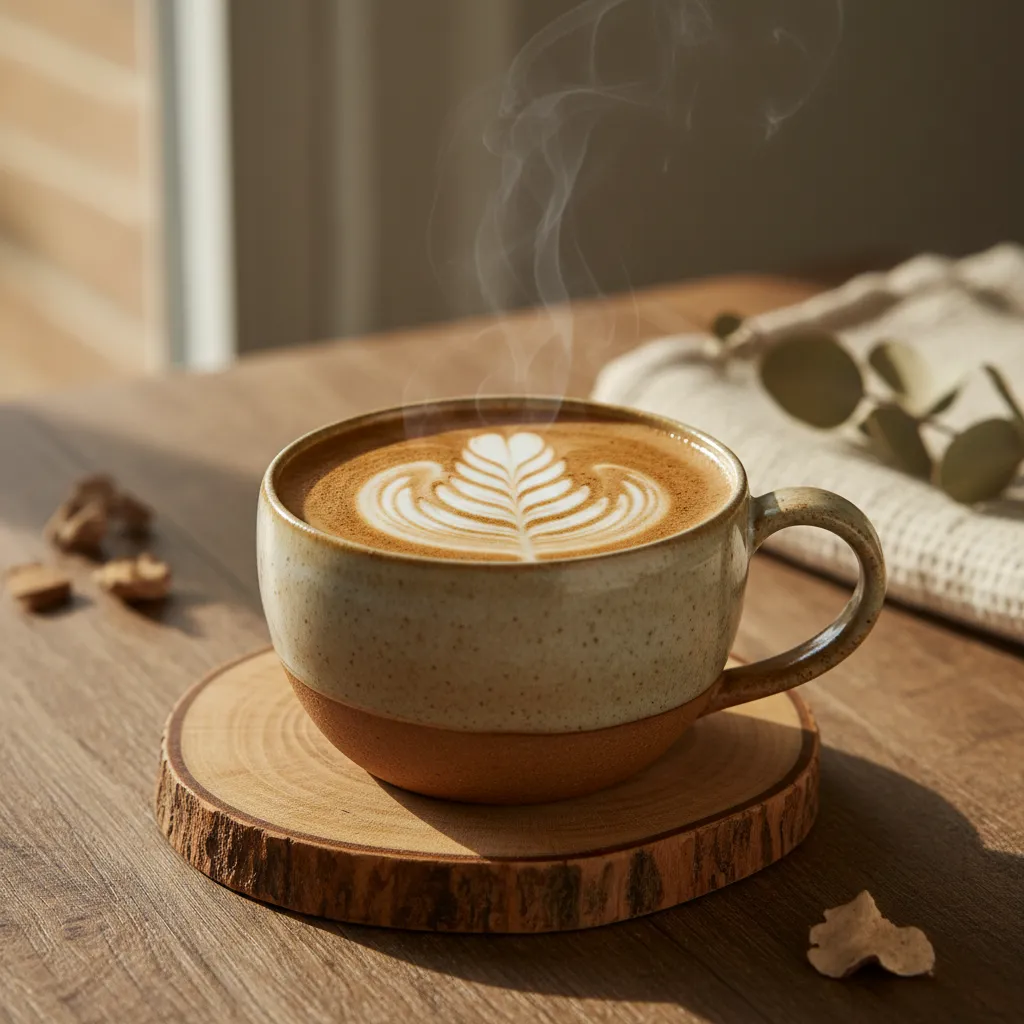
Mushroom coffee brews exactly like regular coffee. If you can make a cup of coffee, you can make mushroom coffee — no special equipment or techniques required.
Step 1: Choose Your Brew Method
Use whatever you normally use. All standard methods work:
- Drip coffee maker — Use the same coffee-to-water ratio you normally would (typically 1-2 tablespoons per 6 oz of water)
- French press — Add grounds, pour hot water (just off the boil, around 93-96°C), steep for 4 minutes, press
- Pour over — Standard technique applies. A gooseneck kettle like the Fellow Stagg EKG gives you the best control over your pour
- Espresso machine — Grind and tamp as you would regular coffee
- Moka pot — Fill the basket, assemble, and heat on the stove as usual
Step 2: Brew Your Coffee
Brew using the same proportions and timing you'd use for regular coffee. The mushroom extract is already blended into the grounds, so there's nothing additional to do. Water temperature between 90-96°C is ideal — boiling water can over-extract and make any coffee taste bitter.
Step 3: Customize Your Cup
Mushroom coffee works with any additions you'd normally use — milk, cream, sweetener, or nothing at all. A few popular options:
- Mushroom coffee latte — Froth milk (dairy or plant-based) with a handheld milk frother and pour over your espresso or strong-brewed mushroom coffee
- Iced mushroom coffee — Brew double strength, pour over ice. The mushroom extracts dissolve fully during hot brewing, so they remain in the iced version
- Butter or MCT coffee — Blend brewed mushroom coffee with a tablespoon of butter or MCT oil for a creamy, satiating drink
If you enjoy mushroom-infused beverages beyond coffee, our guide to making mushroom tea covers similar preparation principles for Chaga, Reishi, and Lion's Mane teas.
Brewing Ratios by Method
All three of our bags are instant, so there is no ratio to get right: one tablespoon, 6 g, into 225 ml of hot water, stir, done. The table below is for the other route, your own ground coffee with mushroom powder stirred in.
| Method | Coffee to water | Example | Grind | Time |
|---|---|---|---|---|
| Drip | 1:16 by weight | 15 g to 250 ml | Medium | Machine cycle |
| French press | 1:16 by weight | 30 g to 500 ml | Coarse | 4 minutes |
| Pour-over | 1:16 by weight | 15 g to 250 ml | Medium-fine | 2.5 to 3 minutes |
| Espresso | 1:2 by weight | 18 g in, 36 g out | Fine | 25 to 30 seconds |
Use water at 93-96 °C, just off the boil. If you are adding the powder yourself, start at half a teaspoon, about 1 g, per 250 ml cup. For cold brew ratios, the powder-paste trick and the rest of the method detail, the full brewing guide covers all of it.
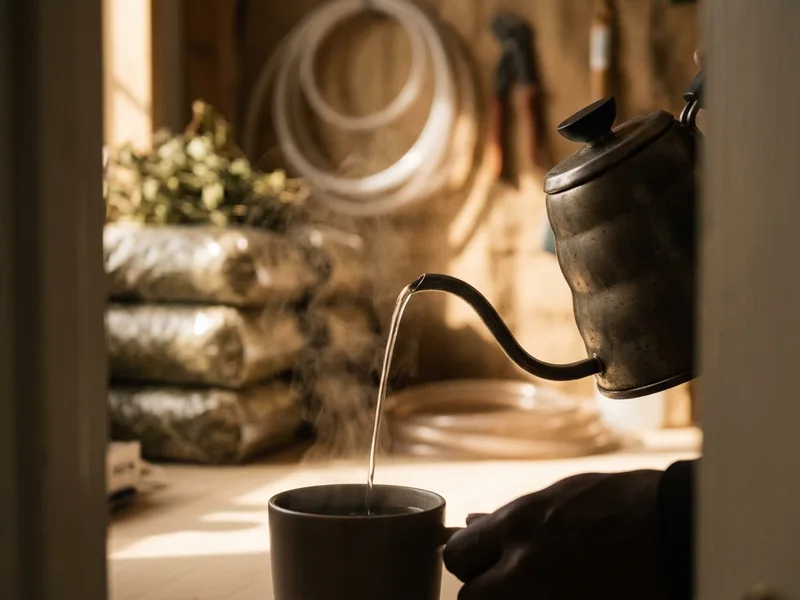
Fellow Stagg EKG Electric Gooseneck Kettle
Precise temperature control and a gooseneck spout make this the perfect kettle for pour-over mushroom coffee. Set your exact brew temperature and pour with precision. Beautiful on any counter.
When you buy through our links, it supports our mycology research at no extra cost to you.
Mushroom Coffee vs Regular Coffee
How does mushroom coffee actually compare to the regular cup you're used to? Here's an honest side-by-side look.
| Regular Coffee | Mushroom Coffee | |
|---|---|---|
| Caffeine content | 135 mg per 237 ml cup (Health Canada) | 65–75 mg per 225 ml cup in our instant blends; ground blends sit closer to regular coffee |
| Flavour | Standard coffee | Coffee-forward, slightly smoother |
| Acidity | Normal | Often perceived as lower |
| Additional compounds | Antioxidants, chlorogenic acid | Same + beta-glucans, polysaccharides, triterpenes |
| Price | $0.25-0.75/cup | $0.50-1.50/cup |
| Preparation | Standard brewing | Identical to regular coffee |
Caffeine Content
Caffeine comes from how much coffee is in the serving, not from the mushrooms. The mushrooms themselves are caffeine-free, and the extract neither reduces nor increases the caffeine in the coffee it is blended with.
Our own blends do land lower than a standard drip cup, though. Lion's Mane Coffee and Chaga Mushroom Coffee are both 65–75 mg per 225 ml cup, roughly half the 135 mg that Health Canada lists for a 237 ml cup of brewed coffee. That is because a 6 g serving is coffee blended with mushroom extract powder and milk powder, so there is less coffee in the mug, not because the mushrooms do anything to the caffeine. A ground mushroom coffee that is mostly coffee by weight measures much closer to a regular cup.
If you want less caffeine than that, you need a blend built on decaf beans. The caffeine table below sets our figures against Health Canada's reference numbers.
Taste Comparison
In direct comparison, most people find mushroom coffee slightly smoother and less acidic than equivalent regular coffee. The difference is subtle — more like the difference between two single-origin coffees than between coffee and something else entirely. The mushroom extracts round out the flavour profile without adding any distinct mushroom taste.
Cost
Mushroom coffee does cost more than regular coffee. You're paying for the mushroom extraction process, which is labour-intensive, and for the raw mushroom material itself. However, compared to buying coffee and mushroom supplements separately, a pre-blended mushroom coffee is usually more cost-effective.
Caffeine Per Cup by Blend
Caffeine in mushroom coffee depends entirely on how much coffee is in the serving. The mushrooms contribute none at all. The reference rows below are Health Canada's published figures, so you can see where our blends actually sit against an ordinary cup.
| Drink | Caffeine per cup | Cup size |
|---|---|---|
| Lion's Mane Coffee | 65–75 mg | 225 ml |
| Chaga Mushroom Coffee | 65–75 mg | 225 ml |
| Shyne Turkey Tail Latte | not printed on the current label | 225 ml |
| Brewed coffee, for reference | 135 mg | 237 ml |
| Instant coffee, for reference | 76 to 106 mg | 237 ml |
| Decaf coffee, for reference | 3 mg | 237 ml |
| Mushroom powder on its own | 0 mg | 2 g serving |
Our blends land near half a brewed cup because a 6 g serving is not 6 g of coffee. It is coffee blended with mushroom extract powder and milk powder, so there is simply less coffee in the mug than a drip machine puts there. A ground mushroom coffee that is mostly coffee by weight will measure much closer to the 135 mg reference row. The Shyne Turkey Tail Latte label states moderate caffeine without printing a milligram figure, so we are not going to invent one for it here.
Reference figures are taken from Health Canada's caffeine in foods table.
Decaf Mushroom Coffee
We do not make a decaf mushroom coffee. None of our three blends is decaffeinated, so if decaf is what you came for, here are the three routes that actually work.
PureShrooms sells a Swiss Water decaf ground mushroom coffee at $31.99 for 340 g, and a decaf instant blend alongside it, both from a Canadian storefront priced in Canadian dollars. We are not linking to them, but the name is enough to find them.
The second route is to stir Lion's Mane powder into decaf you already buy, about half a teaspoon, 1 g, per 250 ml cup. The powder carries no caffeine, so the cup lands wherever your decaf beans put it, which Health Canada gives as 3 mg per 237 ml for ground decaf.
The third route is to skip coffee altogether. Our mushroom tea guide covers steeping and simmering the same powders with no coffee involved.
Benefits by Mushroom Species
Different mushroom species bring different profiles of bioactive compounds. Here's what each one has traditionally been used for:
Lion's Mane — Focus and Clarity
Lion's Mane (Hericium erinaceus) contains compounds called hericenones and erinacines that have been widely studied. Many people pair it with coffee specifically for the combination of caffeine's energy with Lion's Mane's traditional reputation for focus and mental clarity.
Our Lion's Mane Mushroom Coffee is the most popular blend we sell. For a deeper dive into this species, read our guide on what Lion's Mane is and how it works or our overview of Lion's Mane research.
Chaga — Nutrient-Dense
Chaga (Inonotus obliquus) is a nutrient-dense fungus traditionally consumed as a tea in Russia and Northern Europe for centuries. In coffee, it adds beta-glucans and melanin compounds. Its mild, slightly vanilla-like flavour complements coffee nicely, making our Chaga Mushroom Coffee a smooth, easy-drinking option.
Turkey Tail — Naturally Occurring Compounds
Turkey Tail (Trametes versicolor) is rich in polysaccharopeptides (PSP and PSK) and naturally occurring fibres. It's one of the most-studied mushrooms, with a long history of traditional use in East Asian cuisine and medicine. Our Turkey Tail Mushroom Coffee is a great choice for anyone interested in this species' unique compound profile.
Cordyceps — Traditional Energy Support
Cordyceps (Cordyceps militaris) has been traditionally used in Tibetan and Chinese medicine as an energy and endurance tonic. Athletes and active people often gravitate toward cordyceps-enhanced products for this reason.
Reishi — Traditionally Used in East Asian Cuisine
Reishi (Ganoderma lucidum), known as the "mushroom of immortality" in traditional Chinese medicine, contains triterpenes and beta-glucans. It has a long history of use in East Asian cuisine and wellness traditions. In coffee, some drinkers find it smooths out the stimulating effects of caffeine — useful if you're sensitive to jitters.
For a broader look at how these species work together, check out our guide to the 5 mushroom supplement blend.
Best Mushroom Coffee in Canada (2026)
If you're comparing brands, here's what you need to know. The Canadian mushroom coffee market has more options than ever, but quality varies wildly. We've broken down the key factors that matter.
What Separates Good Mushroom Coffee from Bad
Not all mushroom coffee is created equal. The three things that matter most:
Extraction method — Dual-extracted mushroom powder (hot water + alcohol) delivers the full spectrum of bioactive compounds. Single extraction misses triterpenes and other alcohol-soluble constituents. Raw mushroom powder with no extraction is nearly useless — your body can't break down the chitin cell walls.
Mushroom dosage — You need at least 500mg of extracted mushroom powder per serving to get meaningful bioactive compounds. Many budget brands use 100-200mg — enough to put "mushroom" on the label but not enough to matter.
Sourcing transparency — Where were the mushrooms grown? On what substrate? Were they fruiting bodies or mycelium-on-grain? Fruiting body extracts contain higher concentrations of beta-glucans. Mycelium-on-grain products are diluted with the grain the mycelium was grown on.
How Canadian Brands Compare
| Nature Lion / Shyne | Four Sigmatic | RYZE | Budget Imports | |
|---|---|---|---|---|
| Made in Canada | Yes — Brantford, ON | No — USA/Finland | No — USA | No — various |
| CFIA Licensed | Yes | N/A | N/A | Rarely |
| Extraction | Dual-extracted | Dual-extracted | Not specified | Often none |
| Mushroom source | Canadian-grown fruiting bodies | Finnish/international | Not disclosed | Often mycelium-on-grain |
| Species per blend | Single species (targeted) | Single or multi | Multi-blend | Varies |
| Coffee quality | 100% Arabica | 100% Arabica | Organic Arabica | Often not disclosed |
| Cost per cup | $0.85-1.25 | $1.50-2.50 | $1.00-1.50 | $0.50-1.00 |
| Ships from Canada | Yes — free shipping $50+ | USA (duties possible) | USA (duties possible) | International |
What You Actually Pay Per Cup
Bag prices are easy to compare and tell you almost nothing, because a 10-sachet box and a 340 g bag do not hold the same number of cups. Here is the same market priced per cup instead. Every competitor figure below was checked against the seller's own live listing on 1 October 2026, using list price rather than sale price.
| Brand and blend | Format | Bag size | Price (CAD) | Price per cup |
|---|---|---|---|---|
| Nature Lion / Shyne Lion's Mane Coffee | Instant | 144 g (24 × 6 g) | $25.00 | $1.04 |
| Nature Lion / Shyne Chaga Mushroom Coffee | Instant | 144 g (24 × 6 g) | $25.00 | $1.04 |
| Shyne Turkey Tail Latte | Instant | 24 servings | $25.00 | $1.04 |
| Four Sigmatic Lion's Mane and Chaga | Instant sachets | 10 sachets | $21.99 | $2.20 |
| Four Sigmatic Lion's Mane and Chaga Dark Roast | Ground | 340 g | $32.99 | about $1.18 |
| PureShrooms Perfect 10 Ground | Ground | 340 g | $32.99 | about $1.18 |
| PureShrooms Swiss Water Decaf | Ground, decaf | 340 g | $31.99 | about $1.14 |
| Grow Mushrooms Canada Mushroom Coffee Singles | Instant sachets | 30 servings | $36.99 | $1.23 |
| Urban Calm Mushroom Coffee | Whole bean or ground | 340 g | $24.99 | about $0.89 |
| Urban Calm Mushroom Coffee K-Cups | K-Cup pods | 12 pods | $19.99 | about $1.67 |
| Brand and blend | Mushroom species | Single or multi species | Ships from |
|---|---|---|---|
| Nature Lion / Shyne Lion's Mane Coffee | Lion's mane | Single | Brantford, Ontario |
| Nature Lion / Shyne Chaga Mushroom Coffee | Chaga | Single | Brantford, Ontario |
| Shyne Turkey Tail Latte | Turkey tail | Single | Brantford, Ontario |
| Four Sigmatic | Lion's mane and chaga in the blends above | Multi | United States, stocked by Canadian retailers |
| PureShrooms | Up to ten species depending on blend | Multi | Canadian storefront, prices in CAD |
| Grow Mushrooms Canada | Lion's mane, chaga, reishi, turkey tail | Multi | Sayward BC and Hamilton ON |
| Urban Calm | Two per roast, from chaga, reishi, cordyceps and lion's mane | Multi | Roasted in Calgary, Alberta |
The price-per-cup figures for ground coffee assume 12 g of grounds per 250 ml cup, which gives about 28 cups from a 340 g bag. Instant and pod figures use the serving or pod count printed on the box. Change that dose and every ground figure moves, which is exactly why bag prices are not comparable across formats.
What the other brands do better. Four Sigmatic has the longest track record of anyone here and by far the widest Canadian retail distribution, so you can order it from a big retailer or find it on a shelf today. It also sells a 340 g ground dark roast, a format we do not make at all. Its 10-sachet box is the most expensive option per cup on this page at $2.20, but at $21.99 it is the cheapest way to try mushroom coffee at all, and if you are not sure you will like it that matters more than per-cup maths. PureShrooms carries the broadest format range of any Canadian seller on this list, instant and ground across a long catalogue, and it has two real decaf lines, one of them a Swiss Water decaf ground coffee. Grow Mushrooms Canada packs four species into individual single-serve packets, which is the most travel-friendly format here, and it is Canadian too, shipping from Sayward BC and Hamilton ON. Urban Calm roasts in Calgary and sells whole bean, ground and K-Cup, and at $24.99 for 340 g its ground coffee works out cheaper per cup than ours does.
Where we fall short. We make instant only, and single species only. No decaf, no ground, no whole bean, no K-Cup. If you grind your own beans, if you run a Keurig, or if you need decaf, we are not your brand today and one of the names above will serve you better.
The Price Per Cup Maths
Most comparison articles quote the bag price and quietly ignore shipping, which is the biggest single swing in what you actually pay. So here is our own arithmetic in full, both ways.
- $25.00 per bag divided by 24 servings is $1.04 per cup
- One bag on its own: $25.00 plus $9.50 shipping is $34.50, divided by 24 is $1.44 per cup delivered
- Two bags: $50.00 reaches free shipping, divided by 48 servings is $1.04 per cup delivered
- For contrast, a 340 g ground bag at $24.99 works out near $0.89 per cup at a 12 g dose, but you need a grinder and a brewer, and shipping still sits on top
The honest version of our number, then, is $1.04 a cup on a two-bag order and $1.44 a cup on a single bag. The tables above quote bag price because that is the convention every seller uses, but the delivered figure is the one your card pays.
Our Mushroom Coffee Blends
We make three single-species blends, each designed for a specific purpose:
Lion's Mane Mushroom Coffee ($25) — Our best seller. Pairs Lion's Mane's traditional focus-supporting compounds with smooth Arabica coffee. Most popular with students and professionals.
Chaga Mushroom Coffee ($25) — Combines Chaga's naturally occurring antioxidant compounds with a mild, approachable coffee. The smoothest of the three — a good starting point if you're new to mushroom coffee.
Turkey Tail Mushroom Coffee ($25) — Features Turkey Tail's unique polysaccharopeptide profile. Clean, neutral flavour that lets the coffee character come through.
All three are instant format — just add hot water. No brewing equipment needed. Each bag contains 24 servings.
Why Single-Species Blends?
Most competitors use multi-mushroom blends — a little Lion's Mane, a little Chaga, a little Reishi, all mixed together. The problem with this approach is dosage. When you split 500mg across five species, you're getting 100mg of each — well below the amounts used in most research studies.
Our single-species approach gives you a full, meaningful dose of one mushroom per blend. If you want the compounds from multiple species, you can rotate blends throughout the week or mix them — but each cup delivers a real serving of its featured mushroom.
Who Is Mushroom Coffee For?
- Anyone who already drinks coffee and wants to add functional mushroom compounds without changing their routine
- People sensitive to caffeine who find that mushrooms like Reishi smooth out their coffee experience
- Students and professionals looking for sustained focus — the Lion's Mane and caffeine pairing is popular for knowledge work
- Health-conscious consumers who'd rather get mushroom compounds from their daily coffee habit than add another supplement to their routine
- Canadians looking for locally made options — our mushroom coffees are blended in Canada with Canadian-grown mushroom extracts
Buying Mushroom Coffee in Canada
The Canadian mushroom coffee market has grown quickly, and not all products are created equal. Here's what to look for and where to find quality options.
What to Look for When Buying
Real mushroom extract vs flavouring. Some products labelled "mushroom coffee" use synthetic flavouring or minuscule amounts of mushroom powder that provide no meaningful bioactive compounds. Check the label for actual extract dosage — you want at least 500mg of mushroom extract per serving, ideally dual-extracted for full-spectrum compounds. If the ingredient list says "natural mushroom flavour" rather than naming a specific species extract, move on.
Canadian-made and CFIA licensed. A Canadian Food Inspection Agency licence means the facility meets federal food safety standards. Products made in Canada also avoid potential issues with cross-border contamination, unclear sourcing, and long supply chains. Nature Lion is CFIA licensed and produces all mushroom coffee blends in-house at our Brantford, Ontario facility using Canadian-grown mushroom extracts.
Species transparency. Good brands tell you exactly which species are in the blend and how much of each. Vague labels like "proprietary mushroom blend" often hide low dosages or cheap filler species. You should know whether you're getting Lion's Mane, Chaga, Turkey Tail, or a combination — and at what concentration.
Coffee quality. The mushroom component matters, but so does the base coffee. Look for 100% Arabica beans, ideally with information about the roast level and origin. If a brand won't tell you about their coffee sourcing, the beans are likely low-grade.
Price Comparison
Mushroom coffee in Canada typically ranges from $0.75 to $2.50 per cup depending on the brand, format, and mushroom dosage. Here's how the landscape breaks down:
- Budget instant sachets (imported): $1.00-1.50/cup — convenient but often low mushroom content and inferior coffee quality
- Mid-range blends (Canadian brands): $1.25-2.00/cup — decent quality, usually single-extraction mushroom powder
- Premium blends (Nature Lion / Shyne): $1.04/cup — CFIA licensed, dual-extracted mushroom powder, 100% Arabica, Canadian-grown extracts
Our Lion's Mane Mushroom Coffee and Shyne Turkey Tail Latte deliver premium quality at a competitive price point because we control the entire supply chain — from growing the mushrooms to blending the final product.
Where to Buy Mushroom Coffee in Canada
Online (best selection and value). Shopping online gives you access to the full range of species and blends. You can browse our complete mushroom coffee collection, which ships across Canada from Ontario with flat-rate shipping. Online shopping also lets you read ingredient lists, compare dosages, and check for third-party testing — details that aren't always visible on a store shelf.
Health food stores. Independent natural health retailers and chains like Healthy Planet or Ambrosia carry mushroom coffee from various brands. Selection varies by location. Ask staff about extraction methods and sourcing — many store employees are knowledgeable about functional foods.
Farmers' markets and local producers. In Ontario and British Columbia especially, you'll find small-batch mushroom coffee producers at weekend markets. This is a good way to try samples before committing to a full bag.
If you're new to functional mushrooms beyond coffee, our guides on reishi mushroom benefits and cordyceps benefits can help you understand which species might suit your goals. And if you'd rather skip the caffeine entirely, our mushroom tea guide covers caffeine-free options using many of the same species.
Shipping and Delivery From Our Brantford Facility
Every order ships from our own facility in Brantford, Ontario. Shipping is free on orders of $50 or more and a flat $9.50 below that. We take 1-2 business days to process an order, and Canada-wide delivery runs 3-7 business days after it leaves us.
That threshold is worth knowing before you check out. One $25.00 bag does not reach $50, so it carries the $9.50 flat rate. Two bags reach exactly $50 and ship free, which makes the second bag $15.50 cheaper than ordering it on its own later. The full range is in our mushroom coffee collection.
Frequently Asked Questions
Is mushroom coffee safe?
Mushroom coffee is generally considered safe for anyone who can drink regular coffee. The mushroom species used — Lion's Mane, Chaga, Turkey Tail, Reishi, and Cordyceps — have long histories of traditional use. If you're pregnant, nursing, or taking medication, consult your healthcare provider before adding any new supplement to your routine.
How much caffeine is in mushroom coffee?
It depends on the blend. Our Lion's Mane Coffee and Chaga Mushroom Coffee are both 65–75 mg per 225 ml cup, about half the 135 mg Health Canada lists for a 237 ml cup of brewed coffee, because each 6 g serving is coffee blended with mushroom extract powder and milk powder. Other brands vary widely: a 340 g ground blend that is mostly coffee by weight measures much closer to a regular cup. The mushroom extracts contribute no caffeine themselves, so check the label of whatever you buy.
Can I drink mushroom coffee every day?
Yes. Most people who drink mushroom coffee treat it as their daily coffee — it replaces their regular cup rather than being an occasional supplement. Consistency is actually preferred, since the bioactive compounds in mushrooms are traditionally consumed daily for ongoing support.
Does mushroom coffee break a fast?
Black mushroom coffee (no milk, cream, or sweetener) is essentially zero-calorie, the same as regular black coffee. Most intermittent fasting protocols consider black coffee acceptable, and the small amount of mushroom extract doesn't meaningfully change the caloric content.
Where can I buy mushroom coffee in Canada?
You can order directly from Nature Lion's mushroom coffee collection. We ship across Canada from our facility in Brantford, Ontario. Our blends — Lion's Mane coffee, Chaga coffee, and Turkey Tail coffee — are all made with Canadian-grown mushroom extracts and 100% Arabica beans.
Once you know what is in it, the brewing changes what you get out of it. See how to brew mushroom coffee for ratios and method.
What is the best mushroom coffee in Canada?
It depends on the format you want, and any article that hands you a single answer is selling you something. For instant, single-species, Canadian-made coffee at $1.04 a cup, ours is the one to beat: Lion's Mane, Chaga and Turkey Tail, all $25.00 for 24 servings, all shipped from Brantford, Ontario.
For ground coffee you brew yourself, Four Sigmatic's 340 g dark roast and PureShrooms' 340 g bags are the established options, and Urban Calm in Calgary sells whole bean and K-Cup. We make none of those formats. For decaf, PureShrooms is the only brand here with a dedicated line. For the cheapest possible first try, a 10-sachet Four Sigmatic box at $21.99 costs less to find out than a full bag from anybody.
How much does mushroom coffee cost per cup in Canada?
Between about $0.89 and $2.20 a cup across the brands compared above, at list price. Ours is $1.04, from a $25.00 bag of 24 servings.
Shipping moves that figure more than the bag price does. A single $25.00 bag from us carries a $9.50 flat rate, which makes it $1.44 a cup delivered. Two bags reach the $50 free-shipping threshold and come straight back down to $1.04. Ground coffee looks cheaper per cup, roughly $0.89 to $1.18 for a 340 g bag, but that assumes you already own a grinder and a brewer, and shipping still applies on top.
Is there a decaf mushroom coffee in Canada?
Yes, but not from us. We do not make a decaf blend, and none of our three coffees is decaffeinated.
PureShrooms sells a Swiss Water decaf ground mushroom coffee at $31.99 for 340 g, plus a decaf instant blend, both from a Canadian storefront. The other route is to stir Lion's Mane powder into decaf you already buy, about 1 g per 250 ml cup. The powder carries no caffeine of its own, so the cup lands wherever your decaf beans do, which Health Canada puts at 3 mg per 237 ml for ground decaf.
Is mushroom coffee instant or ground?
Both are sold in Canada, and for most buyers the format matters more than the brand.
Ours are instant: one tablespoon, 6 g, into 225 ml of hot water, no equipment at all. Four Sigmatic, PureShrooms and Urban Calm all sell 340 g ground bags you brew like any other coffee, and Urban Calm also sells whole bean and K-Cup pods. Instant wins on speed, on travel, and on not owning a grinder. Ground wins if you care about grinding fresh, and the cheapest ground bag compared above comes in under our $1.04 before shipping is counted.
Does Nature Lion ship mushroom coffee across Canada?
Yes. Every order ships from our own facility in Brantford, Ontario, to anywhere in Canada.
Shipping is free on orders of $50 or more and a flat $9.50 under that. We take 1-2 business days to process an order, and delivery runs 3-7 business days after that. Two $25.00 bags reach the free-shipping threshold exactly, so a two-bag order works out at $1.04 a cup delivered against $1.44 for a single bag. Browse the full range in our mushroom coffee collection.
Try It
Browse our mushroom coffee collection to find your blend. If you'd rather customize your own, grab some Lion's Mane powder and add it to your current favourite coffee. Either way, it's one of the easiest ways to incorporate functional mushrooms into your daily routine.
Have a mushroom-growing question? Ask Dr. MycoTek for AI help with your grow. Sign in to use your free monthly allowance.