
Quick answer: Most gourmet mushrooms incubate at 20-24°C (68-75°F) and fruit at 10-24°C (50-75°F), but the ideal range varies significantly by species. Getting the temperature right is one of the most important factors in a successful grow.
Temperature by Species
| Species | Incubation (Colonization) | Fruiting | Notes |
|---|---|---|---|
| Blue Oyster | 20-24°C (68-75°F) | 10-18°C (50-64°F) | Cold-tolerant — ideal for Canadian basements |
| Pink Oyster | 24-30°C (75-86°F) | 18-30°C (64-86°F) | Tropical species — needs warmth year-round |
| Lion's Mane | 20-24°C (68-75°F) | 16-20°C (60-68°F) | Moderate range, tolerates cooler conditions |
| Shiitake | 20-25°C (68-77°F) | 10-22°C (50-72°F) | Wide range depending on strain |
| Chestnut | 20-24°C (68-75°F) | 13-18°C (55-64°F) | Prefers cool fruiting conditions |
| King Oyster | 20-24°C (68-75°F) | 12-18°C (54-64°F) | Needs significant temperature drop to pin |
| Reishi | 24-30°C (75-86°F) | 20-28°C (68-82°F) | Warm-loving species |
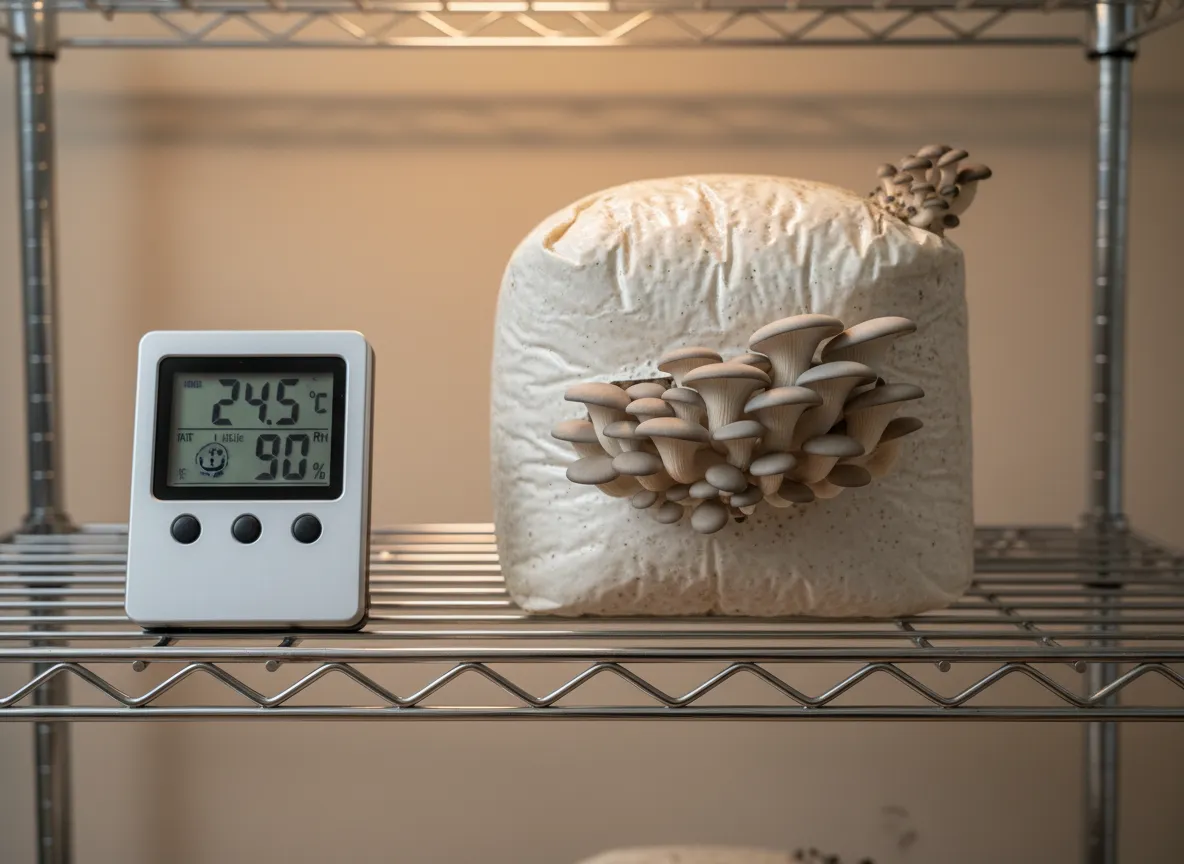
Incubation vs Fruiting: What's the Difference?
Incubation is the colonization phase. Your spawn is growing through the substrate, building a network of mycelium. During this phase, most species prefer warmer temperatures (20-24°C) with no need for complete darkness. This typically takes 2-4 weeks.
Fruiting is when mushrooms actually form. Many species need a temperature drop to trigger pinning — the formation of tiny mushrooms, called pins. This mimics the natural shift from summer to autumn that tells the fungus it's time to reproduce.
For species like Blue Oyster and King Oyster, a 5-10°C drop from incubation temperature is the primary fruiting trigger. For others like Pink Oyster, fresh air exchange and light are more important triggers than temperature change.
Managing Temperature in Canadian Homes
Canada's climate actually gives us some advantages for mushroom growing — especially for cold-fruiting species. Here's how to use your home environment:
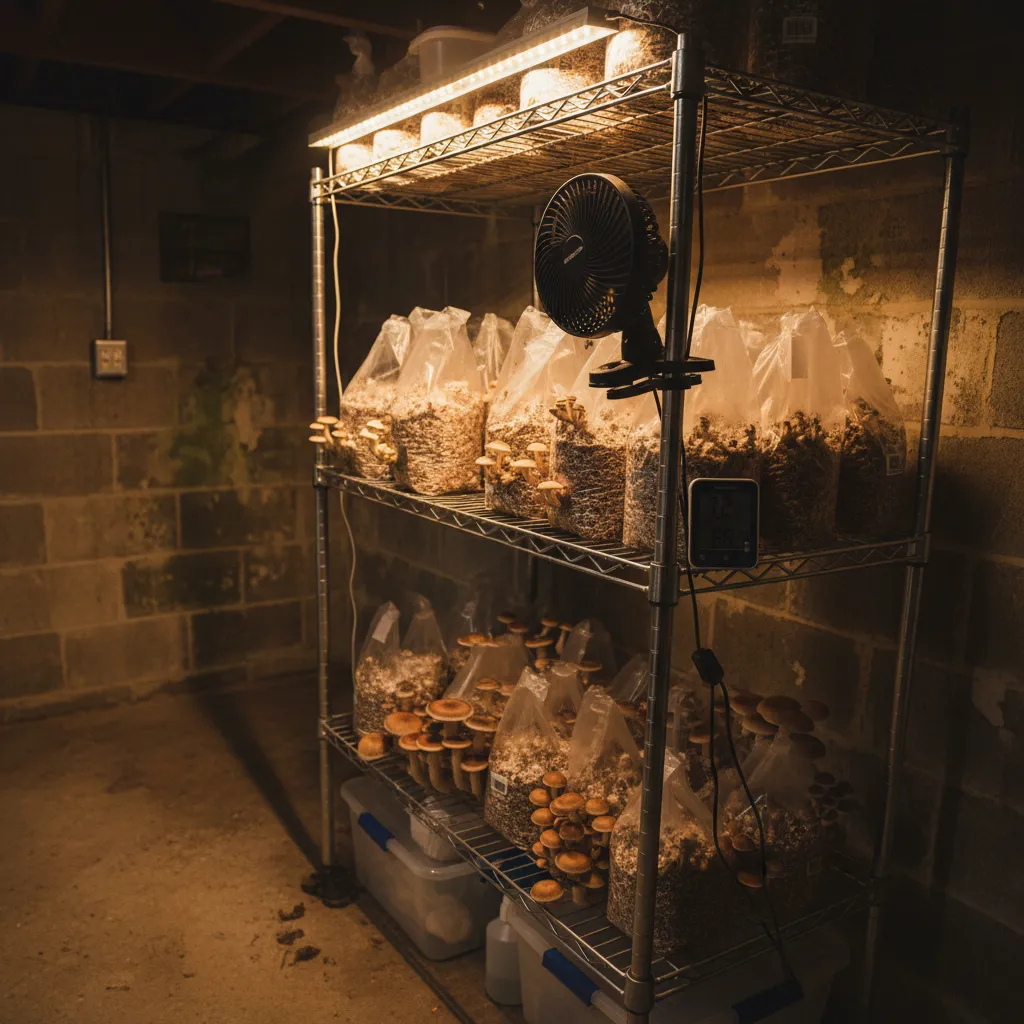
Basements Are Gold
A basement may offer a cooler growing space, but measure its daytime and overnight temperatures before choosing a mushroom. Keep bags away from direct furnace airflow. Use the range supplied with your particular kit or strain instead of assuming every basement stays at one temperature.
Seasonal Strategy
- Fall and Winter: Blue Oyster, Shiitake, Chestnut, King Oyster — all thrive in the cooler indoor temperatures. A grow kit matched to the season is the easiest way to start.
- Summer: Pink Oyster and Reishi — take advantage of natural warmth. Pink Oysters that struggle in January will explode in July.
Simple Temperature Control
- Controlled heating — if the room is too cold, warm the surrounding space. If using a heat mat, follow its instructions, use a thermostat and an air gap, and do not put bags directly on an unregulated mat.
- Small space heater with thermostat — for a dedicated fruiting closet or tent, set to the species' ideal range.
- Air conditioning or cool basement — in summer, move cold-fruiting species to the coolest spot in the house.
Why a Temperature Drop Triggers Mushrooms
Mycelium spends its colonization phase consuming a substrate. Fruiting begins when environmental signals suggest that conditions are right for reproduction. For many temperate species, cooler air is one of those signals because it resembles the arrival of autumn.
The size of the change matters less than reaching the fruiting range and combining it with the other triggers. A fully colonized King Oyster block moved from 23°C to 16°C receives a clear signal. Moving the same block from 23°C to 21°C may not be enough, especially if carbon dioxide remains high and the surface stays dry.
Temperature does not work alone. Most cultivated species also need:
- Fresh air to reduce carbon dioxide around the block
- High relative humidity while pins are forming
- Gentle indirect light to orient growth
- A fully colonized, healthy substrate
Do not cold-shock a half-colonized block to force it to fruit early. Uncolonized substrate remains vulnerable to contamination, and the resulting harvest is usually smaller. Wait until the block is fully colonized and follow the strain or kit instructions.
Some species are less dependent on a drop. Pink Oyster and Reishi primarily need suitable warmth, fresh air, and humidity. Trying to fruit Pink Oyster in a refrigerator-cold room works against its tropical biology.
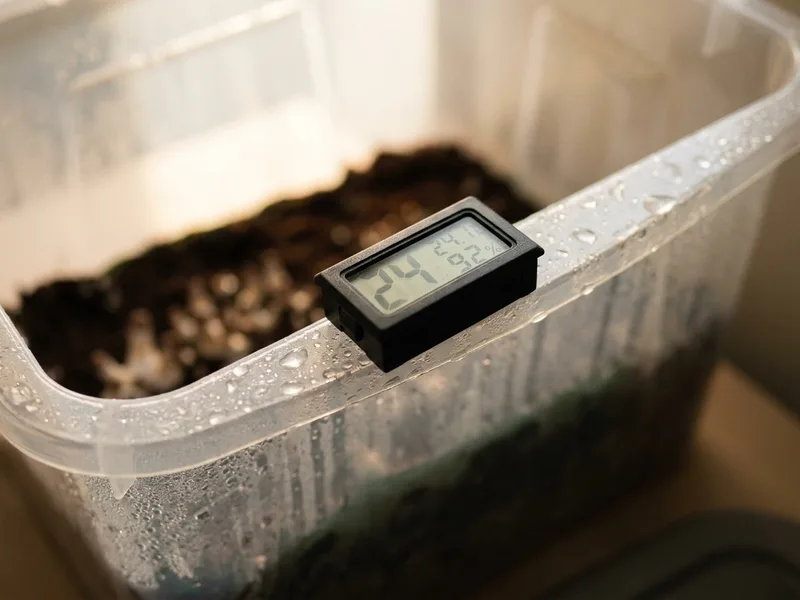
Digital Hygrometer and Thermometer
Get one with a minimum and maximum readout. The overnight low is what tells you whether a room really sits in range, and it is exactly the number a spot check hides.
When you buy through our links, it supports our mycology research at no extra cost to you.
Air Temperature Versus Block Temperature
A thermometer on the wall reports air temperature, not necessarily the temperature inside a colonizing bag. Active mycelium releases metabolic heat. The centre of a large or tightly packed block can run several degrees warmer than the room.
This difference becomes important when incubating many bags together. Blocks touching each other on a shelf trap heat, and the middle of a stack can overheat while the room still appears to be within range. Leave space between bags, circulate room air gently, and avoid placing a temperature probe directly beside a heater.
For a small home grow, measure the air at the same height as the blocks. For a larger batch, place a probe between representative bags and occasionally check the surface temperature of a block with an infrared thermometer. Never puncture a sterile or colonizing bag just to insert a probe.
Fruiting blocks usually sit closer to room temperature because fresh-air exchange removes heat. A closed humidity tent, however, can still become warmer than the surrounding room when lights, humidifiers, or multiple blocks are operating inside it.
Tools for Measuring and Controlling Temperature
You do not need laboratory equipment, but a reliable minimum-and-maximum thermometer is more useful than guessing based on comfort.
Digital Thermometer and Hygrometer
Choose a unit that records daily minimum and maximum readings. Place it near the mushrooms without letting mist spray the sensor. Review the range rather than reacting to every one-degree movement.
Probe Thermostat
A thermostat can switch a heater, heat mat, fan, or cooling device on and off. Set a narrow but realistic range so equipment does not cycle every minute. Keep electrical connections outside wet fruiting spaces.
Infrared Thermometer
An infrared thermometer gives quick surface readings across shelves and bags. It does not measure the centre of a substrate block, but it is useful for finding hot spots near heaters or lights.
Data Logger
For recurring problems, a small Bluetooth or Wi-Fi logger can reveal overnight lows and afternoon highs. A week of actual readings often explains stalled pins better than a single spot check.
Heat mats require special care. Do not place a colonizing bag directly on an unregulated mat. The bottom of the block can overheat or dry out even when the surrounding room is cool. Use a thermostat, leave an air gap, or heat the surrounding space instead.
Matching Species to the Space You Have
It is usually cheaper and easier to choose a mushroom for the room than to force the room to suit a mushroom.
| Available Space | Typical Range | Good Choices |
|---|---|---|
| Cool basement or garage | 10-17°C | Blue Oyster, King Oyster, Chestnut, cool-weather Shiitake |
| Typical heated room | 18-22°C | Lion's Mane, Pearl Oyster, many Shiitake strains |
| Warm summer room | 23-28°C | Pink Oyster, Reishi, warm-weather Oyster strains |
| Temperature-controlled tent | Adjustable | Most species when humidity and fresh air are also managed |
Strain matters within a species. Commercial growers select warm- and cold-weather strains of Shiitake and Oyster mushrooms for different seasons. Use the range supplied with your culture, spawn, or kit when it differs from a general chart.
If you are choosing a first crop, compare your room's minimum and maximum temperature over several days. Then select from our grow kit collection or mushroom spawn rather than purchasing first and trying to redesign the room afterward.
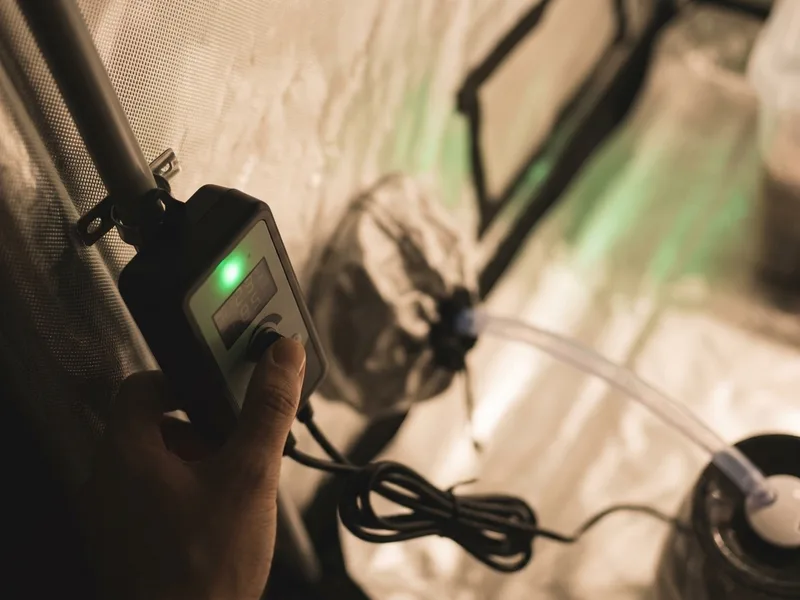
Inkbird ITC-308 and IHC-200 Combo Controller
Two dual-stage controllers, one for heating and cooling and one for humidity. Useful in a Canadian basement that swings between seasons rather than holding one temperature.
When you buy through our links, it supports our mycology research at no extra cost to you.
Canadian Climate by Season
Winter
Winter homes often provide good temperatures for incubation but dry air for fruiting. A furnace may keep a room at 21°C while lowering relative humidity dramatically. Cool-fruiting Oysters can use a basement or insulated garage, provided the block does not freeze. Follow the kit’s humidity instructions and keep it away from direct furnace airflow. Among Nature Lion boxed kits, only Lion’s Mane includes a humidity tent.
Spring and Autumn
These are the easiest seasons for many gourmet species. Basements, spare rooms, and garages naturally move through the 12-20°C range. Blue Oyster, Chestnut, Lion's Mane, King Oyster, and Shiitake can often fruit without mechanical cooling.
Summer
Upper floors and south-facing rooms can exceed the fruiting range of cold-weather strains. Grow Pink Oyster or Reishi, move other species below grade, or pause until cooler weather. A small air conditioner can work for a dedicated room, but cooling an uninsulated tent inside a hot garage is inefficient and produces condensation.
Unheated Garages and Sheds
These spaces can work during shoulder seasons, but watch overnight lows. Mushroom tissue can be damaged by freezing, while daytime sun can heat a shed far above outdoor air temperature. Record the actual range before moving a crop.
Troubleshooting Temperature Problems
Mycelium Colonization Has Stopped
First verify the centre of the block is not too hot. Growth can slow in a cold room, but overheating can damage mycelium and encourage bacteria. Look for wet, uncolonized patches or sour odours. If the block is healthy but cool, move it gradually into the recommended incubation range.
Pins Form and Then Abort
Temperature swings can contribute, but low humidity and direct drying are more common causes. Stabilize the room, maintain humidity around the block, and avoid placing it beside heating vents or air conditioners.
Oyster Mushrooms Have Long Stems and Small Caps
This usually indicates high carbon dioxide, not temperature alone. Increase fresh-air exchange. Warm conditions can exaggerate the problem, so confirm both temperature and ventilation.
Lion's Mane Is Yellowing
Heat, low humidity, age, or direct wetting can all cause yellowing. Keep the fruiting area around 16-20°C, maintain humid air, and avoid repeatedly soaking the developing cluster.
King Oyster Will Not Pin
Confirm the block is fully colonized, then provide a meaningful temperature drop into roughly 12-18°C along with fresh air and light. King Oyster is less forgiving of warm fruiting conditions than Pearl or Pink Oyster.
Pink Oyster Is Growing Slowly
Pink Oyster is a tropical species. At 15°C it may colonize and fruit very slowly or not at all. Move it into a stable warm range, but do not place the bag directly on a hot surface.
Safe Heating and Cooling
Humidity and electricity require careful separation. Use equipment rated for the environment, keep plugs and power bars outside the tent, add drip loops to cords, and never aim a space heater directly at plastic grow bags.
Heat the room or the air around a chamber rather than one point on the substrate. Direct heat creates dry edges and hidden hot spots. For cooling, move cool room air through the space gently; do not blast pins with an air conditioner.
Insulation is often more useful than a larger appliance. A reflective barrier between a tent and a cold concrete wall, or weather stripping around a dedicated room, reduces cycling and makes temperatures more stable. Always preserve fresh-air exchange when insulating a fruiting space.
Frequently Asked Questions
What Is the Best Temperature for Growing Mushrooms Indoors?
There is no single best temperature, but 18-22°C suits many home-growing stages and species. Use the strain-specific incubation and fruiting ranges whenever available.
Is Room Temperature Warm Enough for Mushroom Spawn?
Usually. Most gourmet mushroom spawn and colonizing blocks perform well around 20-24°C. Large blocks can run warmer internally, so avoid stacking them tightly or placing them directly on a heat source.
Can Mushrooms Grow in a Refrigerator?
A refrigerator is too cold for normal growth. Brief cold treatment is sometimes used with Shiitake or other species, but fruiting still occurs at warmer temperatures with humidity, light, and fresh air.
Will Mushroom Mycelium Die if It Freezes?
Freezing can damage mycelium and developing mushrooms, particularly through repeated freeze-thaw cycles. Some outdoor species survive winter in protected substrates, but an indoor kit should be kept above freezing.
How Much Temperature Fluctuation Is Acceptable?
Gradual daily movement of a few degrees is generally fine. Repeated, rapid swings outside the recommended range are more concerning. Track minimum and maximum readings and correct the underlying hot or cold spot.
Do Mushrooms Need Darkness During Incubation?
Most do not require complete darkness. Indirect room light is generally harmless during colonization. Temperature, clean substrate, gas exchange, and full colonization matter more; fruiting then benefits from a normal indirect light cycle.
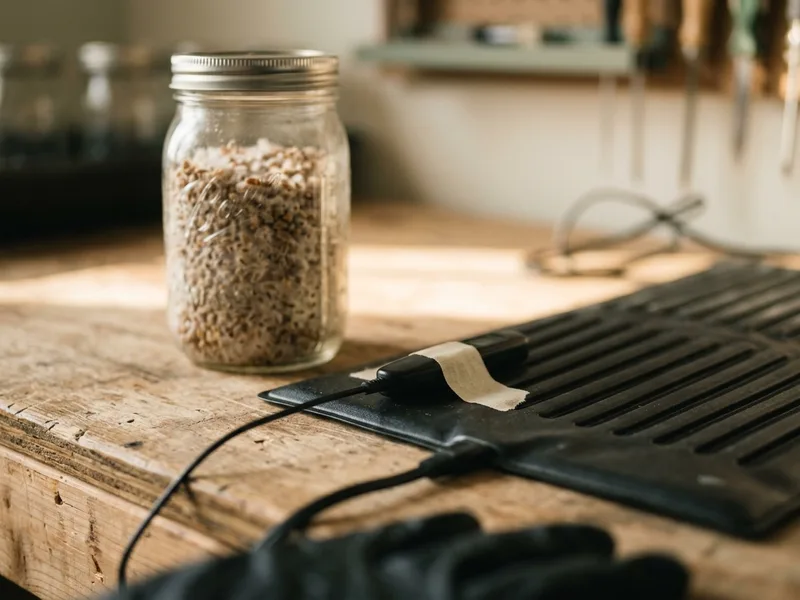
Seedling Heat Mat with Thermostat
Gentle bottom heat for incubation when a room sits below range. Pair it with a thermostat: unregulated mats routinely overshoot and cook the spawn.
When you buy through our links, it supports our mycology research at no extra cost to you.
Common Temperature Mistakes
Too warm during fruiting. Blue Oysters fruited above 22°C develop long stems and tiny caps. They're still edible but yield and quality suffer.
No temperature drop. King Oyster and some Shiitake strains simply won't pin without a noticeable drop from incubation temperature. Move the block to a cooler location or reduce heating.
Fluctuations. Wild temperature swings stress mycelium. Gradual changes are fine — mushrooms experience them in nature — but rapid 10°C swings in a single day can stall growth.
Getting Started
Not sure which species to try first? Check our best mushrooms for beginners in Canada guide. If you want to skip the guesswork, our grow kits come with species-specific instructions including ideal temperature ranges.
Browse our full spawn collection to find the right species for your climate, or read the complete mushroom growing guide for the full process from start to harvest.
If you own a Nature Lion boxed kit, begin with grow-kit setup. If it remains unchanged after the expected window, use the not-growing checklist and record the temperature alongside a current photograph rather than changing several conditions at once.
For a deeper question-by-question reference on humidity, fresh air, light, CO₂, and sensor placement, use the Mushroom Growing Tips environmental parameters guide.
Measuring and holding it
Knowing the range is half the job. Holding it overnight, when nobody is watching, is the other half.
Sources and Further Reading
- Cornell Small Farms: Indoor Mushroom Production — controlled-environment incubation, fruiting, temperature, humidity, light, and airflow guidance.
- Cornell Small Farms: Seven Stages of Mushroom Cultivation — temperature drops, oxygen, incubation timing, and species-specific fruiting practices.
- Hoa and Wang: Temperature Effects on Oyster Mushroom Mycelium — experimental comparison of Pleurotus ostreatus and P. cystidiosus mycelial growth at different temperatures.
Need help with a Nature Lion kit? Start with the kit care guide, or email info@naturelion.ca with a photo and your start date. Dr. MycoTek is another option for growing questions and notes.