
If you're just getting into mushroom growing, species selection matters more than equipment. Pick the right mushroom and you'll succeed with basic supplies — even a simple grow kit on the kitchen counter. Pick the wrong one and you'll fight an uphill battle no matter how much you spend.
Here are the five best species for Canadian beginners, ranked from easiest to still-pretty-easy, plus what to avoid and how to progress from your first grow kit to running your own substrate blocks.
What Makes a Mushroom Beginner-Friendly?
Not all species are created equal for new growers. The best beginner mushrooms share a few traits:
- Fast colonization — the quicker mycelium takes over the substrate, the less chance contamination has to establish. Speed is your biggest ally as a new grower.
- Contamination resistance — aggressive species produce enzymes and metabolites that actively fight competitors. Oyster mushrooms are particularly good at this.
- Wide fruiting range — species that fruit across a broad temperature and humidity range are more forgiving of imperfect conditions. If a mushroom only fruits in a narrow 2°C window, beginners will struggle.
- Visible feedback — you want to clearly see what's happening at every stage. Is it colonizing? Is it pinning? Is it ready to harvest? The best beginner species make these stages obvious.
- Tolerant substrates — species that grow on easy-to-prepare substrates (pasteurized straw, coffee grounds, simple hardwood) have lower barriers to entry than those requiring supplemented, sterilized blocks.
With those criteria in mind, here are the five species we recommend.
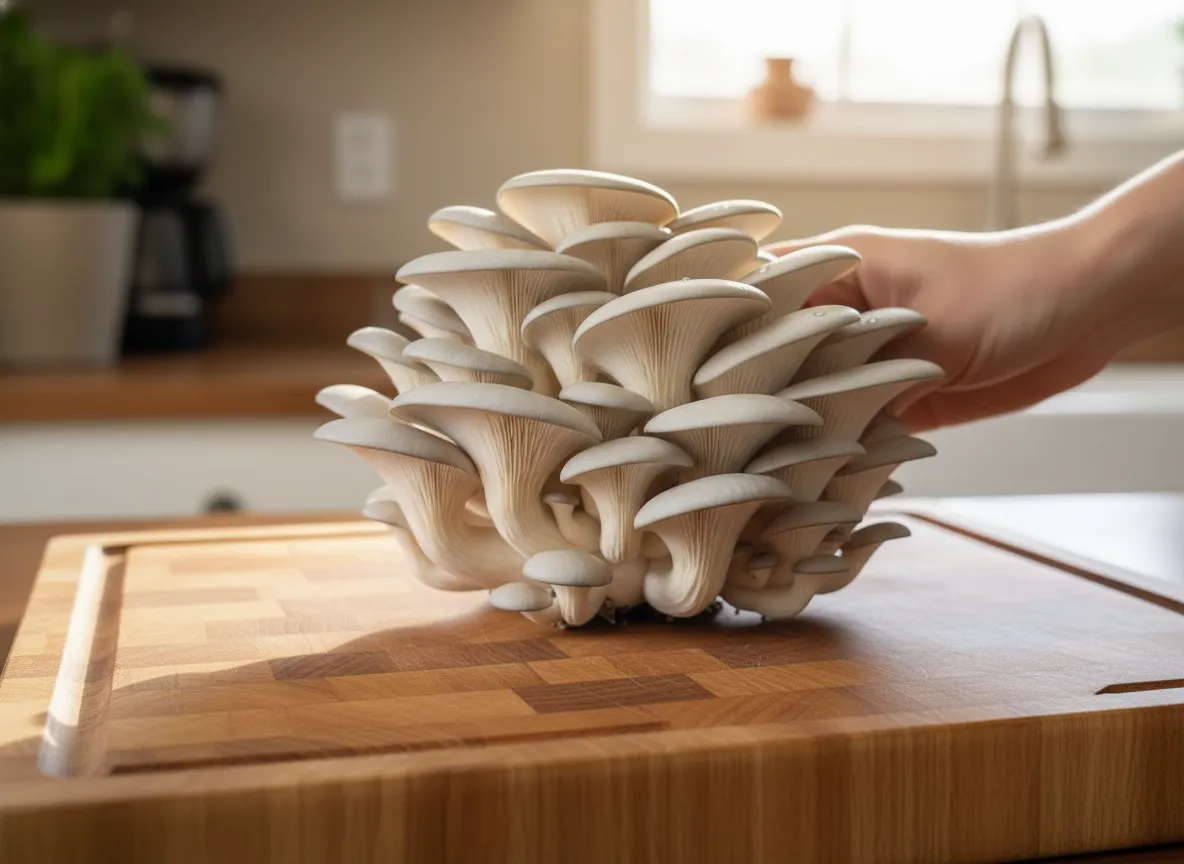
1. Blue Oyster (Pleurotus ostreatus var. columbinus)
Difficulty: Beginner — nearly foolproof
Blue Oyster is the best beginner mushroom, full stop. It's aggressive, cold-tolerant, and forgiving of mistakes.
Why it's great for Canadians:
- Fruits at 10-18°C (50-64°F) — your basement in October is perfect
- Colonizes substrate faster than almost any other species
- Grows on almost anything: straw, hardwood pellets, cardboard, coffee grounds, supplemented sawdust
- Produces heavy yields — 1-2 lbs per 5 lb substrate block is typical
- Very resistant to contamination due to aggressive growth
Downsides: Produces a LOT of spores when mature. Harvest promptly before caps flatten completely. The spores aren't dangerous in small quantities, but repeated heavy exposure can cause respiratory sensitivity.
Best substrates: Pasteurized straw, hardwood pellets, coffee grounds, supplemented sawdust. Blue oyster is genuinely undemanding — it colonizes almost anything with cellulose.
Expected timeline: Colonization in 10-14 days, pins in 5-7 days after fruiting conditions, harvest-ready in 3-5 days after pinning. Total from inoculation to first harvest: roughly 3 weeks.
Start with a Blue Oyster Grow Kit or Blue Oyster Spawn if you want to make your own substrate. Read our full oyster mushroom growing guide for the complete process.
2. Pink Oyster (Pleurotus djamor)
Difficulty: Beginner — but needs warmth
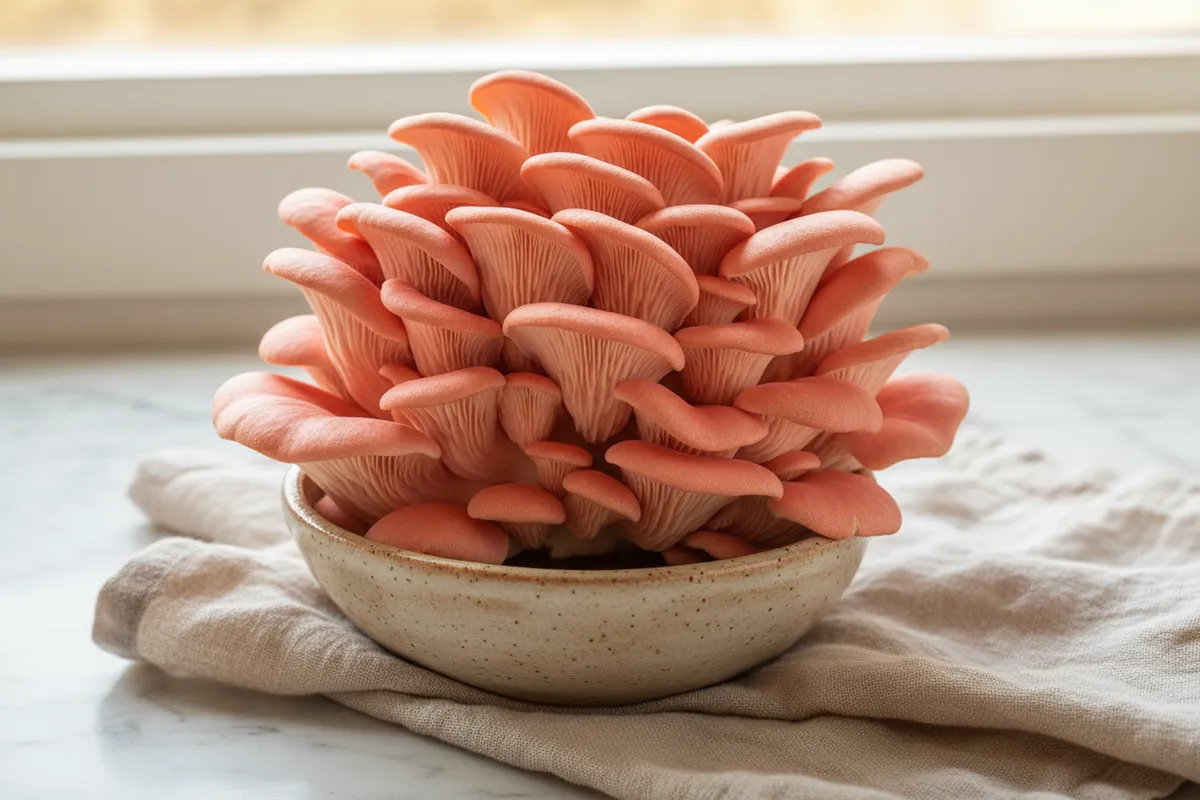
Pink Oyster is the fastest-growing mushroom most people will ever encounter. From inoculation to harvest can take as little as 3 weeks. The vibrant pink colour makes it a showstopper.
Why it's great for beginners:
- Extremely fast colonization and fruiting
- Aggressive against contamination
- Beautiful — the bright pink colour is unlike any other mushroom
- Delicious when cooked crispy — often compared to bacon
The catch for Canadians: Pink Oysters are tropical. They need 18-30°C (64-86°F) to fruit and will not tolerate cold. In a Canadian winter, you'll need a warm room or supplemental heating. Summer is the perfect time to grow them — your house is already at the right temperature.
Best substrates: Same as blue oyster — straw, hardwood, coffee grounds. Pink oyster is even less picky about substrate quality because it colonizes so aggressively.
Expected timeline: The fastest of all gourmet mushrooms. Colonization in 7-10 days, first harvest possible in as little as 2-3 weeks from inoculation when conditions are warm.
Check out our Pink Oyster Grow Kit or read our detailed Pink Oyster growing guide.
3. Lion's Mane (Hericium erinaceus)
Difficulty: Beginner to Intermediate
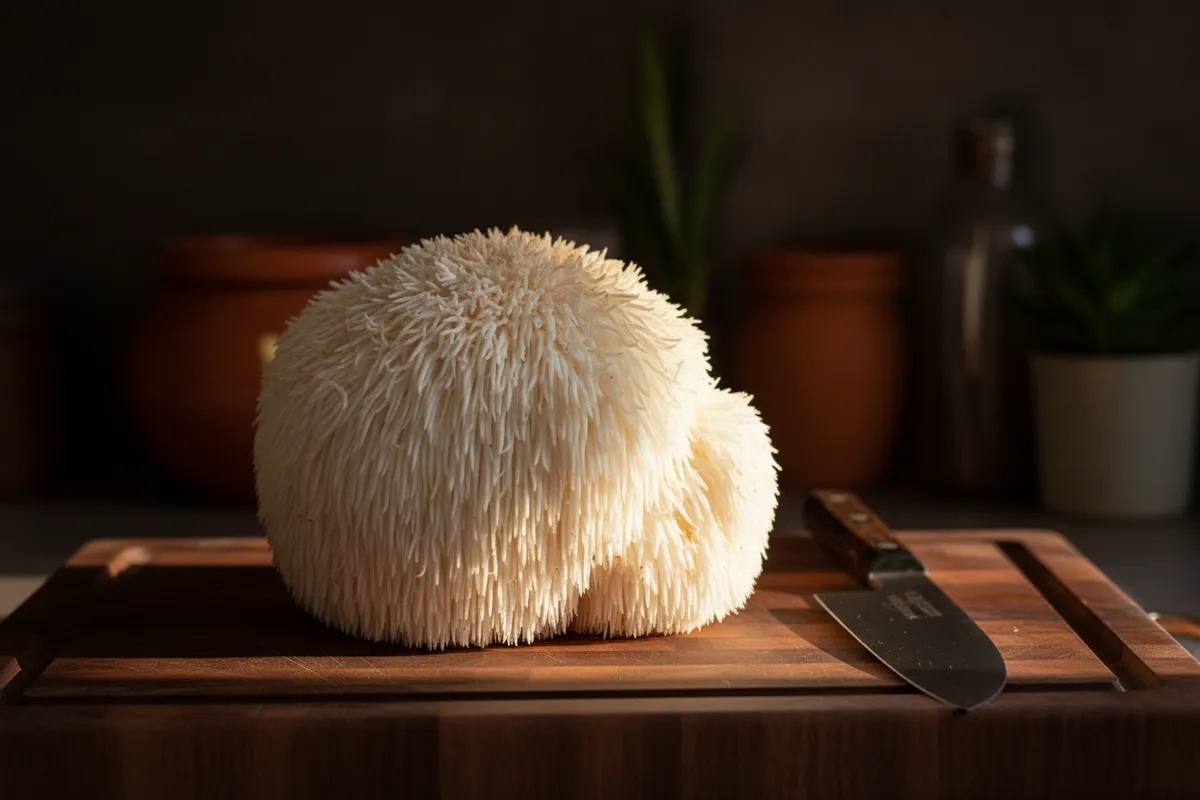
Lion's Mane is unlike any other mushroom — a shaggy white ball of cascading spines. It's one of the most sought-after gourmet and medicinal species, and it's very satisfying to grow.
Why it's great for beginners:
- Fruits at 16-20°C (60-68°F) — comfortable Canadian indoor temperatures
- Visual feedback is clear — you can see the "teeth" developing and know exactly when to harvest
- Outstanding flavour and texture — often compared to crab or lobster
- Strong market demand if you ever want to sell
Why it's slightly harder: Lion's Mane prefers supplemented hardwood substrate and is pickier about humidity than oysters. It needs consistent high humidity (85%+) or the spines dry out and yellow. A humidity tent, Martha tent, or even a large plastic bag draped loosely over the block solves this.
Best substrates: Supplemented hardwood sawdust (Masters Mix) or hardwood pellets with 10-15% wheat bran. Must be sterilized, not pasteurized. Or skip the complexity and use a pre-sterilized substrate block.
Expected timeline: Colonization in 14-21 days, fruiting in 7-14 days. Slower than oysters, but the visual process of watching the "teeth" grow longer each day is incredibly satisfying.
Grab a Lion's Mane Grow Kit to start, or read our Lion's Mane growing guide for the full process.
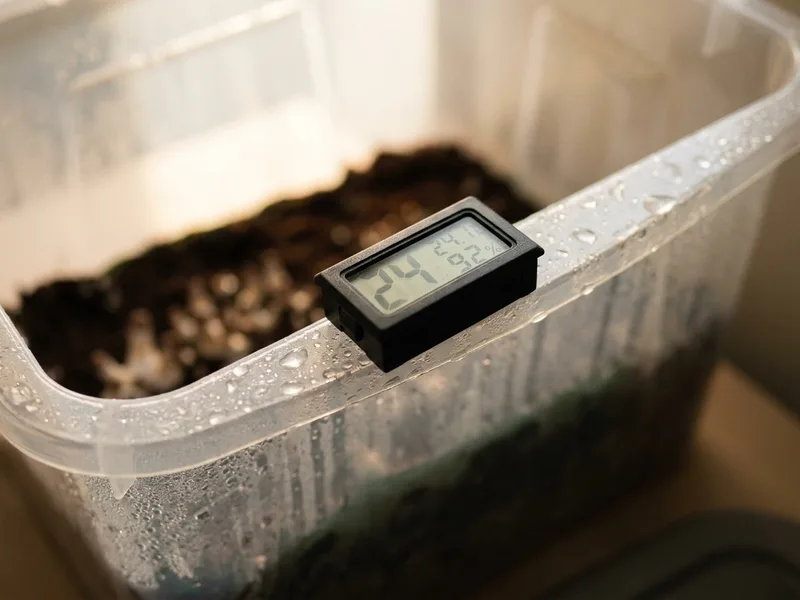
TempPro TP50 Digital Hygrometer & Thermometer
Each mushroom species has different temperature and humidity needs. A hygrometer helps you match your growing space to the right species for the season.
When you buy through our links, it supports our mycology research at no extra cost to you.
4. Chestnut (Pholiota adiposa)
Difficulty: Beginner to Intermediate
Chestnut mushrooms are seriously underrated. Small, brown, and clustered, they have a nutty, crunchy texture that's unlike any other mushroom. They hold up beautifully in cooking.
Why they're great for beginners:
- Fruits at 13-18°C (55-64°F) — excellent for cool Canadian spaces
- Produces dense, attractive clusters
- Great shelf life compared to oysters — they hold up for days in the fridge
- Unique flavour that stands out at farmers markets
Why they're less common: Chestnuts are less well-known, so there's less growing information online. They also benefit from supplemented substrate and slightly longer colonization times. But the actual growing process is straightforward.
Best substrates: Supplemented hardwood (Masters Mix or hardwood + wheat bran). Similar requirements to lion's mane — sterilization required. Our substrate guide covers the recipes.
Expected timeline: Colonization in 14-21 days, fruiting in 7-10 days. The dense clusters of small brown mushrooms are unmistakable when they appear.
Read our full chestnut mushroom growing guide for the complete process.
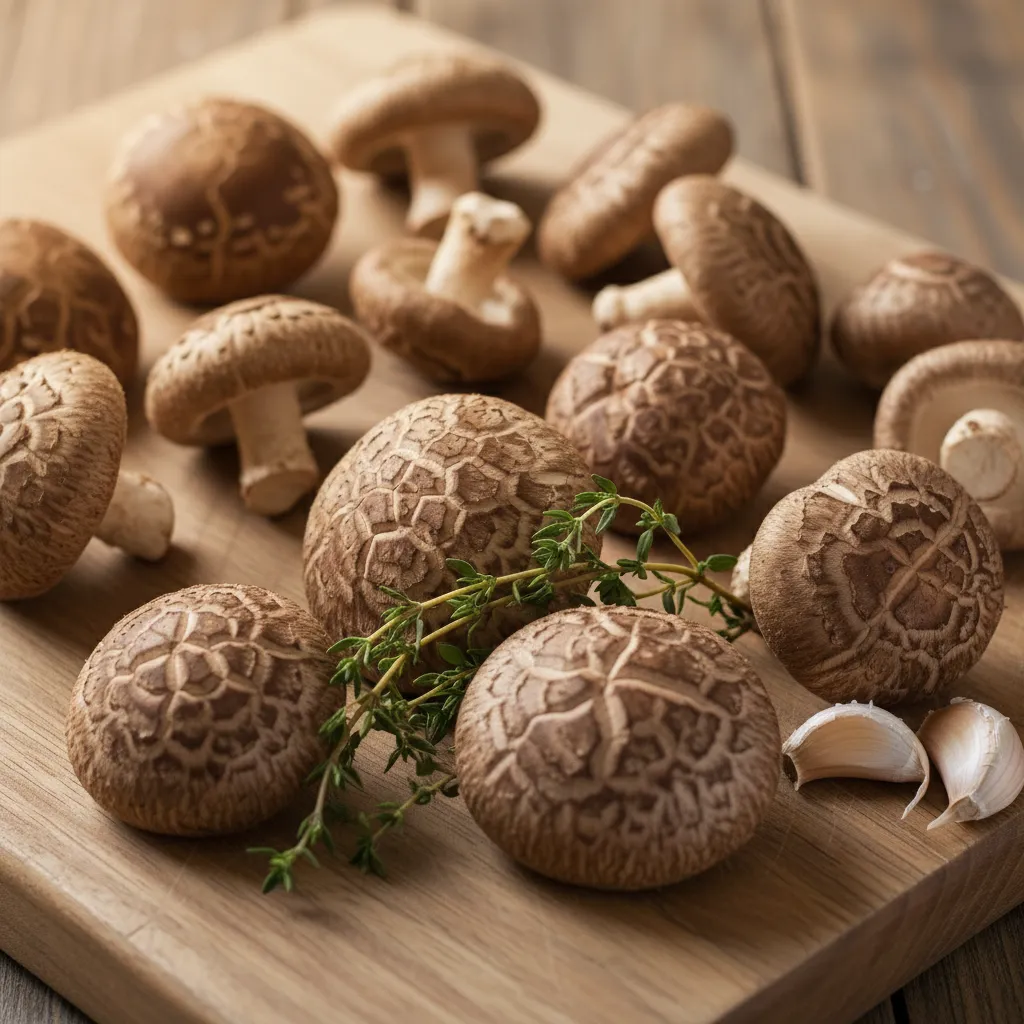
5. Shiitake (Lentinula edodes)
Difficulty: Intermediate
Shiitake is the world's second most cultivated mushroom for good reason — incredible flavour, long shelf life, and strong market demand. It requires more patience than oysters but rewards you with a premium product.
Why it's good for beginners (with patience):
- Fruits at 10-22°C (50-72°F) — wide range suits Canadian conditions
- Produces thick, meaty mushrooms with excellent shelf life
- Strong consumer recognition — everyone knows shiitake
- Can be grown on supplemented sawdust blocks or logs
Why it takes patience: Shiitake has a longer colonization period (6-12 weeks on blocks) and some strains need a cold shock or physical impact to initiate fruiting. The substrate also needs to "brown" on the surface before it's ready to fruit — a process called primordia formation.
Best substrates: Supplemented hardwood sawdust blocks (commercial method) or hardwood logs (traditional method). Log cultivation is particularly rewarding — drill holes, insert spawn plugs, and harvest for 3-5 years.
Expected timeline: Sawdust blocks: 6-12 weeks colonization, then flushes every 2-3 weeks. Logs: 6-12 months to first fruit, then seasonal harvests for years. Shiitake is the patience play, but the payoff is a premium product.
Read our full shiitake growing guide for both methods.
Quick Comparison Table
| Species | Difficulty | Fruiting Temp | Colonization | Best Substrate | First Harvest |
|---|---|---|---|---|---|
| Blue Oyster | Beginner | 10-18°C | 10-14 days | Straw, hardwood, coffee | ~3 weeks |
| Pink Oyster | Beginner | 18-30°C | 7-10 days | Straw, hardwood, coffee | ~2-3 weeks |
| Lion's Mane | Beg/Int | 16-20°C | 14-21 days | Supplemented hardwood | ~4-5 weeks |
| Chestnut | Beg/Int | 13-18°C | 14-21 days | Supplemented hardwood | ~4-5 weeks |
| Shiitake | Intermediate | 10-22°C | 6-12 weeks | Hardwood blocks or logs | 8-14 weeks |
Species to Avoid as a Beginner
Not every interesting mushroom is a good first project. These species are rewarding once you have experience, but frustrating as a starting point:
- King Oyster — top-fruiting technique, needs casing layer, cool temps for proper stem development. Learn the basics on regular oysters first.
- Reishi — very slow growing (months), requires supplemented hardwood and careful humidity control. Beautiful but not a beginner project.
- Morels — cannot be reliably cultivated indoors. Despite what some sellers claim, consistent indoor morel cultivation remains unsolved at the hobby level.
- Maitake (Hen of the Woods) — slow colonization, exacting environmental requirements, low success rates even for experienced growers.
- Enoki — requires very specific cold temperatures (4-8°C) and CO2 levels to develop the classic long, thin stems. Commercially produced in bottles with tightly controlled conditions.
Start with the five species above. Once you've grown 5-10 successful batches, the intermediate and advanced species become much more approachable because you'll understand substrate preparation, contamination prevention, and environmental control.
The Beginner's Progression Path
Here's the natural progression most successful growers follow:
Stage 1: Grow Kits (Week 1)
Buy a ready-to-fruit grow kit. This skips substrate prep, sterilization, and inoculation — you just open the bag, mist, and watch mushrooms appear in 7-14 days. The goal isn't maximum yield; it's learning what fruiting looks like, how fast mushrooms grow, and what humidity and air exchange feel like.
Stage 2: Spawn + Simple Substrates (Month 1-2)
Buy grain spawn and make your own substrate. Start with pasteurized straw (requires only hot water, no pressure cooker) or coffee grounds (free, already pasteurized). You'll learn spawn ratios, mixing technique, and colonization monitoring.
Stage 3: Sterilized Substrates (Month 2-4)
Graduate to supplemented hardwood substrates that require a pressure cooker. This opens up lion's mane, shiitake, and chestnut mushrooms. Build a still air box for cleaner inoculation. Your contamination rate will drop dramatically.
Stage 4: Agar + Liquid Culture (Month 4+)
Start working with agar plates to isolate and store your best genetics. Make your own liquid culture to multiply spawn indefinitely. At this stage, you're self-sufficient — you can maintain cultures, produce your own spawn, and fruit any species you want.
Frequently Asked Questions
What's the single best mushroom for a first-time grower in Canada?
Blue oyster, hands down. It fruits in cool temperatures (perfect for Canadian basements), colonizes fast, fights off contamination, and grows on cheap, easy substrates. If you can only try one species, make it blue oyster.
Can I grow mushrooms outdoors in Canada?
Yes — wine cap mushrooms thrive in Canadian garden beds, and shiitake grows well on outdoor log stacks. Oyster mushrooms can also fruit on outdoor straw bales in summer. See our log growing guide for outdoor methods.
How much does it cost to start growing mushrooms?
A grow kit starts under $30 — that's everything you need for your first harvest. Moving to spawn and your own substrates costs roughly $50-100 for the first batch (spawn + bags + substrate materials), plus a pressure cooker ($80-150) if you want to sterilize. Our equipment guide breaks down every item.
Do I need a special room or setup?
Not for your first grows. A kitchen counter, bathroom, or basement shelf works fine for grow kits. As you scale up, a dedicated space helps — even a closet with a Martha tent and humidity controller gives you professional results.
What temperature should my growing space be?
It depends on the species. Blue oyster fruits at 10-18°C (50-64°F) — a cool basement. Pink oyster needs 18-30°C (64-86°F) — a warm room in summer. Lion's mane likes 16-20°C (60-68°F) — comfortable room temperature. Check our temperature guide for every species.
Getting Started
For your very first grow, start with a grow kit. It removes the substrate preparation, sterilization, and inoculation steps so you can focus on learning the fruiting stage. Our grow kit collection includes all five species above.
Once you've successfully fruited a kit or two, move on to working with spawn and making your own substrate blocks. All you need to get started is a spray bottle for misting and a hygrometer to monitor conditions. That's where the real fun (and cost savings) begin. Thinking about turning your hobby into a side business? Our Farm Profit Calculator can help you see the numbers before you take the leap.
For the full process from start to finish, read our complete mushroom growing guide. And check our temperature guide to match species to your growing space.
Have a mushroom-growing question? Ask Dr. MycoTek for AI help with your grow. Sign in to use your free monthly allowance.