
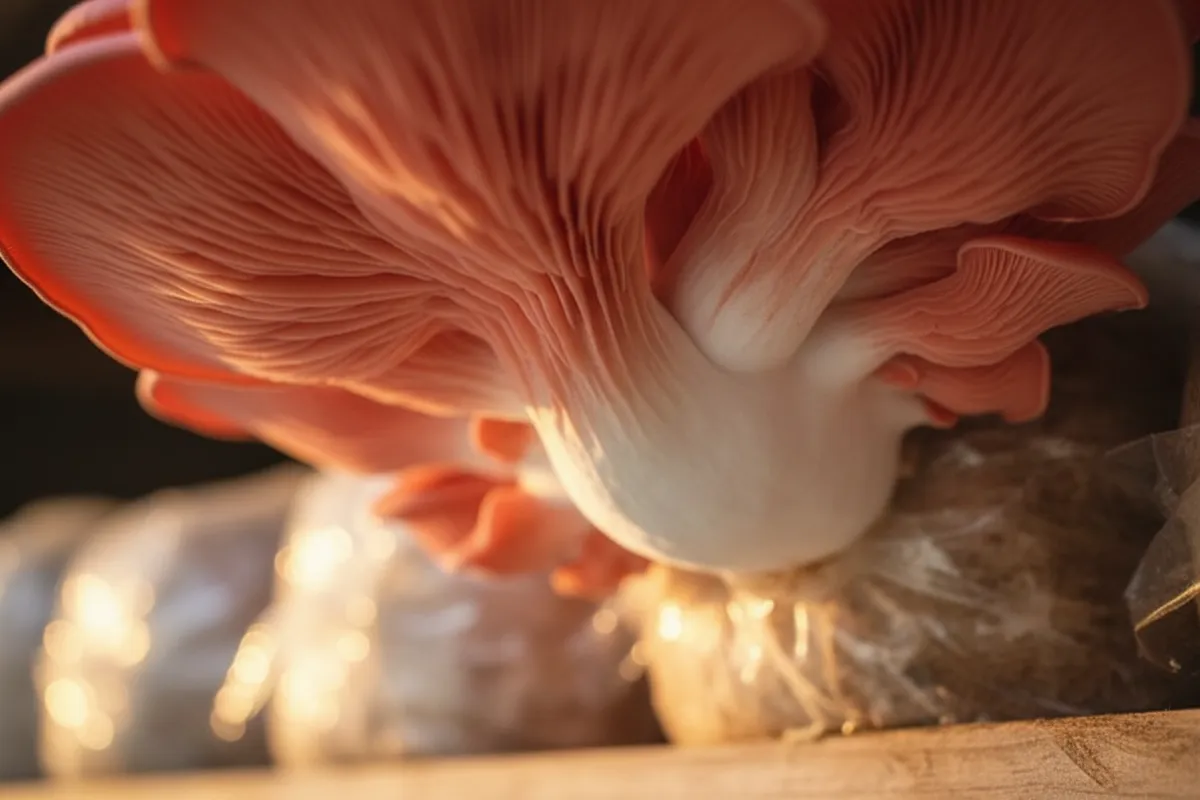
Pink Oyster mushrooms (Pleurotus djamor) are the most visually striking species you can grow at home. Clusters of vibrant flamingo-pink caps erupting from a substrate block — they look almost unreal. They're also the fastest-growing mushroom most growers will ever encounter.
But there's a catch for Canadian growers: they're tropical. Here's everything you need to know to grow them successfully, from a grow kit on your kitchen counter to bulk production with grain spawn.
Species Profile
- Scientific name: Pleurotus djamor
- Common names: Pink Oyster, Flamingo Oyster, Salmon Oyster
- Origin: Tropical and subtropical regions worldwide
- Growth speed: Very fast — one of the quickest from inoculation to harvest
- Flavour: Mild when raw; meaty, savoury, and slightly bacon-like when seared crispy
- Shelf life: Short — use within 1-2 days of harvest
- Difficulty: Beginner (if you can manage the temperature)
Pink Oyster belongs to the same genus as Blue Oyster, Black Oyster, and White Oyster — but it behaves quite differently. Where Blue Oyster thrives in cool Canadian basements, Pink Oyster demands warmth. Understanding this single difference is the key to success.
Temperature Requirements
This is where Pink Oysters differ from every other commonly cultivated species in Canada:
| Phase | Temperature Range |
|---|---|
| Incubation (colonization) | 24-30°C (75-86°F) |
| Fruiting | 18-30°C (64-86°F) |
| Optimal fruiting | 22-28°C (72-82°F) |
Pink Oysters will not fruit below 15°C (59°F). They simply stall. In a Canadian winter, your basement at 14°C is perfect for Blue Oyster — and a dead zone for Pink Oyster.
This means Pink Oysters are a summer species for most Canadian growers unless you have a heated growing space. July and August, when indoor temperatures naturally sit in the 22-28°C range, are prime Pink Oyster season.
For more on matching species to temperatures, see our temperature guide.
Humidity and Fresh Air Exchange
Temperature gets all the attention with Pink Oyster, but humidity and fresh air exchange (FAE) are just as important for healthy fruiting.
Humidity: Pink Oysters need 85-95% relative humidity during fruiting. Without it, the caps will crack, curl at the edges, and dry out before they reach full size. In a Canadian home during summer, ambient humidity is rarely enough on its own.
How to maintain humidity:
- Mist 3-4 times daily with a fine mist spray bottle. Mist the air around the mushrooms, not directly on the pins.
- Humidity tent: Drape a clear plastic bag with a few holes punched in it loosely over the kit. This creates a microclimate while still allowing some air exchange.
- Martha tent: For multiple kits or blocks, a Martha tent fruiting chamber with a humidifier on a timer gives the most consistent results.
- Pebble tray: Place the kit on a tray filled with wet pebbles. As the water evaporates, it raises the humidity around the kit.
Fresh air exchange: Pink Oysters need ample fresh air. In a sealed container with no airflow, the caps will grow long, thin stems reaching for oxygen — a condition called "leggy" or "stretchy" fruiting. If your mushrooms look like they're reaching for the exit, they need more air. Open a window, run a fan on low nearby, or add more holes to your humidity tent.
The balance between humidity and FAE is the core skill of mushroom growing. Too much air dries them out. Too little air makes them leggy. For Pink Oyster, err on the side of more air — they can handle brief dips in humidity better than prolonged stale air.
Substrate Options
Pink Oysters are aggressive colonizers and grow well on a variety of substrates:
Straw (preferred): Pasteurized wheat or barley straw is the traditional substrate for Pink Oysters. It's cheap, easy to prepare, and produces excellent yields. See our straw pasteurization guide for methods.
Hardwood pellets: HWFP work well and require minimal preparation. Use the standard 1:1.2 hydration ratio. No supplementation needed for oysters.
Supplemented sawdust: Hardwood sawdust with 10-20% wheat bran, sterilized. Higher yields than plain sawdust but requires a pressure cooker. Our pre-sterilized hardwood blocks come pre-blended and already sterilized — no pressure cooker needed.
Coffee grounds: Pink Oysters grow well on spent coffee grounds mixed 50/50 with straw or sawdust. A good use for a waste product, though contamination rates are higher.
Bucket tek: Pink Oyster is one of the best species for bucket tek — pasteurized straw packed into a 5-gallon bucket with holes drilled in the sides. Simple, productive, and perfect for a garage or patio grow in summer.
Step-by-Step Growing Guide
From a Grow Kit
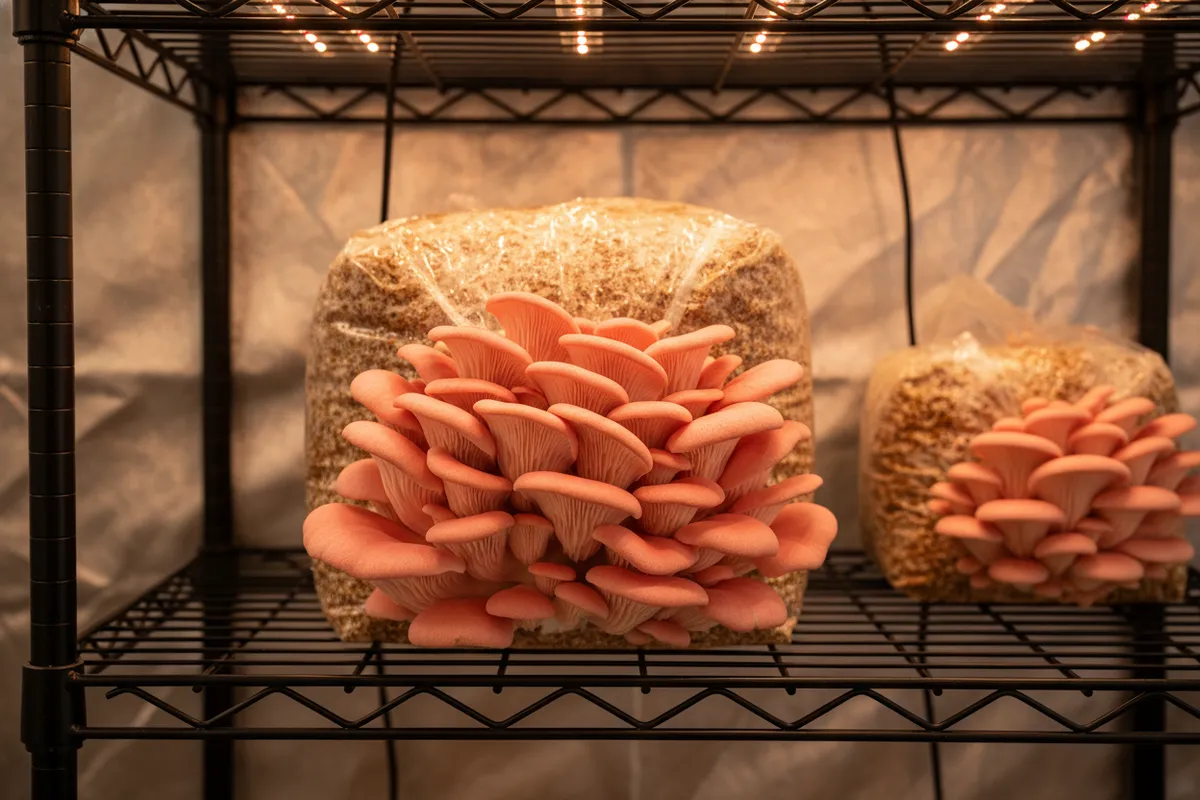
The easiest way to start. Our Pink Oyster Grow Kit arrives fully colonized and ready to fruit.
- Remove from box. The block inside is fully colonized — covered in white or slightly pink mycelium.
- Cut an X. Using a clean knife, cut a 3-4 inch X in the plastic bag. Some growers cut multiple smaller holes for multiple fruiting sites.
- Mist and maintain humidity. Mist the opening 2-3 times daily with clean water from a fine mist spray bottle. A humidity tent (a clear plastic bag with holes loosely draped over the kit) helps enormously.
- Keep warm. Place in the warmest room of your house — 22-28°C is ideal. Near (but not on) a heat source works. Avoid direct sunlight.
- Watch for pins. Within 5-7 days, you should see tiny pink pins forming at the cut opening. Once pins appear, continue misting and maintaining humidity.
- Harvest. Pink Oysters grow fast once they start. Harvest when caps flatten out, before they begin to curl upward — typically 3-5 days after pinning. Don't wait too long; they go from perfect to past-prime quickly.
Most kits produce 2-3 flushes. After the first harvest, mist the opening, soak the block in cold water for 6-8 hours, drain, and return to fruiting conditions. The second flush typically appears within 7-10 days.
From Spawn
For larger grows, start with our Pink Oyster Spawn — 5 lb millet grain bags.
- Prepare your substrate (straw or pellets) using pasteurization or the pellet hydration method.
- Mix spawn into substrate at a 10-20% spawn ratio in grow bags.
- Seal bags and incubate at 24-30°C. Colonization is fast — often 10-14 days.
- Once fully colonized, cut holes and move to fruiting conditions (22-28°C, 85-95% humidity, good FAE).
- Harvest when caps flatten. Expect first pins within 5-7 days of cutting.
If you're making your own spawn, our grain-to-grain transfer guide covers the process. Pink Oyster mycelium is aggressive and forgiving — a great species for learning spawn production.
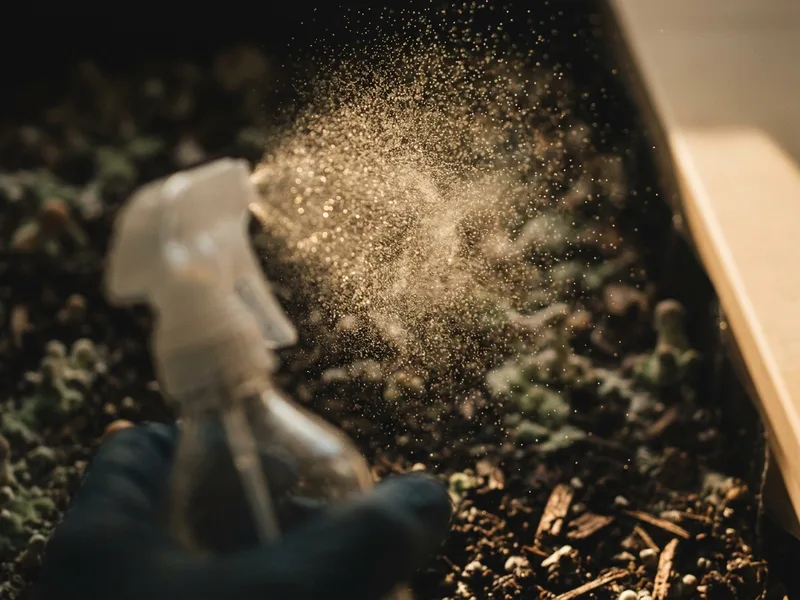
Fine Mist Spray Bottle — 2 Pack (500ml)
Pink Oysters need consistent misting for proper cap development. A fine mist sprayer adds humidity without waterlogging the delicate pins.
When you buy through our links, it supports our mycology research at no extra cost to you.
Troubleshooting Common Problems
Mushrooms won't pin
The most common issue. Almost always a temperature problem. Check with a thermometer — if your growing area is below 18°C, Pink Oyster will not fruit. Move the kit to a warmer room. On top of the fridge, near (not on) a heat register, or in a room with a space heater set to 24°C all work. If temperature is fine, check humidity — very dry air can also prevent pinning.
Long, leggy stems with tiny caps
Not enough fresh air exchange. The mushrooms are reaching for oxygen. Open a window, add holes to your humidity tent, or move the kit somewhere with better airflow. A fan running on low speed across the room (not pointed directly at the kit) solves this quickly.
Caps are cracking or drying out
Humidity is too low. Increase misting frequency or add a humidity tent. If you're using a Martha tent or grow chamber, check that the humidifier reservoir is full and the output is reaching the mushrooms.
Pink colour is fading to grey or white
This can happen for several reasons. Not enough light — Pink Oysters need indirect natural light to develop their full colour. Move the kit near a window (not in direct sunlight). Cold temperatures can also cause colour loss. In some cases, the colour simply fades as the mushrooms mature, which is normal. They're still perfectly edible.
Contamination (green, black, or orange mold)
If you see mold that's clearly not mushroom mycelium, isolate the block immediately. Green mold (Trichoderma) is the most common contaminant. If it's on the surface near the fruiting hole, you can sometimes cut it away and still get a harvest. If the entire block is contaminated, compost it and start fresh. See our contamination field guide for identification and prevention.
The Short Shelf Life Challenge
Pink Oysters have the shortest shelf life of any commonly cultivated mushroom. After harvest, they begin to deteriorate within 24-48 hours, even refrigerated. The vibrant pink colour fades, edges curl, and texture becomes rubbery.
Practical solutions:
- Cook them the day you harvest. This is the best approach. Plan your meals around your harvest schedule.
- Sear and store. Cooked Pink Oysters last 3-4 days in the fridge. Pan-sear a batch and use throughout the week.
- Dehydrate. A food dehydrator works perfectly. Dried Pink Oysters lose their colour but retain flavour. Rehydrate for soups and stir-fries.
- Grow only what you'll eat. If you're cutting fruiting holes in your block, start with one or two rather than six. You can stagger harvests.
For farmers market sellers: Pink Oysters must be sold the day of harvest or the day after at most. Price them as a premium product to account for the short window.
How to Cook Pink Oyster Mushrooms
Pink Oyster is one of the few mushrooms that truly transforms with heat. Raw, they're bland and slightly rubbery. Cooked properly, they're one of the best-tasting mushrooms you'll ever eat.
The crispy sear method (recommended):
- Tear large clusters into bite-sized pieces along the natural seams. Don't use a knife if you can avoid it — torn edges crisp better.
- Heat a cast iron pan or skillet over medium-high heat. Add a generous amount of oil or butter.
- Place mushrooms in a single layer. Don't crowd the pan. Let them cook undisturbed for 3-4 minutes until the bottom is golden and crispy.
- Flip and cook another 2-3 minutes. Season with salt and pepper.
- The result should be crispy on the outside, tender inside, with a deeply savoury flavour often compared to bacon.
Other ways to use them:
- Stir-fries: Add in the last 3-4 minutes of cooking. They absorb sauces beautifully.
- Tacos: Seared crispy Pink Oyster makes an excellent taco filling with lime, cilantro, and pickled onions.
- Pasta: Sear first, then toss with pasta, garlic, cream, and parmesan.
- Tempura: Light batter, deep-fried. The ruffled edges become incredibly crispy.
For more mushroom cooking ideas, check out our oyster mushroom recipes.
Why They're Worth Growing (Despite the Challenges)
Pink Oysters bring something no other mushroom does:
Visual impact. Nothing else in the mushroom world looks like this. They're stunning on a plate, at a market stand, or just sitting on your kitchen counter. They make mushroom growing exciting.
Speed. From inoculation to first harvest in as little as 3 weeks. Instant gratification in a hobby that often requires patience.
Flavour. When seared crispy in a hot pan with oil, Pink Oysters develop a deeply savoury, almost bacon-like flavour and a satisfying crunch. They're a standout ingredient — not a substitute for something else.
Education. They demonstrate how different mushroom species can be. If you've only grown Blue Oysters, Pink Oysters show you how much variety exists within a single genus.
Canadian Growing Calendar
| Month | Viability |
|---|---|
| November - March | Difficult without heated space |
| April, October | Possible in warm rooms |
| May - September | Ideal — natural indoor warmth |
| June - August | Peak season |
Frequently Asked Questions
Can I grow Pink Oyster mushrooms in winter in Canada?
Yes, but only if you can maintain 22-28°C in your growing space. A heated room, heat mat, or Martha tent with a small heater works. Most growers find it easier to grow cold-tolerant species like Blue Oyster in winter and save Pink Oyster for summer.
How many harvests will I get from one kit?
Typically 2-3 flushes over 4-6 weeks. The first flush is the largest. Soak the block between flushes to rehydrate it. See our flush guide for details.
Why are my Pink Oysters growing so fast?
That's normal. Pink Oyster is the fastest fruiting commonly cultivated mushroom. Once pins appear, you can go from tiny bumps to harvest-ready clusters in 3-5 days. Check them daily during fruiting.
Are Pink Oyster mushrooms safe to eat raw?
While not toxic, they're best cooked. Raw Pink Oyster has a bland, slightly spongy texture. Cooking transforms the flavour and texture completely. Always cook your mushrooms before eating.
Can I use Pink Oyster spawn for outdoor beds?
Not recommended in Canada. Pink Oyster is tropical and will not survive outdoor temperatures in most of the country. For outdoor growing, Wine Cap is a much better choice.
Get Started
Pick up a Pink Oyster Grow Kit for the easiest start, or grab Pink Oyster Spawn if you want to make your own substrate blocks. Both are produced in our CFIA-licensed cleanroom in Brantford, Ontario with lab-isolated genetics.
For more on oyster mushroom cultivation generally, read our complete oyster mushroom guide. And if you're new to mushroom growing entirely, start with how to grow mushrooms at home or our guide to the best mushrooms for beginners in Canada.
Have a mushroom-growing question? Ask Dr. MycoTek for AI help with your grow. Sign in to use your free monthly allowance.