
If you see a new spreading coloured patch or unusual slime, pause before handling it. Keep the kit or bag apart from other grows and contact its maker. Do not scrape away a suspicious patch, sniff an opened bag or use a photo as proof that the mushrooms are safe to eat.
This guide explains common terms you may encounter and the useful checks you can make without disturbing the grow. Colour and texture can raise a concern, but they cannot reliably identify a mould species or its cause.
First: White Growth Can Be Normal
Mycelium is the mushroom growing through its food. It can look thin and wispy, fluffy, or like thicker white threads, depending on the species and stage. White does not automatically mean healthy, and a fuzzy patch does not automatically mean cobweb mould.
Some blocks change colour as they mature. Shiitake blocks, for example, develop a brown surface. Small oyster pins can have dark caps. Compare what you see with the mushroom and kit type you actually have, rather than a single colour chart.
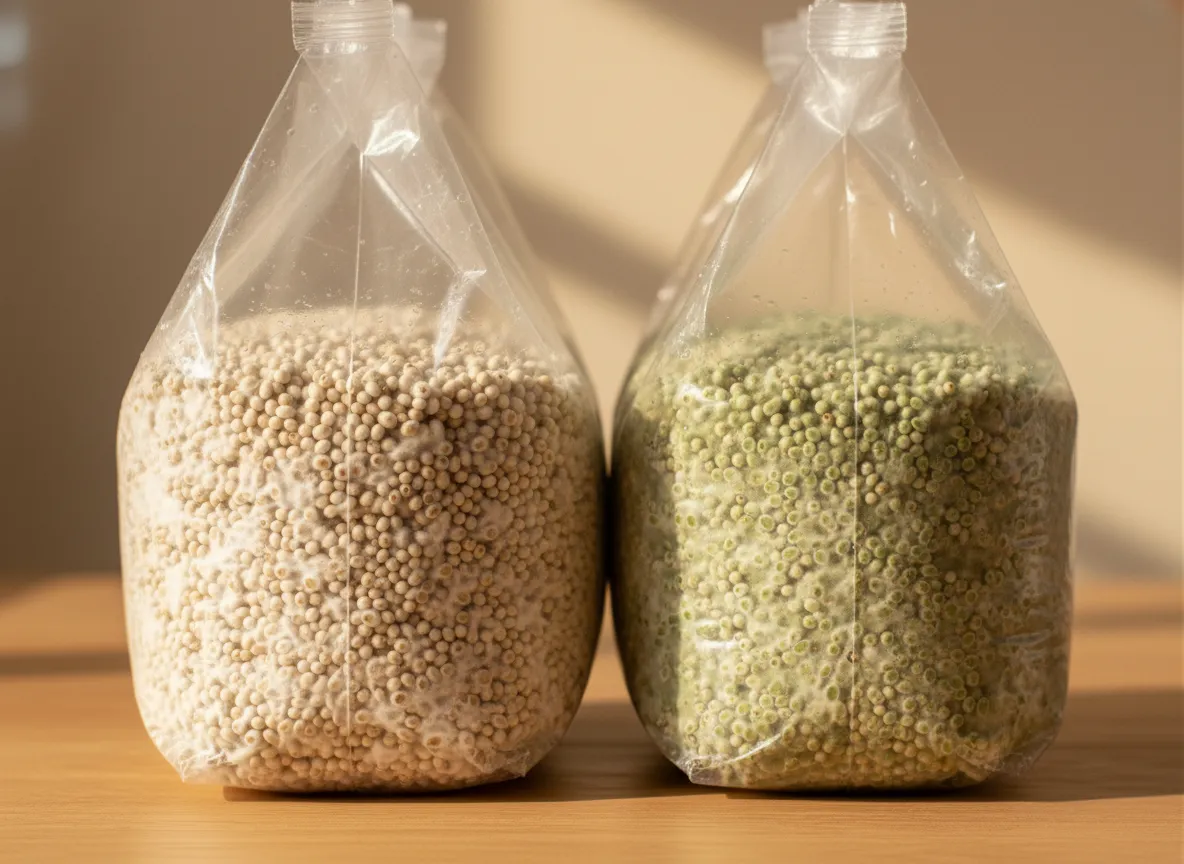
This illustration is for orientation, not a diagnostic photograph or an identification test.
If you own a Nature Lion kit, start with mould or mycelium on a kit. It explains what photos to send us and how to avoid unnecessary handling.
What to Do Right Now
- Leave the suspicious area alone. Do not brush, swab or scrape it to see what comes off. Do not open a closed bag for a smell test.
- Keep it apart from other grows. Avoid shaking it or handling it over healthy blocks. Keep an already closed bag closed.
- Take two photos. Show the whole kit or container and a clear close-up through the existing opening or plastic.
- Write down the details. Include the mushroom, supplier, start date, when the patch appeared and whether it is changing.
- Ask the maker for the next step. For Nature Lion kits, email info@naturelion.ca. Do not assume that an unaffected-looking mushroom from a suspect block is safe to harvest and eat.
Common Contamination Names
These names describe organisms or growing problems, not diagnoses you can confirm from this table.
| Name you may hear | What may draw attention | What the appearance cannot tell you |
|---|---|---|
| Trichoderma or green mould | A new green or powdery patch | Green alone cannot confirm the genus or how it entered |
| Penicillium | Blue-green powdery growth | Colour is not a reliable way to distinguish it from other moulds |
| Cobweb mould | Unusual wispy growth spreading over the surface | Normal mushroom growth can also be wispy; peroxide is not an identification test |
| Aspergillus or other dark moulds | Dark, sooty or powdery spots | A black spot does not identify a species or its health effects |
| Lipstick mould | Pink, orange or reddish growth | Several changes can produce colour; an image is not confirmation |
| Bacterial contamination or “wet spot” | Unusual wet, slimy grain or stalled areas | Water or condensation alone does not identify bacteria |
| Yeast or fermentation | Unexpected film, wetness or other deterioration | You cannot identify the organism or source from timing alone |
| Grain mites | Fine tan dust around a jar lid or on the grain surface | Dust that moves under magnification is a pest, not a mould |
For a closer look at the first concern, read green mould on mushroom substrate. If the powder on a spawn jar appears to shift when you watch it, see grain mites in mushroom spawn.
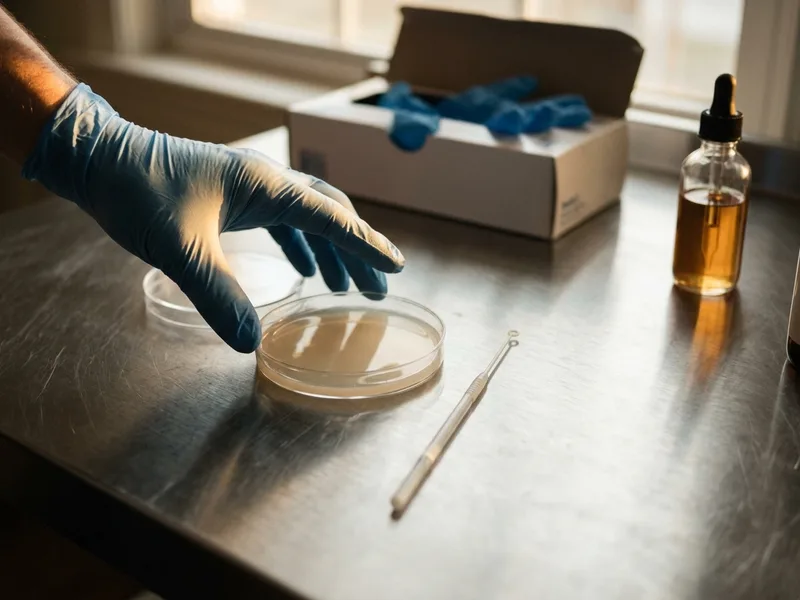
Nitrile Gloves
Wiped down with alcohol between steps, gloves stop skin flora reaching an open bag or plate. Box of a hundred lasts most home growers a season.
When you buy through our links, it supports our mycology research at no extra cost to you.
Why Did This Happen?
For a purchased kit, a problem is not automatically your fault. The maker can review how the kit looked on arrival, packaging, storage and the care routine. Save the order details and photos.
For a homemade grow, investigate each stage rather than guessing from the colour:
- Starting material: Which culture or spawn lot did you use? Did several bags from the same source develop problems?
- Preparation: Which substrate recipe and heat-treatment method did you follow? Was the equipment suitable for the load?
- Cooling and handling: Did bags remain sealed while cooling? Were they opened in a suitable clean workspace?
- Packaging: Are seals and filter patches intact?
- Growing conditions: Is water pooling, are bags overheating, or are old blocks left beside new ones?
A problem appearing early does not prove it entered during inoculation. Several stages can introduce or reveal contamination. Notes from multiple batches are more useful than assigning blame from one bag.
Prevent Problems on the Next Grow
Follow a complete substrate method
Substrate means the growing material, such as straw, grain or sawdust. Different recipes need different preparation. Pasteurization reduces competing organisms; sterilization is a different heat-treatment process used for grain and many supplemented recipes.
Use a tested method appropriate to your material, container size and equipment. One pressure and time is not a universal guarantee for every load. Read the substrate guide before combining parts of different recipes.
Work inside the clean area
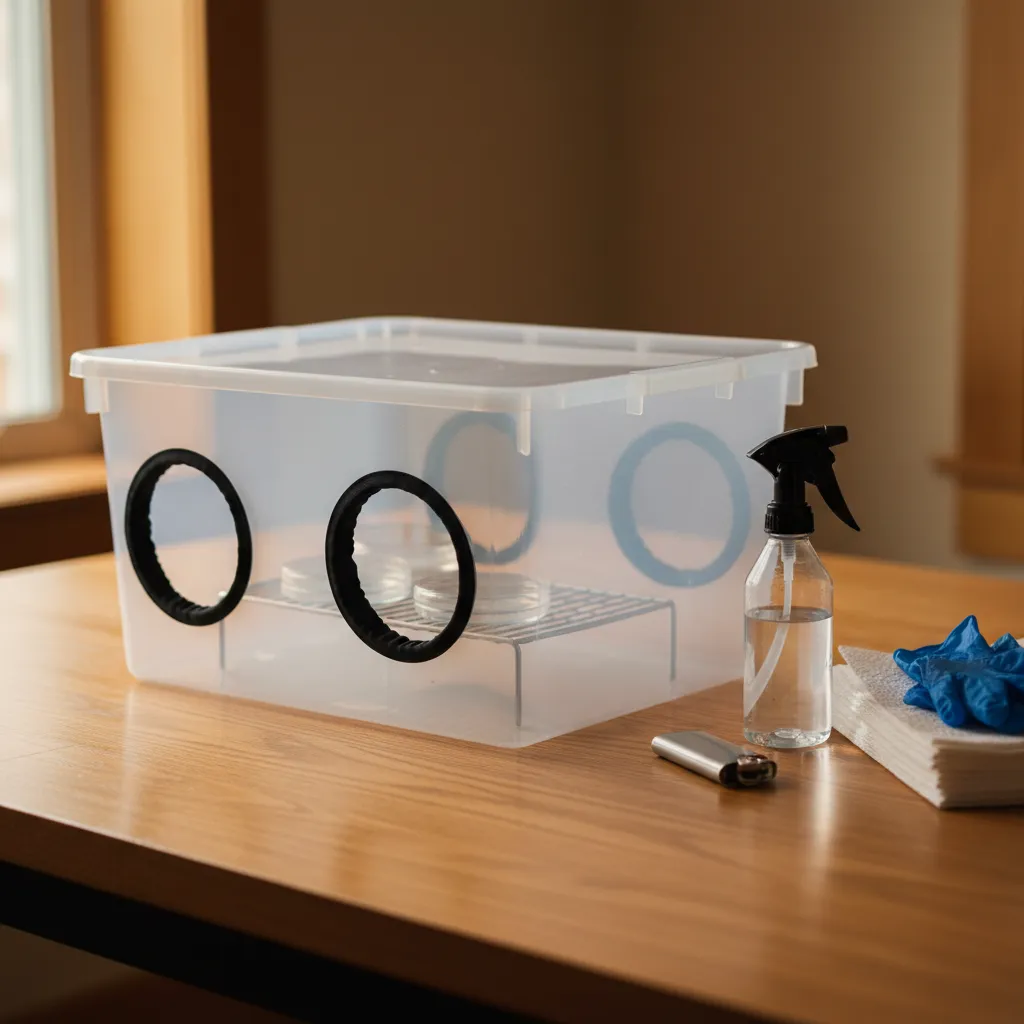
A still-air box reduces moving air around open containers; it does not make the room sterile. Work inside the box, rather than in front of it. A flow hood is a different setup. See the still-air box guide before starting transfers.
Prepare tools before opening a bag. Follow disinfectant labels for surfaces, and keep flames away from alcohol and out of a still-air box. Do not spray cleaning chemicals onto a growing block as a substitute for proper preparation.
Keep containers closed while growth spreads
Inspect through the bag or jar when possible. Avoid opening it just to check a smell or touch the surface. Keep filters intact; use the intended injection port rather than puncturing a filter patch.
Keep records simple
Label bags with their date, mushroom and spawn source. Note the recipe and any changes. If only one batch has a problem, those details help you compare it with a successful batch.
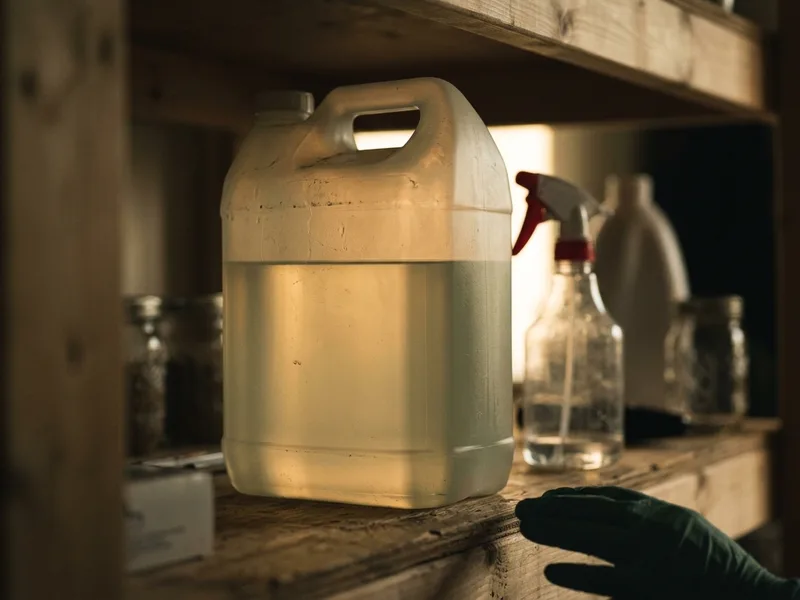
Isopropyl Alcohol 70%, 4 Litre Jug
Seventy percent works better here than ninety-nine, which flashes off before it has time to act. Buy it by the jug and decant into a spray bottle.
When you buy through our links, it supports our mycology research at no extra cost to you.
Can I Save a Contaminated Block?
Do not use patch size as a safety test. A coin-sized spot is not a reliable reason to cut it away, salt it or continue harvesting. Visible growth may not show the whole problem.
For a suspect retail kit, stop and contact the maker. For a homemade grow, removing an affected bag from production and reviewing the process is generally more useful than experimenting with chemicals on a crop you intend to eat. Keep it contained during handling and follow local disposal guidance.
Do not add a suspect block to a new indoor grow or use it as spawn. A chat response cannot confirm that a salvaged crop is safe.
Frequently Asked Questions
Is white fuzz always mycelium?
No. Mushroom mycelium can be fuzzy, and other growth can begin white. Consider the species, stage and changes over time, then ask for help if it looks unusual.
Should I spray hydrogen peroxide on cobweb-like growth?
Do not use fizzing or a change after spraying as proof of identity or a cure. Avoid applying chemicals to a kit without the maker’s advice.
Should I open the jar to smell it?
No. Leave a suspicious closed container closed. Describe any odour already noticed during normal use, without deliberately sniffing or disturbing the growth.
Can an AI photo check identify the mould?
It may help you describe visible changes and organise questions, but it cannot establish the organism’s identity or clear a crop for eating. A photo diary is a record, not a laboratory test.
What actually prevents it
Most contamination is airborne or carried in on hands. Two cheap things move the odds more than anything else.
Fluffy white growth climbing off the substrate instead of pinning is usually aerial mycelium from stale air rather than contamination. See fresh air exchange.
Small dark flies drifting off the surface are fungus gnats, and they are how contamination moves between blocks. See fungus gnats in mushroom grows for the treatment that does not harm mycelium.
Further Reading
- Cornell Small Farms: Indoor Production — cultivation stages and production planning.
- Nature Lion kit help — opening, daily care and when to ask us for help.
- Growing at home — choose a method before buying equipment.
Need help with a Nature Lion kit? Email info@naturelion.ca with the whole-kit photo, close-up and start date.