
If you want to grow mushrooms outdoors with almost zero effort, wine caps are your species. Stropharia rugosoannulata — also called Garden Giant or King Stropharia — is the most forgiving outdoor mushroom you can cultivate in a Canadian garden. No sterile technique. No pressure cooker. No grow room. Just wood chips, spawn, and patience.
They fruit in the same bed for years, improve your soil as they decompose organic matter, and produce caps the size of dinner plates. If you have a shady corner of your yard and access to wood chips, you can grow wine caps.
Species Profile
- Scientific name: Stropharia rugosoannulata
- Common names: Wine Cap, Garden Giant, King Stropharia, Burgundy Mushroom
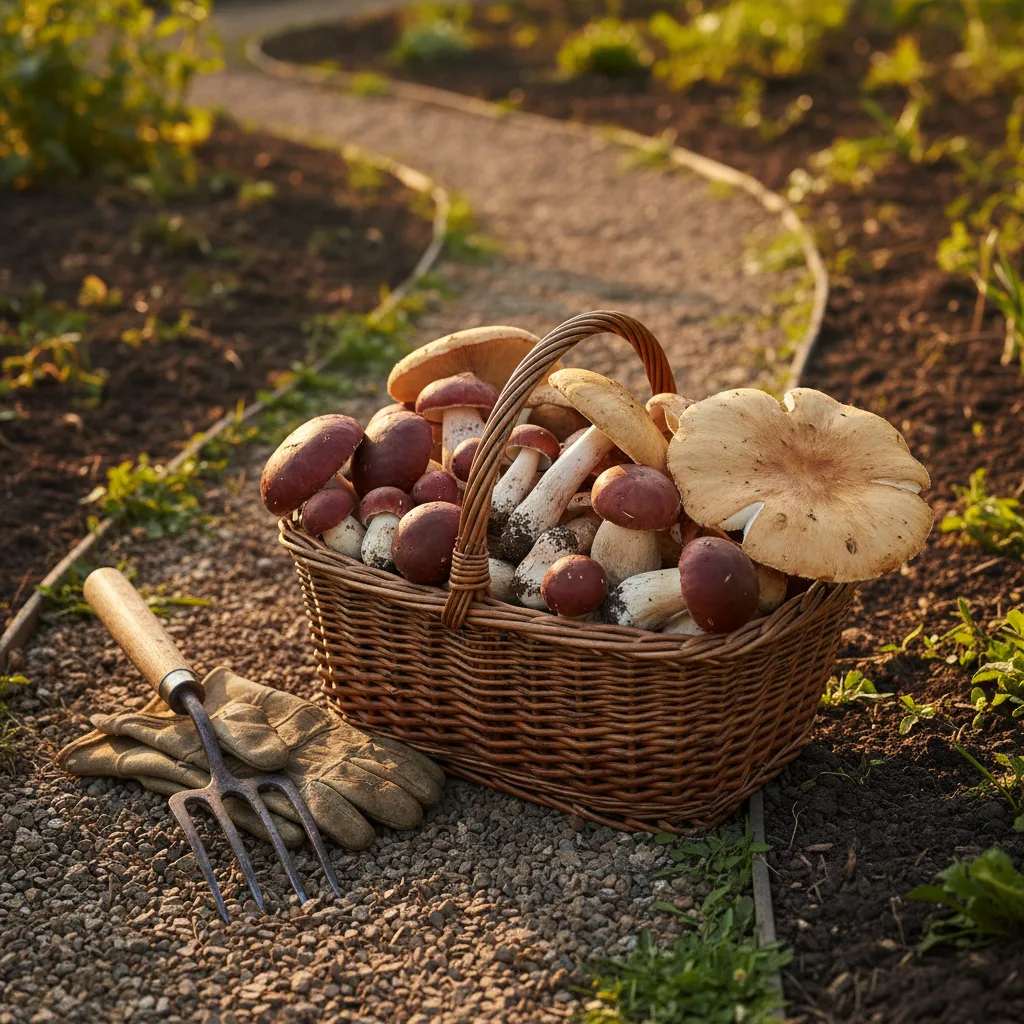
- Cap colour: Rich burgundy to wine-red when young, fading to tan-brown as they mature
- Cap size: 5 to 30 cm across — some of the largest cultivated mushroom caps you will ever see
- Gills: Grey to purple-grey, darkening with age
- Stem: Thick, white, with a prominent ring (annulus)
- Flavour: Mild, nutty, slightly potato-like. Meaty texture when cooked.
- Difficulty: Beginner — the easiest outdoor mushroom to grow in Canada
Why Wine Caps Are Perfect for Canadian Gardens
Wine caps thrive in exactly the conditions that most Canadian backyards already provide:
Cold-hardy. Wine caps fruit between 10 and 21°C (50 to 70°F) — the same temperature range as a Canadian spring and fall. They handle frost better than any oyster mushroom and overwinter in the ground as mycelium, coming back year after year.
No special equipment. No laminar flow hood, no pressure cooker, no humidity tent. You build a bed, add spawn, water it, and wait. This is gardening, not lab work.
Improves your soil. Wine cap mycelium breaks down wood chips and straw into rich humus. After a year or two of fruiting, the bed becomes some of the best garden soil you have ever seen. Many permaculture growers use wine caps specifically for soil building.
Produces for years. A single inoculated bed can fruit for 3 to 5 years if you keep feeding it fresh wood chips or straw each season. The mycelium spreads naturally and can even colonize nearby mulched pathways.
Massive yields. A well-established 4x8 foot bed can produce 5 to 15 kg of mushrooms over a season. At farmers market prices of $15 to $20/lb, that is serious value from a pile of wood chips.
When to Plant in Canada
Timing depends on your region, but the rule is simple: plant after your last frost date, when soil temperatures are consistently above 10°C (50°F).
| Region | Best Planting Window | First Expected Harvest |
|---|---|---|
| Southern Ontario, BC Lower Mainland | Late April to June | July to October |
| Prairies (AB, SK, MB) | Mid-May to June | August to October |
| Quebec, Maritimes | May to June | August to October |
| Northern Ontario, Northern BC | June to early July | August to September |
You can also plant in early fall (September) to let the mycelium establish before winter. It will overwinter and fruit the following spring — this actually produces the strongest flushes because the mycelium has months to colonize before fruiting.
Substrate Options
Wine caps are not picky. They will colonize almost any carbon-rich organic material:
Hardwood chips (preferred). Fresh or aged hardwood chips from maple, oak, birch, or beech are ideal. Many municipalities offer free wood chips from tree trimming operations — call your local public works department. Arborist chip (mixed species with leaves) works well too.
Straw. Wheat or barley straw works excellent. Chop or break it up to increase surface area. Straw beds colonize faster than wood chips but break down quicker — expect 1 to 2 years of production vs 3 to 5 years with wood chips.
Cardboard. Corrugated cardboard, soaked and layered, makes a surprisingly good substrate layer. Wine caps love the cellulose. Use it as a base layer under wood chips for excellent results.
Mixed substrates. The best beds combine materials — a cardboard base, wood chips as the main body, and a straw top layer. This gives the mycelium multiple food sources and textures to colonize.
What to avoid: Softwood chips (cedar, pine) contain natural fungicides that slow colonization. Dyed mulch, pressure-treated wood, and anything with chemical treatment will kill the mycelium.
Step-by-Step: Building a Wine Cap Bed
What You Need
- 1 bag of wine cap spawn or wine cap liquid culture expanded on grain
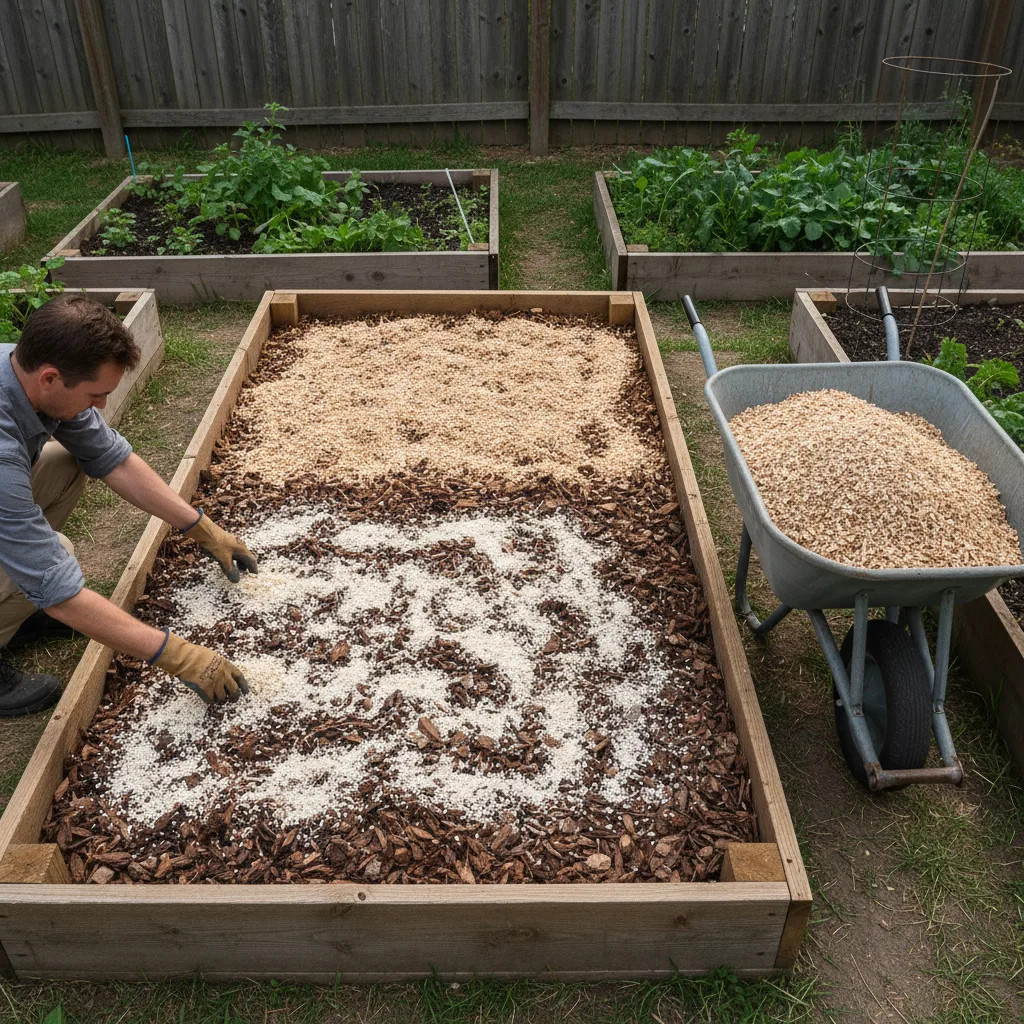
- 2 to 4 wheelbarrows of fresh hardwood wood chips (enough for a 4x8 foot bed, 15 to 20 cm deep)
- A shady or partially shaded garden area
- A garden hose or watering can
- Optional: cardboard for the base layer, straw for the top layer
Build the Bed
Choose your location. Part shade is ideal — under deciduous trees, along a fence, or on the north side of a building. Wine caps can handle more sun than most mushrooms, but full blazing sun will dry the bed out too fast. Near a hose for easy watering is a bonus.
Prepare the ground. Clear grass or weeds from a 4x8 foot area (or any size you want — bigger is better). Lay down a layer of soaked corrugated cardboard if you have it. This suppresses weeds and gives the mycelium a head start.
Add the first substrate layer. Spread 5 to 8 cm (2 to 3 inches) of wood chips evenly across the bed. If the chips are dry, soak them with a hose until thoroughly moist.
Add spawn. Crumble or break your spawn into walnut-sized pieces and scatter evenly across the wood chip layer. Space pieces about 15 to 20 cm (6 to 8 inches) apart. You want good coverage but it does not need to be perfect — mycelium will grow to fill gaps.
Add the second substrate layer. Cover the spawn with another 5 to 8 cm of wood chips. This protects the spawn from drying out and gives it more food.
Optional: Add a third layer. For the best results, repeat the spawn and chip layers one more time. A deeper bed (15 to 20 cm total) holds moisture better and produces larger harvests.
Water thoroughly. Soak the entire bed until water runs out the bottom. The substrate should be consistently moist — like a wrung-out sponge.
Mulch the top. Cover with a thin layer of straw or leaf litter. This insulates the bed and helps retain moisture during hot spells.
Sourcing wood chips
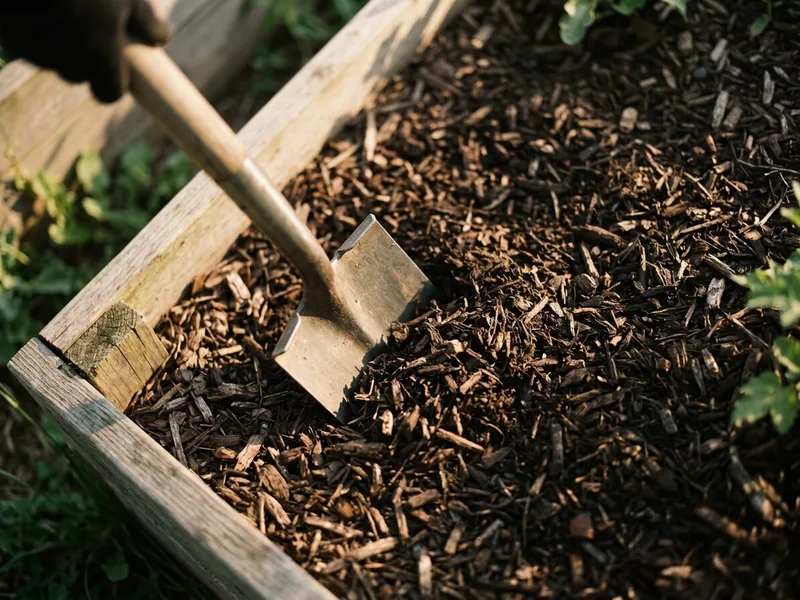
Fiskars Steel D-handle Square Garden Spade
Essential for building mushroom beds and turning wood chips. The flat blade makes it easy to spread substrate in even layers.
When you buy through our links, it supports our mycology research at no extra cost to you.
Maintenance
Wine cap beds are low-maintenance, but a little attention goes a long way:
Watering. This is the most important factor. The bed should never dry out completely. Water deeply every 2 to 3 days during dry spells, more often during heat waves. A soaker hose laid across the bed on a timer is ideal. Consistent moisture is the single biggest factor in getting good harvests.
Feeding. Add 5 to 10 cm of fresh wood chips or straw to the top of the bed each spring. This gives the mycelium fresh food and keeps the bed producing. Think of it like mulching your garden — you are just feeding mushrooms at the same time.
Weeding. Minimal. The mycelium mat suppresses most weeds naturally. Pull anything that pushes through in the first few weeks before the bed is fully colonized.
Winter preparation. In most of Canada, the bed will freeze solid in winter. This is fine — wine cap mycelium survives Canadian winters. Cover with a thick layer of leaves or straw in late fall for insulation. Remove in spring when temperatures rise above 10°C.
Fall Installation & Overwintering in Canada
I used to think of wine caps as a spring project. After a few seasons I have flipped that around: a bed built in September or early October is, more often than not, the bed that produces the biggest flushes the following year. The reason is simple. A spring bed has to race — colonize the chips, build a mycelial mat, and fruit, all in one short season. A fall bed gets the cool, damp weeks of autumn to establish, sleeps under the snow, and wakes up in April already fully colonized. When the soil warms and the spring rains arrive, it is ready to fruit instead of still spreading.
Timing by hardiness zone
The target is to get the spawn into the bed four to six weeks before the ground freezes hard. Mycelium keeps working slowly right down to about 5°C, so you have more runway than you might think.
| Zone | Where | Install window |
|---|---|---|
| 3a–3b | Edmonton, Saskatoon, Thunder Bay, northern Quebec | Late August to mid-September |
| 4a–4b | Calgary, Winnipeg, Sudbury, Quebec City | Early to late September |
| 5a–5b | Ottawa, Montreal, Halifax, Fredericton | Mid-September to mid-October |
| 6a–7a | Toronto, Niagara, Windsor, Vancouver Island, Lower Mainland | Late September to early November |
If you are past your window, do not throw the spawn out. Keep it in the fridge and build the bed the first week the ground thaws in spring — it will still be ahead of a bed built in May.
Build it deeper than a spring bed
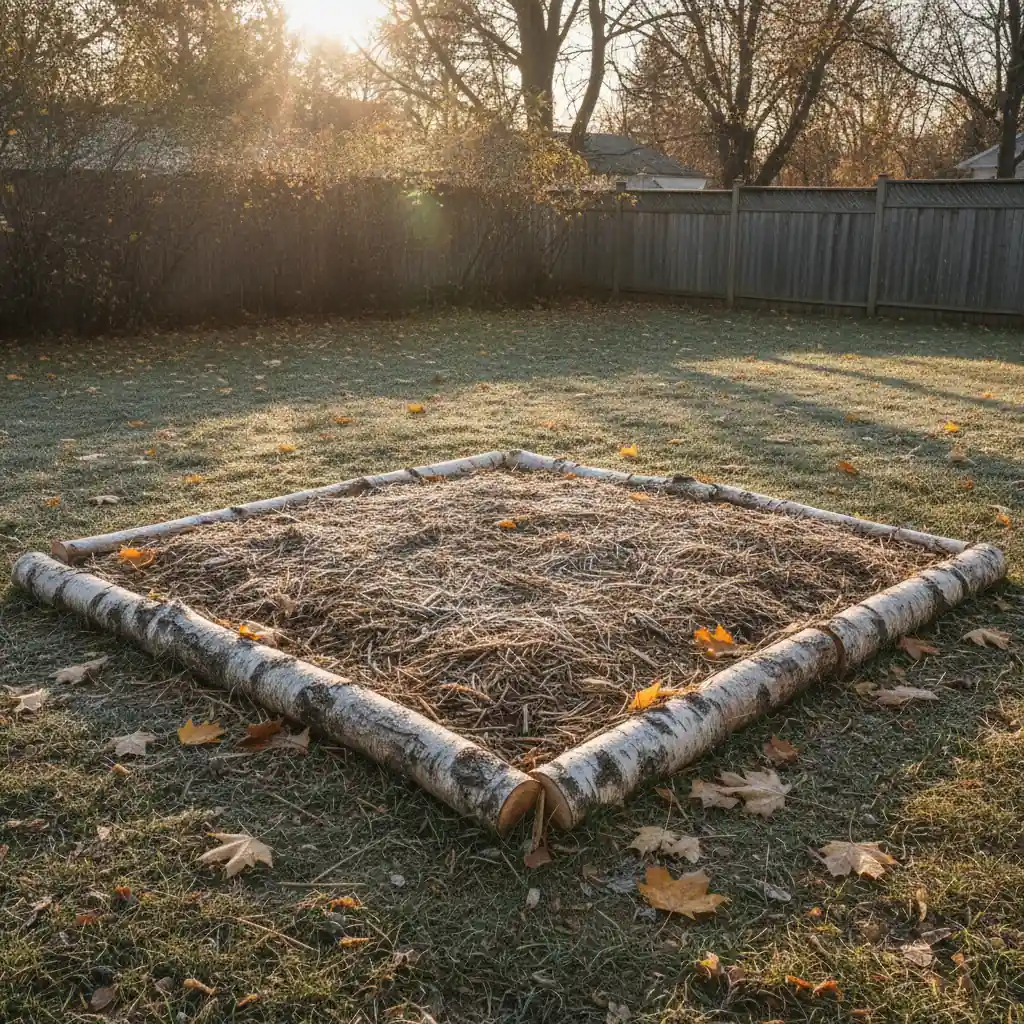
A spring bed needs 10 to 15 cm of chips. A fall bed should be 15 to 20 cm deep. The extra depth is insulation: it keeps the spawn layer in the middle of the bed from freeze-thaw cycling in November and again in March, which is what actually damages young mycelium. Layer it the same way as in the build steps above — chips, spawn, chips, spawn — but put the spawn in the lower two-thirds of the bed so it sits well below the frost line of the mulch. A ring of logs or a low frame around the edges helps hold heat and moisture.
Water to field capacity before freeze-up
The most common fall mistake is building the bed and then forgetting it. Water the finished bed deeply, then keep it damp through October. Just before freeze-up, give it one last long soak so the chips are at field capacity — squeeze a handful and a few drops should come out. Frozen, moist chips hold the mycelium in suspended animation. Dry chips freeze-dry the mycelium and you lose it.
Snow is your friend
Snow cover is the best insulation you can get, and it is free. A bed under 30 cm of snow sits at roughly 0°C all winter no matter how cold the air is. If you are in a low-snow area (Southern Alberta chinook belt, coastal BC, parts of Southern Ontario), throw 10 cm of loose straw over the bed in late November as a stand-in. Pull it back in April so the bed can warm up.
Spring wake-up cues
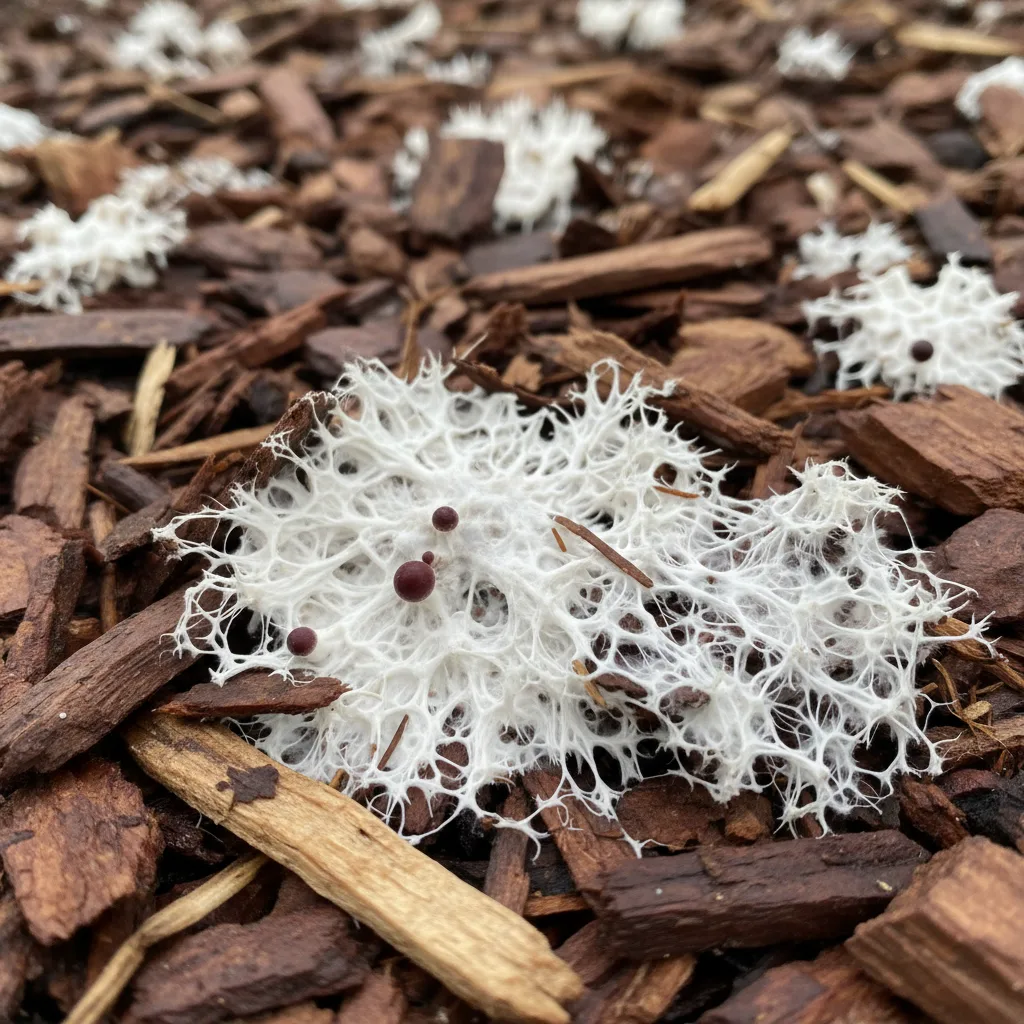
Rake back a corner of the bed once the snow is gone and the daytime highs are above 10°C. You are looking for white, rope-like mycelium threading through the chips and a sweet, earthy smell. If the chips look dark and inert, give it two more weeks — wine cap mycelium often looks dormant until the soil has warmed. Top up with 5 cm of fresh chips in May to feed the bed for the season.
What to expect in year two
A fall-installed bed usually gives its first flush in late May or June, then a second, larger flush in September and October. Year two is the peak year for most beds. By year three the original chips are mostly consumed and the bed needs a full 10 to 15 cm top-up of fresh hardwood chips — or better, transplant a few shovelfuls of colonized chips into a new bed and let the old one run down.
How Much Spawn Per Bed
Wine caps are forgiving on spawn rate, but under-spawning is the main reason beds stall. The baseline I use for wood chips is 1 part spawn to about 10 parts substrate by volume. Grain spawn is denser and more vigorous than sawdust spawn, so you need less of it by weight. The figures below assume a 10 to 15 cm deep bed; if you are building a 20 cm fall bed, use the same spawn amounts and simply put more chips on top — the extra depth is insulation, not something the spawn has to colonize before winter.
| Bed size | Grain spawn (kg) | Sawdust / chip spawn (L) | Hardwood chips needed |
|---|---|---|---|
| 1 m² | 0.75–1 kg | 10–12 L (~5 kg) | ~100–150 L |
| 2 m² | 1.5–2 kg | 20–25 L (~10 kg) | ~200–300 L |
| 4 m² (about 4×10 ft) | 3–4 kg | 40–50 L (~20 kg) | ~400–600 L |
| 10 m² | 7.5–10 kg | 100–120 L (~50 kg) | ~1–1.5 m³ |
Going above these numbers speeds colonization and pulls the first flush earlier; going below roughly 0.5 kg of grain per square metre is where beds start failing. For the full reasoning behind spawn rates across species and methods, see our mushroom spawn ratio guide.
The low-cost route: a nursery bed
If you want a 10 m² bed but do not want to buy 10 kg of spawn, start with a 1 m² nursery bed this fall using 1 kg of grain spawn. By the following June it will be a solid block of colonized chips. Dig it up, break it into fist-sized chunks, and use those chunks as spawn for the big bed at the same 1:10 ratio. One well-colonized square metre will inoculate 8 to 10 square metres. It costs you a season, but it costs almost nothing in spawn, and the mycelium is already adapted to your yard.
From Culture to Bed: Sourcing Wine Cap Spawn in Canada
Ready-made wine cap spawn is not always in stock in Canada in September, and shipping bags of grain across the country is expensive. The reliable alternative is to start from a culture and expand it yourself. It sounds technical, but it is only three steps, and each one is covered in its own guide on this site.
Step 1 — Culture (day 0). Start with a Wine Cap Liquid Culture 3cc syringe — enough for 3 to 6 grain jars — or a Wine Cap Agar Culture if you want to keep a master culture going year after year. Both come from lab-isolated genetics selected for Canadian outdoor beds. Browse the full range at our cultures shop.
Step 2 — Grain jars (days 0–21). Inject 1 to 2 cc of liquid culture into a sterilized grain jar (millet, rye, or wheat) and hold it at 20 to 24°C. Wine cap is slower on grain than oyster — expect 14 to 21 days to full colonization. One jar can then be broken up to inoculate 5 to 10 more jars using a grain-to-grain transfer, which is how you turn a single syringe into several kilograms of spawn for a few dollars. If you would rather skip this step, ready-to-use grain spawn is the shortcut.
Step 3 — Sawdust or chip spawn (days 21–45). Mix one colonized grain jar into 5 to 10 litres of pasteurized hardwood sawdust or fine chips (same method as our straw pasteurization guide — a hot-water soak at 65 to 75°C for one hour). Hold at 20 to 24°C. In two to three weeks you have a bucket of chip spawn that is already eating the same food it will meet in the bed, which makes the bed take off faster than grain alone.
Step 4 — The bed (day 45 onward). Lay the chip spawn into the bed exactly as described in the build steps above.
Realistic timeline: if you inject grain in mid-July, you have chip spawn by early September and a fall bed in the ground before the first frost anywhere south of zone 4. Starting in mid-August still works for zones 5 to 7. If you are reading this in October, buy grain spawn now, hold it in the fridge, and either build immediately (zones 6–7) or wait for spring thaw (zones 3–5).
Harvesting
Wine caps are ready to harvest when the caps are still convex (rounded) and the veil underneath is just starting to separate from the stem. At this stage, the cap colour is its deepest burgundy and the texture is firmest.
When to pick:
- Button stage (best eating quality): Caps still closed or just opening. Deep wine-red colour. Firm, dense flesh. This is when flavour and texture are at their peak.
- Mature (still good): Caps fully open, flattening out. Colour fading to tan-brown. Gills turning dark purple-grey. Still edible but softer texture.
- Past prime (skip these): Caps curling upward, edges ragged, dark spore deposit visible. Leave these to drop spores and seed the bed for future flushes.
How to harvest: Grip the stem near the base and twist gently while pulling. The mushroom should pop out cleanly. Or use a sharp knife to cut at the base. Do not pull hard — you want to disturb the mycelium network as little as possible.
Expected timeline: First flush typically appears 6 to 12 weeks after planting in spring, or the following spring for fall plantings. Subsequent flushes appear every 2 to 4 weeks through the fruiting season, especially after rain.
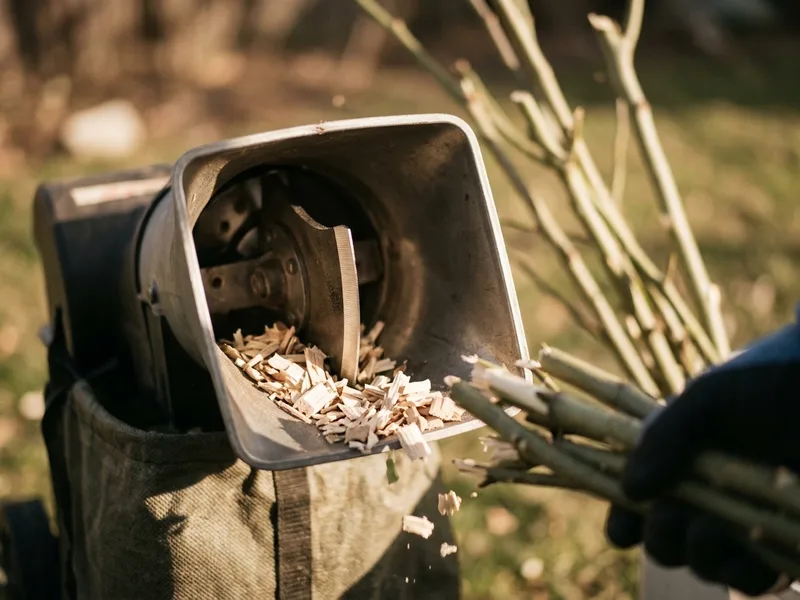
VIVOSUN 15-Amp Electric Wood Chipper Shredder
A bed eats far more chips than most people expect, and bought bags get expensive fast. An electric chipper turns prunings and storm fall into fresh hardwood chips, which wine caps prefer to aged bark mulch. Skip it if a local arborist will drop a load for free, which many will.
When you buy through our links, it supports our mycology research at no extra cost to you.
How to Cook Wine Cap Mushrooms
Wine caps have a mild, nutty flavour with a dense, meaty texture — often compared to potatoes or mild porcini. They hold up well to any cooking method.
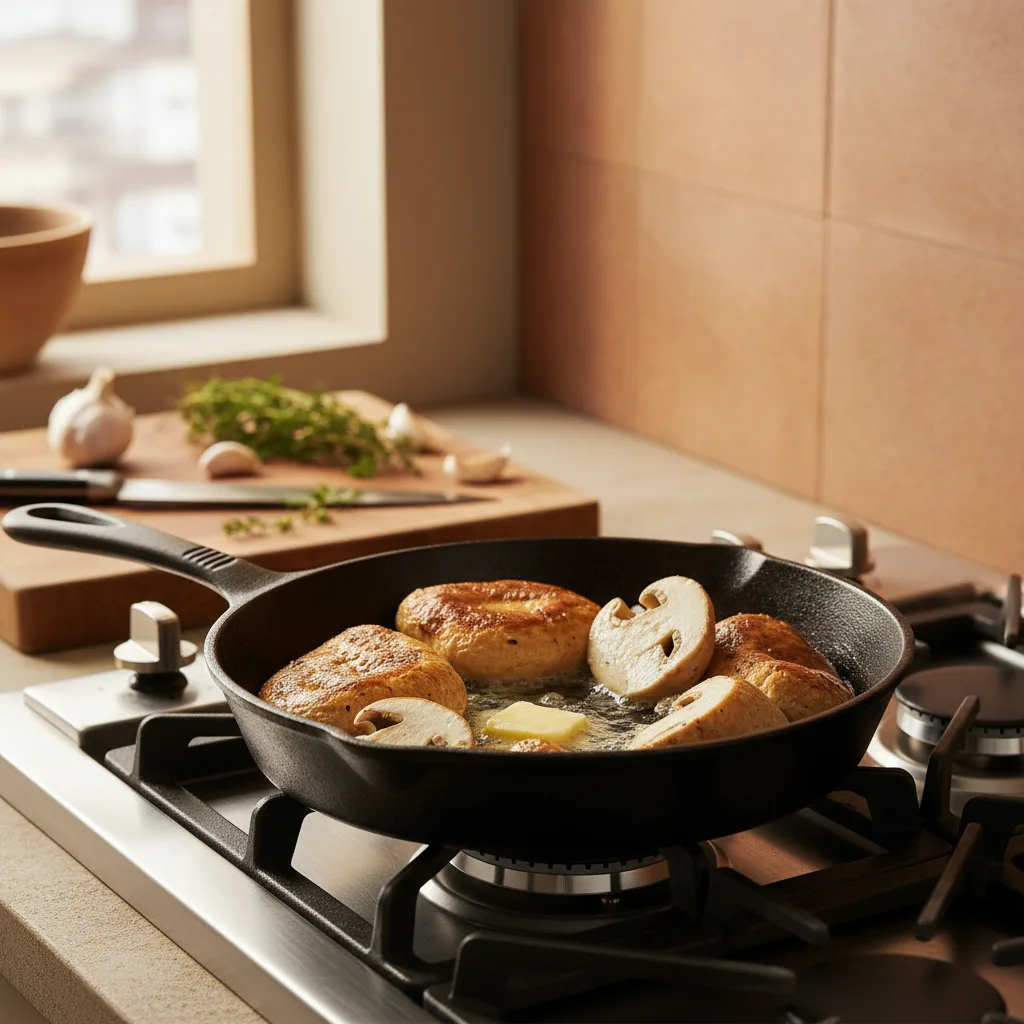
The sear method (recommended):
- Slice caps into 1 cm thick pieces. Large caps can be quartered.
- Heat a cast iron skillet over medium-high with butter or oil.
- Lay slices in a single layer — do not crowd the pan.
- Cook 3 to 4 minutes per side until golden brown and slightly crispy.
- Season with salt, pepper, and a squeeze of lemon.
Other ways to use them:
- Grilled. Large caps grill beautifully — brush with olive oil, grill cap-side down for 4 minutes, flip, cook 3 more minutes. Serve like a portobello burger.
- Soups and stews. Dice and add to any recipe calling for button mushrooms. They hold their texture better than most species.
- Dehydrated. Wine caps dehydrate well for long-term storage. Use a food dehydrator at 50°C (125°F) for 6 to 8 hours.
- Pickled. Small button-stage wine caps pickle excellently in vinegar brine with garlic and dill.
For more mushroom cooking ideas, check out our oyster mushroom recipes.
Troubleshooting
No fruiting after 3 months
Usually a moisture problem. Check the bed — if the wood chips are dry more than 2 cm below the surface, you are not watering enough. Soak deeply and consistently. Wine caps also need cool temperatures to trigger fruiting — they often stall during hot summers and flush heavily once temperatures drop in September.
Slugs eating the mushrooms
Slugs love wine caps. Set beer traps around the bed perimeter, or harvest at the button stage before slugs find them. Early morning harvest (when slugs are still hiding) helps too.
Bed colonizing slowly
Fresh spawn colonizes faster than old spawn. If you are using liquid culture, expand it on grain first before adding to the bed — direct liquid culture on wood chips is slow. Also check that you are not using softwood chips, which contain natural antifungal compounds.
Green mold on the bed surface
Small patches of green mold (Trichoderma) on the surface are common in the first few weeks and usually harmless. The wine cap mycelium is aggressive and will outcompete it once established. If green mold is widespread, the bed may be too wet with poor air circulation — reduce watering slightly and remove any covering that traps moisture. See our contamination guide for identification help.
Mushrooms are small and thin
The bed needs more food. Add a fresh layer of wood chips or straw. Also check moisture — inconsistent watering produces small, stunted mushrooms. A well-fed, well-watered bed produces massive caps.
Wine Cap vs Other Outdoor Mushrooms
| Factor | Wine Cap | Shiitake (logs) | Oyster (straw) |
|---|---|---|---|
| Setup difficulty | Very easy | Moderate (drilling, plugging) | Easy |
| Equipment needed | None | Drill, plug spawn, wax | Grow bags or buckets |
Worth knowing before you buy dowels: a hundred plugs covers three or four logs, while the same spend on millet grain spawn carries more mycelium and inoculates more wood. See plug spawn vs grain and sawdust spawn for the arithmetic, or skip logs entirely with a ready-to-fruit grow kit. | Time to first harvest | 6 to 12 weeks | 6 to 18 months | 2 to 4 weeks | | Production lifespan | 3 to 5 years | 3 to 6 years | Single flush per bag | | Temperature range | 10 to 21°C | 10 to 20°C | 10 to 30°C (species dependent) | | Canadian winter survival | Yes | Yes (on logs) | No (tropical species die) | | Maintenance | Water only | Soak logs seasonally | Indoor management |
For log growing methods, see our guide to growing mushrooms on logs.
Frequently Asked Questions
Can I grow wine caps in a raised bed with vegetables?
Yes, and this is one of the best applications. Plant wine cap spawn in the wood chip mulch between your vegetable rows. The mycelium decomposes the mulch, feeds your soil, and produces mushrooms as a bonus crop. Tomatoes, squash, and corn all grow well alongside wine cap beds.
How much spawn do I need?
For a 4x8 foot bed (3.7 square metres), 2 to 3 kg of grain spawn is ideal. More spawn means faster colonization and earlier fruiting. If you are starting from liquid culture or agar, expand to grain spawn first before building your bed.
Do wine caps spread on their own?
Yes. Once established, the mycelium will spread into any adjacent wood chip mulch, pathways, or garden beds. Many growers start with one bed and find wine caps popping up in their mulched flower beds and walkways the following year. This is a feature, not a problem.
Are wine caps safe to eat? Can I confuse them with anything dangerous?
Wine caps are distinctive and easy to identify: large burgundy cap, grey-violet gills, thick white stem with a prominent ring, and growth on wood chips or mulch. There are no dangerous lookalikes in this habitat in Canada. However, always confirm your identification with a local mycology group or field guide before eating any mushroom for the first time. Check out our foraging guide for identification resources.
Can I grow wine caps in containers or indoors?
Not recommended. Wine caps need soil contact and natural rainfall/temperature cycling to fruit well. They are specifically an outdoor species. For indoor growing, try oyster mushroom grow kits or lion's mane instead.
When is the best time to start a wine cap bed in Canada?
Spring (May to June) is ideal for most of Canada. The mycelium colonizes through summer and produces the first flush in late summer or fall. Fall planting (September) also works — the mycelium establishes before winter and produces heavy spring flushes the following year.
Can I start a wine cap bed in October?
Yes, in zones 5 and warmer — Southern Ontario, the Lower Mainland, Vancouver Island, most of the Maritimes and the Montreal–Ottawa corridor. Build it 15 to 20 cm deep, water it thoroughly, and get it in at least three to four weeks before the ground freezes. In zones 3 and 4 (Prairies, Northern Ontario, Quebec north of Quebec City), October is usually too late; keep the spawn refrigerated and build the bed the first week the ground thaws in spring, or build a small 1 m² nursery bed in a sheltered spot against the south wall of the house.
Will wine caps survive a Prairie winter?
Yes. Established wine cap mycelium survives -40°C winters in Alberta, Saskatchewan and Manitoba as long as the bed was moist going into freeze-up and has snow cover. The mycelium goes dormant in frozen chips and resumes growth when the bed warms above about 5°C in April. The beds that fail on the Prairies are the ones that dried out in a windy, snowless November, not the ones that got cold. If you are in a chinook or low-snow area, cover the bed with 10 cm of loose straw in late fall and remove it in spring.
Get Started
Wine cap is the perfect gateway to outdoor mushroom cultivation. No equipment, no sterile technique, no experience needed — just wood chips and spawn.
Start with our Wine Cap Liquid Culture for production-scale inoculation, or a Wine Cap Agar Culture if you want to expand your own spawn. Both are produced in our CFIA-licensed cleanroom in Brantford, Ontario with lab-isolated genetics.
For more species guides, read our complete guide to growing mushrooms in Canada, our guide to growing mushrooms on logs, or browse our full substrate guide for other outdoor methods. If you are brand new to mushroom growing, start with our beginner's guide.
Have a mushroom-growing question? Ask Dr. MycoTek for AI help with your grow. Sign in to use your free monthly allowance.