
Shiitake (Lentinula edodes) is the second most cultivated mushroom in the world — and for good reason. Rich, meaty, and loaded with umami, it's a culinary staple across Asia and increasingly popular in North American kitchens. It's also one of the most satisfying mushrooms to grow at home once you understand its particular requirements.
Unlike oyster mushrooms, which are aggressive colonizers that fruit at the drop of a hat, shiitake take their time. They need a proper colonization phase, a browning period, and a cold shock to trigger fruiting. But that patience is rewarded with dense, flavourful mushrooms that are noticeably better than anything you'll find at the grocery store.
Choosing Your Strain: Cold-Weather vs. Warm-Weather
We carry two shiitake strains, and choosing the right one for your situation makes a big difference:
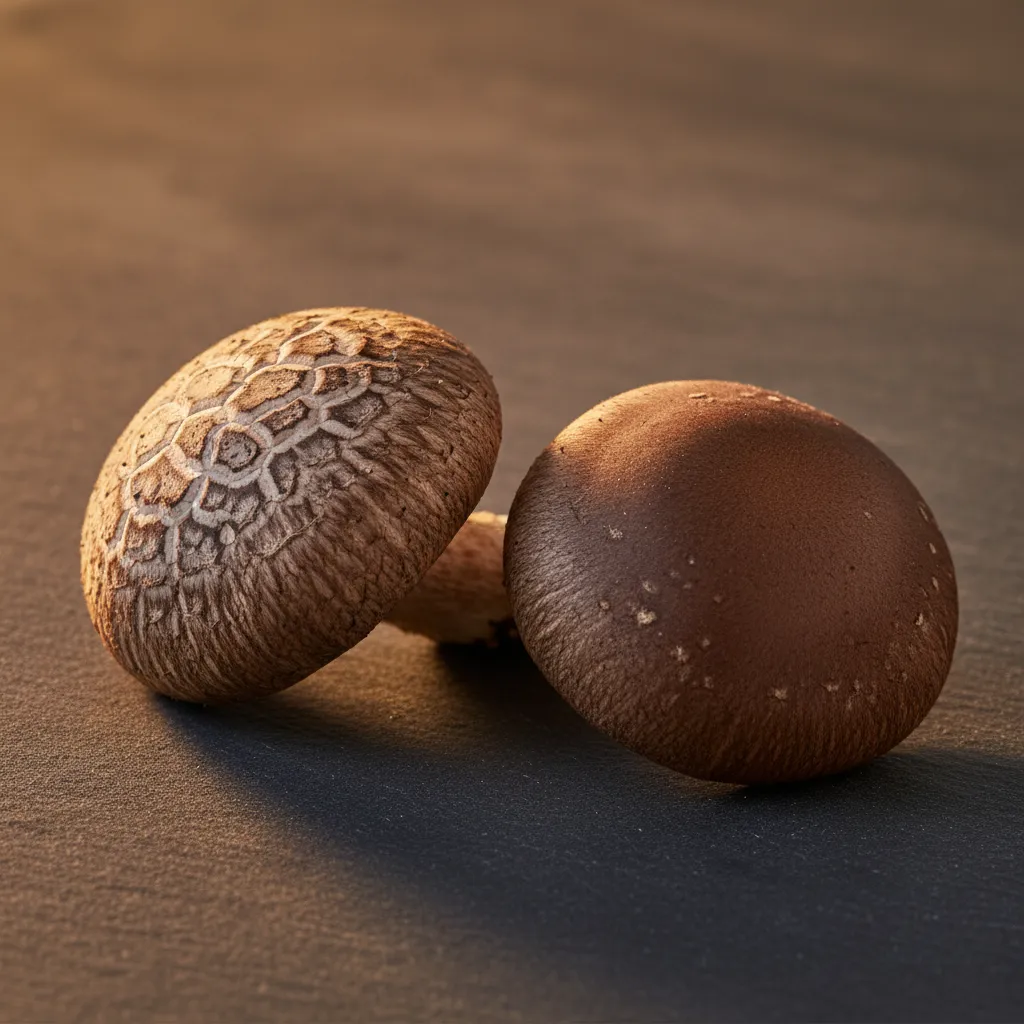
Shiitake 3782 — Cold-Weather Strain
Shiitake 3782 fruits best at 10–16°C (50–60°F). This is the strain to choose if you're:
- Growing in a Canadian basement, garage, or unheated space during fall, winter, or early spring
- In a climate where you can reliably provide cool temperatures
- Growing on outdoor logs (this strain handles our Canadian winters well)
Strain 3782 produces thick-capped, deeply coloured mushrooms — the kind you see at Japanese specialty shops. The cooler fruiting temperature tends to produce denser, meatier fruits with better shelf life.
Shiitake 3790 — Warm-Weather Strain
Shiitake 3790 fruits at 16–22°C (60–72°F), making it the better choice if you're:
- Growing indoors at room temperature
- In a warmer season or climate
- Setting up a temperature-controlled fruiting room
Strain 3790 produces slightly thinner caps but fruits more readily at typical indoor temperatures. It's generally the easier strain for beginners growing indoors.
Our recommendation for Canadian growers: If you have a cool basement or garage and want the best-quality mushrooms, go with 3782. If you're growing in a heated space year-round, go with 3790. Many growers run both strains to produce shiitake across all seasons.
Substrate: Supplemented Hardwood
Shiitake are hardwood specialists. In nature, they grow on dead oak, maple, and beech — and your substrate should reflect that.
Best options:
- Supplemented hardwood sawdust — oak is traditional and preferred, but maple and beech work well too. Supplement with wheat bran at 10–15% by dry weight.
- Supplement choice — use a recipe recommended for your shiitake strain. A 50/50 hardwood and soy-hull mix is not a universal shiitake recommendation. See our substrate guide and Field & Forest’s commercial growing resources for recipe background.
- Hardwood fuel pellets — the easiest way to get consistent hardwood sawdust. Hydrate, supplement, bag, and sterilize.
Shiitake substrate must be sterilized, not pasteurized. The supplementation that shiitake need to produce well also creates an ideal environment for contaminants. Pressure cook or autoclave your bags at 15 PSI / 121°C (250°F) for 2.5–3 hours. Need help scaling a recipe? Our Bulk Substrate Calculator gives you exact pellet, water, and supplement weights for any number of blocks.
Our Pre-Sterilized Mushroom Substrate (6-pack) works well for shiitake if you want to skip the sterilization step entirely.
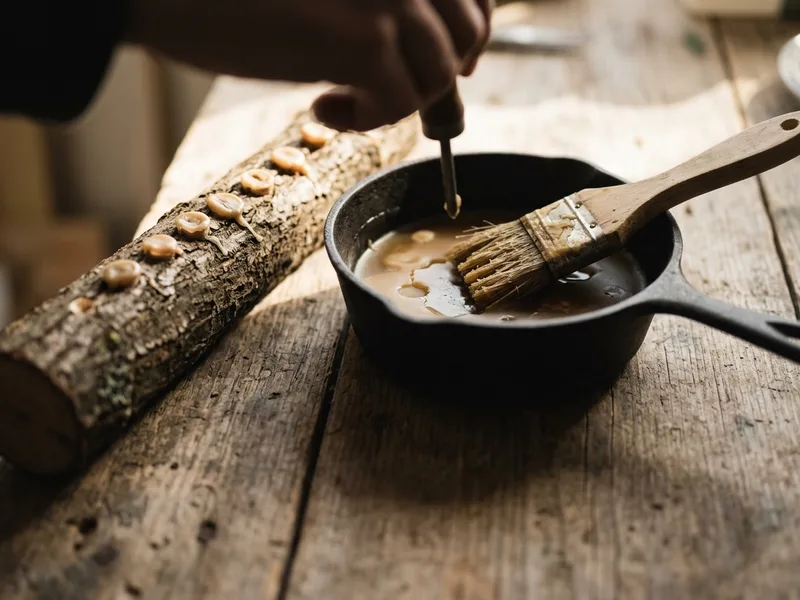
Cheese Wax or Beeswax Pellets
Sealing each plug keeps moisture in and competitors out while the mycelium runs. Food-grade cheese wax melts at a workable temperature; ordinary candle wax is too brittle and flakes off outdoors.
When you buy through our links, it supports our mycology research at no extra cost to you.
Step by Step: From Inoculation to Harvest
Step 1: Inoculation
Once your sterilized substrate has cooled to room temperature (below 25°C / 77°F — patience here prevents killing your spawn), inoculate with shiitake grain spawn at a 10–15% rate. Work in the cleanest environment you can manage — a still air box or flow hood is ideal.
Break up the grain spawn thoroughly and mix it evenly throughout the substrate in your grow bag. Seal the bag and ensure the filter patch is unobstructed for gas exchange.
Step 2: Colonization (3–4 Weeks)
Store your inoculated bags at 20–24°C (68–75°F) in a dark or dimly lit space. Over the next 3–4 weeks, white mycelium will spread through the substrate. You'll see the block gradually turn white from the spawn points outward.
Don't open, shake, or disturb the bags during this phase. Just let the mycelium do its work.
Step 3: Wait for the Block to Mature and Brown
Here's where shiitake differ from most other gourmet mushrooms. After the block is fully colonized (completely white), shiitake enter a "browning" phase. The outer surface of the block develops a brown, leathery skin. This is normal and desirable — it's the mycelium forming a protective layer that helps retain moisture during fruiting.
Allow the block to mature according to the strain supplier’s instructions. Browning can take several additional weeks. Do not remove the bag simply to meet a calendar estimate; opening time depends on the particular block and method.
The block’s maturity signs and the supplier’s directions matter more than a promised total number of weeks.
Step 4: Prepare the Mature Block for Fruiting
Use the supplier’s directions for your shiitake block. Some routines include unwrapping, a temperature change or soaking; the correct sequence and soak duration depend on how the block was prepared. Do not add ice or give every block a 12–24 hour soak by default.
Once prepared, place it in the strain’s recommended growing conditions with indirect light, suitable moisture and fresh air. Watch for small mushrooms rather than repeating the treatment if a fixed day passes. For a purchased block, start with the shiitake kit guide. Nature Lion’s boxed oyster, chestnut and Lion’s Mane X-cut and rehydration routine is not a shiitake method.
Step 5: Fruiting and Harvest
Once pins appear, maintain humidity and fresh air exchange. Shiitake take roughly 5–7 days from pin to harvest size.
When to harvest: Pick shiitake when the caps are 70–80% open — the edges should still be slightly curled downward, and the gills should be visible but not fully exposed. At this stage, the mushrooms have the best combination of flavour, texture, and shelf life.
If you wait until the caps are completely flat, the mushrooms become tougher and lose some of their culinary quality. If you see the cap edges starting to curl upward, you've waited too long — harvest immediately.
How to harvest: Twist and pull, or cut at the base with a clean knife. Don't leave stumps on the block — they can become entry points for contamination.
Step 6: Subsequent Flushes
After harvesting, follow the shiitake supplier’s rest and rehydration routine for that block. Its instructions may differ from a log or another maker’s block. Additional crops can be smaller and are not guaranteed.
Between flushes, you can keep the blocks at room temperature in indirect light. Some growers mist the blocks lightly to prevent them from drying out excessively between soaks.
Growing shiitake on logs
Growing Shiitake on Logs (Outdoor Option)
For Canadian growers with access to hardwood trees, log cultivation is a rewarding long-term project. A well-inoculated log can produce mushrooms for 3–6 years with almost zero ongoing effort — though it takes 6–18 months before your first harvest.
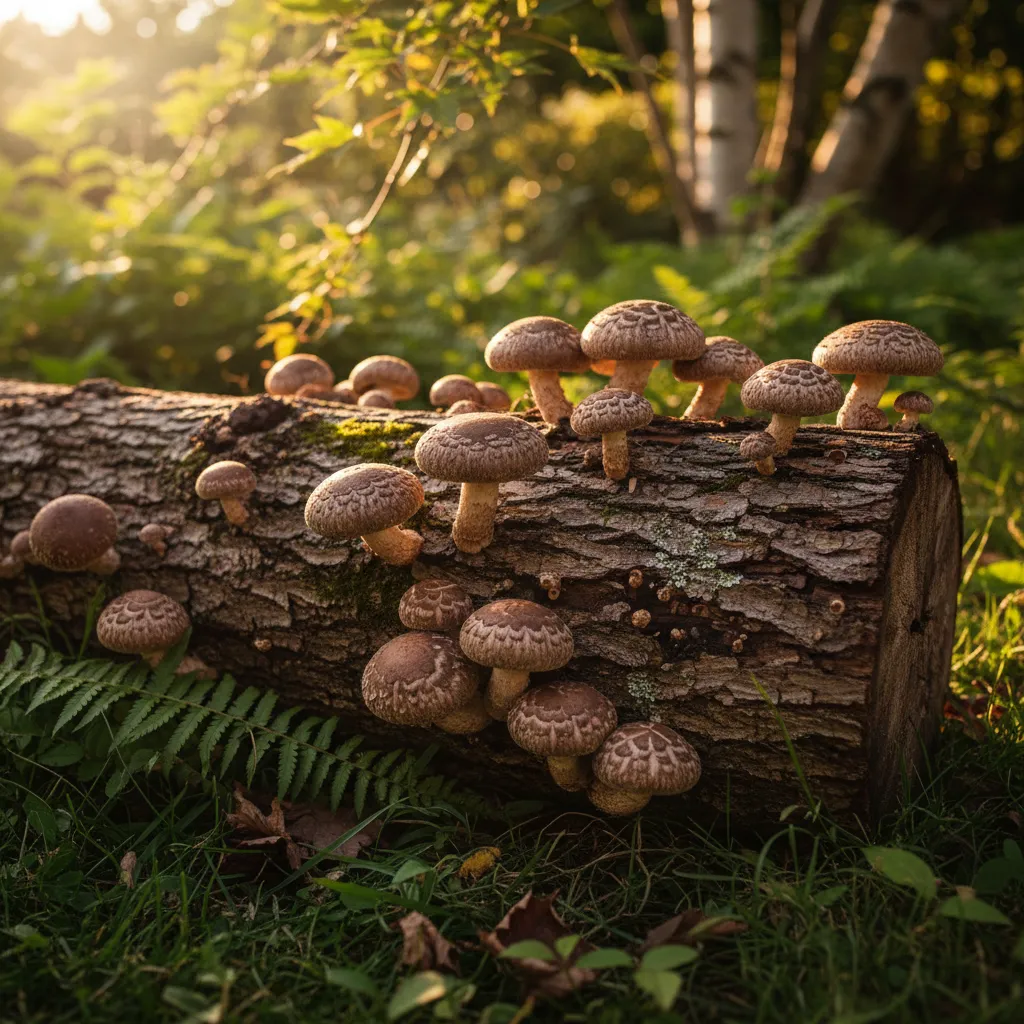
Use fresh-cut oak, sugar maple, or beech logs, 3–6 inches (8–15 cm) in diameter. Cut during dormancy and let rest 2–4 weeks before inoculating. Drill holes in a diamond pattern, fill with spawn, seal with food-grade wax, and stack logs in a shady, moist location — a north-facing tree line is ideal in southern Ontario.
Logs fruit naturally after spring and fall rains. You can force-fruit by soaking in cold water for 24 hours. Strain 3782 is our recommended strain for outdoor Canadian log cultivation.
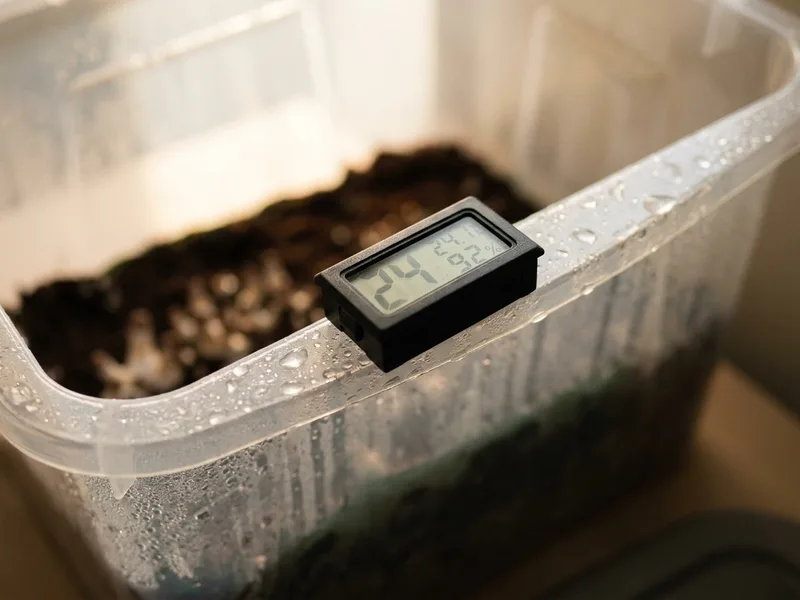
TempPro TP50 Digital Hygrometer & Thermometer
Shiitake are temperature-sensitive and strain-specific. A hygrometer helps you match your growing space to the right strain and verify conditions during the critical cold shock fruiting process.
When you buy through our links, it supports our mycology research at no extra cost to you.
Harvest Timing and Culinary Uses
Shiitake is an umami powerhouse — the compound lentinan and high glutamic acid concentrations give it a rich, savoury depth few other mushrooms can match. Sautee in butter or sesame oil until the edges are crispy, add to stir-fries, ramen, or miso soup, or roast whole at 200°C (400°F) with olive oil and salt.
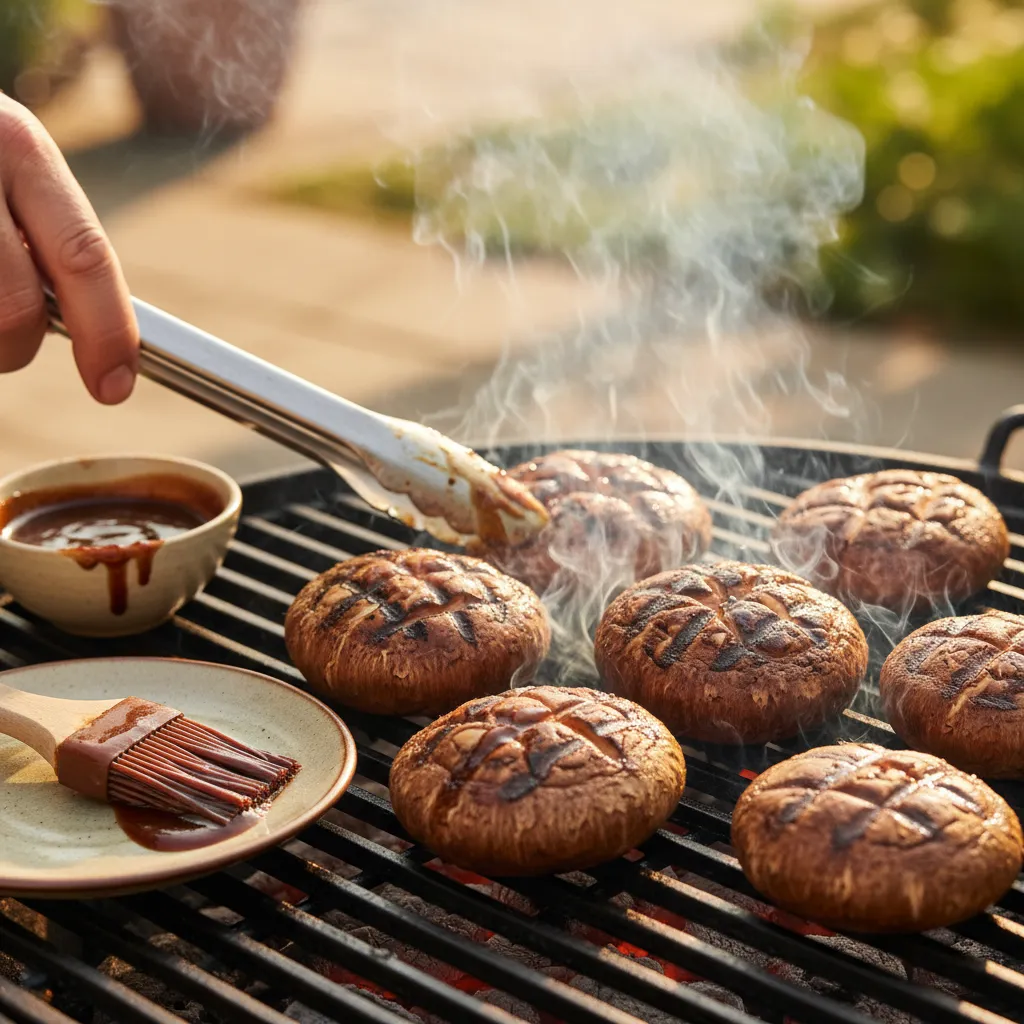
Shiitake also dry beautifully — a food dehydrator at 55°C (130°F) for 6-8 hours does the job, and the flavour actually intensifies. Save the rehydrating liquid as umami-rich stock. Fresh shiitake keep 7–10 days in the fridge in a paper bag, significantly longer than most gourmet mushrooms.
Getting Started
Shiitake require more patience than oyster mushrooms, but the process is straightforward once you've done it once. Here's the shopping list:
- Shiitake 3782 Spawn (5 lbs) or Shiitake 3790 Spawn (5 lbs)
- Grow bags — we recommend autoclavable bags with a filter patch
- Substrate — our Pre-Sterilized Substrate is the easiest route, or make your own using our substrate guide
For the full picture on mushroom cultivation from start to finish, see our complete guide to growing mushrooms. And if you're growing other species alongside shiitake, our oyster mushroom guide covers the most beginner-friendly option.
For a purchased block, use the shiitake kit guide and the supplier’s instructions. Write down its opening and harvest dates, or keep an optional photo diary.
Need help with a Nature Lion kit? Start with the kit care guide, or email info@naturelion.ca with a photo and your start date. Dr. MycoTek is another option for growing questions and notes.