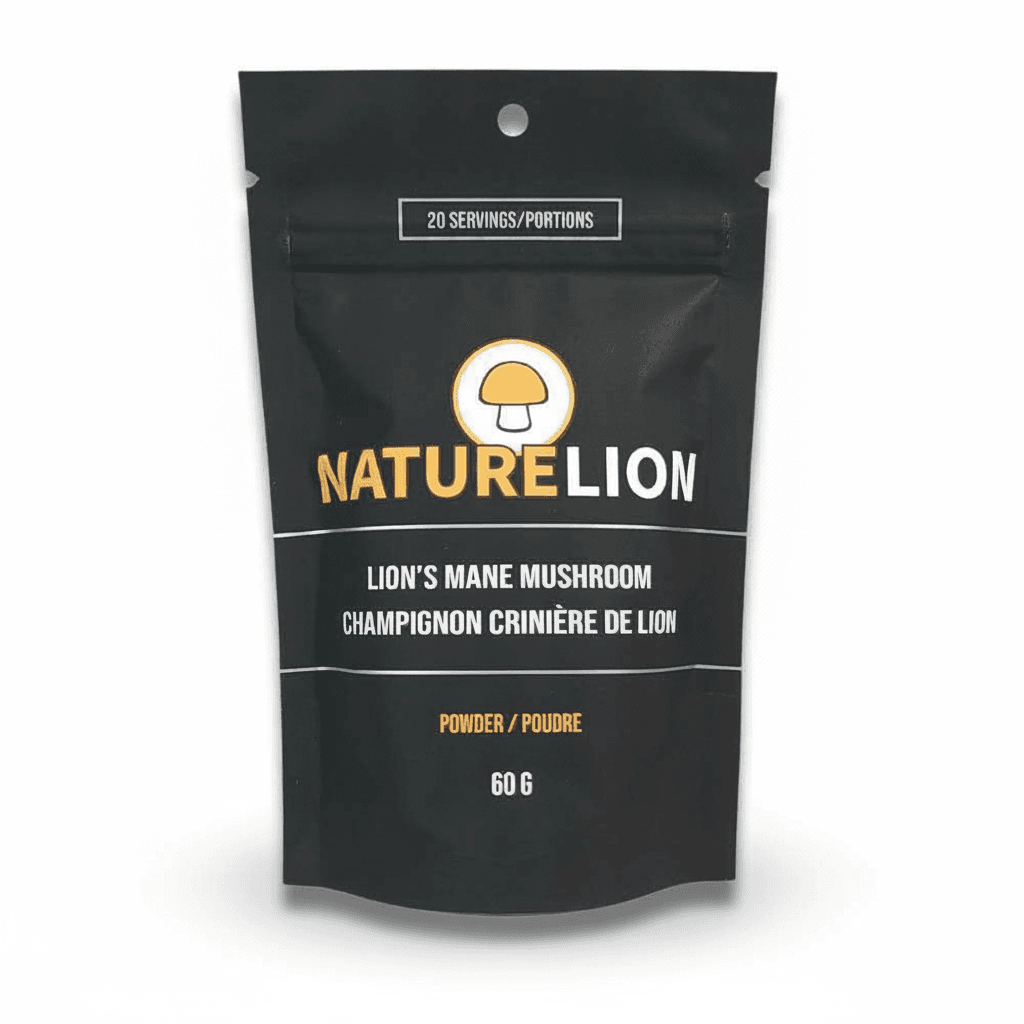
Lion's Mane
$25.00Pairs with coffee
Excellent- Flavour
- Mild, slightly nutty
- Typical dose
- ½–1 tsp (1–2 g)
- Colour change in coffee
- Minimal
The most coffee-friendly powder. Disappears into the cup.
Shop Lion's Mane
Guide · 3-Minute Brew · From Single-Species Powder
How to brew mushroom coffee at home using single-species mushroom powder. Which powder, how much, and what to expect from each.
By Andrew Langevin · Founder, Nature Lion · Contributing author, Mushroomology (Brill, 2026)
Updated June 20, 2026·Published June 19, 2026
Quick Answer
To make mushroom coffee from powder, stir ½ teaspoon (about 1 g) of single-species powder into a hot brewed cup of coffee — use ¼ tsp for chaga or reishi, ½–1 tsp for lion's mane, cordyceps, or turkey tail. Froth or stir vigorously for 15–20 seconds so the powder suspends evenly instead of settling. Lion's mane is the easiest starting species.
Making mushroom coffee from pure powder lets you control the dose, choose your species, and use any coffee you already love. No fillers, no fixed ratios, no mystery blends. This guide walks through exactly how to do it: which of the five Nature Lion mushroom powders works best in coffee, how much to add per cup, and what to expect in terms of flavour, colour, and texture.
Pick Your Powder
Not every mushroom powder behaves the same way in coffee. Some blend invisibly into hot brewed coffee; others taste more pronounced or settle to the bottom of the cup. Here's how all five Nature Lion powders compare for coffee use specifically.
Pairs with coffee
ExcellentThe most coffee-friendly powder. Disappears into the cup.
Shop Lion's Mane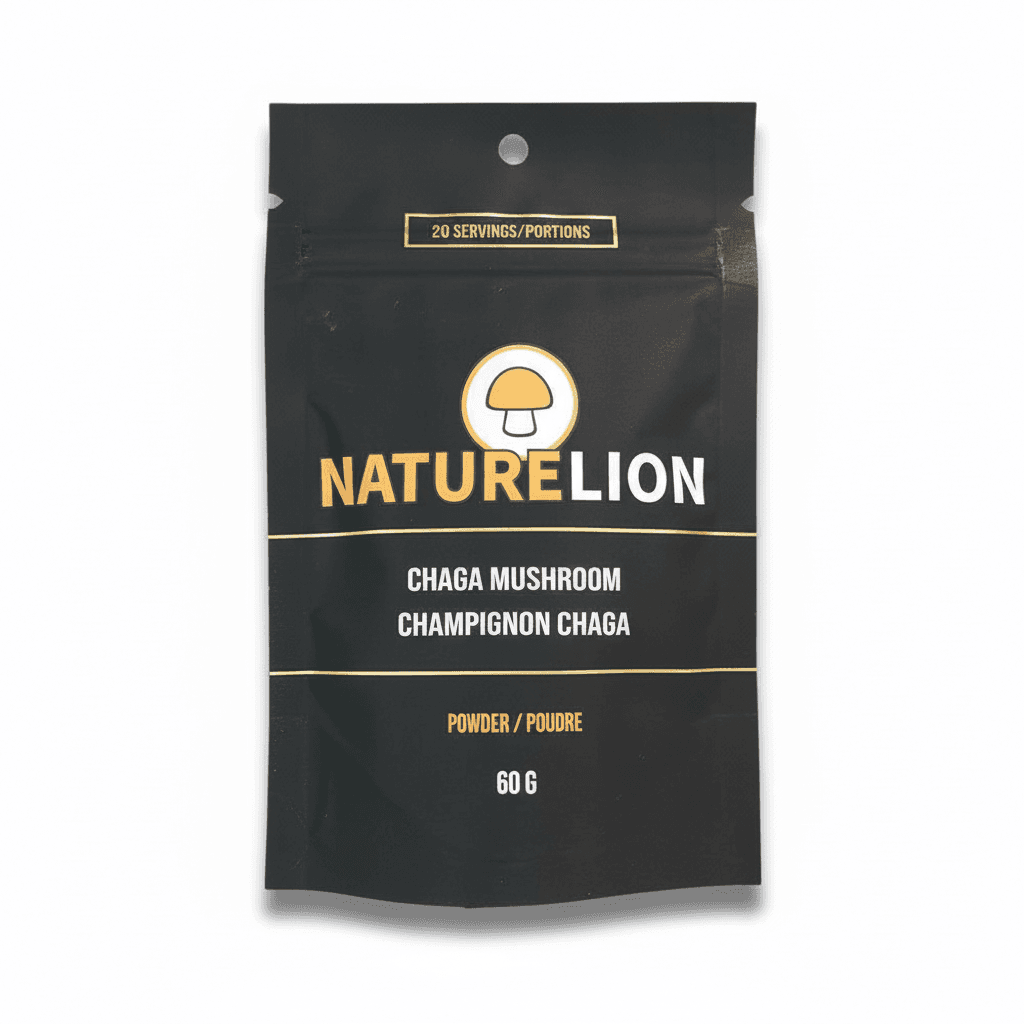
Pairs with coffee
ExcellentEchoes coffee's natural bitterness; start with a smaller dose.
Shop Chaga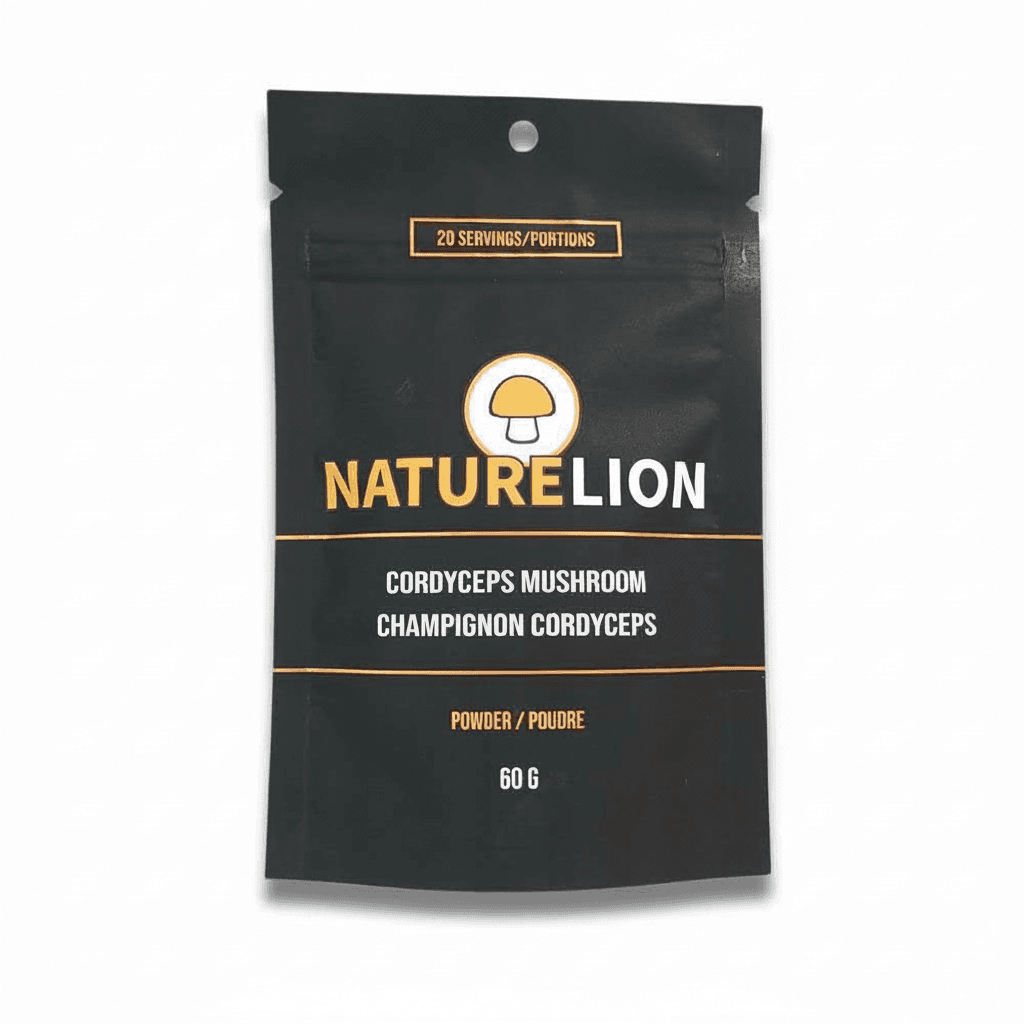
Pairs with coffee
GoodWorks particularly well in cold brew and iced coffee.
Shop Cordyceps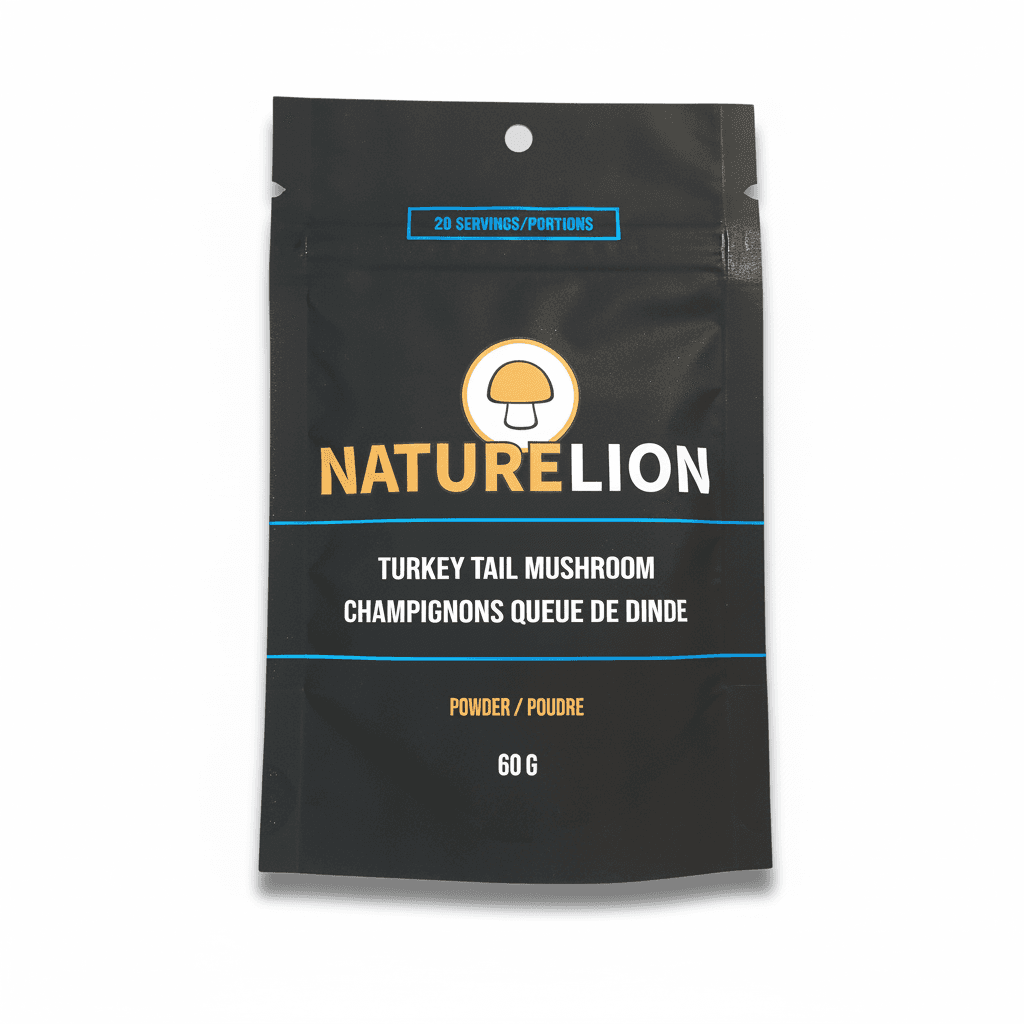
Pairs with coffee
GoodOften paired with cream or oat milk to soften the woody note.
Shop Turkey Tail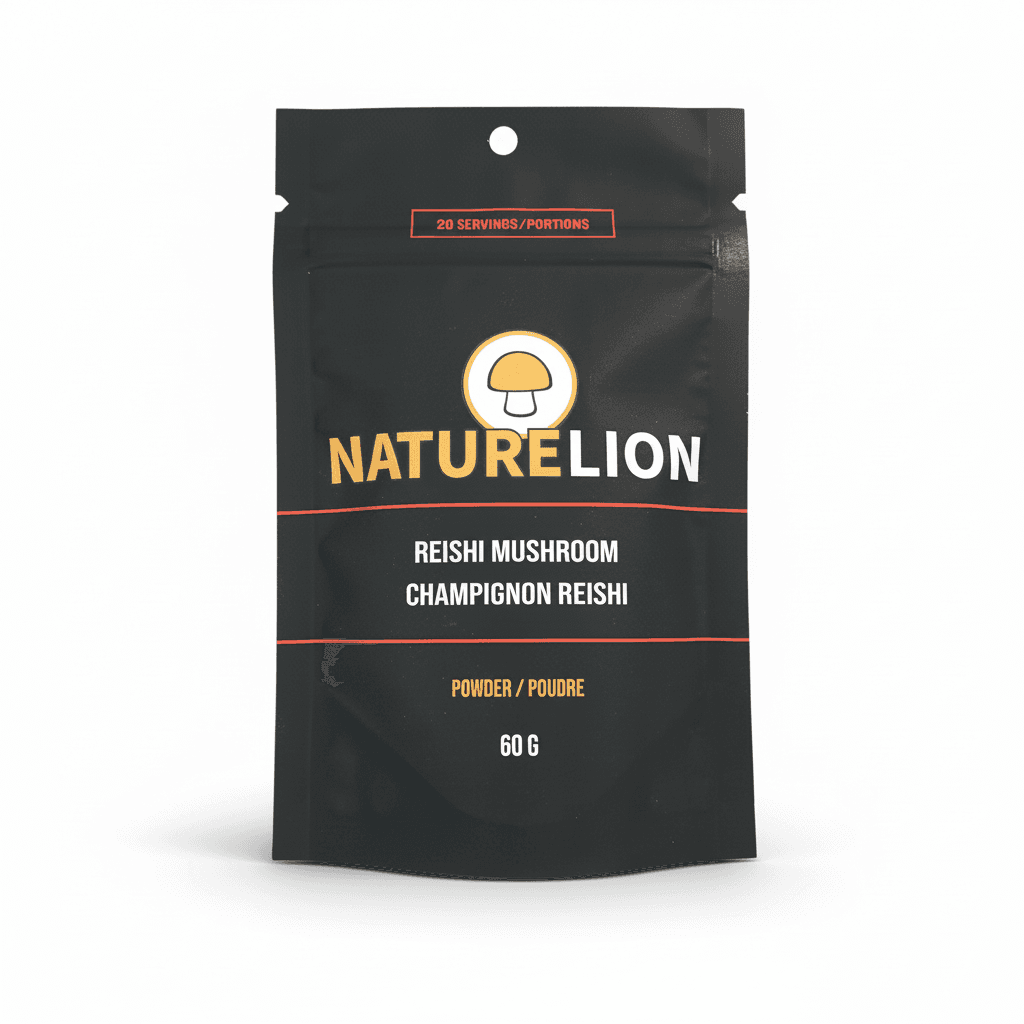
Pairs with coffee
ChallengingBetter suited to decaf or an evening cup than morning coffee.
Shop ReishiAll five powders also come in 5-pack 300g and bulk 1kg sizes.
The Method
Total time
~3 minutes
Serves
1 cup
Equipment
Mug + spoon (frother recommended)
Drip, French press, espresso, or cold brew — any method works. The mushroom powder goes in after brewing, not into the grounds. Adding it to the grounds wastes powder in the filter.
Start with ½ teaspoon (about 1 g) for lion's mane, cordyceps, or turkey tail. Use ¼ teaspoon (about 0.5 g) for chaga or reishi — both are more flavour-forward. Once you know how your palate handles it, you can adjust up to 1 teaspoon.
Pour the measured powder into your mug of brewed coffee. Mushroom powder is finely milled but doesn't fully dissolve — it suspends. The next step is what makes the difference between a smooth cup and one with sediment.
Stir for 15–20 seconds to break up any clumping. For a noticeably smoother cup, use a handheld milk frother for 10 seconds. The mechanical agitation integrates the powder evenly and dramatically reduces the sediment that can settle at the bottom of the cup.
Oat milk, cinnamon, and a touch of maple syrup all pair beautifully with mushroom coffee. Reishi and turkey tail benefit the most from being softened with cream or a barista-style oat milk — it tames the woodier notes.
Some species (especially chaga) settle slightly as you drink. A quick stir halfway through keeps the powder evenly distributed all the way to the last sip.
Variations
Iced mushroom coffee. Stir the powder into hot espresso or hot brewed coffee first, then pour over ice. Cold liquid holds less powder in suspension, so blooming the powder in something hot makes a smoother iced drink. Cordyceps powder is the most cold-friendly of the five.
Mushroom espresso shot. Add the powder directly to a freshly pulled shot before any milk goes in. The crema helps integrate the powder. Best paired with lion's mane or chaga.
Mushroom oat milk latte. Steam or froth ¾ cup of oat milk, add ½ teaspoon of powder to the milk, froth again, then pour over a double espresso. The frothing distributes the powder evenly throughout the milk before it ever meets the coffee.
Batch (pre-mix) jar. Stir 60 g of powder into 60 g of instant coffee (1:1 by weight) in a sealed mason jar. Use 1 rounded teaspoon of the mix per cup. Travel-friendly and uses one powder species consistently across the batch.
Decaf / evening cup. Reishi is the natural fit here — it's bitter and woody, which pairs better with the deeper roast of decaf than with a bright morning coffee.
Troubleshooting
The most common fix: dissolve the powder in a tablespoon of hot water first to make a quick paste, then pour the coffee on top. Stirring or frothing afterward finishes the job. Clumping is more common in cold liquids — start with something hot.
Reduce your dose first — reishi and chaga in particular get noticeably bitter past ½ teaspoon per cup. If you want something coffee-forward with minimal mushroom flavour, switch to lion's mane.
This is normal — mushroom powder is suspended, not dissolved. A milk frother almost eliminates sediment compared to spoon-stirring alone. Chaga is the most prone to settling because of its darker, denser particles.
It's not supposed to. Mushroom powder is whole dried mushroom, finely milled — not an extract concentrate. It suspends in liquid and gives the cup body. Frothing or vigorous stirring distributes it evenly; that's the goal, not full dissolution.
Yes. Instant coffee actually integrates mushroom powder more easily than drip or French press because the granules and the powder dissolve into the same hot water. Add the powder and the instant coffee to your mug together, pour hot water, and stir.
Pre-mixed blends are convenient but typically use a single species at a fixed ratio. Adding mushroom powder to your own coffee lets you choose the species, dial in the dose, and use any coffee you like. Many people use both — a pre-mixed blend for travel and single-species powder at home.
Most people start with ½ teaspoon (about 1 gram) per cup. For more flavour-forward powders like chaga or reishi, ¼ teaspoon is enough. The exact amount depends on the species and your personal preference for taste.
It depends on the species. Lion's mane and cordyceps are mild and blend almost invisibly into coffee. Chaga adds a slightly earthier, deeper note. Reishi is the most noticeable — bitter and woody — and is usually better in decaf or evening cups than morning coffee.
Yes to both. For espresso, stir the powder into the shot before adding milk. For cold brew, either stir vigorously or use a milk frother — cold liquids hold less powder in suspension, so frothing is especially helpful here.
Mushroom powder is suspended, not dissolved. A small amount settling at the bottom is normal, especially with chaga or in cold drinks. Using a milk frother instead of just stirring, or stirring once halfway through your cup, keeps the powder evenly distributed.
For most people new to mushroom coffee, lion's mane powder is the easiest entry point. It has the mildest flavour, blends invisibly into coffee, and works at standard doses of ½ to 1 teaspoon without overpowering the cup.

The background, history, and how the modern mushroom-coffee category came together.
Which mushroom format fits your routine, and the trade-offs between them.
If you want it ready to brew: lion's mane coffee, chaga coffee, and turkey tail coffee.
Browse 60g pouches, 5-packs, and bulk 1kg bags across all five species.
Ready to Brew
Canadian-grown, CFIA-licensed, no fillers. 60g pouches make ~30 cups — enough to test the species in your coffee for a month.
Shop Mushroom Powders