Toy / Small
Under 7 kg (15 lb)
Daily dose
100–250 mg
≈ Pinch (1/16 tsp)
Start at the very low end. Tiny dogs are sensitive to any new addition.

Guide · Dog Dosage Reference
A weight-based dosage chart, plus how to introduce, mix into food, and what Canadian dog owners commonly do.
By Andrew Langevin · Founder, Nature Lion · Contributing author, Mushroomology (Brill, 2026)
Updated June 20, 2026·Published June 19, 2026
Quick Answer
Commonly used turkey tail dosage for dogs is roughly 50–100 mg of powder per kg of body weight per day, split across meals — that's about ¼ tsp for a 10 kg dog, ½ tsp for a 25 kg dog, and ¾–1 tsp for a 40 kg dog. Mix into wet food or broth so it integrates. Always check with your veterinarian before adding any supplement to your dog's diet.
Turkey tail (Trametes versicolor) is one of the most commonly used mushrooms in the Canadian pet supplement space. This page covers the dosage chart by dog body weight, how to introduce it without upsetting your dog's stomach, and how long a 60g pouch typically lasts. Always check with your veterinarian before adding any supplement to your dog's diet, especially if your dog is on medication or has an existing condition.
Dose by Weight
Based on body weight. These ranges reflect typical Canadian pet-owner usage patterns. Always start at the lower end of the range for the first week, then build up.
Toy / Small
Daily dose
100–250 mg
≈ Pinch (1/16 tsp)
Start at the very low end. Tiny dogs are sensitive to any new addition.
Small–Medium
Daily dose
250–500 mg
≈ ~1/8 tsp
Mix into a tablespoon of wet food. Build up over 7 days.
Medium
Daily dose
500–1000 mg
≈ ~¼ tsp
The most common size range. Standard mid-range dose works well.
Large
Daily dose
1000–1500 mg
≈ ~½ tsp
Can split into morning and evening doses if mixing into two meals.
Giant
Daily dose
1500–2000 mg
≈ ~¾–1 tsp
Split across meals. Larger dogs do best with steady daily dosing.
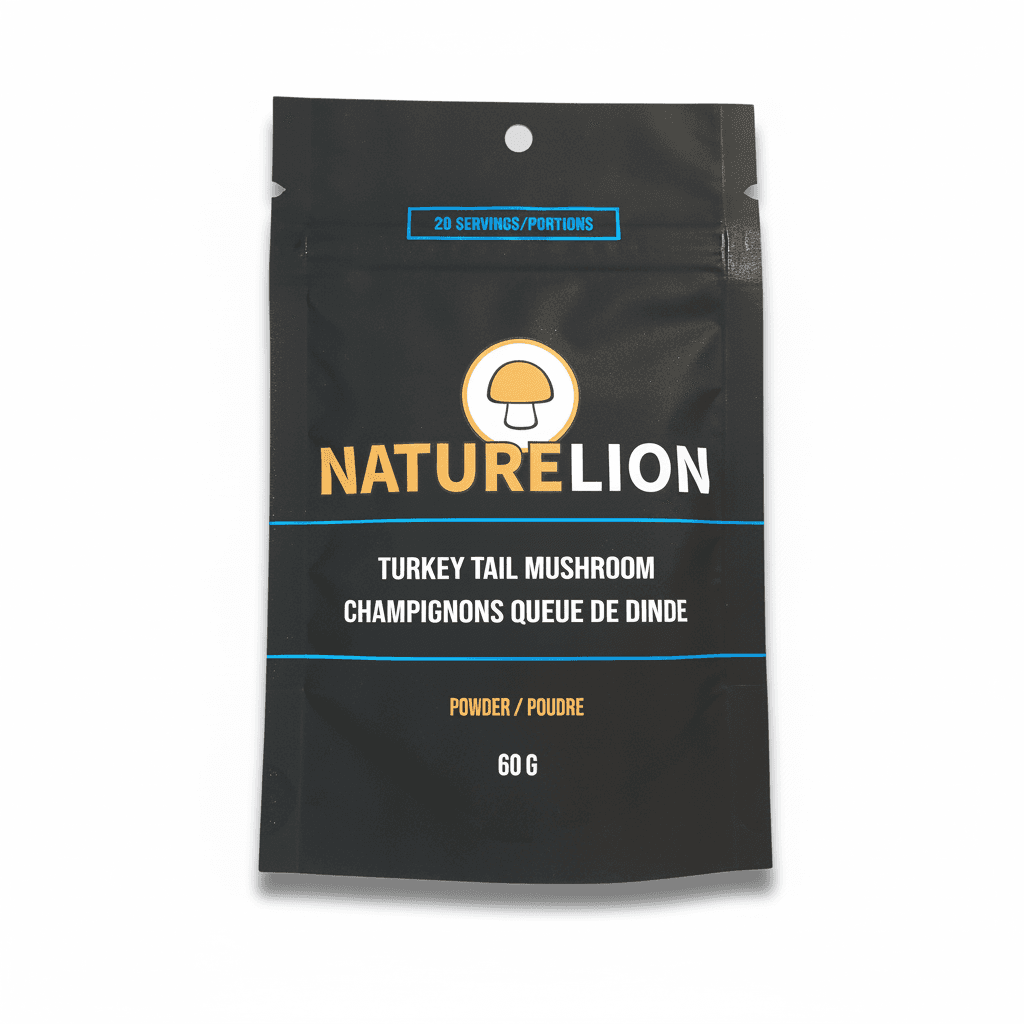
Canadian-grown, CFIA-licensed, no fillers. 60g = approximately 4 months for a medium dog at ¼ tsp/day.
How to Introduce
Especially if your dog is on medication, has a chronic condition, or is very young or old. Your vet knows your dog's history.
Mix into one meal per day. Watch for any digestive changes — soft stool, decreased appetite, lethargy. If any of these appear, hold the dose or stop.
If the first three days went smoothly, move to the full daily dose for your dog's weight range. Always mix with food rather than giving plain.
Most Canadian dog owners use turkey tail as a steady daily addition. Same time of day, same amount, same food carrier — keeps it predictable for your dog.
Mixing Into Food
Wet food. Easiest. Stir the powder into 1–2 tablespoons of wet food, then mix into the rest of the meal. The moisture carries the powder evenly.
Bone broth or warm water. Stir into a tablespoon of warm broth or water, then drizzle over dry kibble. Works well for dogs that get plain kibble.
Plain yogurt or kefir. For most dogs that tolerate dairy, a teaspoon of plain unsweetened yogurt is an easy carrier. Avoid yogurts with xylitol (toxic to dogs).
Peanut butter (no xylitol). A small dab works for stubborn dogs. Confirm the brand contains no xylitol — many natural peanut butters now do.
Raw food diet. Mix into the daily portion at meal prep. Refrigerate covered. Don't pre-mix more than 2 days ahead.
Typical daily ranges based on body weight are: small dogs (under 15 lb) 100–250 mg, medium dogs (35–65 lb) 500–1000 mg, large dogs (65–100 lb) 1000–1500 mg. A rough conversion: ¼ teaspoon of turkey tail powder is approximately 500 mg. Always start at the low end and increase gradually over a week.
Mix the powder into wet food, broth, or a small amount of plain yogurt or peanut butter. Most dogs accept it readily — turkey tail has a mild, slightly woody flavour. Start with half the target dose for the first 3–4 days, then build up gradually.
Turkey tail is widely used as a supplement for dogs by Canadian pet owners. It is not licensed as a veterinary medicine in Canada. Before adding any supplement to a dog's diet — particularly if your dog is on medication, has an existing condition, or is very young/old — consult your veterinarian.
Depends on dose. At ¼ teaspoon per day (medium dog), a 60g pouch is approximately 120 servings — roughly 4 months. For a large dog at ½ tsp/day, about 2 months. For multiple dogs or larger long-term use, the 1kg bulk bag is more cost-effective.
Most pet owners wait until puppies are at least 6 months old before introducing any supplement. If you're considering it earlier, ask your veterinarian first. When you do start, use the smallest end of the dose range for the puppy's adult weight class, not the puppy's current weight.
Important
This page provides general dosage references based on common usage patterns. It is not veterinary medical advice. Nature Lion's turkey tail powder is sold as a food-grade mushroom powder, not a licensed veterinary medicine. Always consult your veterinarian before adding any supplement to your dog's diet, particularly if your dog is on medication, has an existing health condition, is pregnant or nursing, or is a puppy or senior. If your dog shows any adverse signs after starting turkey tail, stop and contact your vet.

The wider context — why turkey tail became a popular pet supplement.
The human-dosage version of this reference — typical ranges for each species.
Browse 60g pouches, 5-packs, and bulk 1kg bags.
Recipes and how-to guides for getting the most out of mushroom powder.
For Multi-Dog Households
For two or more dogs on daily turkey tail, the 1kg bag is dramatically better per gram than 60g pouches. Lasts most multi-dog households a full year.
Shop Bulk Turkey Tail