
Turkey tail (Trametes versicolor) is the most researched functional mushroom in canine health -- and it's one of the few natural products where the evidence actually backs up the enthusiasm. If you've been hearing about turkey tail mushroom for dogs in pet health groups and wondering whether it's worth trying, the short answer is: yes, the research is real, and we'll walk you through everything you need to know to do it right.
We've been producing turkey tail powder for years and hear from dog owners regularly about how they're using it. This guide covers what turkey tail actually is, the key compounds that make it work, what the veterinary research says, practical dosing by weight, how to choose a quality product, and exactly how to work it into your dog's daily routine.
What Is Turkey Tail Mushroom?
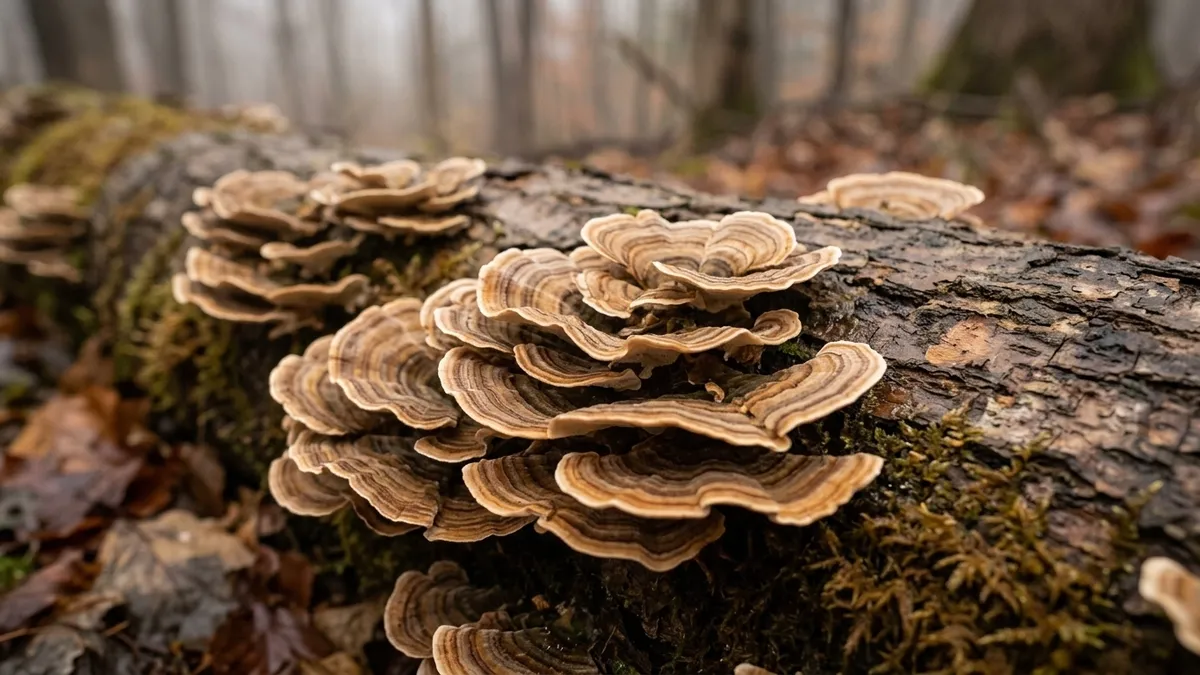
If you're new to functional mushrooms, here's the quick version. Turkey tail is a bracket fungus that grows on dead hardwood trees across every continent except Antarctica. You've probably seen it on forest walks -- colourful, fan-shaped shelves growing in overlapping tiers on fallen logs, with concentric rings of brown, tan, blue, and cream that look like a wild turkey's fanned tail feathers.
Turkey tail has been used in traditional medicine for centuries. In China and Japan, it's been part of health protocols for decades -- in fact, a turkey tail extract called PSK has been an approved adjunctive treatment in Japan since the 1970s. But what matters for dog owners isn't tradition -- it's the modern research, and turkey tail has more of it than almost any other functional mushroom.
Unlike culinary mushrooms like shiitake or oyster, turkey tail is too tough and leathery to eat whole. It needs to be extracted to release its bioactive compounds -- which is why the form you buy matters enormously (more on that below).
For a deeper dive into the mushroom itself and its full range of compounds, see our turkey tail mushroom benefits guide.
Key Compounds: What Makes Turkey Tail Work for Dogs
Turkey tail's benefits aren't vague or hand-wavy. They trace back to specific, well-studied compounds that interact with the immune system in measurable ways.
Beta-Glucans
Beta-glucans are complex polysaccharides -- long chains of sugar molecules -- found in the cell walls of turkey tail and other medicinal mushrooms. They're the primary reason turkey tail mushroom for dogs has gained so much attention from veterinary researchers.
Beta-glucans interact directly with immune cell receptors, particularly on macrophages, natural killer cells, and dendritic cells. The key distinction: beta-glucans appear to modulate the immune system rather than simply stimulate it. They help the immune response work more appropriately -- supporting it when underperforming and calming it when overreacting. Dogs have the same immune cell receptor types (Dectin-1 and complement receptor 3) that beta-glucans interact with in humans, which gives biological plausibility to the observed effects.
This modulation is what makes turkey tail interesting for such a wide range of canine health situations -- from daily immune maintenance in healthy dogs to supportive care alongside conventional cancer treatment.
PSK (Polysaccharide-K)
PSK is a protein-bound polysaccharide unique to turkey tail. It's been used in Japanese medicine since the 1970s as an adjunctive treatment alongside conventional therapies. There are hundreds of clinical studies on PSK in humans, and the mechanisms it works through -- immune cell activation, cytokine regulation -- are conserved across mammals, including dogs.
PSP (Polysaccharopeptide)
PSP is similar to PSK and has been researched extensively in China. This is the compound used in the landmark Penn Vet hemangiosarcoma study (more on that below). PSP has been shown to enhance T-cell proliferation, increase immune cell activity, and support the body's natural surveillance mechanisms.
Prebiotics and Gut-Active Compounds
Turkey tail is also a potent prebiotic. Its polysaccharides feed beneficial gut bacteria -- particularly Bifidobacterium and Lactobacillus species -- while inhibiting less desirable strains. Since roughly 70% of a dog's immune system resides in the gut, this prebiotic effect isn't a side benefit -- it's a core part of how turkey tail supports canine health.
Both PSK and PSP are water-soluble, which is why hot water extraction is the right processing method for concentrating them. This becomes critical when choosing a product -- unextracted mushroom powder delivers a fraction of the active compounds.
Benefits of Turkey Tail Mushroom for Dogs
Here's what the research and veterinary experience actually support.
Immune System Support
This is the most broadly applicable benefit. The beta-glucans and polysaccharides in turkey tail help maintain a well-functioning immune system in healthy dogs. For senior dogs whose immune function naturally declines with age, daily turkey tail powder can help keep immune surveillance sharp.
Many integrative veterinarians now recommend turkey tail as part of a daily wellness protocol for older dogs, similar to how joint supplements became standard for ageing pets.
Cancer Support: The Penn Vet Study
The study that changed everything for turkey tail in veterinary medicine came from the University of Pennsylvania School of Veterinary Medicine in 2012. Researchers gave dogs with hemangiosarcoma -- an aggressive, often fatal cancer of the blood vessel walls affecting the spleen -- a turkey tail extract containing PSP.
The results: Dogs who received the highest dose of turkey tail extract (100 mg/kg/day) had the longest median survival times -- significantly longer than historical data for untreated dogs with the same condition. The high-dose group had a median survival time of 199 days, compared to the typical 86 days for dogs receiving no treatment.
This was a small study and the researchers were appropriately careful about its limitations. But it wasn't a one-off finding in isolation -- it sits within a much larger body of research on turkey tail's immune-active compounds and their effects on tumour surveillance mechanisms.
Since that study, turkey tail has become one of the most commonly recommended natural supplements by veterinary oncologists and integrative veterinarians. It's typically used alongside conventional treatment (surgery, chemotherapy), not as a replacement for it. The goal is to support the dog's immune system in recognising and responding to abnormal cells.
If your dog has been diagnosed with cancer, talk to your veterinary oncologist about incorporating turkey tail into the treatment plan. Many are already familiar with the Penn Vet data.
Gut Health and Digestion
Turkey tail's prebiotic properties support a healthy gut microbiome. Research has shown that turkey tail polysaccharides promote the growth of beneficial bacteria while creating an environment less favourable for pathogenic strains. For dogs with chronic digestive issues, loose stool, or post-antibiotic gut imbalance, turkey tail can help restore microbial diversity.
The gut health connection matters beyond digestion. A well-balanced gut microbiome supports immune function, nutrient absorption, mood regulation, and systemic inflammation management. When you support your dog's gut, you're supporting their whole body.
Anti-Inflammatory Properties
Chronic low-grade inflammation is a factor in many age-related conditions in dogs, from joint stiffness to cognitive decline. Turkey tail's compounds have demonstrated anti-inflammatory effects in animal studies, helping to regulate the inflammatory response without suppressing it entirely. This makes it a useful complement to other anti-inflammatory strategies for dogs dealing with chronic conditions.
Antioxidant Support
Turkey tail contains a range of antioxidant compounds, including phenols and flavonoids, that help protect cells from oxidative stress. For active dogs, senior dogs, and dogs recovering from illness, this antioxidant support helps maintain cellular health.
Dosage: How Much Turkey Tail for Your Dog
Turkey tail for dogs dosage is calculated by body weight. These guidelines are based on available veterinary research and common integrative veterinary recommendations. We always recommend consulting your vet before starting, especially for dogs with existing health conditions. For a printable weight-by-weight chart plus how to mix the powder into kibble or wet food, see our turkey tail for dogs dosage guide.
Daily Immune Support (Healthy Dogs)
| Dog Size | Weight | Daily Dose |
|---|---|---|
| Small breeds | Under 10 kg (22 lbs) | 250-500 mg |
| Medium breeds | 10-25 kg (22-55 lbs) | 500-1,000 mg |
| Large breeds | 25-40 kg (55-88 lbs) | 1,000-1,500 mg |
| Giant breeds | Over 40 kg (88+ lbs) | 1,500-2,000 mg |
How to start: Begin at the lower end of the range for your dog's weight. Maintain that dose for 1-2 weeks, watching for any digestive changes. If everything looks good, you can increase to the full dose. This gradual introduction gives your dog's gut microbiome time to adjust to the prebiotic effects.
Measuring With Our Turkey Tail Powder
Our turkey tail powder (60 g) comes with a small scoop. One level scoop is approximately 1,000 mg (1 g). For a 15 kg dog on the lower end of the maintenance range, that's half a scoop per day. A 60 g pouch lasts a medium-sized dog roughly 2-3 months at maintenance dosing -- making it one of the most cost-effective supplements you can add to your dog's routine.
Splitting the Dose
Most integrative vets recommend splitting the daily dose between morning and evening meals. This keeps levels more consistent throughout the day. But if one dose per day is more realistic for your routine, that works too -- consistency matters more than perfect timing.
Higher-Dose Protocols
The Penn Vet study used 100 mg/kg/day of PSP extract -- significantly higher than maintenance dosing. For a 30 kg dog, that's 3,000 mg per day. Higher-dose protocols should only be used under direct veterinary supervision as part of a comprehensive treatment plan, typically managed by a veterinary oncologist or integrative vet.
How to Give Turkey Tail to Your Dog
Most dogs won't eat mushroom powder on its own, but getting them to take it is easier than you'd think. Here are the methods that work, starting with the simplest.
Mix It Into Food (Easiest Method)
Measure the dose and sprinkle it directly onto your dog's regular food. Mix it in thoroughly so it coats the food rather than sitting on top as a suspicious pile. Most dogs eat it without hesitation when it's blended into:
- Wet food -- the moisture absorbs the powder completely
- Raw food -- mixes right in
- Moistened kibble -- add a splash of warm water to kibble, let it soften slightly, then mix in the powder
Dry kibble is the hardest -- the powder tends to fall to the bottom of the bowl. Adding a small amount of warm water or broth solves this.
Our turkey tail powder is hot-water extracted from fruiting bodies, which means the beta-glucans and PSP are already liberated from the chitin cell walls. This matters for your dog's digestion -- unextracted, raw-ground mushroom powder passes through a dog's system largely unprocessed, so you're paying for something that doesn't get absorbed.
Turkey Tail Broth
Dissolve the daily dose in warm (not hot) bone broth or low-sodium chicken broth. Pour it over food or offer it as a standalone treat. This is the best method for picky eaters who detect and reject anything new on their food. The broth also provides additional hydration, which is beneficial for dogs who don't drink enough water on their own.
The Peanut Butter Trick
This is the go-to method for stubborn dogs. Mix the measured dose of turkey tail powder into a tablespoon of peanut butter (always check the label -- no xylitol, which is toxic to dogs). Most dogs will lick a peanut butter spoon clean without a second thought. You can also use:
- Plain yogurt (the probiotics complement turkey tail's prebiotic effects nicely)
- Mashed banana
- Pumpkin puree
- A small amount of cream cheese
Offer it as a separate treat. This works well if you want to keep mealtime simple and handle the mushroom dose independently.
Turkey Tail Tincture
If your dog is exceptionally fussy about powder texture, our turkey tail tincture offers an alternative format. A tincture is a liquid extract that can be added directly to food or water. The liquid form mixes more invisibly into wet food or broth than powder does. Follow the product label for dosing based on your dog's weight.
Capsules for Larger Dogs
If your dog swallows pills easily, you can fill empty gelatin capsules with turkey tail powder. Hide the capsule in a piece of cheese, a pill pocket, or a chunk of banana. This works best for medium and large dogs who are used to taking medications.
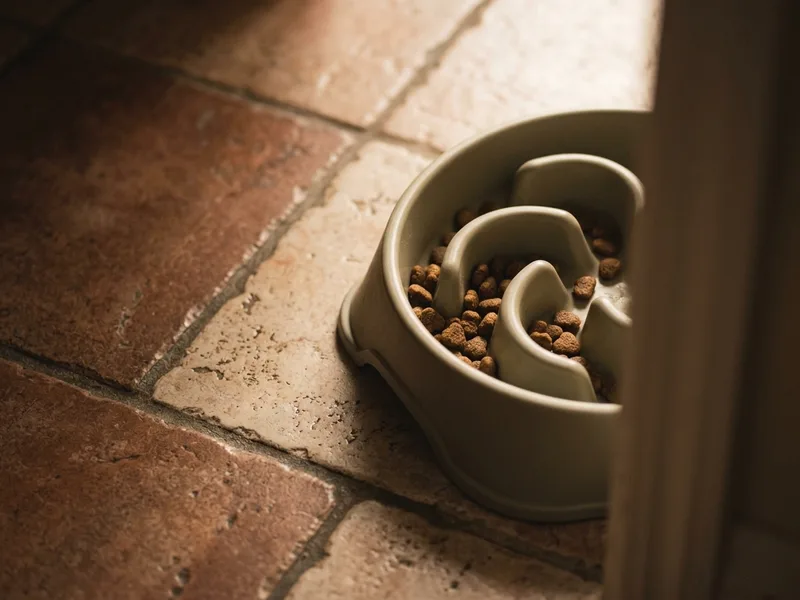
Slow Feeder Dog Bowl
A slow feeder bowl makes it easy to mix turkey tail powder into your dog's food — the ridges help distribute the powder evenly so your dog eats it all. Great for dogs who eat too fast.
When you buy through our links, it supports our mycology research at no extra cost to you.
What to Look for When Buying Turkey Tail for Dogs
This is where most pet owners go wrong. The functional mushroom market has a lot of products that look similar on the shelf but differ enormously in what's actually inside. Here's what to look for -- and what to avoid.
Fruiting Body, Not Mycelium on Grain
This is the single most important distinction. Some products are made from mycelium grown on grain -- the final product is a mix of mycelium and the rice or oat substrate it grew on. That means you're paying for a product diluted with starch filler, and the concentration of beta-glucans and other active compounds is a fraction of what you'd get from actual fruiting bodies.
Look at the label. If it says "myceliated grain," "mycelial biomass," or lists grain as an ingredient, you're getting a diluted product. Many popular pet mushroom supplements fall into this category -- the packaging shows a mushroom, but the ingredient list tells a different story.
All Nature Lion functional mushroom products are made from fruiting bodies -- no mycelium on grain, no filler.
Hot Water Extraction Is Non-Negotiable
The bioactive compounds in turkey tail are locked behind chitin cell walls -- the same tough structural material found in crab shells. Your dog's digestive system cannot break down chitin efficiently. Hot water extraction cracks those cell walls open and releases the beta-glucans and polysaccharides into a bioavailable form.
Raw-ground turkey tail powder, no matter how finely milled, delivers significantly fewer active compounds because the chitin barrier stays intact. If a product doesn't mention extraction method, assume it's raw-ground.
Check the Beta-Glucan Content
Reputable producers disclose their beta-glucan percentage. This is the most direct measure of potency. Look for products with at least 20-30% beta-glucans. Our turkey tail powder is tested for beta-glucan content -- you can see the numbers on the product page.
Single Ingredient, No Fillers
Your dog doesn't need flavourings, sweeteners, flow agents, or mystery "proprietary blends" in their functional mushroom product. The ingredient list should be short: turkey tail extract. That's it. Be especially wary of products marketed specifically for pets that add unnecessary ingredients to justify a higher price.
Why We Recommend Our Turkey Tail Powder for Dogs
Our turkey tail powder (60 g) checks every box above. It's hot-water extracted from fruiting bodies, tested for beta-glucan content, contains no fillers or additives, and ships from Canada. One pouch lasts most dogs 2-3 months at daily maintenance dosing -- that's roughly the cost of a bag of decent dog treats for a product backed by actual clinical research.
It's the same product we sell for human use -- there's no need for a separate "pet" version at a marked-up price. Turkey tail extract is turkey tail extract. The only difference is the dose.
Side Effects and Safety
Turkey tail is one of the safest functional mushroom supplements you can give a dog. Serious adverse effects are rare in the veterinary literature, and most dogs tolerate it well even at higher doses. That said, here's what to be aware of.
Digestive Adjustment Period
Some dogs experience softer stool or mild gas when first starting turkey tail, especially at higher doses. This is normal and usually resolves within 3-5 days as the gut microbiome adjusts to the prebiotic effects. If digestive changes persist beyond a week, reduce the dose by half and rebuild gradually. If they still don't resolve, discontinue and consult your vet.
Allergic Reactions (Very Rare)
True allergic reactions to mushroom products in dogs are uncommon, but watch for excessive scratching, hives, facial swelling, or vomiting during the first week. Discontinue immediately if any of these occur and contact your vet.
Medication Interactions
Because turkey tail modulates immune function, it could theoretically interact with:
- Immunosuppressive medications -- turkey tail's immune-modulating effects could work against drugs designed to suppress immune response
- Chemotherapy drugs -- timing and dosing should be coordinated with your veterinary oncologist
- Blood thinners -- some preliminary research suggests possible interactions
If your dog is on any medication, talk to your vet before adding turkey tail.
Long-Term Safety
Turkey tail has been used in traditional medicine for centuries and in clinical settings for decades. There is no evidence of toxicity or adverse effects from long-term daily use at recommended doses. Many dogs take it daily for years as part of their wellness routine.
When to Involve Your Vet
We recommend a vet conversation before starting turkey tail if:
- Your dog has any diagnosed health condition, particularly cancer or autoimmune disease
- Your dog takes any medications
- Your dog is pregnant or nursing
- Your dog has a history of allergies or food sensitivities
- You're considering anything beyond basic maintenance dosing
Even for healthy dogs, let your vet know at the next checkup. More veterinarians are familiar with the research now, and having them aware of everything your dog takes helps them provide better care.
If your vet isn't familiar with turkey tail research, mention the Penn Vet hemangiosarcoma study (Brown & Reetz, 2012). It's the strongest conversation starter, and many veterinary oncologists and integrative vets are already incorporating turkey tail into their protocols.
Other Functional Mushrooms for Dogs
Turkey tail is the most-researched option for canine use, but other functional mushrooms are worth knowing about:
- Reishi -- anti-inflammatory and immune-modulating properties with a similar beta-glucan profile. Good for dogs dealing with chronic inflammation. See our reishi mushroom benefits guide.
- Lion's Mane -- some interest in its neurotrophic properties for senior dogs showing cognitive decline, though canine-specific research is still limited. Learn more in our lion's mane benefits guide.
- Chaga -- antioxidant-rich with preliminary animal research on immune support. Our chaga mushroom benefits guide has the details.
For any functional mushroom product you give your dog, the same quality rules apply: fruiting body extract, hot water extracted, disclosed beta-glucan content, no fillers.
If you're curious about how different forms of functional mushroom products compare, our powder vs capsules vs tincture guide covers the pros and cons of each format.
Frequently Asked Questions
Is turkey tail safe for dogs to take every day?
Yes. Turkey tail is considered very safe for daily use in dogs. There is no evidence of toxicity or adverse effects from long-term daily supplementation at recommended doses. Many integrative veterinarians recommend it as a daily wellness supplement, particularly for senior dogs and dogs in cancer recovery. Start at the lower end of the dosage range and maintain consistency -- the benefits build over weeks and months of regular use.
Can puppies take turkey tail mushroom?
Turkey tail is generally considered safe for puppies over 12 weeks old, but there's limited research specifically on very young dogs. If you want to give turkey tail to a puppy, start with a very low dose (half the recommended amount for their weight) and consult your vet first. For healthy puppies with no specific health concerns, most vets would say there's no particular reason to supplement -- their immune systems are typically robust. It's more commonly recommended for adult and senior dogs.
Turkey tail powder or capsules -- which is better for dogs?
Powder is almost always the better choice for dogs. It's easier to mix into food, simpler to adjust the dose precisely for your dog's weight, and more economical. Capsules work for larger dogs who swallow pills easily, but you're paying for the capsule material and losing the ability to fine-tune the dose. Our turkey tail powder is designed to mix easily into food -- most dogs don't even notice it.
How long does it take to see results from turkey tail for dogs?
Most dog owners report noticeable changes within 4-8 weeks of consistent daily use. The effects are gradual -- you're supporting immune function and gut health at a cellular level, not treating an acute symptom. For dogs with specific health challenges, some owners report changes sooner, but plan on at least 6-8 weeks of daily use before evaluating whether it's making a difference. The key word is consistent -- skipping days undermines the cumulative effect.
Can I give my dog the same turkey tail powder I use myself?
Yes -- and in fact, that's what we recommend. Our turkey tail powder is the same product whether you're using it for yourself or your dog. There's no need to buy a separate "pet" formulation at a marked-up price. The only difference is the dose -- calculate based on your dog's body weight using the dosage table above. Avoid products marketed as "pet-specific" that add unnecessary flavourings or fillers.
Does turkey tail help dogs with cancer?
The most significant veterinary study on this topic is the 2012 Penn Vet hemangiosarcoma study, which found that dogs receiving turkey tail extract (PSP) at 100 mg/kg/day had significantly longer survival times compared to historical controls. Turkey tail is not a cancer treatment on its own -- it's used as a complementary supplement alongside conventional veterinary care. If your dog has been diagnosed with cancer, talk to your veterinary oncologist about incorporating turkey tail into the treatment plan. Many are already familiar with the research and may recommend it as part of a comprehensive approach.
Turkey tail has more credible evidence behind it for canine use than most natural products you'll find. The Penn Vet study gave us real data on mushroom for dogs cancer support, and the broader research on beta-glucans gives biological backing to what dog owners are reporting. But it's not a miracle product -- responsible use means appropriate dosing, a quality source, and keeping your vet in the loop.
If you're ready to start, our turkey tail powder is hot-water extracted from fruiting bodies, ships across Canada, and contains nothing but turkey tail extract. For dogs who prefer liquid, our turkey tail tincture can be added directly to food or water. Start at the lower end of the dosage range for your dog's weight, mix it into food, and give it 4-6 weeks of consistent daily use before evaluating. This isn't something that works overnight -- the benefits build with sustained, daily use over weeks and months.
Have a mushroom-growing question? Ask Dr. MycoTek for AI help with your grow. Sign in to use your free monthly allowance.