
Saskatchewan flies under the foraging radar — most Canadian foraging media focuses on the rainforests of BC or the maple stands of Ontario. But Saskatchewan's boreal forest covers the entire northern half of the province, and the parkland belt around Saskatoon and Yorkton produces aspen boletes, morels, and shaggy manes in serious quantities. Add minimal foraging pressure (this is a wide-open province with few competing foragers in any given patch) and you get one of the most underrated mushroom destinations in Canada.
This guide covers where you can legally forage in Saskatchewan, what's in season month by month, and the toxic lookalikes you must know before harvesting.
Saskatchewan Foraging Calendar
What's fruiting in Saskatchewan — tap a month to see the species.
October in Saskatchewan
9 species fruiting
Giant Puffball
Calvatia gigantea
Pasture and field edges across the parkland and prairie south. Must be pure white inside — yellow or olive means it's past edible.
View this species on Dr. MycoTek →Hedgehog Mushroom
Hydnum repandum
Mixed boreal forests in the north. Spines instead of gills underneath — no deadly lookalikes. Safe species for beginners.
View this species on Dr. MycoTek →Lion's Mane
Hericium erinaceus
Aspen and birch in the parkland and boreal. White waterfall-shaped fruit body — no deadly lookalikes. Less common than in eastern Canada but worth scouting for.
View this species on Dr. MycoTek →Saffron Milk Cap
Lactarius deliciosus
Orange cap, bleeds orange-red latex when cut. Pine forests in the northern boreal. The traditional Eastern European wild mushroom.
View this species on Dr. MycoTek →Shaggy Mane
Coprinus comatus
Lawns, gravel road edges, disturbed soil throughout the province. Eat within hours of picking — they self-digest into black ink within a day.
View this species on Dr. MycoTek →Wild Oyster Mushroom
Pleurotus ostreatus
★ Peak season right now
Fruits on fallen aspen and cottonwood through the season. Best texture from cool fall flushes.
View this species on Dr. MycoTek →Chaga
Inonotus obliquus
Year-round on living birch — Saskatchewan's vast boreal birch stands are among the most chaga-rich landscapes in North America. Easiest spotting after leaf-fall.
View this species on Dr. MycoTek →Honey Mushroom
Armillaria mellea group
Big clusters at the base of dying aspen and poplar. Must be cooked very thoroughly. Confirm against the deadly Galerina marginata on the same wood.
View this species on Dr. MycoTek →Slippery Jack
Suillus luteus
Pine plantations and natural pine stands. Peel the slime layer before cooking — it can cause digestive upset.
View this species on Dr. MycoTek →Year at a glance
The Legal Framework
Saskatchewan's land-use rules are simpler than in BC or Ontario, but you still need to know the categories.
Crown Land
Saskatchewan has enormous provincial Crown land holdings, especially in the Northern Saskatchewan Administration District (NSAD), which covers roughly the northern half of the province. The province administers more than 37 million hectares of Crown resource land, primarily in central and northern Saskatchewan. Personal-use harvesting of non-timber forest products — mushrooms, berries, plant material — is permitted on Crown land without a permit.
Key rules:
- No permit needed — even for commercial picking. Saskatchewan is unusually permissive here. The Ministry of Environment's forest product licensing rules state that no licence is required for "harvesting berries, fruits and mushrooms for commercial or own-use, or subsistence gathering." Most other provinces require a permit to sell what you pick; Saskatchewan doesn't.
- Forest tenure areas (active forest licences) may have additional restrictions. Be aware of where you're picking and respect active forestry operations.
- Leave no trace and stay off active forestry roads when logging trucks are running.
Provincial Parks
Provincial parks are the opposite story. Under The Parks Regulations, 1991, section 59, "no person shall take, damage or destroy a flower, plant, shrub, tree or any other natural vegetation on park land without the prior written consent of the minister" — and there is no personal-use exception. Notable parks where foraging is restricted include Prince Albert National Park (federal — see below), Meadow Lake Provincial Park, Duck Mountain Provincial Park, and Cypress Hills Interprovincial Park.
Some park-adjacent Crown land is excellent foraging — for example, the Crown land surrounding Meadow Lake Provincial Park or the boreal forest east of Prince Albert National Park provides similar habitat to the protected areas without the no-harvest rules.
National Parks
Prince Albert National Park and Grasslands National Park strictly prohibit the collection of any natural objects, including mushrooms. Stay outside park boundaries.
Private Land
Permission required. Saskatchewan's Trespass to Property Act applies — never assume access.
Treaty Lands and First Nations Territory
Saskatchewan is covered by Treaties 2, 4, 5, 6, 8, and 10. Many of the best northern foraging areas overlap traditional First Nations territory. Always respect Indigenous harvesting rights, and if foraging on reserve land, seek permission from the band council.
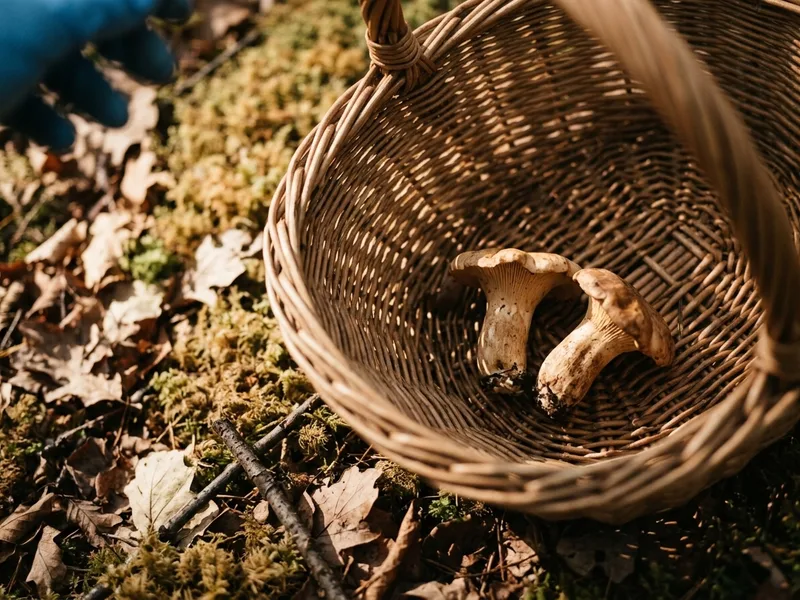
Wicker Foraging Basket
An open weave lets spores drop back through as you walk, which a plastic bag does not, and it stops a soft cap being crushed under everything picked after it. Size it to the walk, not the best day you have ever had.
When you buy through our links, it supports our mycology research at no extra cost to you.
Three Foraging Regions
Boreal North
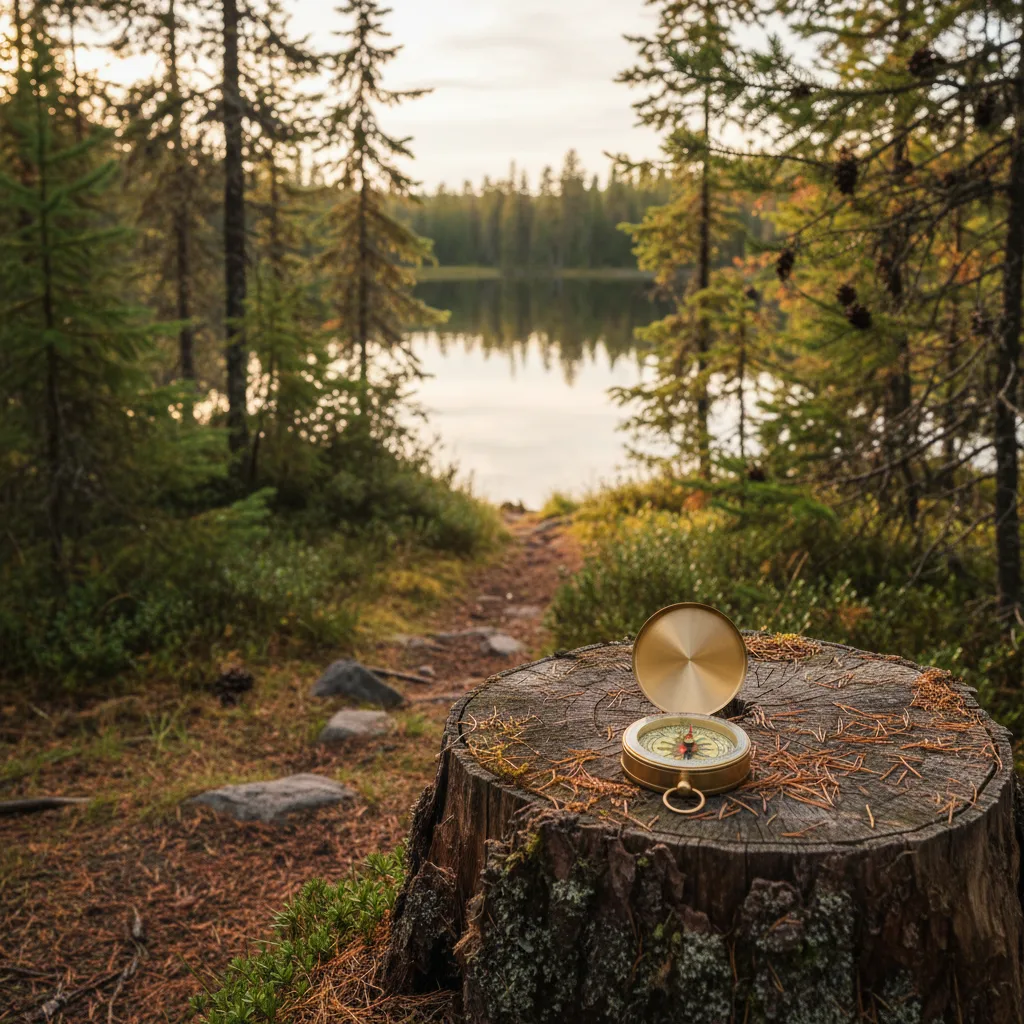
Everything north of roughly La Ronge — the Boreal Forest Natural Region. Black spruce, white spruce, jack pine, aspen, birch. Vast Crown land, sparse population, almost no foraging pressure. This is also the heart of Saskatchewan's wildfire country — the spring after a major burn can produce extraordinary morel flushes.
Key areas: Crown land around La Ronge, Meadow Lake, Hudson Bay, and Greenwater Lake (outside the provincial park). The country east of Prince Albert National Park along Highway 55 has excellent boreal habitat.
Best species: Black morels (especially burn years), birch boletes, king boletes, slippery jack, saffron milk caps, honey mushrooms, hedgehogs, and abundant chaga on the boreal birch.
Aspen Parkland (Central Belt)
The transition zone from boreal forest to prairie, running through Saskatoon, Yorkton, and Battleford. Aspen, balsam poplar, willow, and scattered white spruce. Many small Crown land parcels mixed with farmland.
Key areas: River valleys — the North Saskatchewan, South Saskatchewan, Battle, and Qu'Appelle rivers all hold riparian forest worth scouting. The Touchwood Hills and Beaver Hills areas have decent Crown land access.
Best species: Aspen boletes (signature parkland mushroom), wild oysters on fallen aspen, dryad's saddle on dead poplar, shaggy manes after rain, giant puffballs in pasture edges, and yellow morels along cottonwood-lined creeks in spring.
The South — Prairie
The dry agricultural south (Regina, Moose Jaw, Swift Current) is generally poor mushroom country. Shelterbelts and irrigation-fed treelines around small towns can produce occasional shaggy manes and giant puffballs in good years, but you'll travel further than you pick. Cypress Hills (foraging prohibited inside the provincial park, permitted on surrounding Crown land) is the exception — the elevated forest island holds species you won't find elsewhere in the south.
What to take with you
Foraging needs very little kit, and the three things that matter each do a different job: carry the find without crushing it, cut it without damaging what is left behind, and clean it dry.
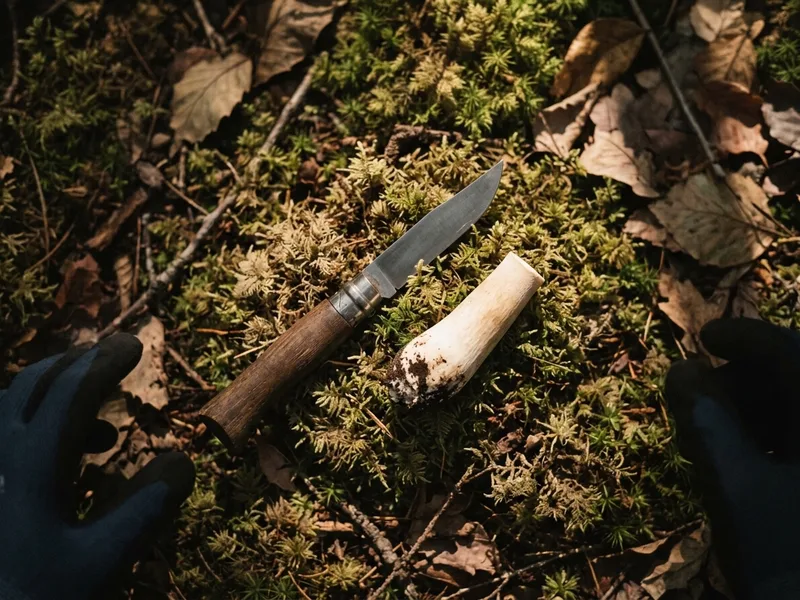
Opinel No. 08 Mushroom Knife
A curved blade cuts the stem cleanly at the base instead of tearing the mycelium out with it, and the boar bristle brush is set into the handle so cleaning happens in the field rather than at the sink.
When you buy through our links, it supports our mycology research at no extra cost to you.
Species by Season
Spring (May - June)
Black Morels (Morchella angusticeps) — The spring prize. Natural black morels appear in mixed-wood boreal forests. The spring after a major wildfire, burn morels can be commercial-quantity abundant — a boreal burn-harvest study reviewed in the US Forest Service's morel management guide found pickers averaging 19.8 pounds per person per day. Check the Saskatchewan Wildfire dashboard from the previous summer to identify promising burn zones.
Yellow Morels (Morchella esculenta) — Less common than blacks. Look in aspen and cottonwood riparian areas in the parkland belt.
Dryad's Saddle (Cerioporus squamosus) — Polypore on dead aspen and elm. Young, tender specimens only — woody by July.
Wild Oyster Mushrooms (Pleurotus ostreatus) — Spring flushes on fallen aspen and cottonwood. If you can't get out to forage, you can grow oysters year-round at home with a grow kit or grain spawn.
Summer (July - August)
Aspen Bolete (Leccinum insigne) — The parkland's defining mushroom. Orange cap, black-flecked stem, fruits near aspen. Cook well.
Birch Bolete (Leccinum scabrum) — Boreal species, only fruits near birch. Mild flavour, dries beautifully.
King Bolete (Porcini) (Boletus edulis) — Spruce and pine stands in the boreal north. Best after late-summer rains. Confirm against bitter bolete.
Slippery Jack (Suillus luteus) — Pine forests, mostly in the north. Peel the slime layer.
Fall (September - October)
Saffron Milk Cap (Lactarius deliciosus) — Orange cap, bleeds orange-red latex when cut. Pine forests in the boreal north.
Hedgehog Mushroom (Hydnum repandum) — Mixed forests in the boreal. Spines, not gills — no deadly lookalikes. Best species for cautious beginners.
Honey Mushrooms (Armillaria group) — Clusters at the base of dying aspen and poplar. Cook thoroughly. Confirm against the deadly Galerina marginata on the same wood.
Lion's Mane (Hericium erinaceus) — On aspen and birch through the parkland and boreal. Distinctive waterfall shape — no deadly lookalikes.
Shaggy Mane (Coprinus comatus) — Lawns, gravel road edges, disturbed soil. Eat the same day you pick them. Our shaggy mane guide covers identification, lookalikes, and cooking.
Giant Puffball (Calvatia gigantea) — Pasture and field edges. Pure white inside is essential.
Winter and Year-Round
Chaga (Inonotus obliquus) — Saskatchewan's boreal birch country is one of the great chaga landscapes of North America. Available year-round, easiest to spot after leaf-fall. Harvest carefully — never take more than a third of any conk.
Toxic Look-alikes Every Saskatchewan Forager Must Know
False Morel (Gyromitra esculenta) — Brain-like (not honeycomb) cap, solid or chambered interior (true morels are completely hollow). Contains gyromitrin — there is no safe home preparation. Do not eat false morels.
Destroying Angel (Amanita bisporigera) — All-white mushroom with a cup-like volva at the base and a ring on the stem. White spore print. Found in mixed forests through Saskatchewan. Causes irreversible liver failure. Avoid any mushroom with all four Amanita features (white spores + free gills + ring + volva).
Galerina marginata — Small brown mushroom in clusters on dead wood, often on the same logs where honey mushrooms appear. Same amatoxins as the destroying angel. Has killed people who confused it with honey mushrooms.
Sulphur Tuft (Hypholoma fasciculare) — Yellow-green to orange-tinged clusters on dead wood. Sometimes mistaken for honey mushrooms. Causes severe gastrointestinal poisoning.
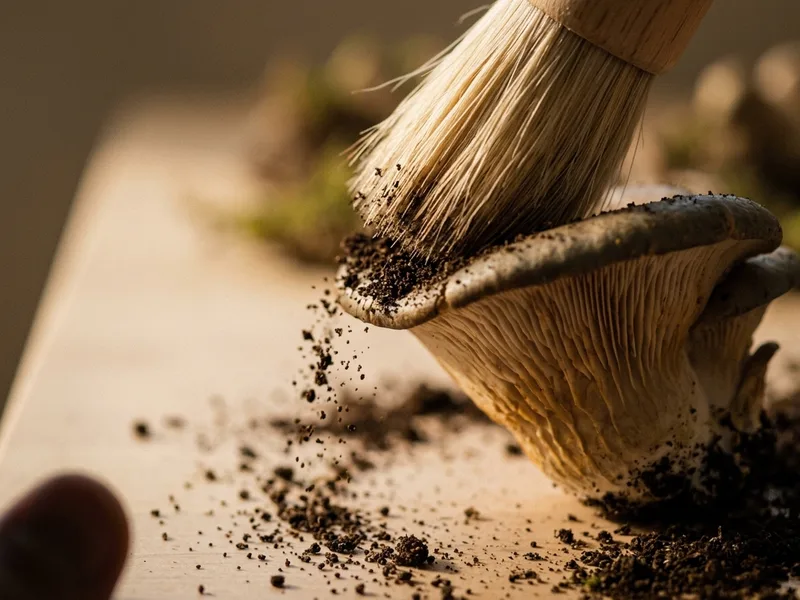
Redecker Natural Pig Bristle Mushroom Brush
Soft enough to take soil off a cap without tearing the skin. Mushrooms absorb water, so brushing dry beats rinsing every time, and anything you plan to dry has to be cleaned this way.
When you buy through our links, it supports our mycology research at no extra cost to you.
Community and Resources
Saskatchewan's foraging community is smaller than Alberta's or Manitoba's but knowledgeable and welcoming.
- Saskatoon Mycological Society — The province's main mycological club, runs forays and identification workshops.
- iNaturalist — Excellent for recording your finds and getting community ID. Foragers and naturalists have logged nearly 22,000 fungi observations in Saskatchewan as of September 2026 — filter the feed to see what's currently fruiting near you.
- Mushroom Observer — Specialised mushroom-ID platform with strong Canadian participation.
Growing Gourmet and Medicinal Mushrooms
Most people who forage for a season start wondering whether they can grow the same species deliberately. This is the standard cultivation reference, with substrate, spawn and fruiting conditions worked through species by species. A different book from a field guide and worth owning alongside one.
When you buy through our links, it supports our mycology research at no extra cost to you.
Sustainable Foraging in Saskatchewan
- Take only what you'll use. Wild mushrooms are a shared resource.
- Leave a third behind so the patch can keep producing.
- Don't rake the duff — disturbing the forest floor damages the mycelium that produces next year's flush.
- Cut, don't pull. A clean knife cut at the base disturbs less than yanking.
- Vary your spots within a season.
Further north the season compresses sharply and the species list changes. The northern Canada foraging guide covers what still fruits above the treeline.
National Audubon Society Field Guide to North American Mushrooms
The broadest single-volume reference for North America, with photographic plates arranged by shape and colour. Heavier than a pocket guide, so most foragers keep it at home and carry something smaller.
When you buy through our links, it supports our mycology research at no extra cost to you.
Getting Started in Saskatchewan
- Connect with the Saskatoon Mycological Society — one foray with experienced identifiers will teach you more than a year of reading.
- Start with the foolproof species — shaggy manes, giant puffballs, hedgehogs, and morels (with the false-morel feature memorised).
- Get a regional field guide. Mushrooms of Western Canada by Helene Schalkwijk-Barendsen is the standard reference.
- Use iNaturalist's Saskatchewan feed before each trip to see what's currently fruiting in your region.
- Three independent confirmations before eating any new species — field guide + community ID + experienced friend.
If the off-season has you missing fresh mushrooms, you can grow gourmet species at home year-round. Browse our grow kits, grain spawn, and growing supplies. And see our companion guides for mushroom foraging in Alberta and Manitoba for trips across the prairie provinces.