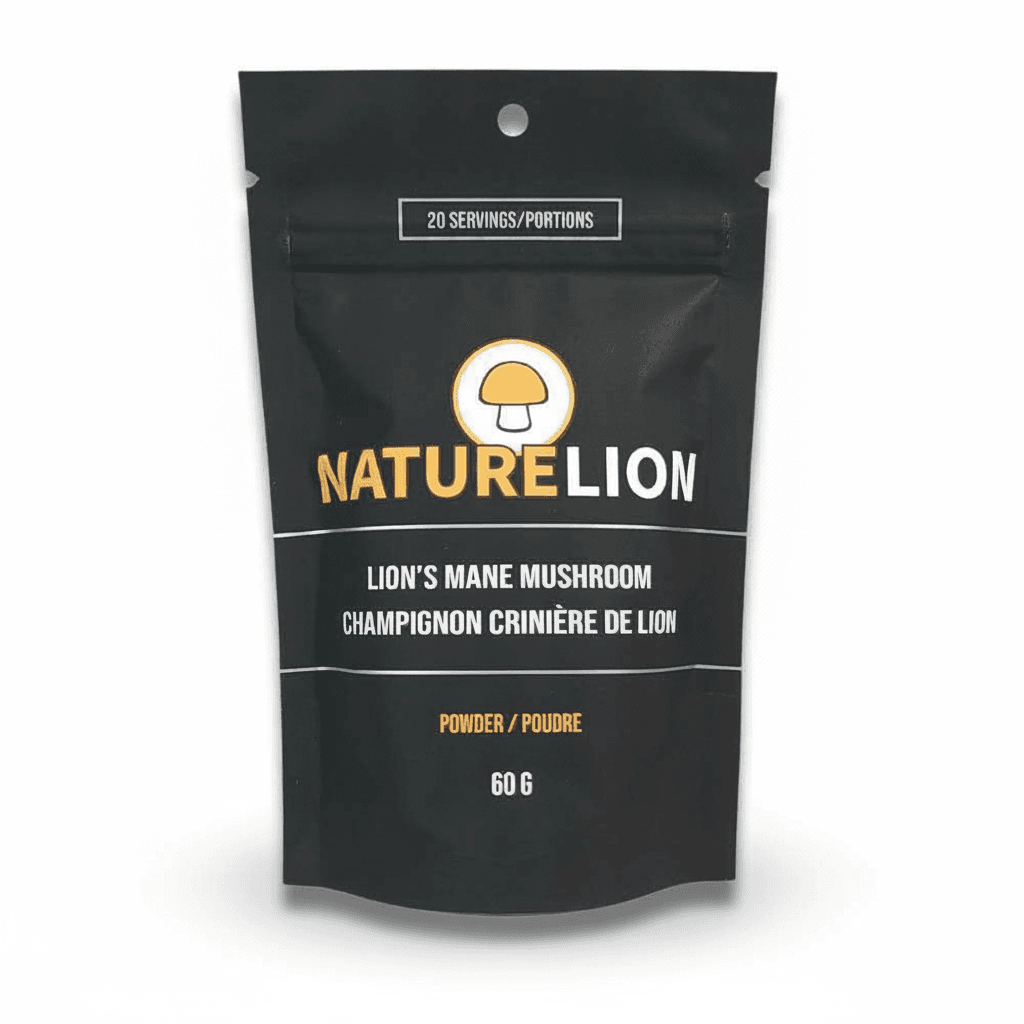
Is mushroom powder safe for cats?
Some mushroom species are commonly used in feline supplement formulas — turkey tail is the most common. Others, like chaga (high in oxalates), are generally avoided for cats. Always check with your veterinarian before adding any supplement to your cat's diet, especially if your cat has any medical condition or takes medication.
Which mushroom powder is best for cats?
Turkey tail is the species most commonly used in feline supplement formulas. Mild flavour, well-tolerated by most cats when mixed into wet food. Chaga should be avoided in cats due to its high oxalate content.
How much mushroom powder for a cat?
Common ranges cited by feline supplement formulators are roughly 25–50 mg of mushroom powder per kg of body weight per day, split across meals. For a 4 kg cat, that's about 100–200 mg total daily — much less than the equivalent dose for a similarly-sized dog. Always confirm with your veterinarian.
How do I get my cat to eat mushroom powder?
Mix the powder into highly aromatic wet food, churu (Japanese cat treat paste), or low-sodium chicken broth. Cats are notoriously picky — start with a quarter of the eventual dose and increase over a week so your cat acclimates to the taste.
Are there mushroom species I should avoid giving my cat?
Yes. Chaga is generally avoided in cats due to its high oxalate content, which is associated with urinary and kidney concerns in felines. Any wild mushroom of unknown species should never be given to cats. Stick to single-species commercial powders from licensed facilities and discuss with your vet before starting.
Can I give my cat the same dose as my dog?
No. Cats need lower per-kg doses than dogs because of differences in metabolism. A typical guideline is roughly half the per-kg dog dose. Cats are also more susceptible to certain compounds (like oxalates), which is why species selection differs.