


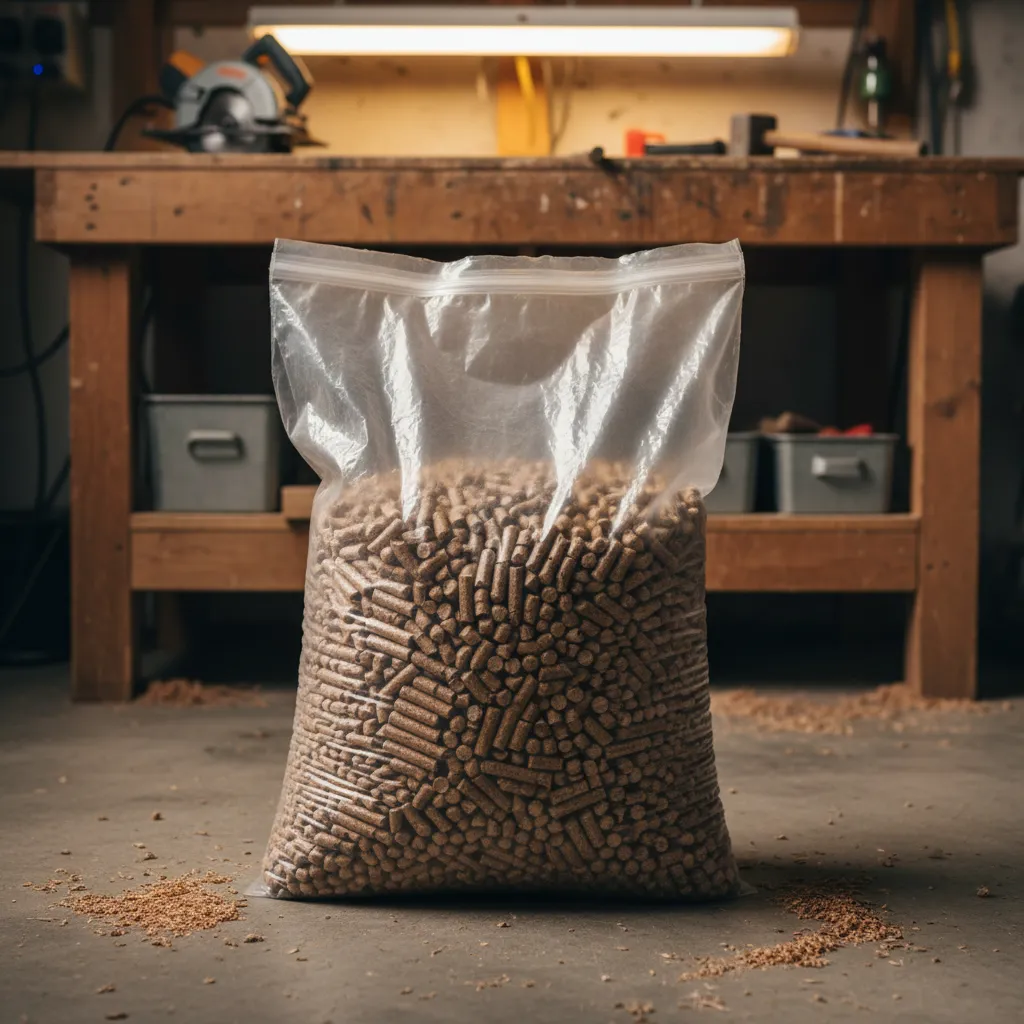
Hardwood fuel pellets (HWFP) are one of the best-kept secrets in mushroom cultivation. They're cheap, widely available, nearly sterile out of the bag, and produce excellent results with a wide range of gourmet species.
If you've been buying pre-made substrate and want to save money — or you're scaling up and need a reliable bulk recipe — pellets are the answer.
What Are Hardwood Fuel Pellets?
HWFP are compressed sawdust pellets sold as heating fuel for pellet stoves. They're made by forcing hardwood sawdust through a die at high pressure and temperature, which compresses the material into dense, uniform cylinders about 6mm in diameter.
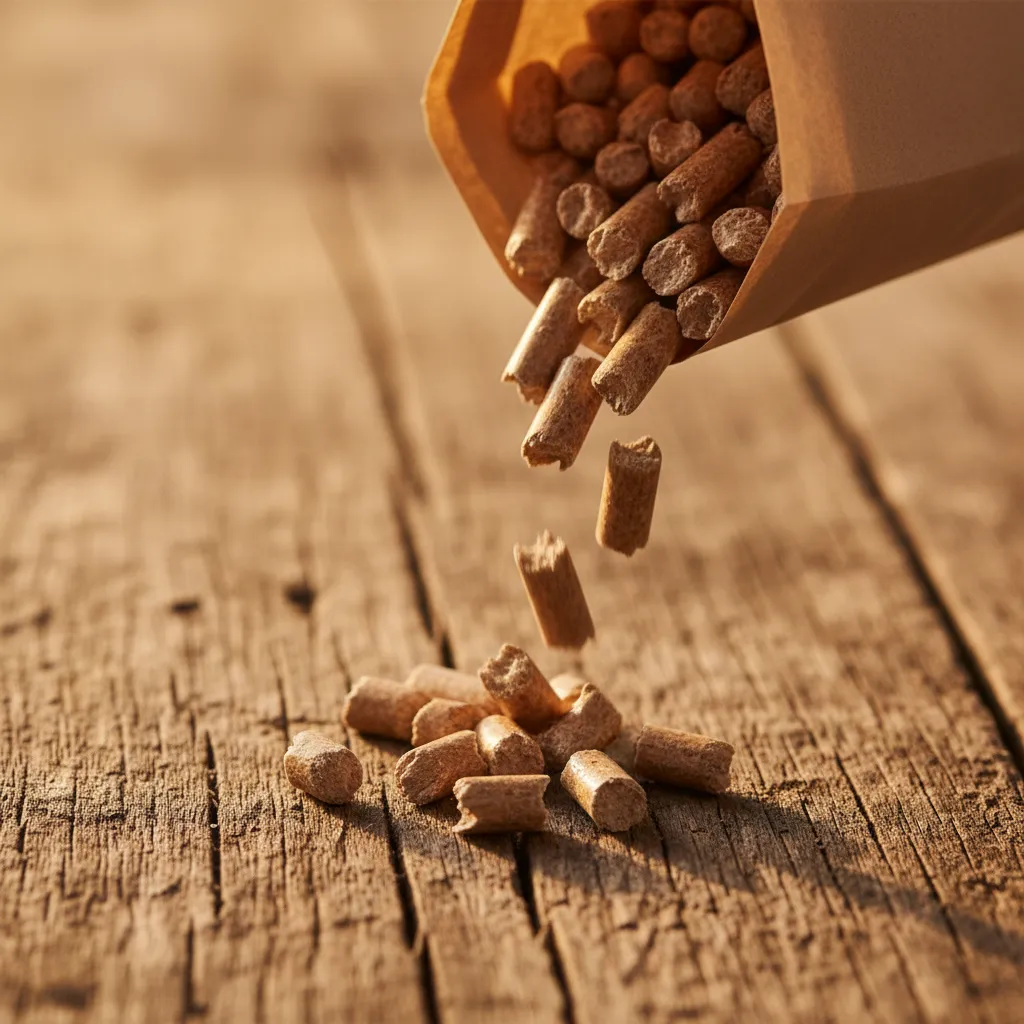
The key properties that make them ideal for mushroom growing:
- Nearly sterile. The heat and pressure of manufacturing kills most contaminants.
- Consistent. Every bag is the same — no variation in particle size or wood species.
- Cheap. A 40 lb bag costs $6-10 at Canadian hardware stores or feed suppliers.
- Easy to hydrate. Just add water and they break apart into fine sawdust.
- Available everywhere. Canadian Tire, Home Hardware, farm supply stores — they're not hard to find.
Important: Use only hardwood pellets with no additives, binders, or accelerants. Softwood pellets (pine, spruce) contain resins that inhibit mushroom growth. Check the label — it should say 100% hardwood with no additives.
Hydration Ratio
The standard hydration ratio for HWFP is 1:1.2 by weight — for every 1 kg of dry pellets, add 1.2 litres of water. This brings the substrate to approximately 60-65% moisture content, which is ideal for most species. Our Bulk Substrate Calculator lets you enter your target number of bags and spits out exact pellet, water, and supplement weights — no mental math required.
A practical recipe for one grow bag:
- 2.5 lbs (1.1 kg) hardwood pellets
- 3 lbs (1.3 kg) water (about 1.3 litres)
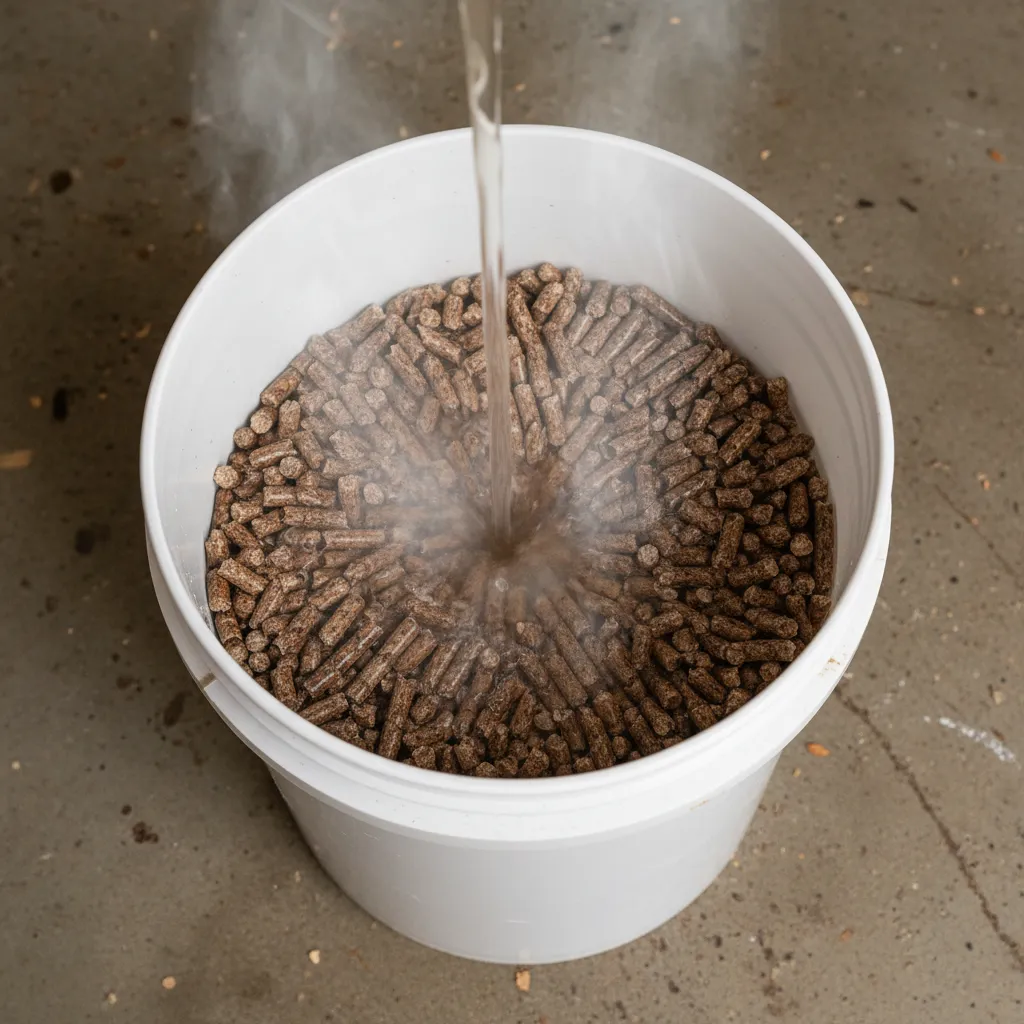
Pour the water over the pellets in a clean bucket or directly into your grow bag. Wait 20-30 minutes for full absorption. The pellets will break apart into fluffy, moist sawdust. Break up any remaining clumps by hand or by kneading the bag.
Which Species Grow on Pellets?
HWFP work well for most hardwood-loving species:
| Species | Performance on HWFP | Notes |
|---|---|---|
| Blue Oyster | Excellent | Fast colonization, heavy yields |
| Pink Oyster | Excellent | Prefers warmer temperatures |
| Lion's Mane | Very Good | Benefits from supplementation |
| Shiitake | Good | Longer colonization, supplement recommended |
| Chestnut | Good | Supplement for best yields |
| King Oyster | Good | Benefits from supplementation |
Oyster mushrooms are the easiest species to grow on pellets. They colonize aggressively and produce reliably even without supplementation.
Step-by-Step: Pellet Substrate in a Grow Bag
What You Need
- Hardwood fuel pellets (no additives)
- Mushroom grow bags with filter patch
- Grain spawn — your chosen species
- Clean bucket or mixing container
- Kitchen scale
- Pressure cooker or large pot (optional for supplemented batches)
The Process
1. Measure and hydrate. Weigh out your pellets and water according to the 1:1.2 ratio. Pour water over pellets and wait 30 minutes. Break up any clumps.
2. Load the bag. Transfer the hydrated sawdust into your grow bag. If you're not supplementing, you can skip sterilization — the pellets are clean enough for a simple pasteurization approach. Many growers succeed with no additional heat treatment at all, especially with aggressive species like oysters.
3. Add spawn. Mix in your grain spawn at a rate of 10-20% by weight. More spawn means faster colonization and less chance of contamination. Break the spawn up and distribute it evenly throughout the substrate.
4. Seal and incubate. Fold over the top of the bag and secure it. The filter patch allows gas exchange while keeping contaminants out. Place the bag in a dark area at the appropriate incubation temperature for your species (typically 20-24°C). Colonization takes 2-4 weeks depending on species and spawn rate.
5. Fruit. Once the bag is fully colonized (100% white mycelium), cut slits or holes in the bag and move it to your fruiting area. Maintain humidity, provide fresh air, and wait for pins.
Digital Kitchen Scale
Getting your pellet-to-water ratio right is the key to perfect substrate moisture. A kitchen scale takes the guesswork out of hydration every time.
View on Amazon.ca →When you buy through our links, it supports our mycology research at no extra cost to you.
Supplementation with Bran
For species that benefit from extra nutrition — Lion's Mane, Shiitake, King Oyster, and Chestnut — you can add wheat bran or oat bran to boost yields by 20-50%.
Supplemented recipe (per bag):
- 2 lbs hardwood pellets
- 0.5 lbs wheat bran (about 20% of dry substrate weight)
- 3 lbs water
Critical: When you add bran, you must sterilize the substrate. Bran is nutrient-rich and will attract contamination if not properly sterilized. Load the mixed substrate into your grow bag, seal with an impulse sealer or fold-over, and pressure cook at 15 PSI for 2.5 hours. Allow to cool fully before inoculating.
Our all-in-one grow bags come pre-sterilized with a supplemented hardwood substrate — ready for you to add spawn without any sterilization equipment.
Tips for Success
- Use fresh pellets. Bags that have been open or exposed to moisture may have picked up contaminants.
- Don't over-hydrate. Soggy substrate invites bacterial contamination. If you squeeze a handful and water drips out freely, it's too wet.
- Work clean. Even though pellets are nearly sterile, poor technique can introduce contaminants. Wash your hands, clean your workspace, and work quickly.
- Start with oysters. They're the most forgiving species on pellets and will teach you the process before you move to pickier species.
For a deeper dive into substrate options, check out our complete substrate guide. If you're growing oysters specifically, our oyster mushroom guide covers the full process from spawn to harvest.