
Lion's mane is unusual among mushrooms in that the way you break it down changes what it becomes. The same fruit body will give you something that sears like a steak, something that shreds like crab, or something that melts into a hash, depending only on whether you slice it, pull it apart, or dice it.
That is the useful way to think about recipes here, so this page is organised by shape rather than by cuisine. Decide what texture you want, then pick the dish.
The Part That Applies to All of Them
Lion's mane is dense but it is still mostly water, and every preparation below fails the same way if you skip this.
Do not wash it. It absorbs water like a sponge, and a wet mushroom steams instead of browning. Brush off any substrate with a dry cloth or pastry brush. Trim the base where it attached to the block.
Start the pan dry. Hot pan, no oil, mushroom straight in. Let the water it releases boil off completely before any fat goes near it. This one step is the difference between golden and grey.
Do not crowd the pan. Two batches beat one crowded batch every time.
Salt at the end. Salt early and you pull the water out before the surface can brown.
Fresh matters more than technique. A lion's mane cut that morning is firm and dry enough to sear in minutes. The same mushroom a week later has gone soft and will never crisp properly, whatever you do to it.
Cut It Three Ways
| Shape | How to get it | What it behaves like | Dishes |
|---|---|---|---|
| Thick slabs | Slice the whole fruit body across, 1.5-2 cm | Dense, meaty, holds together | Steaks, scallops, skewers |
| Hand-pulled shreds | Tear along the grain of the spines | Stringy, flaky, absorbs sauce | Crab cakes, rolls, tacos |
| Fine dice | Chop, or pulse in a processor | Disappears into a base | Hash, pasta, soup, duxelles |
Thickness is the thing people get wrong on slabs. Under 1 cm and the piece cooks through before a crust forms. Over 3 cm and the outside is done while the middle is still raw. 1.5-2 cm is the window.
Slabs
1. Seared Lion's Mane Steak
The flagship, and the preparation to try first because it shows you what the mushroom actually is. Dry sear thick slabs until deeply golden, then butter baste with garlic and thyme, finish with a squeeze of lemon. Fifteen minutes, five ingredients.
We have written this one up properly with timings and photos: the full lion's mane steak recipe.
2. Seared "Scallops"
Cut rounds from the densest part of the fruit body, about 3 cm across and 2 cm thick. Score a shallow crosshatch on both faces so heat gets in. Dry sear hard, then finish in butter for under a minute a side.
The scored faces caramelise into something genuinely close to a seared scallop. Serve on a purée with a splash of white wine reduced in the pan.
3. Grilled Skewers
Thread 2 cm cubes onto skewers, brush with oil, and grill over medium-high for 3-4 minutes a side. Lion's mane is one of the few mushrooms dense enough to survive direct grates without collapsing. Sauce only in the final minute, or the sugars burn before the mushroom finishes.
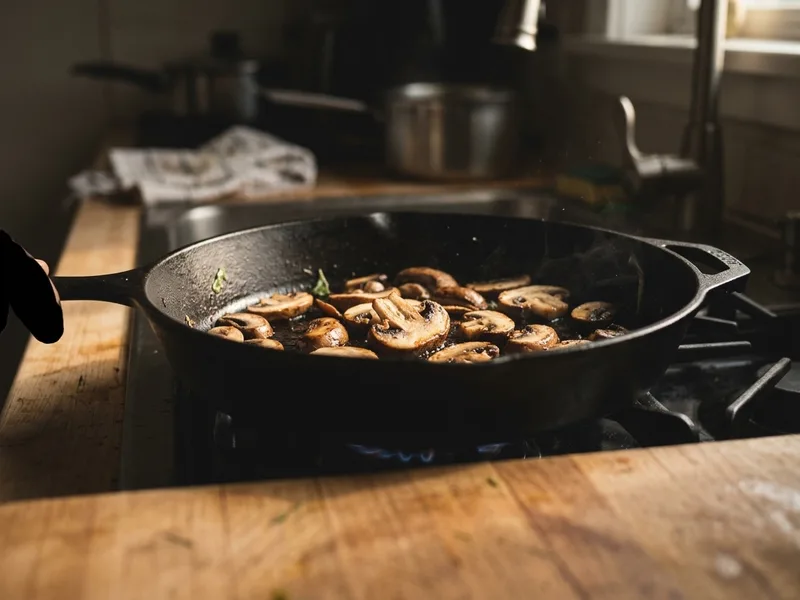
Lodge 12-Inch Cast Iron Skillet
Heat capacity is the entire argument. A thin pan loses temperature the moment wet mushroom hits it, which is how you end up simmering rather than searing. A heavy 30 cm base holds its heat and gives you room to cook a real batch in a single layer. Nothing else on this page needs buying.
When you buy through our links, it supports our mycology research at no extra cost to you.
Shreds
This is where lion's mane does its best trick. Pulled along the grain, the tooth-like spines separate into strands with the flake and stringiness of crab or lobster meat.
4. Crab Cakes
Pull about 300 g into shreds and dry sear them first, which is the step most recipes skip and the reason most versions come out wet. Cool, then mix with an egg, a few tablespoons of breadcrumbs, finely diced shallot and celery, mayonnaise, Dijon, Old Bay or celery salt, and lemon zest.
Form into patties, chill for 20 minutes so they hold, then shallow fry until golden on both sides. The chill is not optional; warm mixture falls apart in the pan.
5. "Lobster" Rolls
The lazier and arguably better version of the same idea. Dry sear the shreds, then toss them while still warm in melted butter with lemon juice, a little mayonnaise, chives and black pepper. Pile into a toasted split-top bun.
Nothing here is pretending to be seafood exactly, but the texture lands close enough that this is the dish that surprises people most.
6. Pulled Tacos
Dry sear the shreds, then braise them briefly in whatever you would use for pulled pork: chipotle in adobo, cumin, smoked paprika, a splash of stock and a little maple or brown sugar. Cook until the liquid has reduced to a glaze and the edges have crisped again.
Warm corn tortillas, quick-pickled red onion, coriander, lime.
Fine Dice
7. Breakfast Hash
Dice fine and sear with potato, onion and plenty of butter until everything has caught colour. Lion's mane browns faster than potato, so give the potato a head start. Top with a soft egg.
This is the best use for the irregular offcuts and the trimmed base that are too awkward for slabs.
8. Pasta and Ramen
Fine dice sautéed in butter with garlic, deglazed with white wine and finished with cream and parmesan makes a sauce with more body than button mushrooms give you. In ramen, sear the dice hard and add it at the end so it keeps some texture against the broth.
Which to Cook First
If you have one fresh lion's mane and want to understand the mushroom, make the steak. If you are cooking for people who are sceptical about mushrooms, make the lobster rolls. If you are dealing with a big flush and a lot of irregular pieces, make the hash.
A first flush from a kit usually produces more than one meal needs. Cook one dish fresh, then deal with the rest before quality drops rather than after.
Storage and Leftovers
Fresh lion's mane keeps 5-7 days in the fridge in a paper bag, though it is noticeably better in the first two or three. Never seal it in plastic, which traps moisture and turns it slimy.
Cooked lion's mane reheats poorly as slabs, because the crust softens and the texture goes rubbery. Chop leftovers and fold them into fried rice, pasta or an omelette instead.
For longer storage, slice and dehydrate. Dried lion's mane rehydrates well enough for soups, stocks and stews, but it never regains the dense structure that makes searing work, so do not dry the pieces you were planning to make steaks from.
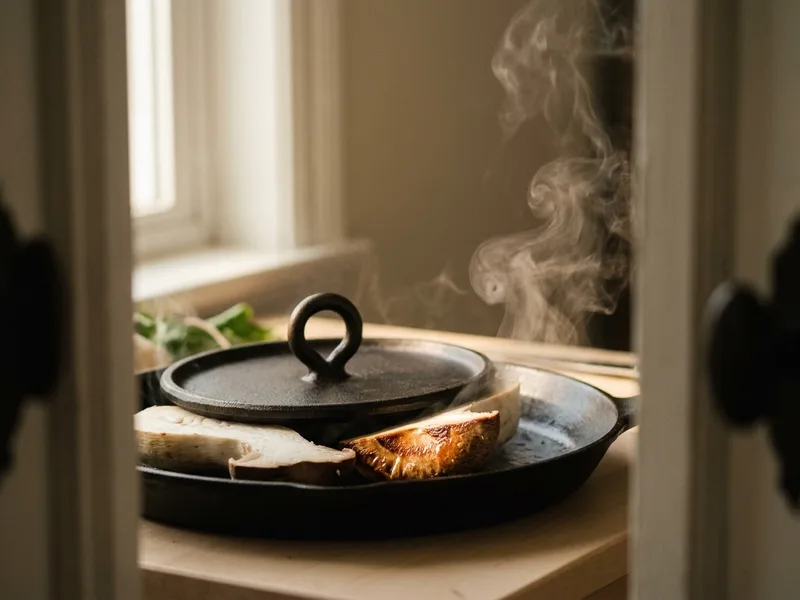
Lodge 8-Inch Cast Iron Griddle Press
Lion's mane has an uneven surface, so parts of a slab never touch the pan and never brown. A weighted press fixes that and gives you an even crust across the whole face. A spatula and steady hand does the same job, so treat this as a convenience rather than a requirement.
When you buy through our links, it supports our mycology research at no extra cost to you.
Frequently Asked Questions
Can you eat lion's mane raw?
Cook it. Raw lion's mane is unpleasantly spongy and slightly bitter, and cooking is what develops both the texture and the flavour people actually want from it.
Why does my lion's mane taste bitter?
Usually over-browned garlic in the baste, or a mushroom that was past its prime. Older lion's mane develops a sour, faintly off taste that cooking will not fix. Slightly yellowing specimens are on the way out.
Do I need to remove the spines?
No. The tooth-like spines are the whole mushroom and they are what shreds into strands. There is nothing to peel or trim except the firm base where it was attached to the growing block.
Can I use dried lion's mane for these?
For the diced and shredded dishes, yes. For steaks and scallops, no. Rehydrated lion's mane never gets back the dense fibrous structure those preparations depend on.
How much do I need per person?
Around 150-200 g of fresh mushroom per person as a main, less as a side. It shrinks substantially, so a cluster that looks like plenty produces less than you expect.
Growing Your Own
Every recipe here works better with a mushroom picked that day, and the gap between a fresh lion's mane and a supermarket one is larger than it is for most species. A lion's mane grow kit is the shortest route from block to pan, and our growing guide covers doing it at scale from grain spawn.
Related Guides
- Lion's mane steak recipe — the flagship preparation in full detail
- How to grow lion's mane — humidity, fruiting and harvest timing
- How to cook oyster mushrooms — the same dry pan principle on a wetter mushroom