
Few experiences in the mushroom world match the thrill of spotting your first morel. These honeycomb-capped fungi are among the most prized wild edibles in Canada, commanding prices of $40 to $80 per pound at farmers' markets — when you can find them at all. For foragers willing to learn the terrain and timing, morel season offers a rewarding reason to get into the spring woods.
This guide covers everything you need to know about morel mushroom foraging in Canada, from regional timing and habitat preferences to identification, safety, and cooking.
What Are Morel Mushrooms?
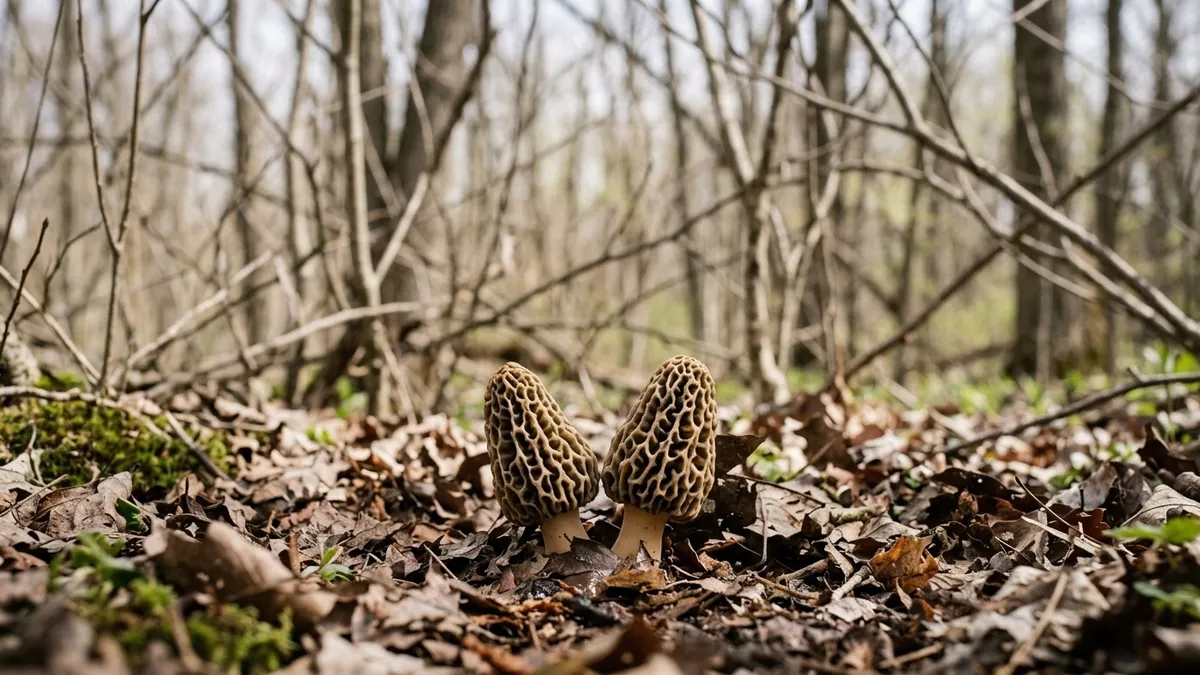
Morels belong to the genus Morchella, a group of ascomycete fungi recognizable by their distinctive honeycomb or sponge-like caps. Unlike most mushrooms you see in grocery stores (which are basidiomycetes), morels produce their spores in tiny sac-like structures called asci, housed within the pitted ridges of their caps.
Several morel species are found across Canada:
- Yellow morels (Morchella esculenta complex) — The most common find in deciduous forests. Pale tan to golden yellow, often appearing near dead elm trees and in river bottoms.
- Black morels (Morchella elata complex) — Darker in colour, typically fruiting earlier in spring. Common in coniferous forests and post-fire areas.
- Burn morels (Morchella tomentosa and related species) — Prolific fruiters in forests burned the previous year. These drive the massive commercial harvest in British Columbia and Alberta.
- Half-free morels (Morchella punctipes) — Smaller, with a cap that attaches only at the top of the stem. Less common but found in eastern Canada.
All true morels share key characteristics: a completely hollow interior (cap and stem form one continuous hollow chamber) and a cap that is attached directly to the stem rather than hanging free like a skirt.
What to take with you
Foraging needs very little kit, and the three things that matter each do a different job: carry the find without crushing it, cut it without damaging what is left behind, and clean it dry.
When Is Morel Season in Canada?
Morel season in Canada generally runs from April through July, but timing varies dramatically by province, elevation, and latitude. Morels fruit when soil temperatures reach approximately 10-15°C, typically following spring rains after the last hard frost.
British Columbia
BC offers Canada's longest and most productive morel season. Coastal areas can see early morels in March, while the massive burn morel harvest in the interior runs from May through July depending on elevation. Northern BC fire sites may produce well into August. The province's commercial morel harvest is one of the largest in the world, drawing pickers from across the country. For a deeper look at BC foraging, see our guide to mushroom foraging in British Columbia.
Alberta
Southern Alberta sees morels from late April through May in river valleys and cottonwood bottoms. The boreal forest regions produce burn morels from June through July following the previous year's wildfires. The eastern slopes of the Rockies are particularly productive.
Saskatchewan and Manitoba
The prairies may seem unlikely morel territory, but river valley forests, particularly those with dead elm trees affected by Dutch elm disease, can be excellent. Season runs from mid-May through June. Aspen parkland areas along the northern edge of the prairies also produce reliably.
Ontario
Ontario's morel season begins in late April in the southernmost regions (Essex, Niagara, Hamilton-Wentworth) and progresses northward through May and into June in northern Ontario. Deciduous forests with elm, ash, tulip poplar, and old apple orchards are prime habitat. For Ontario-specific details, check our complete guide to mushroom foraging in Ontario.
Quebec
Similar timing to Ontario, with southern Quebec (Monteregie, Eastern Townships) starting in early May and the season progressing through June as you move north toward the Laurentians and beyond. Maple-dominant hardwood forests are productive ground.
Atlantic Provinces
New Brunswick, Nova Scotia, and Prince Edward Island see morels from mid-May through June. Look in mixed forests, old orchards, and areas with dead or dying elm trees. The season is shorter but can be productive in the right habitats.
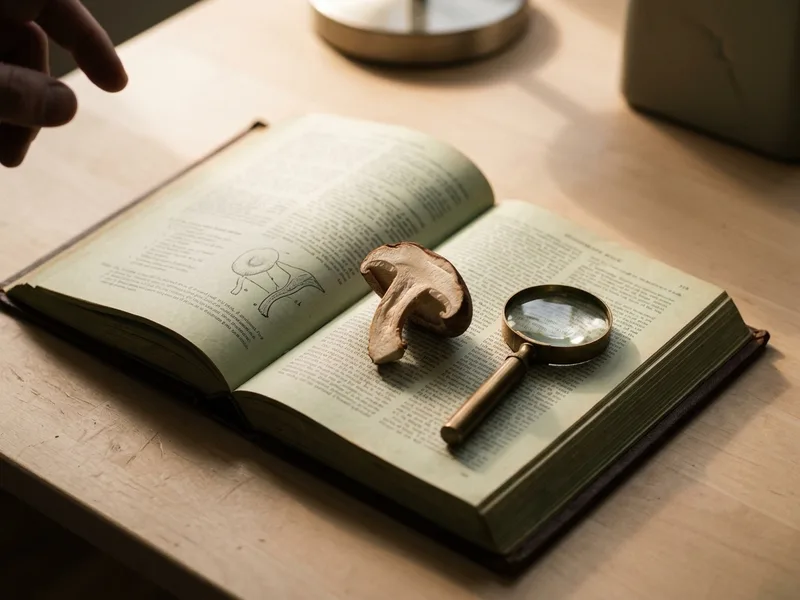
Growing Gourmet and Medicinal Mushrooms
Most people who forage for a season start wondering whether they can grow the same species deliberately. This is the standard cultivation reference, with substrate, spawn and fruiting conditions worked through species by species. A different book from a field guide and worth owning alongside one.
When you buy through our links, it supports our mycology research at no extra cost to you.
Where to Find Morels
Understanding morel habitat is the single most important skill for a successful hunt. Morels are not random — they have strong associations with specific trees, soil conditions, and disturbance events.
Burned Areas (The Mother Lode)
Post-fire forests are the most productive morel habitat in western Canada. The season following a moderate-to-severe wildfire can produce staggering quantities of black morels. Key details:
- Look for fires from the previous summer or fall — morels fruit the spring/summer after the burn
- Moderate burns (where some trees remain standing but are killed) outproduce severe burns
- The most productive zone is often at the edges of the burn, transitioning from burned to unburned forest
- Coniferous forests (spruce, pine, fir) produce better than deciduous burns
- Production typically peaks in year one and drops off sharply by year two
River Bottoms and Floodplains
Lowland forests along rivers and streams are classic morel territory across all of Canada:
- Cottonwood and balsam poplar stands along prairie and mountain rivers
- Silver maple and ash forests in eastern floodplains
- Areas with recent flooding or high water tables
- Sandy or loamy soils that warm quickly in spring
Dying and Dead Elm Trees
Dutch elm disease has devastated elm populations across eastern Canada since the 1960s, and morels have a well-documented association with dying elms. Look for:
- Standing dead elms with bark beginning to slough off (1-3 years dead is ideal)
- The zone within 2-5 metres of the trunk base
- Both urban parks and rural forests can be productive
Old Apple Orchards
Abandoned apple orchards are a cherished morel spot in Ontario, Quebec, and the Maritimes. The combination of disturbed soil, specific soil chemistry, and decaying wood seems to favour yellow morels. Check:
- Orchards abandoned 10-30 years ago
- Under and around old apple trees, both living and dead
- Edges where orchard meets forest
Other Productive Habitats
- Disturbed ground — road cuts, logging skid trails, gravel pits
- Tulip poplar stands — in the Carolinian zone of southern Ontario
- Ash trees — particularly those dying from emerald ash borer
- South-facing slopes — these warm earliest in spring and often produce first
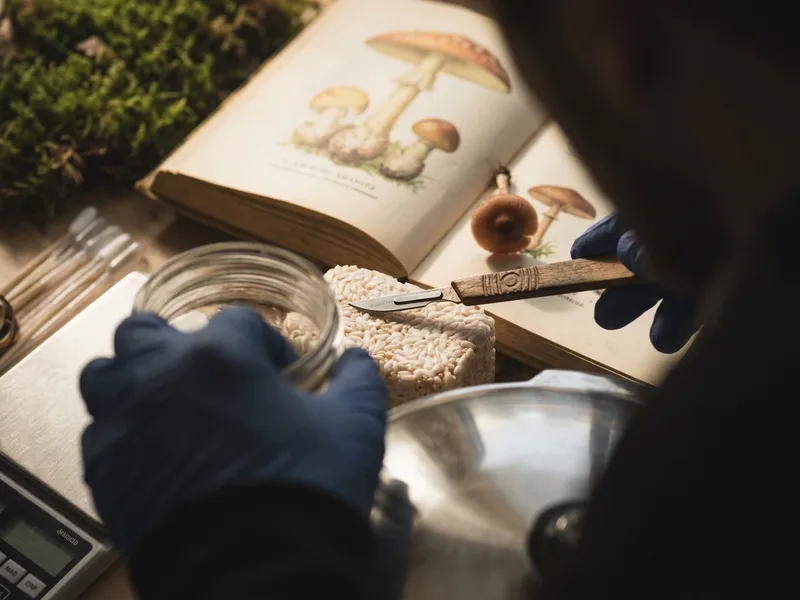
National Audubon Society Field Guide to North American Mushrooms
The broadest single-volume reference for North America, with photographic plates arranged by shape and colour. Heavier than a pocket guide, so most foragers keep it at home and carry something smaller.
When you buy through our links, it supports our mycology research at no extra cost to you.
How to Identify Morels (and Avoid False Morels)
Correct identification is absolutely critical. While true morels are relatively straightforward to identify, there are dangerous lookalikes that must be distinguished.
True Morel Identification
A true morel has these characteristics:
- Honeycomb cap — Pits and ridges form an irregular honeycomb pattern over the entire cap surface
- Completely hollow — When sliced lengthwise from top to bottom, the interior is one continuous hollow chamber with no cottony tissue
- Cap attached to stem — The bottom edge of the cap connects directly to the stem (except in half-free morels, where it attaches at the top)
- Brittle, thin flesh — The walls are relatively thin and snap cleanly
False Morels (Gyromitra species) — DANGER
False morels can cause serious illness or death. The most dangerous species in Canada is Gyromitra esculenta (the brain mushroom), which contains gyromitrin, a compound that metabolizes into monomethylhydrazine (rocket fuel). Key differences:
- Brain-like or saddle-shaped cap — Wrinkled and lobed rather than pitted with a honeycomb pattern
- Not hollow inside — Cross-section reveals cottony or chambered tissue rather than a single open cavity
- Cap often hangs free — The cap may drape over the stem rather than being fused to it
- Reddish-brown colour — Often darker and more reddish than true morels
The hollow test is your most reliable single check. Always slice your morels lengthwise before cooking. A true morel is completely hollow from cap tip to stem base. If you see any solid tissue, chambered areas, or cottony filling, discard it.
Other Lookalikes
- Verpa bohemica (early morel/wrinkled thimble cap) — Cap hangs freely from the top like a thimble placed on a finger. The stem is stuffed with cottony pith. While not as dangerous as Gyromitra, it can cause gastrointestinal upset.
- Verpa conica — Similar to V. bohemica but with a smooth rather than wrinkled cap. Attached only at the very top of the stem.
When in doubt, throw it out. Never consume a mushroom you cannot identify with 100% certainty.
Equipment You Need
Morel foraging requires minimal gear, but a few items make the experience safer and more productive:
- Mesh bag or basket — Essential for carrying your harvest. Mesh allows spores to disperse as you walk, helping sustain future crops. Avoid plastic bags, which cause morels to deteriorate quickly. For gear recommendations, see our mushroom growing equipment guide.
- Small knife — For cutting morels at the base rather than pulling them. This leaves the mycelial network undisturbed.
- GPS or mapping app — Mark productive spots for future years. Morel patches often produce annually (outside of burn sites).
- Layers of clothing — Spring weather in Canada is unpredictable. Mornings can be near freezing while afternoons warm considerably.
- Long pants and boots — You will be walking through brush, deadfall, and potentially muddy terrain.
- Field guide — A regional mushroom guide with clear photographs of both morels and their lookalikes.
- Bear spray — If foraging in bear country (much of western and northern Canada), carry bear spray and make noise on the trail. Spring is when bears are hungriest after hibernation.
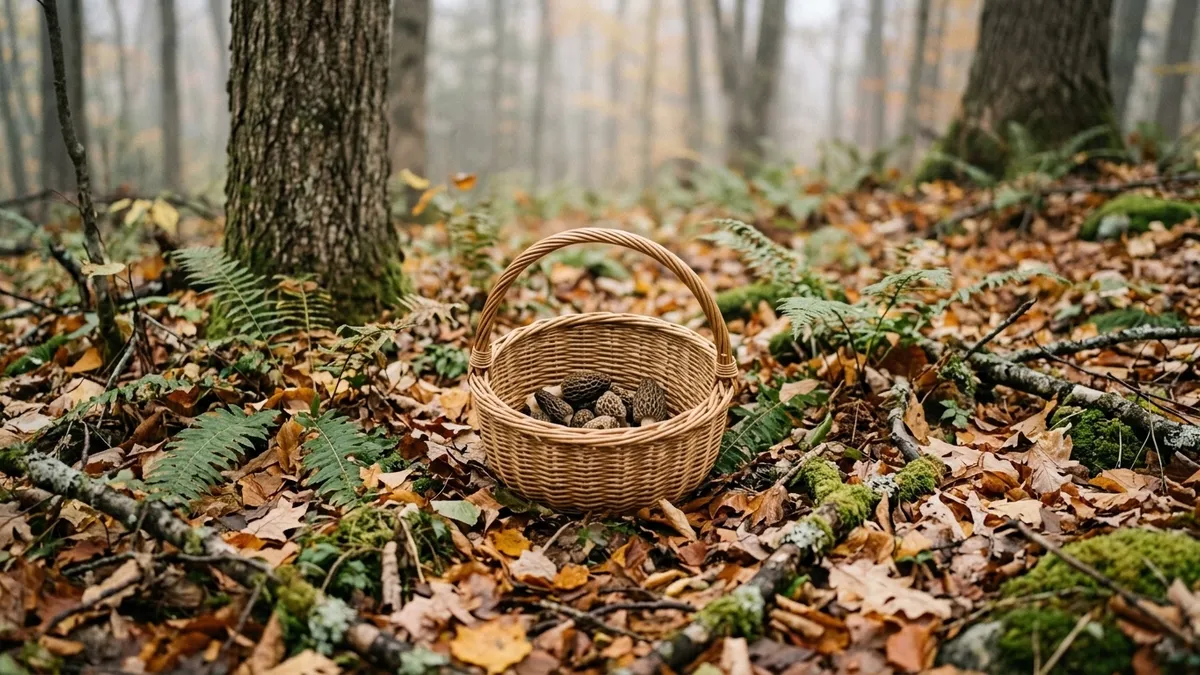
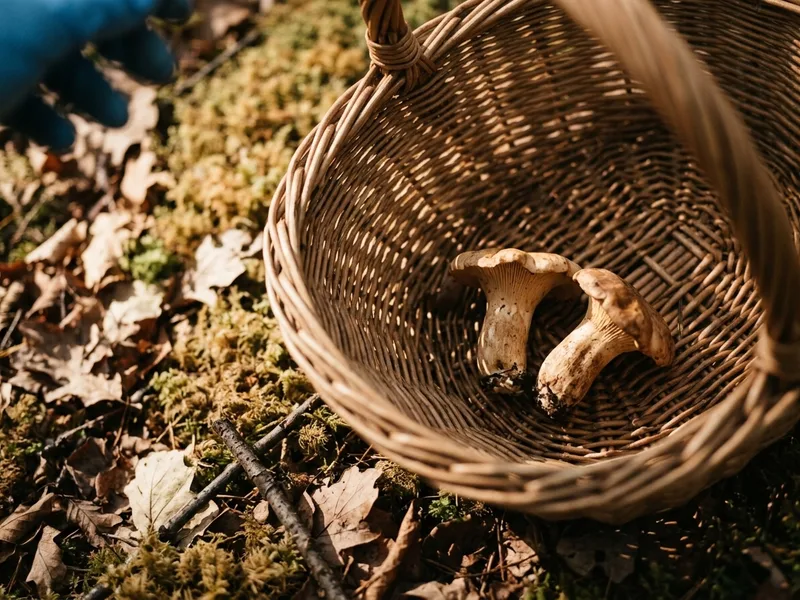
Wicker Foraging Basket
An open weave lets spores drop back through as you walk, which a plastic bag does not, and it stops a soft cap being crushed under everything picked after it. Size it to the walk, not the best day you have ever had.
When you buy through our links, it supports our mycology research at no extra cost to you.
How to Clean and Store Morels
Morels require careful cleaning due to their pitted caps, which harbour dirt, insects, and debris.
Cleaning
- Shake and brush — Gently tap morels to dislodge loose debris. A soft brush (pastry brush or dedicated mushroom brush) works well for the pits.
- Quick rinse — Despite the old myth about never washing mushrooms, a brief rinse under cool running water is fine. Do not soak them — water trapped in the hollow interior promotes rot.
- Slice lengthwise — This reveals any hidden insects or larvae (common) and confirms the hollow interior.
- Salt water soak (optional) — If you find many insects, a 20-minute soak in lightly salted cold water encourages them to evacuate. Dry thoroughly afterward.
Storage
- Fresh — Store in a paper bag in the refrigerator for 3-5 days. Never use plastic bags or sealed containers.
- Dried — The best long-term preservation method. Slice morels and dry them in a food dehydrator at 45-50°C (or string them on thread and air dry). Properly dried morels keep for 1-2 years in an airtight container. Reconstitute in warm water for 20-30 minutes before cooking.
- Frozen (cooked) — Saute morels first, then freeze in airtight containers for up to 6 months.
How to Cook Morels
Morels must always be cooked before eating. Raw morels contain compounds that can cause stomach upset, including nausea, vomiting, and cramps. Thorough cooking neutralizes these compounds.
Basic Preparation
The simplest and often best preparation:
- Slice morels in half lengthwise
- Melt butter in a pan over medium heat
- Add morels in a single layer — do not crowd the pan
- Cook for 5-7 minutes, turning occasionally, until they release their moisture and begin to brown
- Season with salt, pepper, and a squeeze of lemon
- Finish with fresh thyme or chives if desired
Classic Pairings
Morels pair exceptionally well with:
- Cream sauces — Their earthy, nutty flavour shines in cream-based pasta or risotto
- Eggs — Scrambled eggs with morels and fresh herbs is a spring foraging tradition
- Asparagus — Both are spring harvests and complement each other perfectly
- Steak — Morels sauteed in butter with a splash of cognac alongside a grilled steak
- Fresh pasta — Hand-cut fettuccine with morels, brown butter, and Parmesan
Important Cooking Notes
- Never eat raw — Cook morels thoroughly every time
- Start small — If it is your first time eating morels, try a small portion to check for individual sensitivity
- Avoid alcohol — Some people report reactions when consuming morels with alcohol. While evidence is mixed, start cautiously.
- Cook within a few days — Fresh morels are perishable. Process them promptly after harvest.
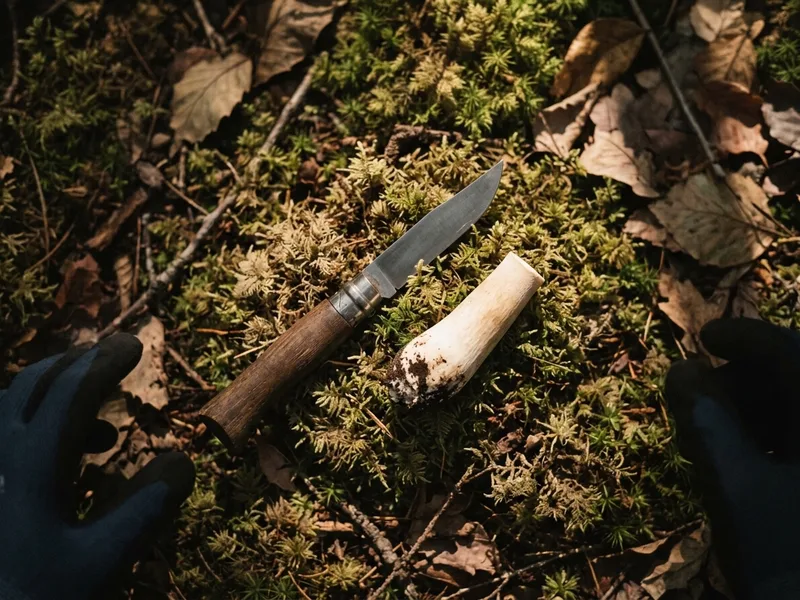
Opinel No. 08 Mushroom Knife
A curved blade cuts the stem cleanly at the base instead of tearing the mycelium out with it, and the boar bristle brush is set into the handle so cleaning happens in the field rather than at the sink.
When you buy through our links, it supports our mycology research at no extra cost to you.
Foraging Ethics and Regulations
Responsible foraging ensures morel populations persist for future seasons and respects the ecosystems and communities involved.
Leave No Trace
- Stay on existing trails where possible, especially outside of burn zones
- Do not disturb soil excessively — raking or digging damages the mycelial network
- Use a mesh bag to allow spore dispersal as you walk
- Cut morels at the base rather than pulling them up
- Pack out all garbage, including food wrappers and water bottles
Know the Rules
Regulations vary significantly by province and land type:
- National Parks — Foraging is generally prohibited in Canadian national parks without a specific permit
- Provincial parks — Rules vary by province. Some allow personal-use foraging; others prohibit it entirely. Always check before you go.
- Crown land — Generally open to personal-use foraging in most provinces
- Private land — Always obtain permission from the landowner
- Commercial harvest — Requires permits in most provinces, particularly in BC and Alberta for burn morel operations
Sustainability Practices
- Do not harvest every morel you find — leave some to sporulate and sustain the population
- Avoid trampling young primordia (baby morels) when harvesting mature ones
- Respect other foragers' space — if you see someone working an area, move on
- Share knowledge responsibly — not every productive spot needs to be posted on social media
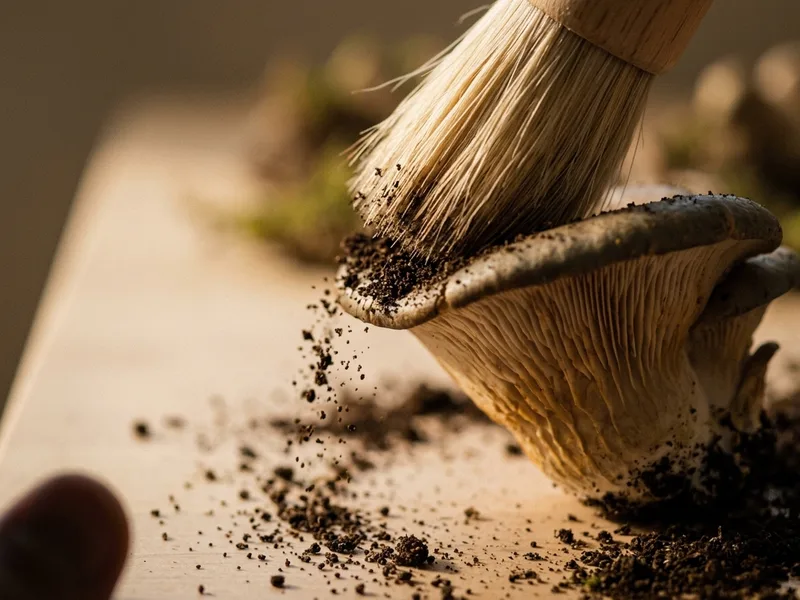
Redecker Natural Pig Bristle Mushroom Brush
Soft enough to take soil off a cap without tearing the skin. Mushrooms absorb water, so brushing dry beats rinsing every time, and anything you plan to dry has to be cleaned this way.
When you buy through our links, it supports our mycology research at no extra cost to you.
Growing Your Own Mushrooms
If morel foraging inspires you to explore the world of fungi further, consider growing mushrooms at home. While morels are notoriously difficult to cultivate commercially, many other gourmet species are straightforward to grow. Our mushroom grow kits make an excellent starting point for beginners — no foraging experience required. For those interested in understanding mycelium and mushroom biology more deeply, working with grain spawn or mushroom cultures offers a hands-on education in fungal life cycles.
Reliable Gourmets You Can Grow at Home
Morels remain out of reach for home growers, but these wild-flavoured species fruit reliably on your countertop:
- Lion's Mane Grow Kit — sweet, seafood-like flavour. The closest cultivated mushroom to morel's umami depth.
- King Trumpet Grow Kit — thick, meaty stems with a savoury, almost morel-like texture when sautéed in butter.
- Blue Oyster Grow Kit — fast, prolific, and perfect for first-time growers. Fruits in 7-14 days.
- Shop all grow kits — free shipping on orders $50+, fresh from our Ontario facility.
For advanced cultivators, browse our liquid cultures and grain spawn catalogue to inoculate your own substrate.
For which field guide to carry, see the mushroom books worth owning.
FAQ
When is the best time to find morels in Ontario?
Morel season in Ontario typically runs from late April through early June, with peak fruiting in May. Southern Ontario (Niagara, Essex County, Norfolk County) sees morels first, with the season progressing northward. Look for them after consistent warm rains when soil temperatures reach 10-15°C.
Are morels safe to eat?
True morels (Morchella species) are safe when properly cooked. Never eat morels raw — they must be thoroughly cooked to neutralize compounds that cause gastrointestinal upset. The real danger is misidentifying false morels (Gyromitra species), which contain potentially lethal toxins. Always confirm identification by slicing lengthwise to verify a completely hollow interior.
Can you grow morel mushrooms at home?
Morel cultivation remains one of mycology's great challenges. While some success has been reported with outdoor morel beds (using wood ash, elm wood chips, and spawn), results are unpredictable and rarely commercial-scale. If you want reliable home mushroom growing, species like oyster mushrooms and lion's mane are far more practical starting points.
Do I need a permit to pick morels in Canada?
It depends on where you are foraging. Personal-use foraging on Crown land is generally permitted in most provinces. National parks prohibit foraging without a permit. Provincial parks vary by jurisdiction. Commercial harvest requires permits in most provinces. Always verify the regulations for your specific location before heading out.
How can I tell a true morel from a false morel?
The most reliable test is cutting the mushroom in half lengthwise. A true morel is completely hollow from the tip of the cap to the base of the stem — one continuous empty chamber. False morels (Gyromitra species) have wrinkled, brain-like caps (not honeycomb-patterned) and are solid or chambered inside rather than hollow. When in doubt, do not eat it.
Have a mushroom-growing question? Ask Dr. MycoTek for AI help with your grow. Sign in to use your free monthly allowance.