
One of the first questions aspiring mushroom farmers ask is straightforward: which species makes the most money? It's a fair question, and the answer is more nuanced than a simple ranking. Profitability depends on your market, your growing conditions, your experience level, and how much labour you're willing to put in.
But we can get specific. After years of supplying spawn and cultures to commercial growers across Canada, we have a good sense of what's working for farms of all sizes. This guide breaks down six of the most commercially viable species with real numbers — market prices, yields, cycle times, and the demand picture in Canadian markets.
If you're just getting started with the idea of a mushroom business, our guide on how to start a mushroom farm in Canada covers the fundamentals of facility setup, equipment, and finding customers.
How We're Measuring Profitability
Before the rankings, let's define the factors that actually determine profitability for a small to medium-sized mushroom farm:
Market price per pound. What buyers — restaurants, grocery stores, farmers' markets — are willing to pay.
Yield per block. How many grams of mushroom you can harvest from a standard enriched sawdust block (typically 2-2.5 kg dry substrate weight).
Grow cycle time. From inoculation to final harvest, including colonization and all flushes. Shorter cycles mean more harvests per year from the same space.
Difficulty. How demanding the species is to grow reliably. Difficult species have higher failure rates, which eat into margins.
Demand. How easy it is to actually sell what you grow. A high-priced mushroom with no buyers isn't profitable.
Shelf life. How long the harvested mushroom stays sellable. Short shelf life means waste, which destroys margins. Drying extends shelf life indefinitely — use our wet-to-dry weight calculator to estimate dried yields from fresh harvests, and our farm profit calculator to model revenue scenarios.
The Rankings
1. Lion's Mane — Best Overall Profitability
| Factor | Detail |
|---|---|
| Market price | $18-28/lb retail, $12-18/lb wholesale |
| Yield per block | 300-500 g over 2-3 flushes |
| Grow cycle | 4-6 weeks (colonization + fruiting) |
| Difficulty | Moderate |
| Demand | Very high and growing |
| Shelf life | 7-10 days refrigerated |
Lion's mane commands the highest prices of any commonly cultivated gourmet mushroom in Canada, and demand consistently exceeds supply in most markets. Health food stores, upscale restaurants, and direct-to-consumer customers all want it. The "brain health mushroom" reputation drives consumer interest that shows no sign of slowing down.
Why it's #1: The combination of premium pricing and strong demand makes lion's mane the most profitable species for most Canadian farms. It's not the easiest mushroom to grow — it needs consistent high humidity (85-95%) and is less forgiving than oysters — but the price premium more than compensates for the additional attention required.
The challenge: Humidity management. Lion's mane will fruit with yellowed, shaggy, or stunted growth if humidity drops. A well-controlled fruiting environment (like a properly set up grow room or Martha tent) is essential. But once your environment is dialled in, lion's mane is reliably productive.
Market tip: Lion's mane sells exceptionally well at farmers' markets, where you can educate customers about the culinary and wellness aspects. The unique appearance is a conversation starter that drives sales. Many farms charge retail prices ($20-28/lb) at farmers' markets rather than wholesale prices.
2. Blue Oyster — Best for Beginners and Volume
| Factor | Detail |
|---|---|
| Market price | $10-16/lb retail, $6-10/lb wholesale |
| Yield per block | 400-700 g over 2-3 flushes |
| Grow cycle | 3-4 weeks |
| Difficulty | Easy |
| Demand | High, consistent |
| Shelf life | 7-10 days refrigerated |
Blue Oyster is the workhorse of the Canadian mushroom farming industry. Lower per-pound pricing is offset by high yields, fast cycles, and extremely reliable production. You can push more weight per square foot per month with Blue Oyster than almost any other species.
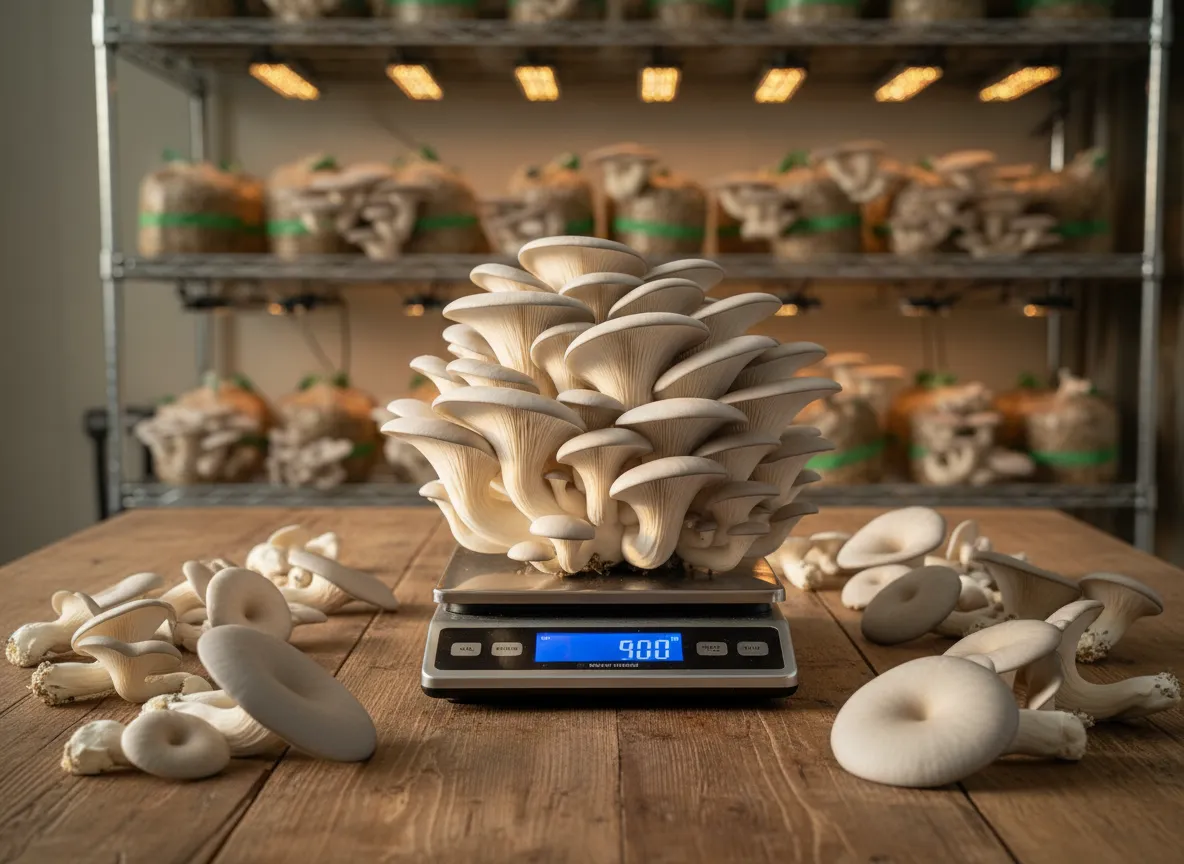
Why it's #2: The math works because of volume and consistency. A new farm that struggles to sell $25/lb lion's mane can almost always move $12/lb Blue Oysters. Every restaurant in Canada uses oyster mushrooms. Every grocery store stocks them. The market is deep and reliable.
The advantage: Blue Oyster is forgiving. It tolerates temperature fluctuations, less-than-perfect substrate prep, and beginner mistakes better than any other commercial species. This means lower waste rates and more predictable income — especially important when you're still learning.
Market tip: Differentiate by selling mixed oyster varieties (Blue, Pink, and Black together) as a "gourmet oyster mix." This commands a higher per-pound price than straight Blue Oyster and looks beautiful at market. You can get your Blue Oyster spawn and other varieties from our shop.
3. Shiitake — Best Margins with Patience
| Factor | Detail |
|---|---|
| Market price | $14-22/lb retail, $8-14/lb wholesale |
| Yield per block | 300-500 g over 3-4 flushes |
| Grow cycle | 8-14 weeks (longer colonization) |
| Difficulty | Moderate |
| Demand | Very high, established |
| Shelf life | 10-14 days refrigerated (best of any gourmet species) |
Shiitake is the most consumed specialty mushroom in the world, and Canadian consumers know it well. The longer grow cycle (shiitake needs 6-10 weeks of colonization before fruiting) means fewer harvests per year, but the excellent shelf life, strong market familiarity, and premium pricing make it a cornerstone species for many farms.
Why it's #3: Shiitake's exceptional shelf life is a genuine competitive advantage. It means less waste, more flexibility in delivery schedules, and the ability to supply grocery stores that demand multi-day shelf stability. Lion's mane and oyster mushrooms start deteriorating within days — shiitake gives you a buffer.
The challenge: The long colonization period ties up growing space. A block that takes 10 weeks to colonize and another 2 weeks to fruit represents 12 weeks of space usage, compared to 3-4 weeks for oysters. You need more colonization space or more patience.
Market tip: Premium shiitake (thick caps, partially open veil, distinctive crack patterns) commands top dollar at Japanese and Korean grocery stores and upscale restaurants. Learn to produce high-quality specimens and your per-pound price goes up significantly. For more on growing shiitake, see how to grow shiitake mushrooms. For the complete reference on commercial mushroom production, Paul Stamets' Mycelium Running is essential reading.
4. Pink Oyster — Best Seasonal Premium
| Factor | Detail |
|---|---|
| Market price | $14-20/lb retail, $8-14/lb wholesale |
| Yield per block | 350-600 g over 2-3 flushes |
| Grow cycle | 3-4 weeks |
| Difficulty | Easy (but temperature-dependent) |
| Demand | Moderate to high, seasonal |
| Shelf life | 1-2 days (very poor) |
Pink Oyster is the Instagram mushroom — bright flamingo pink, dramatic ruffled clusters, and a flavour that's meatier and more complex than Blue Oyster. It commands a meaningful price premium over Blue Oyster and grows just as fast.
Why it's #4: The premium pricing and fast cycle make Pink Oyster very profitable when conditions are right. The problem is "when conditions are right." Pink Oyster needs warmth — 18-30°C (64-86°F) — which makes it a summer species in Canada unless you heat your grow room year-round. And the shelf life is brutal. Pink Oyster deteriorates within 24-48 hours of harvest, which means you need guaranteed same-day or next-day sales.
The strategy: Grow Pink Oyster in summer (June through September) when your space is naturally warm. Sell exclusively through channels with fast turnover — farmers' markets, restaurant deliveries, and CSA boxes. Don't try to supply grocery stores with Pink Oyster unless you're delivering daily.
Market tip: The visual impact of Pink Oyster at a farmers' market is extraordinary. It draws people to your booth from across the market. Even customers who don't buy it will stop to look, and then they buy your other mushrooms.
5. King Oyster — Best Restaurant Premium
| Factor | Detail |
|---|---|
| Market price | $14-22/lb retail, $10-16/lb wholesale |
| Yield per block | 250-400 g over 1-2 flushes |
| Grow cycle | 5-7 weeks |
| Difficulty | Moderate to difficult |
| Demand | Moderate, restaurant-focused |
| Shelf life | 10-14 days refrigerated |
King Oyster (Pleurotus eryngii) is the chef's favourite. The thick, meaty stem — which is the prized part, unlike other oyster species — can be sliced into scallop-like rounds and seared, producing a texture that impresses even dedicated meat-eaters. Restaurants pay premium prices for consistent King Oyster supply.
Why it's #5: King Oyster has excellent pricing and shelf life, but it's harder to grow well. It needs cool temperatures for fruiting — 12-18°C (54-64°F) — and lower humidity than other species. Yields per block are lower than Blue Oyster, and it typically produces fewer flushes. The difficulty and lower yield push it down the profitability ranking despite the premium price.
The strategy: King Oyster is a specialty add-on, not a primary species. Grow it alongside Blue Oyster and Lion's Mane once your systems are established and your environmental control is precise. Target restaurant sales directly — chefs who know King Oyster will pay a premium for reliable local supply.
6. Chestnut — The Underrated Contender
| Factor | Detail |
|---|---|
| Market price | $12-18/lb retail, $8-12/lb wholesale |
| Yield per block | 300-500 g over 2-3 flushes |
| Grow cycle | 4-6 weeks |
| Difficulty | Easy to moderate |
| Demand | Moderate, growing |
| Shelf life | 7-10 days refrigerated |
Chestnut mushrooms (Pholiota adiposa) are a rising star in the Canadian gourmet mushroom market. Small, brown-capped, and nutty-flavoured, they look great on a plate and cook beautifully. They're relatively easy to grow, with good yields and reasonable cycle times.
Why it's #6: Chestnut mushrooms are less well-known to Canadian consumers than oysters, shiitake, or lion's mane, which means you may need to educate your market. But farms that grow them report strong repeat purchasing — once customers try chestnuts, they come back. The flavour is distinctive (rich, nutty, slightly sweet) and the texture holds up well in cooking.
The strategy: Add chestnuts to your product mix once you have established sales channels. They differentiate your booth at the farmers' market and give restaurants a unique option. Growing demand and limited supply mean pricing is strong for farms that grow them well.
The equipment that changes the margin

1 jar

12 bags

10 pairs
Commercial scale
Commercial Grower Bundle
A practical first grain run, with sterile tools and culture left for later batches.
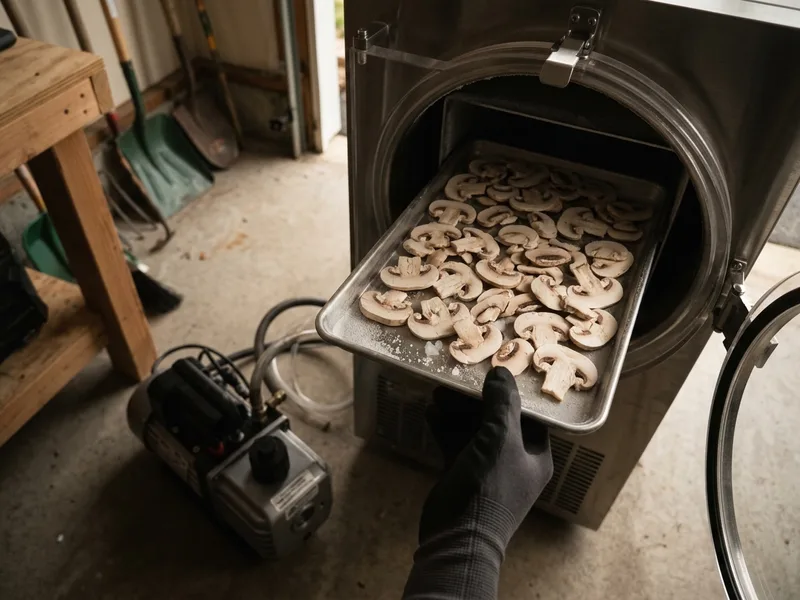
Harvest Right Home Freeze Dryer
Freeze drying removes water by sublimation rather than heat, so the mushroom keeps its shape, colour and cell structure and rehydrates close to fresh. A dehydrator cannot do that, which is why restaurants pay a premium for freeze-dried. It is a serious purchase, it runs for a day or more per batch and it needs a dedicated spot, so it only makes sense if you are selling rather than stocking a pantry.
When you buy through our links, it supports our mycology research at no extra cost to you.
Revenue Projections
Here's what a small farm producing from a single grow room might expect, based on conservative yield assumptions and a 50/50 mix of retail and wholesale sales.
| Species | Blocks/Month | Avg Yield | Avg Price/lb | Monthly Revenue |
|---|---|---|---|---|
| Lion's Mane | 40 | 400 g | $20/lb | $1,400 |
| Blue Oyster | 60 | 550 g | $12/lb | $1,740 |
| Shiitake | 25 | 400 g | $16/lb | $700 |
| Mixed (LM + BO) | 50 | 475 g avg | $16/lb avg | $1,670 |
These figures assume a small-scale operation (a single 10 x 12 foot grow room) with consistent production. Actual results vary based on your market, your pricing power, and your ability to maintain consistent quality and supply.
The key takeaway: even a small mushroom farm can generate meaningful revenue. A well-run operation producing 50-100 blocks per month with a mix of Lion's Mane and Blue Oyster can reasonably generate $1,500-3,000/month in gross revenue. After substrate, spawn, and operating costs (roughly 30-40% of revenue), you're looking at $900-2,000/month in gross margin.
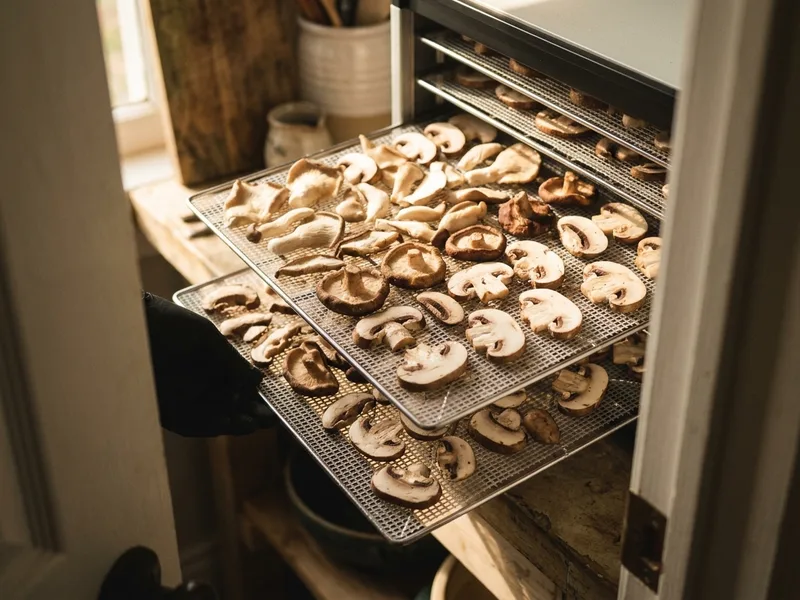
COSORI Food Dehydrator — 5 Stainless Steel Trays
Dried mushrooms are a high-margin value-added product. A quality dehydrator turns surplus harvests into shelf-stable inventory that sells for premium prices year-round.
When you buy through our links, it supports our mycology research at no extra cost to you.
The Real Profitability Factor: Sales Channels
The species you grow matters, but how and where you sell matters more. Here's how different sales channels compare:
Farmers' markets — Highest per-pound pricing (retail), direct customer relationship, market education opportunity. Requires weekend availability and market fees. Best for Lion's Mane, Pink Oyster, and mixed varieties.
Restaurant direct sales — Good pricing (wholesale+), consistent volume, repeat orders. Requires reliability (restaurants don't tolerate inconsistent supply) and delivery logistics. Best for Lion's Mane, King Oyster, Shiitake.
Grocery stores — Consistent volume, but lower per-pound pricing and strict quality/packaging requirements. Often requires food safety certification. Shelf life matters most here — Shiitake and Blue Oyster perform best. Best for established farms.
CSA / subscription boxes — Growing channel for small farms. Weekly or biweekly delivery of mixed mushrooms to subscribers. Good pricing, predictable demand, and builds customer loyalty.
Online / direct-to-consumer — Dried mushrooms (a food dehydrator pays for itself quickly), grow kits, and value-added products (mushroom jerky, seasoning blends) can be sold online. Different business model than fresh mushroom sales, but potentially higher margins.
Getting Started
If you're planning a commercial grow, the best investment you can make is starting small, mastering one or two species, and expanding based on real market feedback from your specific area.
- Start with Blue Oyster. Learn the fundamentals of substrate preparation, colonization, and fruiting with the most forgiving species.
- Add Lion's Mane. Once your environment is stable, add the species with the highest per-pound return.
- Expand based on demand. Let your customers and market tell you what to grow next. If chefs are asking for shiitake, grow shiitake. If your farmers' market customers love Pink Oyster, grow more in summer.
Browse our grain spawn and liquid cultures for all the species discussed in this guide. We supply both hobbyist and commercial growers across Canada.
Profitability depends on evidence from your own production and market. Use the commercial mushroom-growing hub to connect species selection with batch records, the farm-profit calculator, equipment, sales pathways, and Canadian commercial supplies.
Mushroom farming won't make you rich overnight, but it's one of the most accessible and scalable agricultural businesses in Canada. The startup costs are low, the learning curve is manageable, the demand is real, and the margins are solid if you grow the right species and sell them well. Pick your species based on your market, your space, and your experience level — then get growing.
Have a mushroom-growing question? Ask Dr. MycoTek for AI help with your grow. Sign in to use your free monthly allowance.