
Mushroom farming is one of the most accessible agricultural businesses you can start in Canada. The startup costs are lower than most farms, the growing cycle is fast, and demand for locally grown gourmet mushrooms far outstrips supply in most Canadian markets.
Here's a practical overview of what it takes to get started.
Choose Your Species
Start with one or two species. Adding more later is easy — starting with five is a recipe for overwhelm.
Best species for a new farm:
Oyster mushrooms (Blue, Pink, Pearl) — the undisputed best choice for beginners. They grow fast (3-4 weeks from inoculation to harvest), tolerate imperfect conditions, and produce reliably. Blue Oyster is ideal for most of Canada due to its cold tolerance. Every restaurant and farmers market customer recognizes them.
Shiitake — higher market value than oysters, excellent shelf life, and strong consumer demand. Requires more patience (longer colonization) but commands premium pricing.
Lion's Mane — unique appearance, strong health-food appeal, and premium pricing. Slightly more demanding to grow (humidity management) but worth it for differentiation.
Start with Blue Oyster to learn the process, then add Shiitake or Lion's Mane once your systems are dialed in.
Facility Requirements
You don't need a purpose-built facility to start. Many successful Canadian mushroom farms began in basements, garages, shipping containers, or small outbuildings. You need two distinct areas:
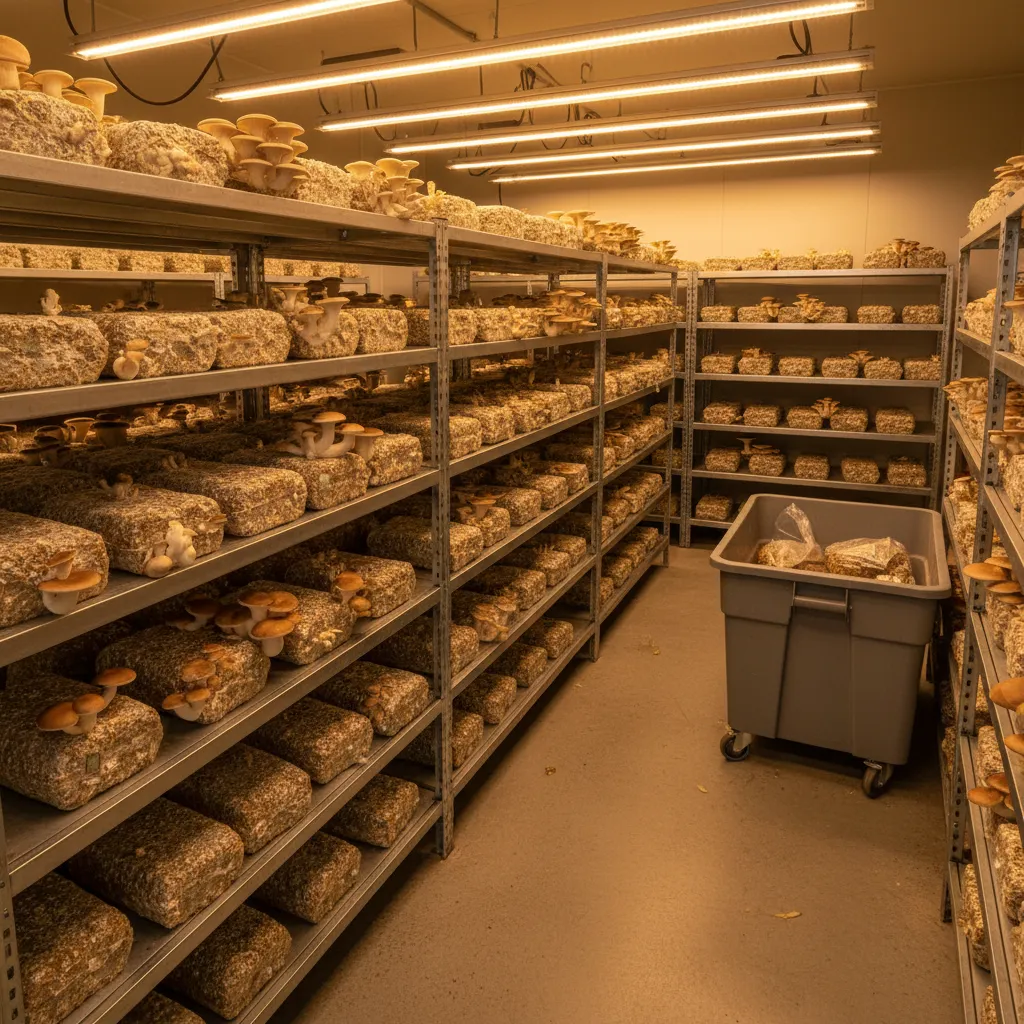
Clean/Prep Room
This is where you prepare substrate, inoculate bags, and store colonizing blocks. It should be:
- Clean and enclosed — minimize airflow and dust
- Temperature controlled — 20-24°C for colonization
- Organized — separate clean materials from spent substrate and waste
If you're purchasing pre-sterilized substrate and spawn (rather than making your own), this room is mainly for inoculation and storage.
Fruiting Room
This is where colonized blocks produce mushrooms. Requirements:
- Humidity: 85-95% relative humidity, maintained by a humidifier or misting system
- Fresh air exchange (FAE): Mushrooms produce CO2 as they grow. You need an exhaust fan or regular air exchange to keep CO2 levels low. High CO2 produces long stems and small caps.
- Light: Indirect natural light or a fluorescent/LED light on a 12-hour cycle. Mushrooms need light as a directional signal, not for energy.
- Temperature control: Species-dependent. An insulated space with a small heater or A/C unit covers most needs.
A common beginner setup: a 10x10 ft insulated room with a $100 ultrasonic humidifier, a bathroom exhaust fan on a timer, and wire shelving racks. This can hold 50-100 fruiting blocks.
Equipment Needed
Starting Without Sterilization
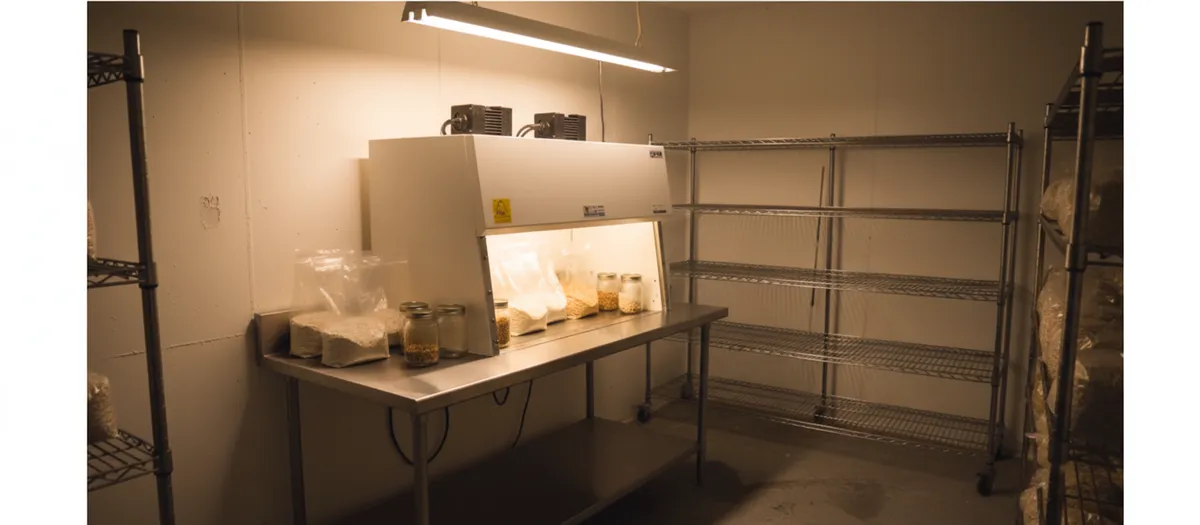
If you buy pre-made spawn and pre-sterilized substrate, your equipment list is short:
- Shelving racks (wire metro shelving works well)
- Humidifier (ultrasonic with humidistat)
- Exhaust fan with timer
- Spray bottles for spot-misting
- Sharp knife or blade for cutting bags
- Scale for weighing harvests
- Harvest containers and packaging
Scaling Up with Your Own Substrate
When you're ready to make your own substrate:
- Pressure cooker or autoclave — a large pressure canner (23-quart minimum) for sterilizing supplemented substrate. Commercial autoclaves when scaling further.
- Impulse sealer — for sealing grow bags
- Large pot and burner — for pasteurizing straw
- Flow hood or still air box — for clean inoculation work. A still air box (a clear tote with arm holes) costs $20 to build and works well for small-scale operations. For deeper reading on scaling up, Paul Stamets' Growing Gourmet and Medicinal Mushrooms is the industry bible.
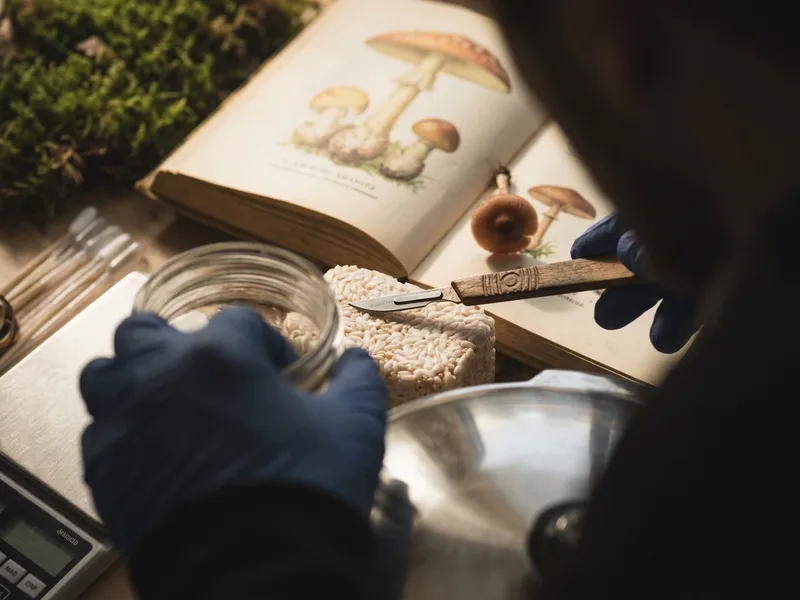
Growing Gourmet and Medicinal Mushrooms — Paul Stamets
The definitive reference for anyone serious about mushroom cultivation. Covers species biology, substrate science, facility design, and commercial production in exhaustive detail.
When you buy through our links, it supports our mycology research at no extra cost to you.
Substrate Sourcing
- Hardwood fuel pellets — available at Canadian Tire, Home Hardware, or farm supply stores. $6-10 per 40 lb bag. Read our hardwood pellet substrate guide.
- Straw — available from farm supply stores or local farms. Cheap in agricultural areas. See our straw pasteurization guide.
- Wheat bran — available at bulk food stores or feed mills. Used for substrate supplementation.
- Spawn — this is where Nature Lion comes in. Our commercial spawn is available in 5 lb bags and cases. We ship across Canada from our CFIA-licensed facility in Brantford, Ontario.

Free tool
Build Your Grow
Tell it where you're starting and it sizes the whole grow: how much spawn, how much substrate, how many containers, the expected harvest and what it works out to per pound.
- I have grain spawnSize the substrate and containers around it
- I'm starting from liquid cultureWork out the grain, then the fruiting plan
- I'm starting from agarPlates to grain to substrate, in order
Live store pricing. Free shipping on orders over $50. Or start from a pre-built bundle.
Initial Investment
An illustrative equipment budget for a small trial, not a current quote or a complete farm startup budget. Get local prices and add rent, building work, utilities, labour, insurance, delivery and working capital:
| Item | Budget Range |
|---|---|
| Fruiting room setup (insulation, shelving, humidity) | $500-2,000 |
| Pressure canner (23 qt) | $150-300 |
| Grow bags (case of 100) | $80-120 |
| Initial spawn (10-20 bags) | $200-500 |
| Substrate materials (pellets, bran) | $50-100 |
| Packaging and labels | $100-300 |
| Miscellaneous (tools, cleaning supplies) | $100-200 |
| Illustrative equipment subtotal | $1,180-3,520 |
You can start with a few kits to learn daily care before investing in production equipment. Use the Farm Profit Calculator with your own local quotes, trial yields and realistic sales assumptions before committing to a larger setup.
Finding Customers
Farmers Markets
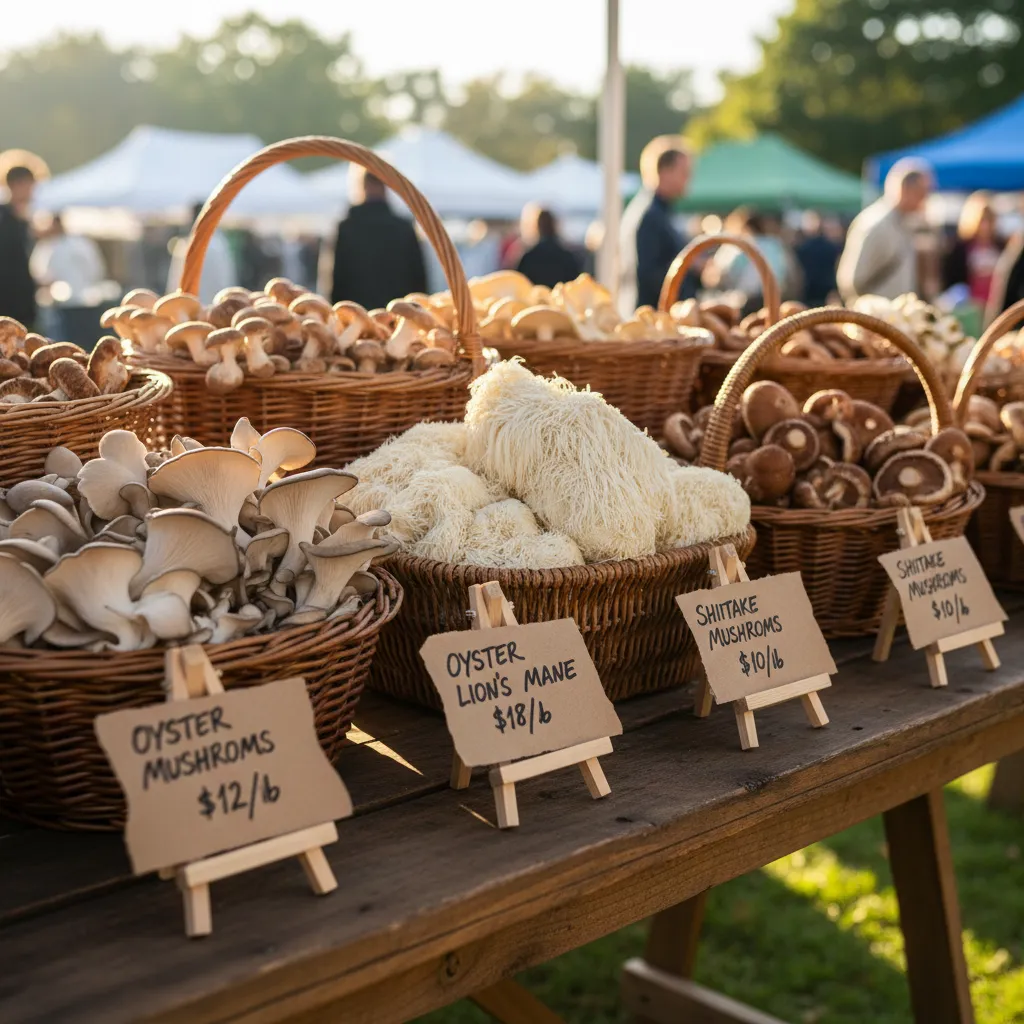
The best starting point for most small farms. Direct-to-consumer sales at farmers markets give you full retail pricing, face-to-face customer feedback, and the ability to build a local following. Most Canadian cities and towns have weekly markets from May through October, with indoor markets in winter.
Apply early — popular markets have waitlists.
Restaurants
Chefs love locally grown mushrooms, especially unusual varieties like Lion's Mane, Blue Oyster, and Chestnut that aren't available through mainstream distributors. Approach restaurants with samples. Start with 2-3 reliable accounts rather than overcommitting.
Price for restaurants is typically 30-40% below your farmers market retail price, but volume is consistent and predictable.
Grocery Stores and Co-ops
Independent grocers, health food stores, and co-ops are often eager to stock local products. You'll need basic food-safe packaging and labelling (check provincial requirements). Pricing is between wholesale and retail.
Online and Direct Delivery
Some farms offer weekly subscription boxes or delivery within their local area. This requires more logistics but builds recurring revenue.
Licensing and Regulations
Mushroom farming in Canada generally falls under provincial food safety regulations. Requirements vary by province, but common elements include:
- Municipal business licence
- Provincial food handling permits (check your province's requirements)
- Food-safe packaging and labelling
- Liability insurance (recommended)
Federal licence requirements depend on the food activities you carry out and where the food is traded. Selling across a provincial border is not by itself a complete licence test. Check the CFIA’s activity-based licensing guidance, together with provincial and municipal requirements, for your exact operation.
Contact your provincial agriculture ministry for specific requirements in your area.
Scaling with Nature Lion
As your farm grows, we're here to supply it. Our commercial supplies include:
- Grain spawn in cases for volume pricing
- Grow bags in bulk quantities
- Substrate materials
We ship across Canada and can provide guidance on species selection and growing techniques. We started small too — and we're happy to help other Canadian growers succeed.
For the full technical guide on growing, start with our complete mushroom growing guide and substrate preparation guide.
Use the commercial growing guide to plan trial batches, equipment, costs and sales. Label your first test batch and record its recipe, dates, harvest weight and work time in a notebook or optional grow diary.
Need help with a Nature Lion kit? Start with the kit care guide, or email info@naturelion.ca with a photo and your start date. Dr. MycoTek is another option for growing questions and notes.