
There comes a point in every mushroom grower's journey where a pressure cooker stops making sense. You're running three or four cycles back to back, babysitting the stove all day, and still can't keep up with demand. That's when an autoclave enters the conversation.
An autoclave isn't a different category of tool. It's still a pressure vessel that reaches 15+ PSI and 121C (250F) to kill bacterial endospores. But dedicated sterilizers are built differently. They're designed for continuous, heavy-duty use. They have features that matter when sterilization is no longer an occasional task but a daily operation. And they free you from standing next to a burner adjusting heat for hours at a time.
If you're running a small commercial operation, scaling up a serious hobby, or building out a mycology lab, this guide covers the equipment worth investing in.
This post contains affiliate links. When you buy through our links, it supports our ongoing mycology research at no extra cost to you.
Canadian buyers: All American sterilizers are manufactured in the USA and are primarily available through Amazon.com, which ships to Canada.
Quick Verdict
For most growers making the jump to an autoclave, the All American 75X Electric Sterilizer is the best overall choice. It's the largest electric model at 41 quarts, it has a built-in heating element so you don't need a separate heat source, and the metal-to-metal seal means zero gasket maintenance. If you want the same capacity but already have a powerful burner, the All American 1941X saves a few hundred dollars by going stovetop. And if you're just stepping up from a pressure cooker and don't need maximum capacity, the All American 50X is the most affordable electric entry point.
Autoclave vs Pressure Cooker: When to Upgrade
A standard pressure cooker like the Presto 23-Qt is perfectly adequate for most home growers. So when does an autoclave actually make sense? Here's the honest answer.
Volume demands. If you're sterilizing more than 20 quart jars per week, you're running multiple pressure cooker cycles every session. An autoclave with a larger chamber and faster turnaround cuts that down significantly. The 41-quart All American models fit roughly twice what a standard 23-quart cooker holds.
Reliability requirements. Pressure cookers use rubber gaskets that wear out every 12-18 months. For a hobby grower, that's a minor inconvenience. For a commercial operation running daily sterilization cycles, gasket failure means a ruined batch and lost production time. The metal-to-metal seal on All American sterilizers eliminates that failure point entirely.
Hands-off operation. Electric autoclaves have built-in heating elements with thermostatic controls. You load it, set it, and walk away. No monitoring a stove burner, no adjusting heat to maintain pressure. That's a meaningful upgrade when sterilization runs are eating into your productive hours.
Consistency. A dedicated sterilizer maintains more even temperature and pressure than a pot on a burner. For grain spawn production where contamination rates directly affect your bottom line, that consistency matters.
When to stay with a pressure cooker. If you're doing weekly runs of 7-14 jars, a Presto 23-Qt or All American 921 pressure canner is still the right tool. An autoclave is overkill for that scale, and the money is better spent on other equipment like a laminar flow hood or quality grow bags.
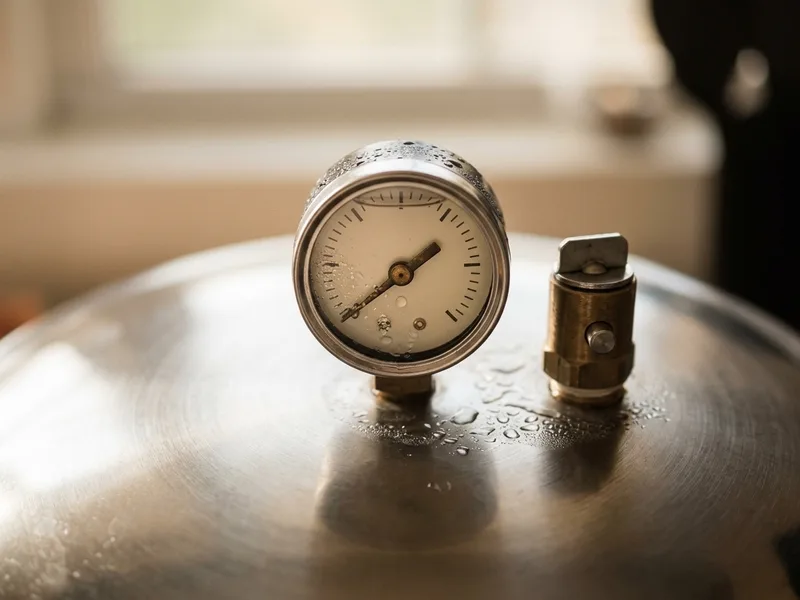
All American 1925X Non-Electric Sterilizer (25-Qt)
The most affordable entry into All American's sterilizer line. Metal-to-metal seal, cast aluminum construction, inner container with rack. The right upgrade when you want sterilizer quality at the lowest price point.
When you buy through our links, it supports our mycology research at no extra cost to you.
What to Look For in a Mushroom Cultivation Autoclave
Capacity
This is the primary reason you're upgrading. A 25-quart sterilizer holds roughly the same as a large pressure cooker, so you're mainly gaining build quality and convenience. A 41-quart unit roughly doubles your per-cycle capacity, which is where the real time savings come in. Think about how many grain jars or substrate bags you need to process weekly and work backward from there.
PSI Rating and Temperature
Any sterilizer worth buying needs to reach and hold 17 PSI (which corresponds to approximately 121C / 250F at sea level). All American sterilizers exceed this standard. Some growers run at slightly higher pressures for shorter cycle times, but the standard 15-17 PSI range at 90 minutes for grain is the proven protocol.
Seal Type
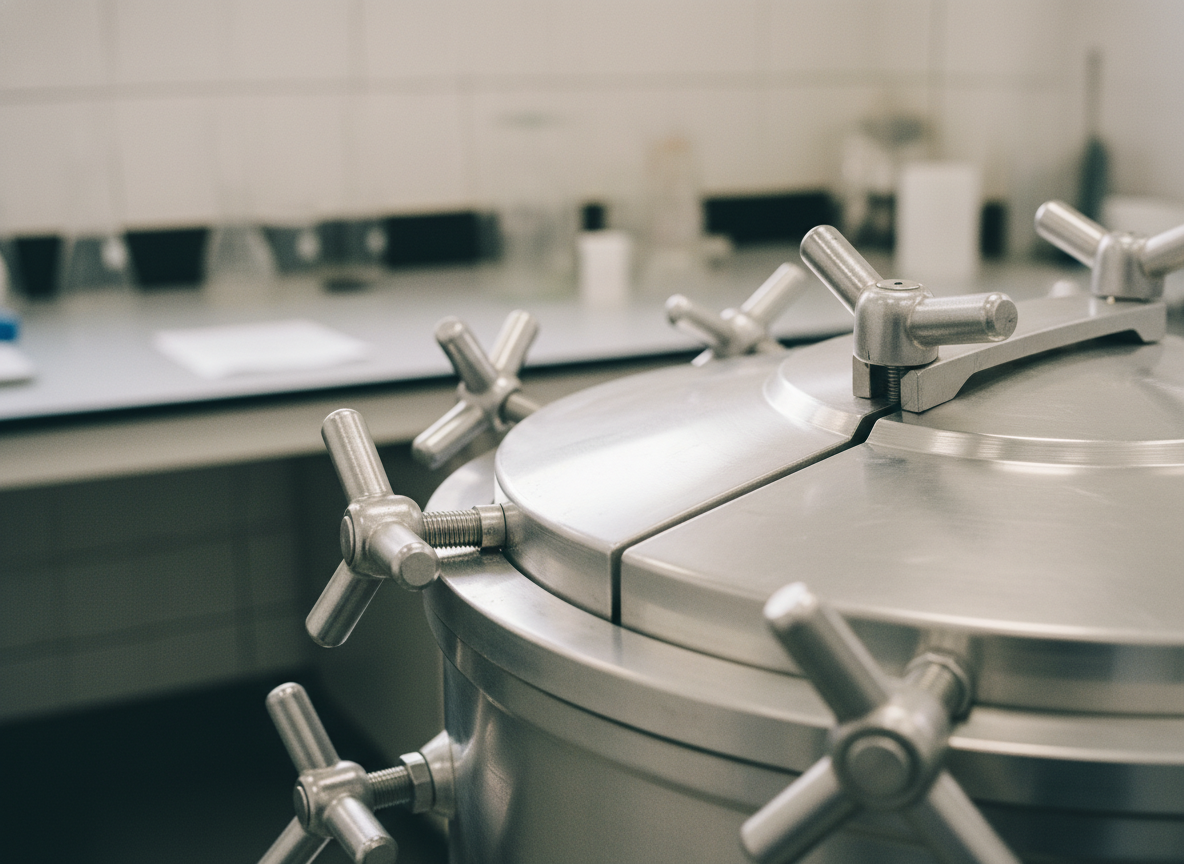
This is the single biggest differentiator between a pressure cooker and a proper sterilizer. The All American metal-to-metal seal uses precision-machined surfaces held together by wing nuts. No rubber gasket means no degradation over time, no wondering if the seal is properly seated, and no emergency parts orders. For equipment you plan to use daily for years, this feature alone justifies the upgrade.
Heating Element (Electric vs Stovetop)
Electric sterilizers have an immersion heating element built into the base, along with thermostatic controls, an automatic release valve, and a pilot light. They plug into a standard outlet and handle the entire sterilization cycle independently. Stovetop models require a gas or electric coil burner capable of bringing the full vessel to pressure. Electric costs more upfront but saves time and attention on every single cycle.
Safety Features
Look for a pressure gauge that's easy to read from across the room, an overpressure release mechanism, positive-action clamping that locks the cover to the base, and UL certification. All of the sterilizers reviewed here include these features, but they're worth verifying on any unit you consider.
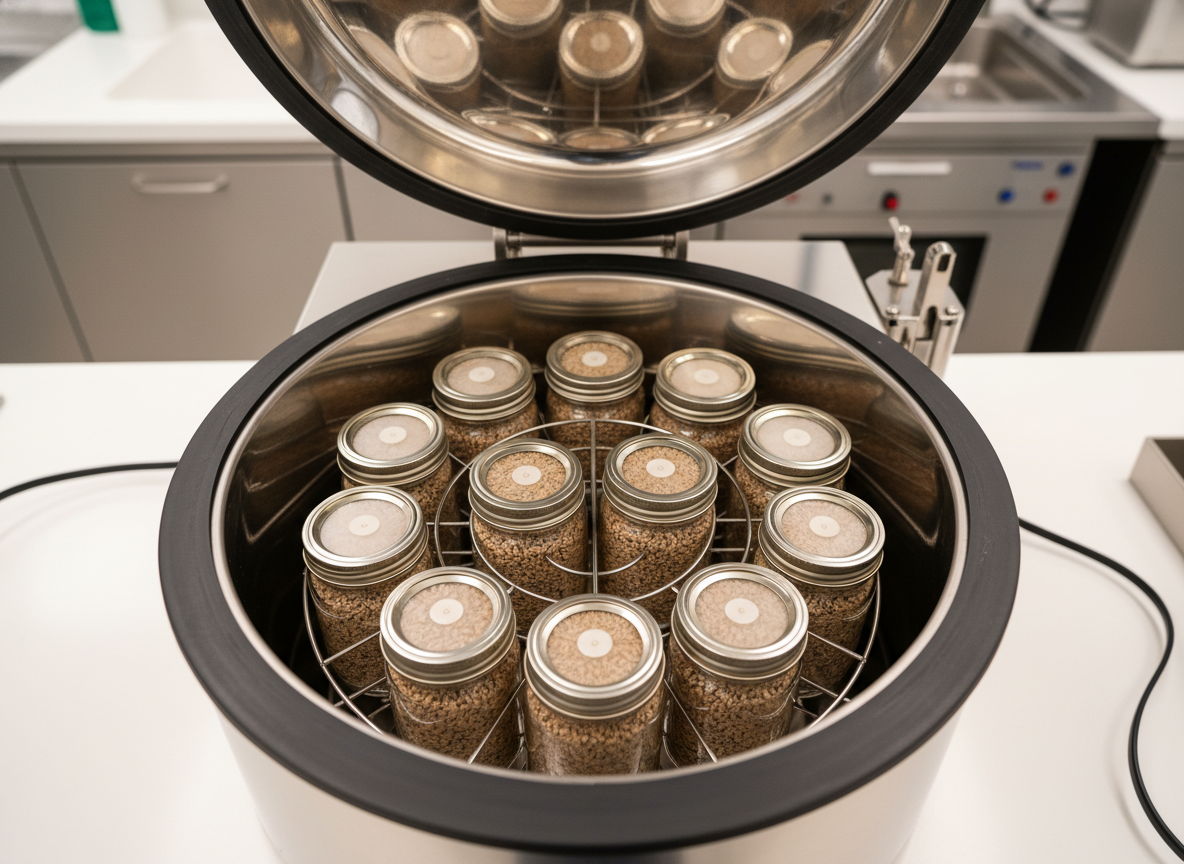
Best Overall: All American 75X Electric Sterilizer (41-Qt)
This is the flagship. The All American 75X is a 41-quart, self-contained electric sterilizer that plugs into a standard 120V outlet and handles everything from heat-up to sterilization to cooldown without supervision.
The 1650-watt immersion heating element brings the chamber to sterilization temperature efficiently, and the automatic thermostatic control maintains it there. A pilot light tells you when the element is active, and an automatic release valve adds a layer of safety. You load your jars, close the lid with the wing-nut clamping system, plug it in, and come back when it's done.
What We Like
True set-and-forget operation. This is the biggest advantage over stovetop models. You're not adjusting a burner, you're not monitoring pressure swings from inconsistent heat. The built-in controls handle it. For growers who are running sterilization while doing other lab work, this is a genuine productivity gain.
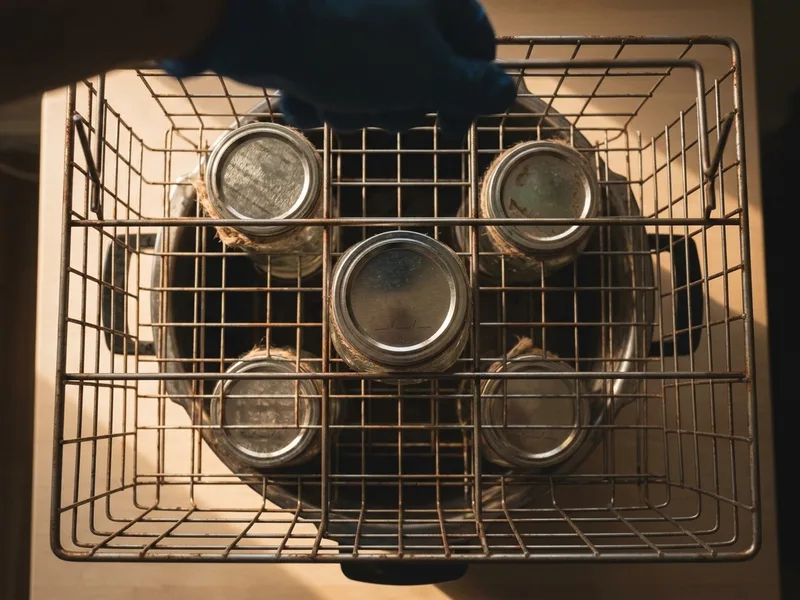
41-quart capacity. That's roughly 10-12 quart jars per cycle depending on your stacking, or a healthy load of grow bags. Compare that to 7 jars in a standard 23-quart cooker and the throughput improvement is obvious.
Metal-to-metal seal. Same precision-machined sealing system as the rest of the All American line. Hand-tighten the wing nuts in a star pattern and you get a perfect seal every time. No gaskets to replace, no seal degradation over thousands of cycles.
Cast aluminum construction. Heavy-duty walls that handle daily use without complaint. At approximately 53 pounds, this unit is built to last decades.
What Could Be Better
Price. At roughly $1,250 from most retailers, this is a serious investment. It only makes financial sense if you're running it frequently enough that the time savings and reliability pay for themselves.
Weight. 53 pounds empty means this lives wherever you put it. It's not equipment you move around casually.
120V limitation. The standard model runs on 120V, which is fine but means slightly longer heat-up times compared to a 240V circuit. A 240V version is available if your lab is wired for it.
Best Value Electric: All American 50X Electric Sterilizer (25-Qt)
If the 75X is more capacity than you need, the 50X delivers the same electric convenience in a 25-quart package at a lower price point.
The 50X uses the same 1650-watt heating element as the 75X, which actually means it heats up faster relative to its smaller chamber volume. All American claims a 50% faster startup time compared to their older 25X model, and in practice, it reaches sterilization temperature noticeably quicker than the larger 75X.
What We Like
Same electric convenience, lower cost. You get the immersion heating element, thermostatic control, automatic release valve, and pilot light, all for roughly $250 less than the 75X. If your batch sizes fit within 25 quarts, there's no reason to pay more.
Faster heat-up. The full-size 1650W element in a smaller chamber means this unit reaches 17 PSI faster than any other model in the lineup. When you're doing multiple cycles in a day, those saved minutes add up.
Metal-to-metal seal. Same gasket-free design as the entire All American sterilizer line. Same reliability, same zero-maintenance sealing system.
Lighter weight. At roughly 35 pounds, this is significantly more manageable than the 75X. Still not something you'd call portable, but at least moving it doesn't require a second person.
What Could Be Better
Same capacity as a pressure cooker. At 25 quarts, you're getting roughly the same chamber volume as a Presto 23-Qt. The upgrade here is about build quality, seal type, and electric operation, not about fitting more jars per cycle.
Still a significant investment. At around $1,000 from most retailers, you're paying a premium for the electric sterilizer features over a stovetop model of the same size.
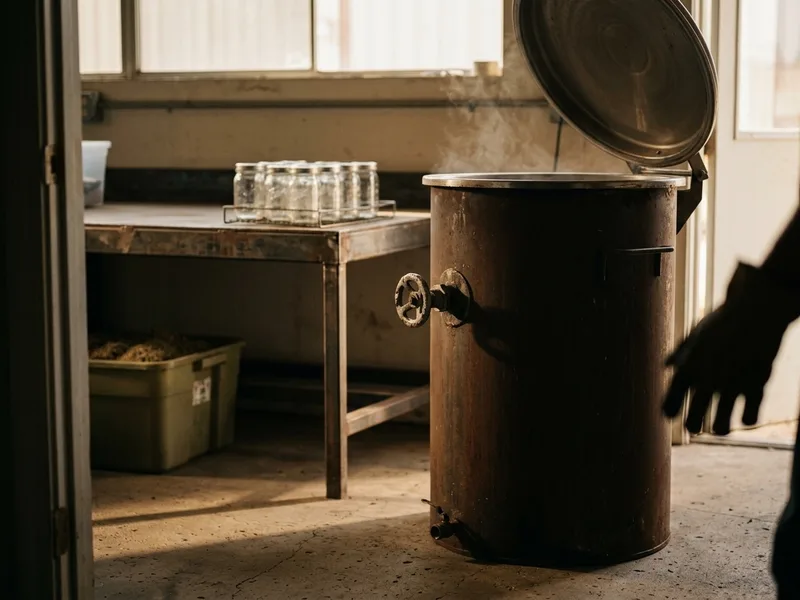
All American 75X Electric Sterilizer (41-Qt)
The top-tier electric autoclave for mushroom cultivation. 41-quart capacity, built-in 1650W heating element, metal-to-metal seal, and thermostatic controls. Plug in, load up, walk away. This is the sterilizer serious growers graduate to. Note: All American sterilizers ship to Canada from Amazon.com.
When you buy through our links, it supports our mycology research at no extra cost to you.
Best Stovetop: All American 1941X Non-Electric Sterilizer (41-Qt)
If you already have a powerful burner, whether that's a commercial gas range, a propane burner, or a heavy-duty electric coil, the 1941X gives you the full 41-quart capacity of the 75X without paying for the built-in heating element.
This is the largest sterilizer All American makes, and it's the workhorse of many small commercial mushroom operations. It runs on any heat source that can bring 41 quarts of water to a rolling boil and maintain it there. A standard residential gas range will do the job, though a more powerful burner will get you to pressure faster.
What We Like
Maximum capacity at a lower price. You get the same 41-quart / 39-liter chamber as the 75X, but you save roughly $400 by supplying your own heat source. If you're already set up with a serious burner, this is the most cost-effective way to get maximum sterilization volume.
Flexibility of heat sources. Gas range, electric coil, propane camp stove, outdoor burner. Any heat source that reaches the bottom of the vessel works. Some growers run these on heavy-duty outdoor propane burners for even faster heat-up times than the electric models.
Same cast aluminum build. Same metal-to-metal seal, same positive-action clamping, same precision gauge. The construction is identical to the electric models. You're only losing the built-in heating element.
Inner container with rack. Included with the unit, making it easy to load and unload jars without reaching deep into a hot chamber.
What Could Be Better
Requires monitoring. Without thermostatic controls, you need to monitor your heat source and adjust it to maintain proper pressure. This isn't difficult once you know your setup, but it does tie you to the sterilization cycle more than an electric model would.
Heat source requirements. Not every stove can handle a full 41-quart vessel efficiently. If your burner struggles to bring a large volume to pressure, you'll have frustratingly long heat-up times. Make sure your heat source is up to the task before committing.
Heavy. At approximately 44 pounds empty, plus the weight of water and a full load of jars, you're looking at a serious amount of weight on your burner grate. Verify your stove can handle it.
Budget Entry: All American 1925X Non-Electric Sterilizer (25-Qt)
The entry point to the All American sterilizer lineup. The 1925X gives you the metal-to-metal seal and cast aluminum construction at the lowest price in the range, making it a natural step up from a pressure cooker for growers who want better build quality without going electric.
What We Like
Most affordable All American sterilizer. At around $700, this is the least expensive way into the sterilizer world while still getting the metal-to-metal seal and cast aluminum build. It's a meaningful upgrade from a Presto without the sticker shock of the electric models.
Proven reliability. Same construction and sealing system that All American has been building for decades. The 1925X is widely used in dental offices, tattoo shops, and labs. It's not fancy, but it works without fail.
Lighter weight. At roughly 27 pounds, this is the most manageable unit in the lineup. It's still not something you'd call light, but it's practical to move on and off a burner.
What Could Be Better
Same capacity as a large pressure cooker. At 25 quarts, you're not gaining volume over a Presto 23-Qt. The upgrade is about seal quality, build durability, and sterilizer-specific features like the inner container and rack.
Still requires a heat source and monitoring. Like the 1941X, you're managing your own heat and monitoring the cycle manually.
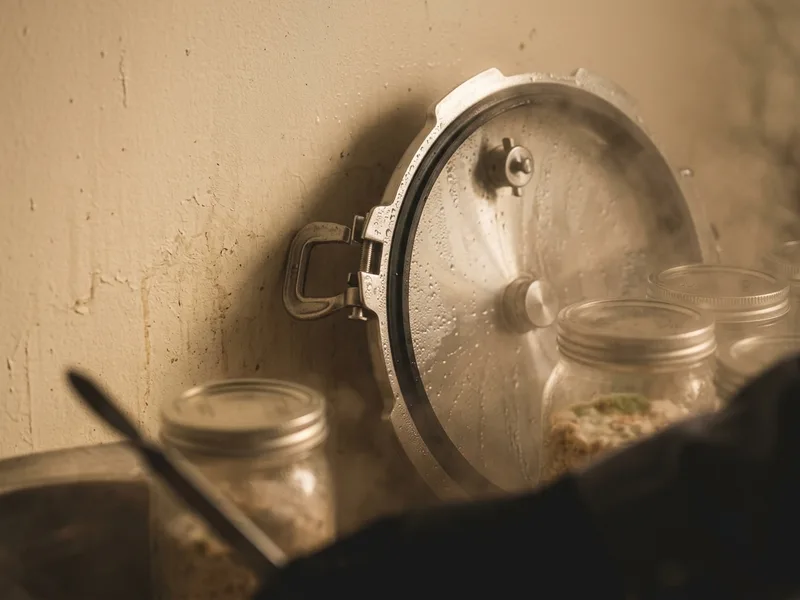
All American 50X Electric Sterilizer (25-Qt)
All the electric convenience of the 75X in a more affordable 25-quart package. Same 1650W element, same metal-to-metal seal, faster heat-up time. The right choice if your batches don't demand maximum capacity.
When you buy through our links, it supports our mycology research at no extra cost to you.
Comparison at a Glance
| Feature | 75X Electric | 50X Electric | 1941X Stovetop | 1925X Stovetop |
|---|---|---|---|---|
| Capacity | 41 qt (39L) | 25 qt (24L) | 41 qt (39L) | 25 qt (24L) |
| Heat Source | Built-in 1650W | Built-in 1650W | Any external | Any external |
| Seal Type | Metal-to-metal | Metal-to-metal | Metal-to-metal | Metal-to-metal |
| Approx. Price | ~$1,250 | ~$1,000 | ~$850 | ~$700 |
| Weight | ~53 lbs | ~35 lbs | ~44 lbs | ~27 lbs |
| Best For | Hands-off large batches | Hands-off smaller batches | Large batches, own burner | Entry-level upgrade |
Commercial Considerations
If you're thinking about sterilization from a business perspective, here are the numbers that matter.
Volume and Throughput
A 41-quart sterilizer processes roughly 10-12 quart jars per cycle, compared to 7 in a standard 23-quart pressure cooker. With a typical grain spawn sterilization cycle of 90 minutes at pressure (plus heat-up and cooldown), you're looking at approximately 3 hours per full cycle. Running two cycles per day on a 41-quart unit gives you 20-24 jars of grain spawn daily. That's enough to support a small commercial operation producing several hundred pounds of mushrooms per week.
Cost Per Cycle
The electricity cost of running a 1650W electric sterilizer for 3 hours is roughly $0.50-0.75 depending on your local rates. Compare that to propane costs for a stovetop model, which can run $2-5 per cycle depending on your burner efficiency and fuel prices. Over hundreds of cycles per year, the electric models pay back their price premium through lower operating costs.
Return on Investment
A $1,250 sterilizer pays for itself quickly when you factor in time savings, reduced contamination rates, and eliminated gasket replacement costs. If upgrading from a pressure cooker saves you even 5 hours per week in sterilization monitoring time, that's 260 hours per year. Many commercial growers eventually run two sterilizers in parallel for near-continuous throughput.
Maintenance and Safety
All American sterilizers are remarkably low-maintenance equipment, but a few things require attention.
Regular Maintenance
Clean the sealing surfaces. Before every use, wipe both the lid and body sealing surfaces clean. The metal-to-metal seal depends on clean, smooth contact. Any debris or residue compromises the seal.
Lubricate the sealing edges. Apply a thin layer of petroleum jelly or the lubricant All American provides to the sealing surfaces before each use. This prevents aluminum galling (cold welding) and ensures the lid removes smoothly after cooling.
Check the pressure gauge. Have your gauge tested annually against a known reference, or replace it every few years. An inaccurate gauge means you might not be reaching sterilization temperature even when the reading looks correct.
Inspect the overpressure plug. This is a safety device that releases pressure if the main vent becomes blocked. Check it periodically to make sure it's clean and functional.
Descale as needed. Hard water leaves mineral deposits inside the chamber over time. A periodic vinegar soak dissolves scale buildup. Don't use abrasive cleaners on cast aluminum.
Safety Practices
Never open under pressure. Wait until the pressure gauge reads zero and the safety lock disengages before opening the lid. The contents are at 121C and will flash to steam if pressure is released suddenly.
Star-pattern tightening. When clamping the wing nuts, follow an alternating star pattern (like wheel lug nuts) to ensure even pressure around the seal. Uneven tightening causes steam leaks.
Adequate ventilation. Sterilizers release steam during normal operation. In a small lab space, the humidity from regular sterilization cycles can create mold problems if ventilation is poor.
Stable surface. A fully loaded 41-quart sterilizer can weigh over 80 pounds. Make sure your work surface is stable, level, and rated for the weight.
All American 1941X Non-Electric Sterilizer (41-Qt)
Maximum 41-quart capacity without paying for a built-in element. Same metal-to-metal seal, same cast aluminum build, works on any heat source. The best option if you already have a powerful burner and want to save on the sterilizer itself.
When you buy through our links, it supports our mycology research at no extra cost to you.
Skip the Autoclave Entirely
Not everyone needs to sterilize their own substrate. If you'd rather spend your time growing mushrooms instead of sterilizing grain, we offer pre-sterilized substrate and grain bags that are ready to inoculate straight out of the package. Professionally sterilized in commercial equipment, tested for contamination, and shipped to your door.
It's the fastest way to go from spore syringe or liquid culture to growing mushrooms without investing in sterilization equipment at all.
Related Guides
- Best Pressure Cookers for Mushroom Cultivation
- How to Make Mushroom Spawn at Home
- Honey Liquid Culture Recipe
- How to Use Mushroom Grow Bags
- Best Laminar Flow Hoods for Mushroom Growing
- Essential Mushroom Growing Equipment Guide
- Browse Pre-Sterilized Substrate
Have a mushroom-growing question? Ask Dr. MycoTek for AI help with your grow. Sign in to use your free monthly allowance.