


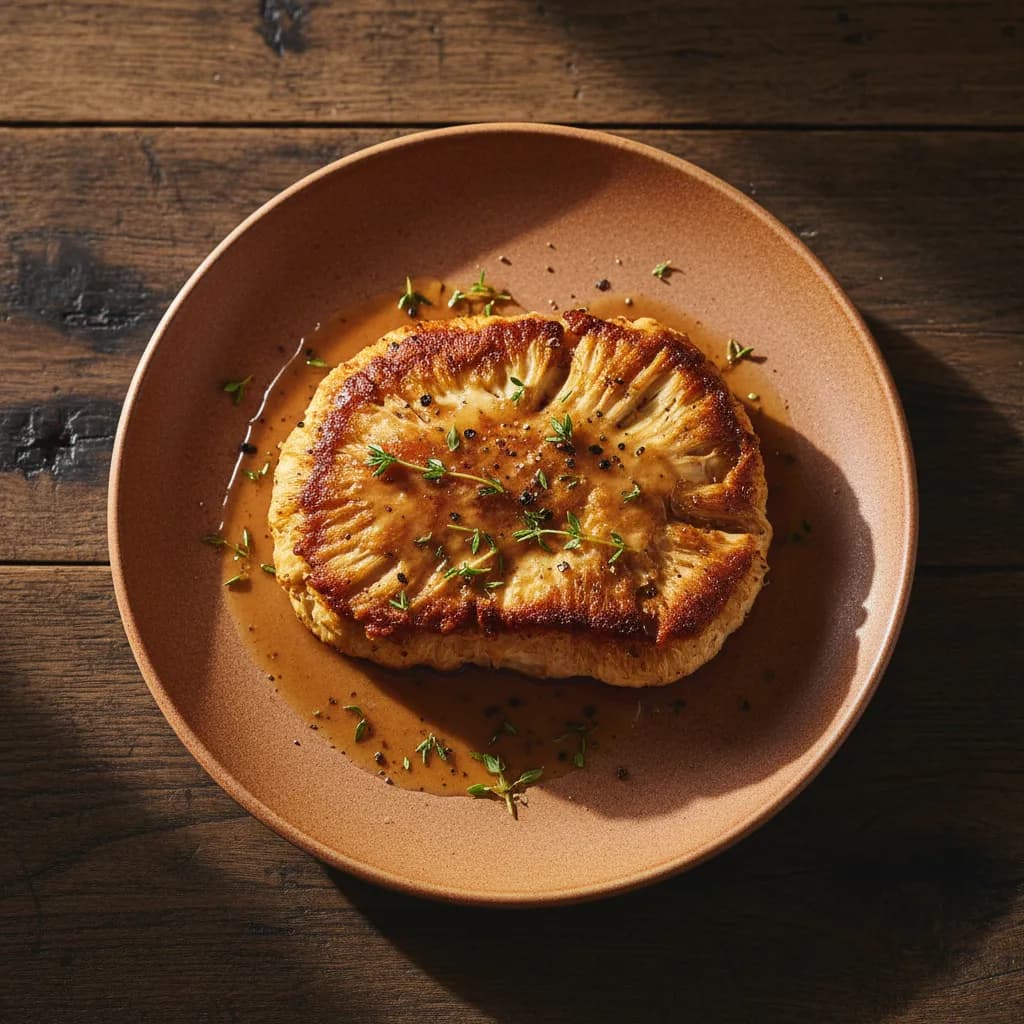
If you've ever sliced into a fresh lion's mane mushroom, you already know — the texture is unlike anything else in the mushroom world. Dense, fibrous, and almost meaty, lion's mane is built for the searing heat of a cast iron pan. When cooked properly, lion's mane steaks develop a crispy golden crust on the outside while staying tender and juicy inside. The flavour lands somewhere between lobster and scallop, with a subtle sweetness that makes first-timers do a genuine double-take.
This is the recipe that convinced us lion's mane belongs on every dinner table. Whether you grew it yourself from a lion's mane grow kit or picked one up at the farmers' market, this method will make the most of every slice.
Why Lion's Mane Makes the Perfect Steak
Most mushrooms are soft, thin, or irregularly shaped. Lion's mane is different. A mature lion's mane fruit body is dense and compact enough to slice into thick slabs — proper steaks that hold their shape in the pan. The internal structure is made up of thousands of fine, tooth-like spines, and when these are compressed during cooking, they create a texture that's remarkably similar to pulled crab or lobster meat.
This isn't a mushroom that's pretending to be meat. It's a mushroom that genuinely delivers a steak-like eating experience on its own terms.
If you're new to lion's mane as a species, our guide to what is lion's mane covers the biology, history, and health research. And if you want to grow your own for a steady supply of the freshest possible steaks, check out how to grow lion's mane.
The Recipe: Pan-Seared Lion's Mane Steaks
This is the foundational recipe — simple, fast, and devastatingly good. Master this, and you can riff on it endlessly.
Details
- Prep time: 5 minutes
- Cook time: 10 minutes
- Total time: 15 minutes
- Servings: 2
- Difficulty: Easy
Ingredients
- 1 large lion's mane mushroom (about 300-400 g)
- 3 tablespoons butter (or a mix of butter and olive oil)
- 2 cloves garlic, minced
- 1 tablespoon soy sauce or tamari
- 1 teaspoon fresh thyme leaves (or 1/2 teaspoon dried)
- Salt and freshly ground black pepper to taste
- Squeeze of fresh lemon juice (optional but recommended)
Equipment
- Cast iron skillet or heavy-bottomed pan
- Sharp knife
- Spatula
Instructions
Step 1: Prepare the mushroom.
Start by brushing off any debris from the lion's mane. Don't wash it under running water — lion's mane absorbs water like a sponge, and a waterlogged mushroom won't develop a proper sear. If it's visibly dirty, use a damp cloth or paper towel to wipe it clean.
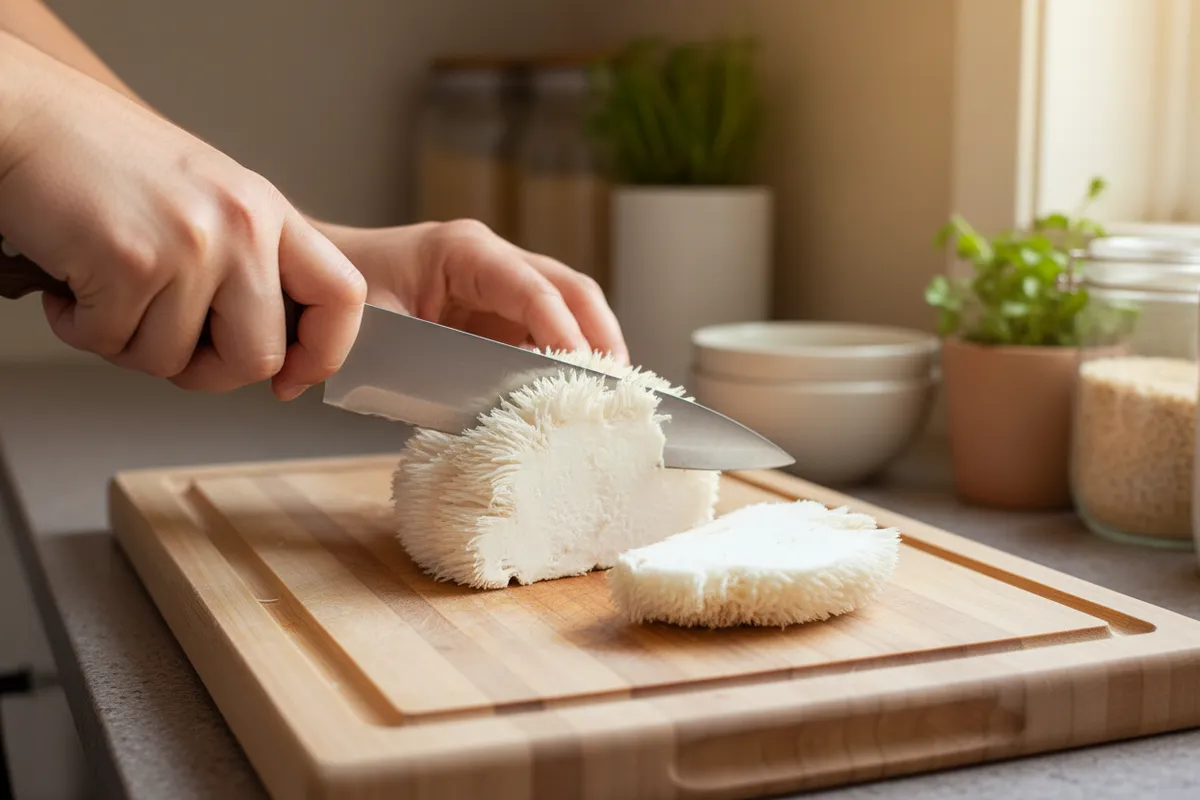
Slice the lion's mane into steaks about 1.5-2 cm (roughly 3/4 inch) thick. Cut from top to bottom so each slice holds together as a single piece. You want slabs thick enough to get a good crust without cooking all the way through too quickly.
Step 2: Dry sear first.
This is the technique that separates a good lion's mane steak from a great one. Heat your cast iron skillet over medium-high heat until it's properly hot — give it a good 2-3 minutes. Place the lion's mane slices in the dry pan. No oil, no butter, nothing. Just mushroom and hot metal.
Let them cook undisturbed for 3-4 minutes. You'll hear sizzling as moisture escapes. Resist the urge to move them. The bottom should develop a deep golden-brown crust. Press down gently with your spatula — you want good contact between the mushroom and the pan surface.
Step 3: Flip and add butter.
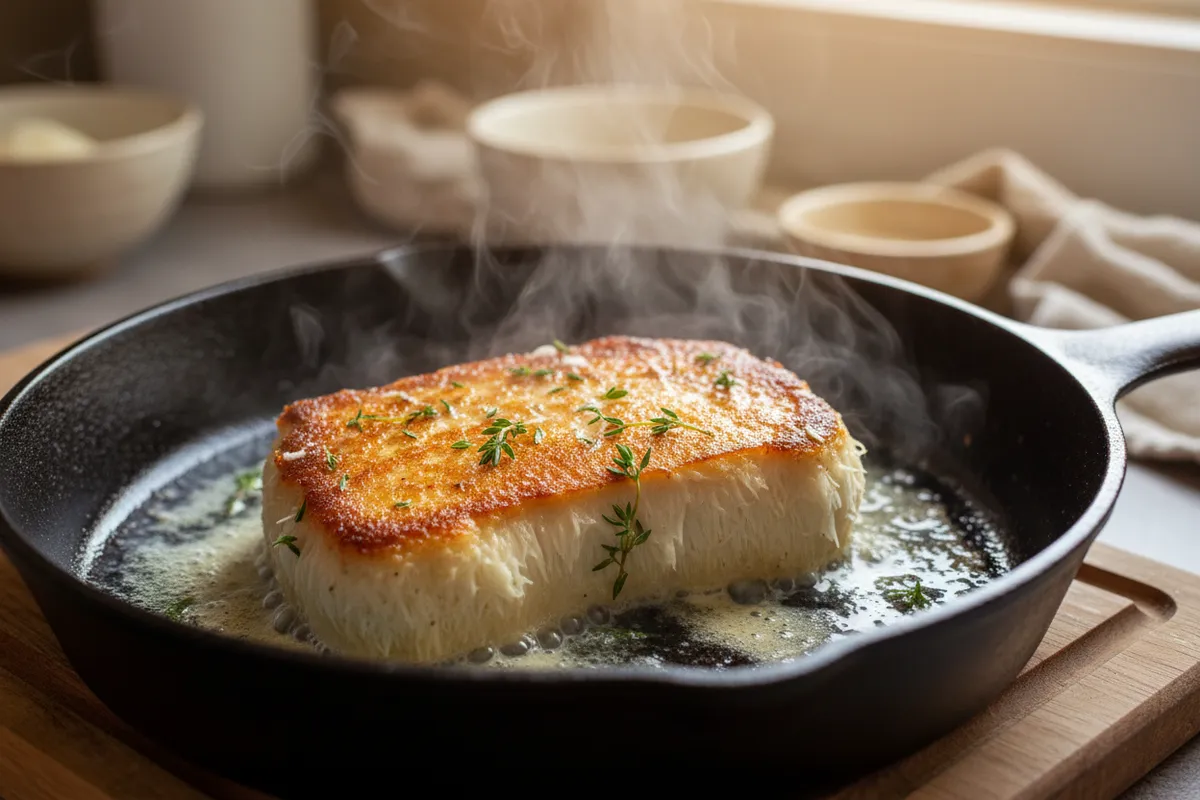
Flip the steaks. They should be beautifully golden on the seared side. Now add the butter to the pan. As it melts and foams, tilt the pan and spoon the butter over the steaks repeatedly. This is basting, and it's what gives the mushroom that rich, restaurant-quality finish.
Step 4: Add aromatics.
After 2 minutes of basting, add the minced garlic and thyme to the butter in the pan. Continue basting for another 1-2 minutes. The garlic should turn golden and fragrant but not burnt — if your pan is too hot, reduce the heat slightly.
Step 5: Season and finish.
Add the soy sauce directly to the pan — it will sizzle and reduce almost immediately, creating a savoury glaze. Season with salt and pepper. A squeeze of lemon juice right at the end adds brightness that balances the richness of the butter beautifully.
Step 6: Serve immediately.
Lion's mane steaks are best served straight from the pan. The crust softens as they sit, so get them on the plate quickly. Spoon any remaining pan butter and garlic over the top.
Pro Tips for the Perfect Sear
These details make the difference between a decent lion's mane steak and one that stops conversation at the dinner table.
Use a cast iron skillet
Non-stick pans don't get hot enough to develop a proper crust. Cast iron retains heat and distributes it evenly, which is exactly what you need for searing. We use a Lodge 12" skillet — if you want something with Canadian character, their Canadiana Maple Leaf edition is the same great pan with a maple leaf stamped on the bottom. If you don't have cast iron, a carbon steel pan is the next best option.
Don't skip the dry sear
Adding fat too early creates steam, which prevents browning. The dry sear drives out surface moisture and allows the Maillard reaction to do its work. This step is the single biggest improvement you can make to any mushroom dish, and it's especially impactful with lion's mane because of the dense texture.
Press down gently
Lion's mane has an uneven surface. Pressing gently with a spatula ensures maximum contact with the hot pan, which means more browning and better crust development. Don't smash it flat — just apply steady, gentle pressure.
Slice thickness matters
Too thin (under 1 cm) and the steaks cook through before the crust develops. Too thick (over 3 cm) and the outside burns before the centre is done. The sweet spot is 1.5-2 cm — thick enough for a substantial steak, thin enough to cook evenly.
Fresh lion's mane is best
Like most mushrooms, lion's mane is at its peak flavour and texture the day it's harvested. If you're growing your own from a lion's mane kit, cook it within a day or two of picking. Store-bought lion's mane from a grocery store may be several days old — it still works, but the texture won't be quite as remarkable.
This is one of the best arguments for growing your own. A lion's mane you harvested an hour ago and sliced straight into a hot pan is an experience that's genuinely hard to beat.
Lodge 12" Pre-Seasoned Cast Iron Skillet
Cast iron is essential for getting that golden crust on lion's mane steaks. This 12" Lodge holds heat perfectly and gives you a restaurant-quality sear every time. Pre-seasoned and ready to use.
View on Amazon.ca →When you buy through our links, it supports our mycology research at no extra cost to you.
Variations
Once you've nailed the basic recipe, try these twists.
Cajun Lion's Mane Steaks
Before searing, dust each slice with a mixture of smoked paprika, garlic powder, onion powder, cayenne, dried thyme, and dried oregano. The spice crust adds heat and smokiness that pairs brilliantly with the natural sweetness of the mushroom. Follow the same dry-sear technique, then baste with butter.
Teriyaki Lion's Mane
Replace the soy sauce and lemon with a teriyaki glaze: combine 2 tablespoons soy sauce, 1 tablespoon mirin, 1 tablespoon rice vinegar, and 1 teaspoon maple syrup. Add to the pan after flipping and let it reduce to a sticky glaze. Finish with sesame seeds and sliced green onion.
Garlic Parmesan Lion's Mane
Follow the base recipe, but after basting with butter and garlic, remove from heat and immediately grate fresh Parmesan over the steaks while they're still sizzling. The cheese melts into the surface and creates an umami-rich crust. Add a sprinkle of fresh parsley.
Lemon Herb Lion's Mane
Use a generous amount of mixed fresh herbs — thyme, rosemary, and sage — in the butter baste. Finish with the zest and juice of half a lemon and a drizzle of good olive oil. This lighter preparation lets the delicate flavour of the mushroom really shine.
BBQ Lion's Mane Steaks
Brush slices with olive oil and grill over medium-high heat for 3-4 minutes per side. Baste with your favourite barbecue sauce during the last minute. Grilled lion's mane develops impressive char marks and a slightly smoky flavour. This is a great one for summer cookouts — it holds up on the grill better than almost any other mushroom.
Side Dish Suggestions
Lion's mane steaks deserve side dishes that complement without competing. Here are our favourites.
Mashed potatoes. The classic pairing. Creamy mashed potatoes with butter and chives create a rich, comforting plate. The steak provides all the flavour and texture contrast you need.
Roasted asparagus. Toss asparagus with olive oil, salt, and pepper, and roast at 220°C (425°F) for 12-15 minutes. The slight bitterness of asparagus balances the sweetness of lion's mane beautifully.
Simple green salad. A peppery arugula salad with a bright lemon vinaigrette cuts through the richness of the butter-basted steak. Keep it simple — the mushroom is the star.
Rice pilaf. Fluffy rice cooked with broth, shallots, and a bay leaf provides a neutral base that lets the lion's mane flavour take centre stage. Works especially well with the teriyaki variation.
Crusty bread. Honestly, a thick slice of sourdough to mop up the garlic butter from the pan might be the best side of all.
Roasted root vegetables. Carrots, parsnips, and sweet potatoes roasted until caramelized make a hearty Canadian fall or winter plate alongside lion's mane steaks.
Storing and Reheating
Fresh lion's mane steaks don't reheat particularly well — the crust softens and the texture becomes a bit rubbery in the microwave. If you have leftovers, the best approach is to chop them and add to fried rice, pasta, or an omelette the next day rather than trying to reheat them as steaks.
Uncooked lion's mane keeps in the fridge in a paper bag for 5-7 days, though quality declines after the first two or three days. If you've got more lion's mane than you can cook right away, consider slicing and dehydrating it — dried lion's mane rehydrates well and can be used in soups and stews all winter.
Nutritional Notes
Lion's mane is a nutritional standout among mushrooms. A 100 g serving of raw lion's mane provides approximately 35 calories, 2.5 g protein, and meaningful amounts of potassium, zinc, and B vitamins. But the real nutritional interest in lion's mane lies in its unique bioactive compounds — hericenones and erinacines — which have been the subject of significant research into cognitive and neurological health.
For a deep dive into the health research, read our guide on lion's mane health benefits. If you're interested in lion's mane in a daily extract format, our lion's mane powder is hot-water extracted for maximum bioavailability.
Grow Your Own Lion's Mane
The best lion's mane steaks start with the freshest possible mushroom, and the freshest possible mushroom is one you grew yourself. Lion's mane grows beautifully at home — it's slightly more particular about humidity than oyster mushrooms, but the results are absolutely worth the extra attention.
Our lion's mane grow kit comes fully colonized and ready to fruit. Most growers see their first harvest within 10-14 days of opening the kit. A single kit typically produces 2-3 flushes, giving you enough lion's mane for multiple rounds of steaks.
If you're ready to scale up beyond kits, lion's mane grain spawn lets you make your own fruiting blocks from hardwood pellets. Check out our complete lion's mane growing guide for the full method.
Beyond the Steak
Lion's mane steaks are the headline recipe, but this versatile mushroom works in dozens of preparations. Try it pulled into shreds for tacos, diced into a stir-fry, or sliced thin and added to ramen. The dense texture that makes it perfect for searing also makes it one of the few mushrooms that can genuinely stand in as the centrepiece of a meal.
If you're looking for more mushroom cooking inspiration, our oyster mushroom recipes guide covers another versatile culinary mushroom, and the complete guide to growing mushrooms can help you keep a steady supply of fresh mushrooms coming from your own home.
There's a reason lion's mane steaks have become one of the most popular mushroom recipes online. The combination of that incredible seafood-like texture, the golden butter-basted crust, and the simplicity of the cooking method makes this a dish that converts skeptics into enthusiasts. Grow your own, slice them thick, sear them hard, and taste the difference that freshness makes.