
Agar work needs four tools and a flame. Almost everything else sold as mycology lab equipment is either optional, borrowed from microbiology where the requirements are stricter, or solving a problem a home grower does not have.
This is the equipment side. For the technique itself, pouring, streaking and isolating, see our guide on how to use agar plates.
Loop, Needle or Scalpel
They do different jobs, and most people buy the wrong one first.
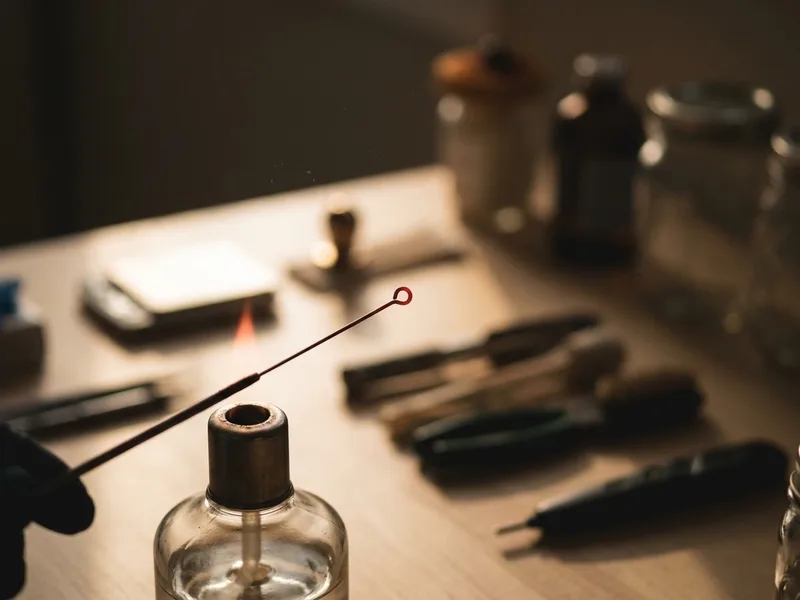
A loop is a small closed ring. It drags across a surface and carries a film of liquid or a smear of spores. Use it for streaking a spore solution and for picking up liquid culture.
A needle is a straight wire with no ring. It picks a single point rather than a smear, which is what you want for taking one clean sector off a contaminated plate.
A scalpel cuts. It is the tool for transferring a wedge of colonised agar onto a fresh plate or into grain, which is the transfer a mushroom grower does most often.
If you only buy one thing, buy the scalpel. Most home mycology is wedge transfers, not streaking. The loop matters once you are working from spore syringes or isolating from a contaminated plate.
Disposable Sterile Inoculating Loops
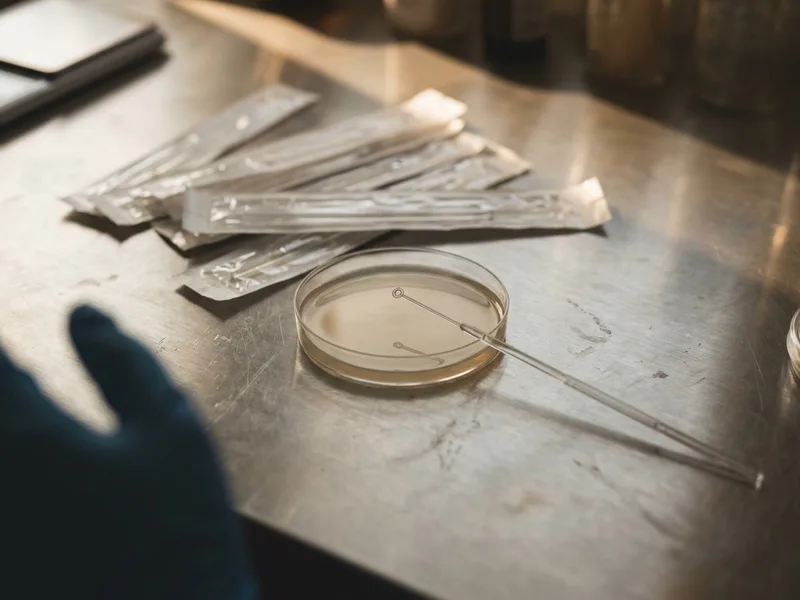
Individually wrapped and gamma sterilised, so there is no flame and no cooling wait. A 10 microlitre loop is the general-purpose size. Buy the bulk pack: the per-loop price falls sharply and they do not expire in any practical sense.
When you buy through our links, it supports our mycology research at no extra cost to you.
Disposable or Reusable Nichrome
This is the real decision, and it is less obvious than it looks.
Nichrome loops are a wire tip in a holder. You sterilise them in a flame until the wire glows red, let them cool, and use them again. The wire lasts months, the holder lasts years, and the running cost is nothing.
Disposable plastic loops come individually wrapped and sterile. You use one and bin it. No flame, no cooling wait, no chance of carrying something over from the last transfer.
The honest comparison for a home grower:
| Nichrome | Disposable | |
|---|---|---|
| Cost per transfer | effectively zero | a few cents |
| Needs a flame | yes | no |
| Cooling wait | 10-20 seconds | none |
| Carryover risk | low if flamed properly | none |
| Works in a still air box | awkward, open flame | easily |
That last row decides it for a lot of people. Running an open flame inside a still air box is possible but unpleasant, and in a small sealed tote it is genuinely worth avoiding. If your clean work happens in a SAB rather than under a flow hood, disposables are the easier tool.
If you work under a flow hood and do a lot of transfers, nichrome is cheaper and faster once you are used to it.
The Flame
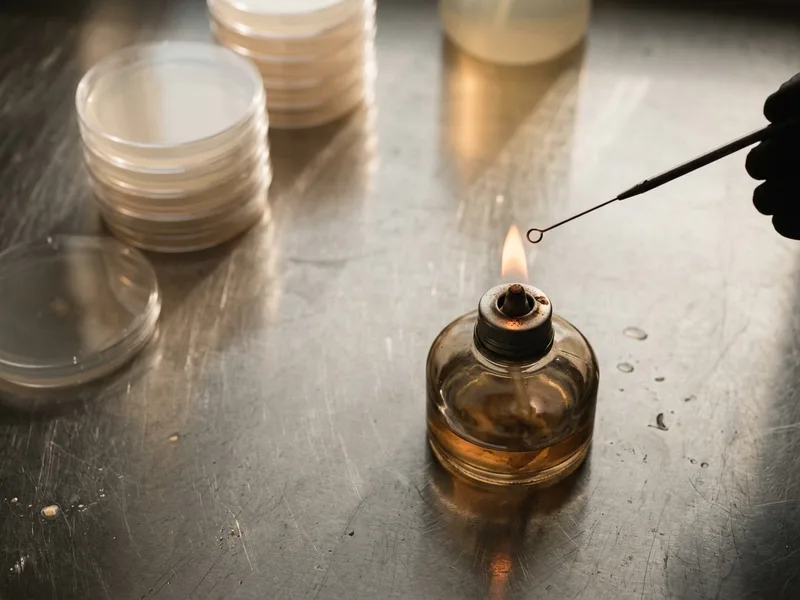
If you use nichrome or a scalpel, you need a flame. An alcohol lamp is the standard answer: small, stable, cheap, and it burns the same isopropyl or ethanol you already have for wiping down.
A butane torch works and heats faster, but it is loud, it throws far more heat around a small workspace, and it is harder to leave burning safely while your hands are busy.
Let steel cool before it touches agar. A red-hot loop or a freshly flamed blade will melt a crater in the surface and kill whatever you were trying to transfer. Touch it to a clean edge of the agar first and listen: if it hisses, wait.
Reusable Nichrome Loop and Needle Set
A holder with interchangeable nichrome tips, usually sold with both loops and straight needles. Buy a set with spare tips: the wire eventually fatigues from repeated heating and it is the only part that wears out.
When you buy through our links, it supports our mycology research at no extra cost to you.
Sealing Plates
Once a plate is inoculated it needs sealing: enough to stop airborne spores getting in, not so much that the culture suffocates.
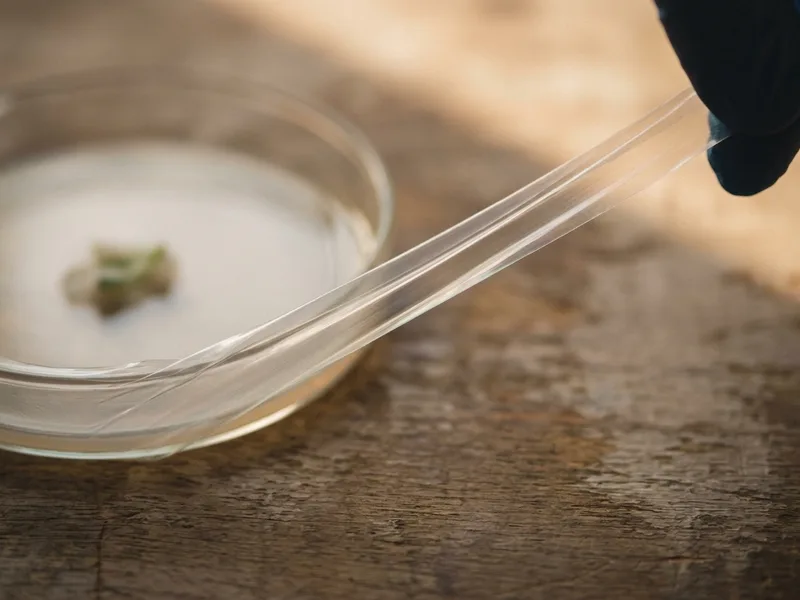
Laboratory sealing film stretches around the rim and does both. Micropore tape works and is cheaper, but it is more fiddly on a round dish and it does not stretch to conform.
Glass Alcohol Burner Lamp, 150 ml
Burns denatured alcohol or isopropyl with a low steady flame, and the metal cap snuffs it and stops the wick drying out. Get one sold with spare wicks and a funnel; the wick is the only consumable.
When you buy through our links, it supports our mycology research at no extra cost to you.
Plates: Pour Your Own or Buy Them Poured
Pouring your own means buying empty dishes and agar powder, mixing to the right concentration, and sterilising in a pressure canner. It is cheaper per plate at volume and it lets you choose the medium.
It is also the step where most beginners lose a batch, because a contaminated pour wastes the agar, the dishes and the sterilisation cycle at once.
If you would rather skip it, we pour ready-to-use agar plates in LME, PDA, honey, charcoal and sawdust media. Worth being straightforward about the trade: pouring your own is cheaper once you are running plates regularly, and buying them poured removes the most contamination-prone step in the whole process while you learn the rest.
Parafilm M Laboratory Sealing Film
Stretches to roughly three times its length and clings to itself, so one wrap seals a dish against airborne spores while still letting the culture breathe. A single roll outlasts most home growers by years.
When you buy through our links, it supports our mycology research at no extra cost to you.
What You Can Skip
- Micropipettes. Precise volumes matter in microbiology. In mycology you are moving tissue, not measuring it.
- Bunsen burner. Needs a gas supply and produces far more heat than agar work requires. The alcohol lamp exists for exactly this.
- Bead steriliser. Faster than a flame and genuinely nice to use, and completely unnecessary at home volumes.
- Autoclave indicator tape. Useful when you must prove a cycle ran for someone else. You are the someone else.
- A microscope, unless you specifically want to look at spores. It will not tell you whether a plate is clean; your eyes will.
The pattern is that microbiology lab kit is built around proving results to a third party. A home grower only has to satisfy themselves that the culture is clean, and that is a visual judgement.
Working Clean
None of these tools help if the air is dirty. The tools matter far less than where you use them, which is why our still air box build and the flow hood comparison are the more important reads if you are setting up from scratch.
If something does go wrong on a plate, the contamination field guide covers what green, black and pink growth each mean.
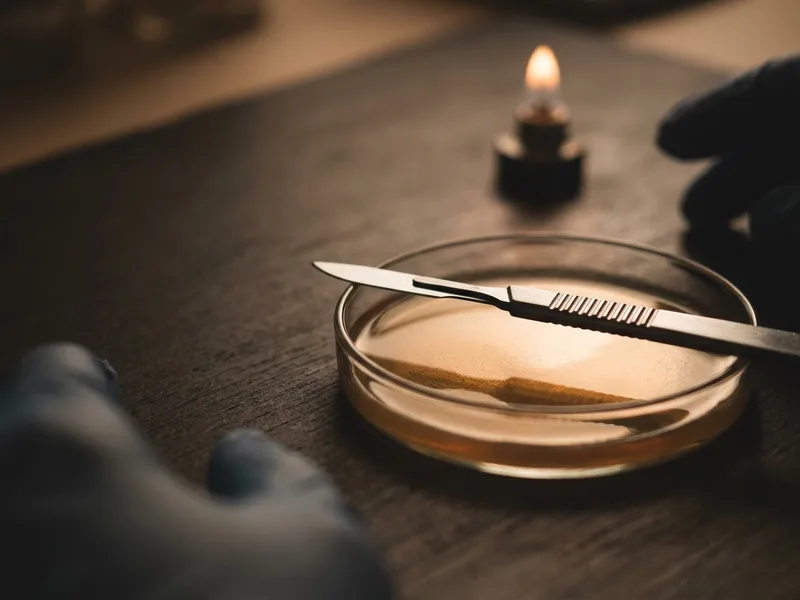
Scalpel Handle #3 with #10 Blades
A steel handle with disposable blades holds an edge a craft knife cannot. Flame the blade, let it cool against clean agar, then cut. Replace blades rather than sharpening them; they are pennies each.
When you buy through our links, it supports our mycology research at no extra cost to you.
Related Guides
- How to use agar plates — the technique these tools serve
- Cloning mushrooms — where the scalpel earns its place
- Still air box build — the cheapest clean workspace
- Flow hood vs still air box — when to upgrade
- Grain spawn vs liquid culture — what you transfer into next