CFIA Licensed·Made in Canada·Free Shipping on Orders $50+
Black Trumpet Mushroom: Identification, Season & Where to Look | Nature Lion Inc
Nature Lion9 min read
Black Trumpet Mushroom: Identification, Season & Where to Look
Black trumpets are the best-flavoured wild mushroom most Canadian foragers have never found. Not because they are rare — in the right forest they fruit in the hundreds — but because they are almost perfectly camouflaged. A patch of black trumpets looks like a patch of dead leaves with holes in it, and people walk through them for years without seeing one.
Once you have seen your first, you stop missing them. That is the strange thing every black trumpet forager says, and it is true: the search image is hard to acquire and almost impossible to lose.
What a Black Trumpet Is
Black trumpets are Craterellus species — close relatives of chanterelles, despite looking nothing like them. In eastern Canada the common one is Craterellus fallax, the fragrant black trumpet. On the British Columbia coast you will find the western black chanterelle instead. Older books and most European sources use the name Craterellus cornucopioides, which is why you will see that name on recipes and dried packets.
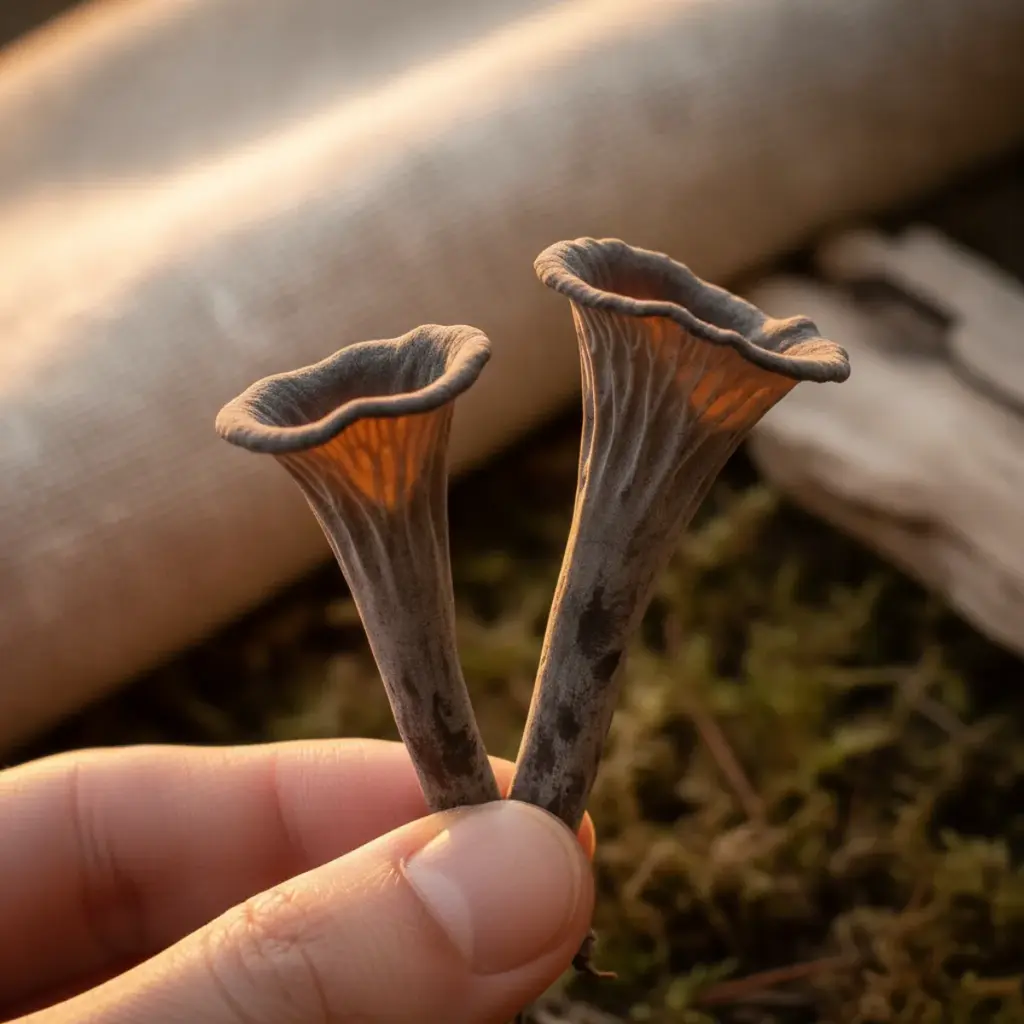
They are not gilled mushrooms. There is no cap sitting on a stem — the whole mushroom is a thin, hollow funnel, like a trumpet bell that goes all the way down. That single structural fact is what makes them identifiable.
They are also, usefully, not dangerous to confuse. Black trumpets have no deadly lookalikes in Canada, which is rare enough among wild mushrooms to be worth saying plainly. It does not mean you should skip the identification work — it means the work is unusually likely to end well.
Andrew is a mushroom cultivation expert and the author of Chapter 29 in Mushroomology, a scientific textbook published by Brill and edited by Prof. Jianping Xu of McMaster University. He founded Nature Lion in 2020 and has shipped over 50,000 orders from the company's CFIA-licensed facility in Brantford, Ontario.
Ready to Start Growing?
Everything you need, from your first grow kit to a full cultivation setup.
Shape. A hollow vase or funnel, 3 to 8 cm tall, with a thin flaring rim that waves and splits irregularly. Tear one down the side: the hollow runs the full length to the base. There is no solid stem anywhere.
Colour. Dark grey-brown to nearly black on the inner funnel surface, which is the part you see from above. The outer surface — the fertile one — is paler: ash grey, sometimes faintly bluish or buff.
Underside. Smooth, or at most shallowly wrinkled and veined. No true gills. No pores. No teeth. If you see distinct blades or a sponge layer, you have something else.
Flesh. Thin, brittle, almost papery. A black trumpet is mostly air. This is why a full basket weighs nothing and why they dry so well.
Smell.Craterellus fallax smells distinctly fruity — apricot, sometimes plum — when fresh and in quantity. It is one of the most pleasant smells in the woods and a strong confirming feature.
Spore print. Pale salmon to buff-yellow in C. fallax, white in the western species. Worth doing once, early on, to train your confidence.
Lookalikes to Know
Devil's urn (Urnula craterium). Spring, not summer. Cup- or urn-shaped rather than funnel-shaped, tough and rubbery, and it grows on buried wood rather than soil. Not toxic, but not worth eating.
Black elfin saddle (Helvella lacunosa). Has an actual cap — a lobed, saddle-shaped one — sitting on a distinctly ribbed and grooved stem. Nothing hollow, nothing trumpet-shaped. Contains hydrazine compounds and is best avoided entirely.
Blue-grey trumpet (Craterellus caeruleofuscus). A genuine relative: smaller, greyer, thinner. Edible, just less worth carrying home.
Dead leaves. Said without a joke. The most common black trumpet error is not misidentification but failing to see them at all, and the second most common is picking up a lot of wet leaf litter.
Where and When They Fruit in Canada
Black trumpets are mycorrhizal with hardwoods. They need a partner tree, which is why you cannot grow them and why the habitat is so specific.
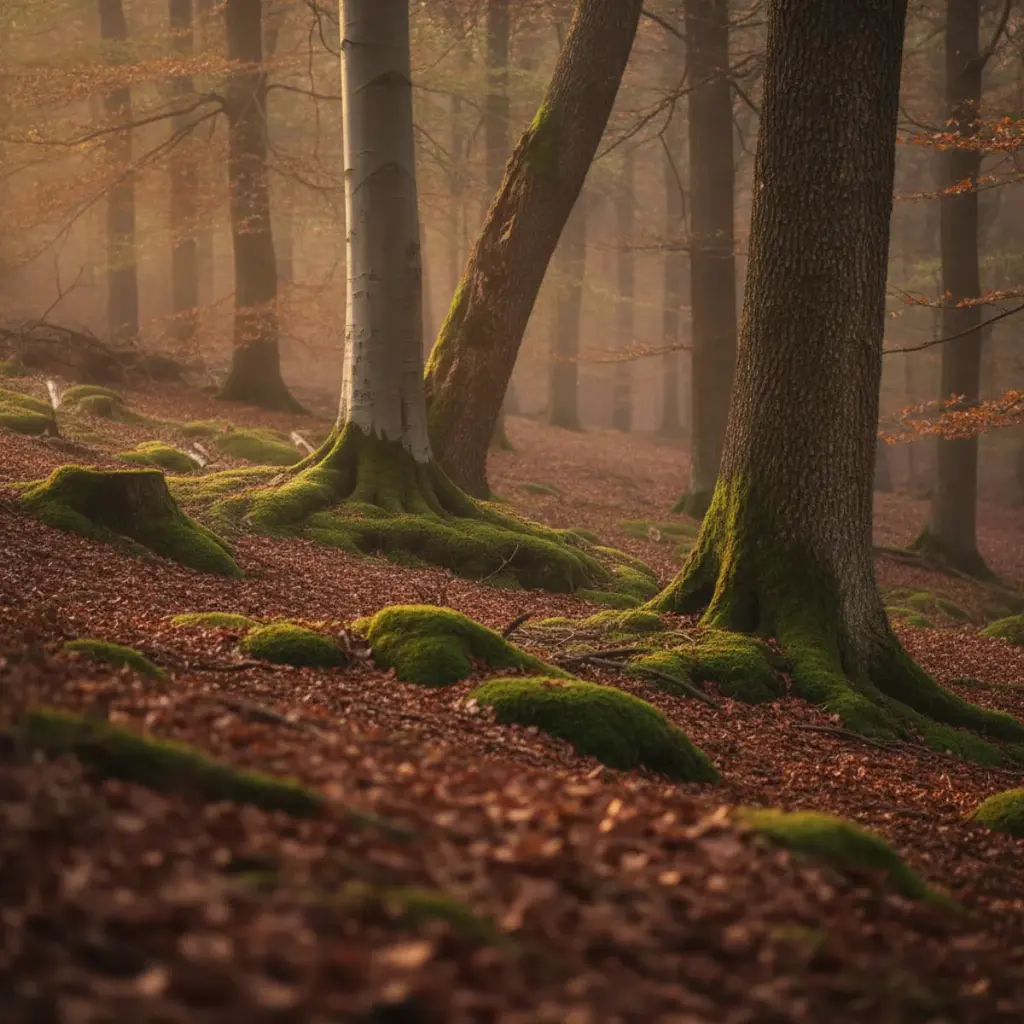
Look for: mature hardwood forest, especially beech and oak, on mossy ground, often on slopes and banks rather than flat ground, and frequently near old stone walls, path cuts or stream edges where the soil is thin and the moss is thick. They come up in troops, directly out of soil and moss, never on wood.
Eastern Canada (Ontario, Quebec, the Maritimes): mid-July through September, with the main flush usually following a good soaking rain in late July or August.
British Columbia: the western black chanterelle runs later, generally September into November in coastal forest.
A dry August can skip the season almost entirely, and a wet one can produce a flush that lasts six weeks. For the broader provincial calendar, our regional guides cover what else is fruiting alongside them — see mushroom foraging in Ontario, Quebec and British Columbia.
How to Actually See Them
Three things that work:
Get low and look sideways. From standing height you see the dark funnel interiors against dark leaf litter. From crouching you see the pale grey outer surfaces catching light, which is a completely different and much easier target.
Stop walking. Black trumpets are found by scanning one square metre properly, not by covering ground. Pick a mossy slope under beech and give it two full minutes.
Where there is one, there are fifty. Mark the spot and search outward in a spiral. They fruit in colonies, and the same patches produce for years.
A basket rather than a bag matters more here than with most species, because the funnels crush easily and because the thin flesh sweats and sours fast in plastic. Cut rather than pull, so you leave the mycelium intact, and brush the moss off in the field — washing them later is how you end up with grit in everything.
Designed specifically for mushroom growers with extra tall trays that fit whole mushrooms. The 360-degree airflow dries evenly without tray rotation. This is the dehydrator we recommend to every mushroom grower.
Live price on Amazon.com
View on Amazon.com →
As an Amazon Associate we earn from qualifying purchases. It costs you nothing and does not change what we recommend.
Why You Should Dry Almost All of Them
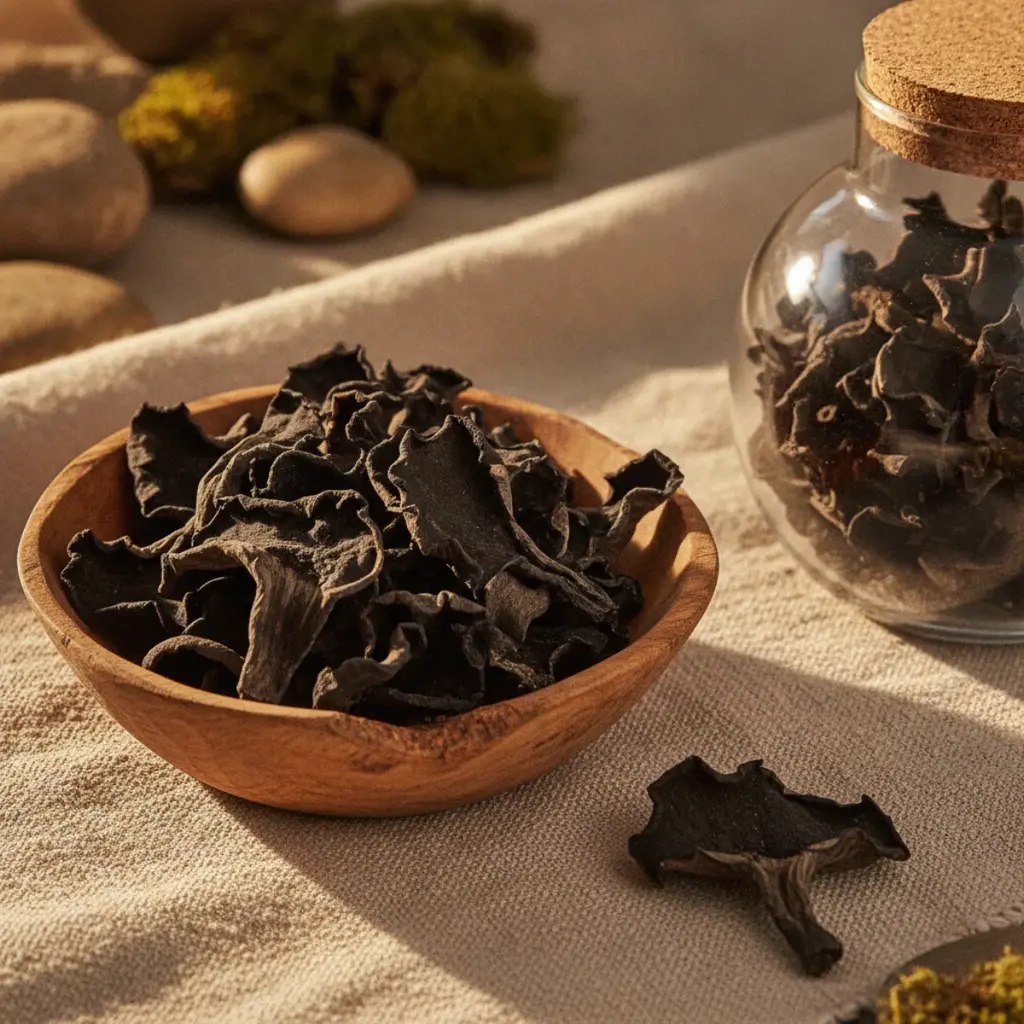
Black trumpets are one of the few mushrooms that are genuinely better dried than fresh. Drying concentrates the fruity, smoky, almost truffle-like quality that makes them famous; fresh ones are good, dried ones are remarkable. The thin flesh also means they dry in a couple of hours and rehydrate in minutes.
They also lose about 90 per cent of their weight on the way, which is a shock the first time — a full basket becomes a small jar. Our wet-to-dry weight calculator gives the ratio for any starting weight, and our guide to the best dehydrators for mushrooms covers the machines worth owning if you intend to do this every year.
Dried and then ground, they make the most useful mushroom powder of any wild species — a half teaspoon will carry a whole pan sauce or a risotto.
An open weave lets spores drop back through as you walk, which a plastic bag does not, and it stops a soft cap being crushed under everything picked after it. Size it to the walk, not the best day you have ever had.
$29.09 USD on Amazon.com · price as of
View on Amazon.com →
As an Amazon Associate we earn from qualifying purchases. It costs you nothing and does not change what we recommend.
You Cannot Grow Black Trumpets
There is no black trumpet spawn, and there will not be. They are mycorrhizal — they live in partnership with the roots of living hardwood trees, and nobody has managed to fruit them commercially. The same is true of chanterelles, morels in practice, and matsutake. Anyone selling you black trumpet spawn is selling you something else.
What you can grow, with no forest and no luck involved, are the saprotrophic species that feed on dead wood and straw. If what you actually want is a reliable supply of intensely flavoured mushrooms to dry and powder, that is a cultivation problem rather than a foraging one:
Mushroom grow kits fruit on a counter with no equipment — the quickest route from nothing to a harvest.
Grain spawn into bulk substrate is the cheaper route per kilogram once you are set up, and shiitake dried and powdered gets closest to that deep savoury character.
Foraging and growing are not rivals. Most people who do both find that the forest supplies the flavours they cannot buy and the grow room supplies the volume.
A Note on Eating Any Wild Mushroom
Black trumpets are a choice edible with no deadly lookalikes in this country, and they are still a wild mushroom. Confirm every feature above, start with a small portion the first time, cook them thoroughly, and never eat any wild mushroom raw. If a specimen does not match on every point — particularly the full-length hollow and the absence of true gills — leave it. A good patch will still be there next August.
If you are new to this, the fastest way to build real confidence is to have an experienced forager or a local mycological society confirm your first few finds in person. A book and a phone are not a substitute for that, and neither is this article.
A curved blade cuts the stem cleanly at the base instead of tearing the mycelium out with it, and the boar bristle brush is set into the handle so cleaning happens in the field rather than at the sink.
$26.39 USD on Amazon.com · price as of
View on Amazon.com →
As an Amazon Associate we earn from qualifying purchases. It costs you nothing and does not change what we recommend.
Frequently Asked Questions
What does a black trumpet mushroom look like?
A thin, hollow, dark grey-black funnel 3 to 8 cm tall with a wavy flaring rim, hollow all the way to the base. No cap-and-stem structure, no true gills and no pores — the outer surface is smooth to faintly wrinkled and paler than the inside.
Are black trumpet mushrooms safe to eat?
They are a well-regarded choice edible with no deadly lookalikes in Canada. The usual rules still apply: confirm every identification feature, cook them thoroughly, never eat wild mushrooms raw, and try a small portion the first time.
When is black trumpet season in Canada?
Mid-July to September in eastern Canada, with the main flush typically a week or two after a heavy summer rain. On the British Columbia coast the western black chanterelle runs from September into November.
Where do black trumpets grow?
On soil and moss in mature hardwood forest, strongly associated with beech and oak, often on mossy slopes, banks and path edges. They grow in troops directly from the ground, never on wood.
Can you grow black trumpet mushrooms?
No. They are mycorrhizal and depend on living hardwood tree roots, and nobody has cultivated them commercially. Cultivated species such as oyster, shiitake and lion's mane grow on dead wood or straw, which is why those are the ones sold as spawn and kits.
Why are black trumpets so hard to find?
The dark funnel interiors read as holes in the leaf litter from standing height. Crouch down and look for the pale grey outer surfaces catching the light instead, and search a small area thoroughly rather than covering ground.
Should I dry black trumpets or eat them fresh?
Dry most of them. Black trumpets are one of the few mushrooms whose flavour genuinely improves with drying, and their thin flesh dries in a couple of hours and rehydrates in minutes.
Product prices and availability are accurate as of the date/time indicated and are subject to change. Any price and availability information displayed on Amazon.com at the time of purchase will apply to the purchase of this product. Certain content that appears on this site comes from Amazon. This content is provided ‘as is’ and is subject to change or removal at any time.