
Spawn is just mycelium growing on something portable. The something matters, and the three options are not interchangeable — they differ by a factor of five or more in how much substrate a given spend will inoculate.
Here is the short version, before the detail. Grain spawn wins indoors. Sawdust spawn wins on wood. Plug spawn wins almost nothing, and the reason it remains popular is that it is the easiest format to ship and the easiest to put on a shelf in a garden centre, not that it is the best way to inoculate a log.
We should say plainly that we sell grain spawn and grow kits and do not sell plugs, so you know where the recommendation comes from. The arithmetic below is the actual argument, and it is checkable with any supplier's own listings.
The Three Formats
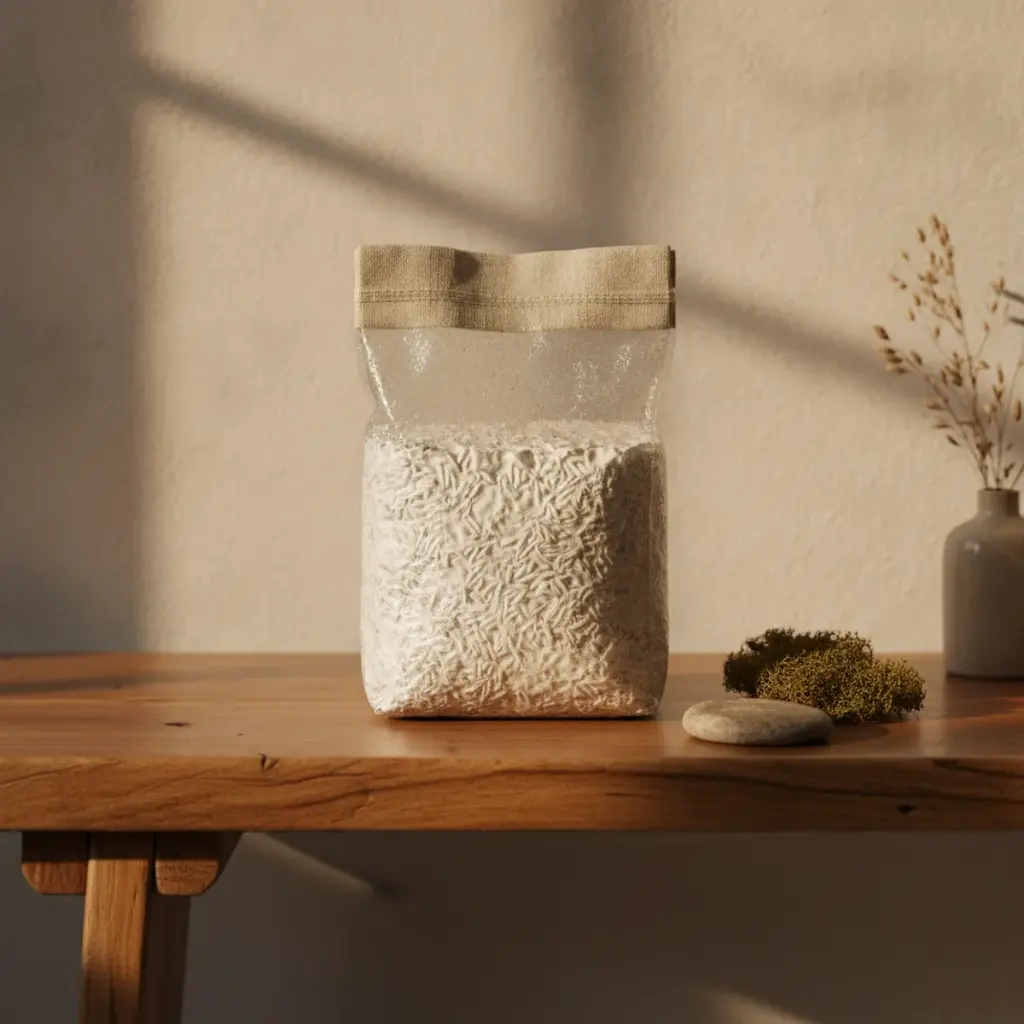
Grain spawn is sterilised cereal grain — rye, millet, wheat, sorghum — fully colonised by mycelium. Each kernel is a separate, nutrient-loaded inoculation point. A 5 lb bag is tens of thousands of them.
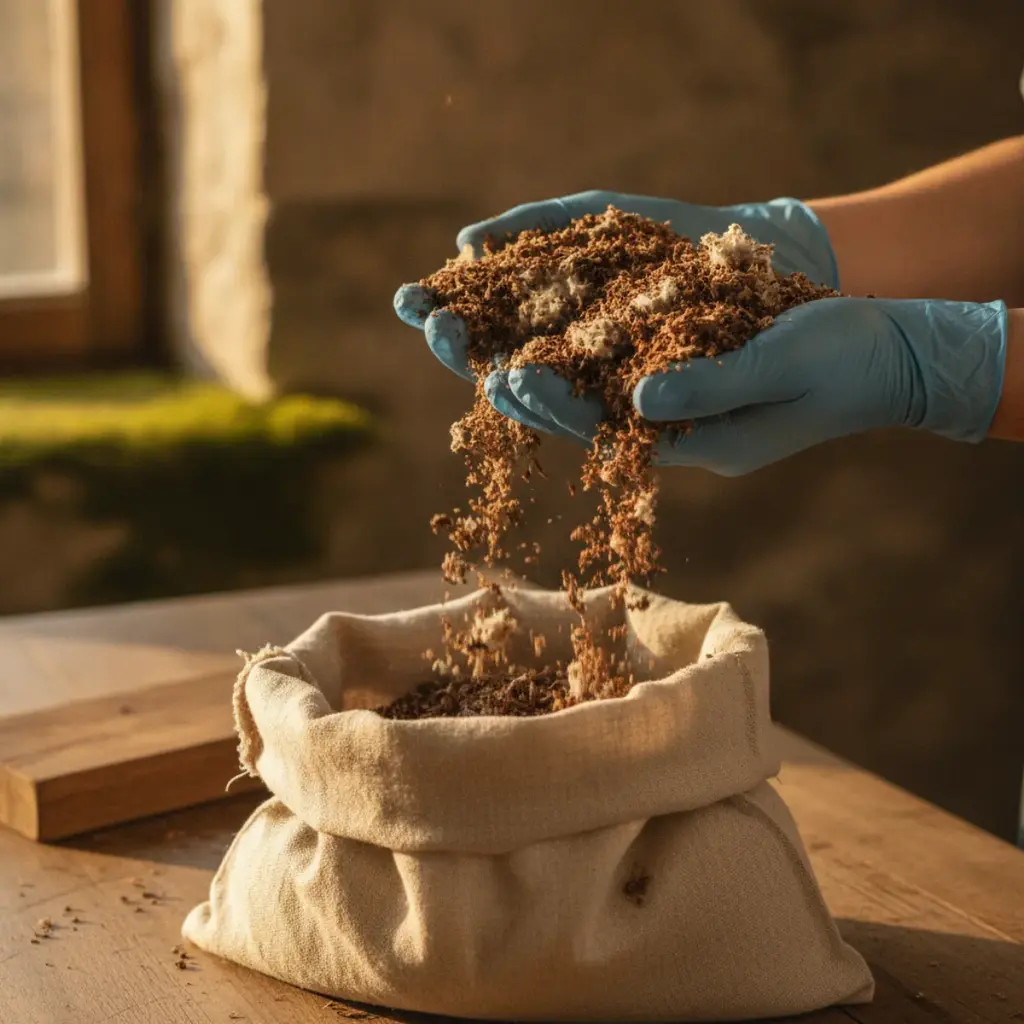
Sawdust spawn is supplemented hardwood sawdust, usually with a little bran, colonised the same way. Each crumb is an inoculation point, and the substrate is already the thing the mushroom wants to eat when the target is wood.
Plug spawn is hardwood dowels — birch, usually, about 8 mm — colonised and sold loose in bags of 100 or 500. Each dowel is one inoculation point, and the mycelium has to bridge out of the dowel into the surrounding log.
The Arithmetic That Decides It
This is the part that gets left out of plug spawn listings.
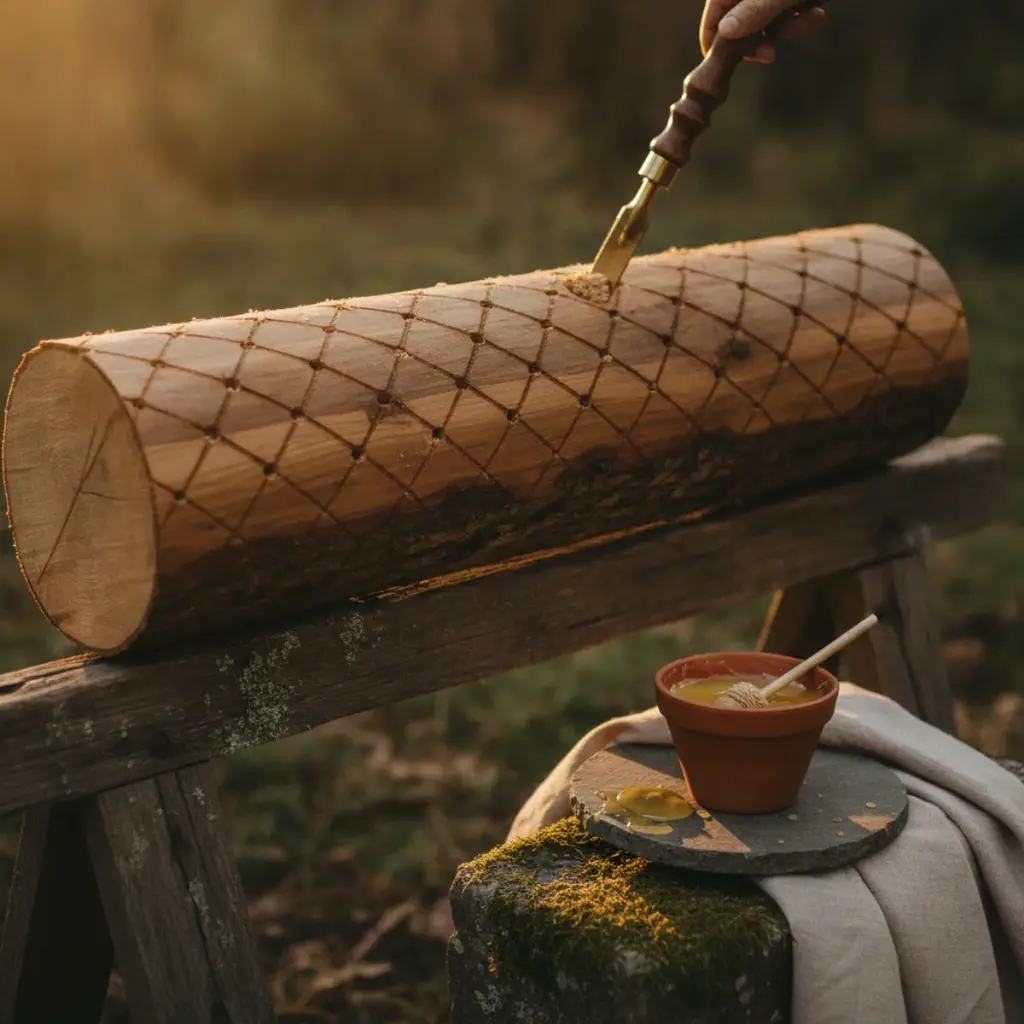
A standard log — about 1 m long and 10 to 15 cm thick — takes 25 to 50 inoculation points, drilled in a diamond pattern roughly 15 cm apart along the length and rotated a third of a turn each row.
- Plug spawn: one plug per hole. A bag of 100 plugs therefore does two to four logs.
- Sawdust spawn: roughly a teaspoon per hole. A 5.5 lb bag does fifteen to twenty-five logs.
At typical Canadian prices — call it $25 to $30 for 100 plugs and $30 to $40 for 5.5 lb of sawdust spawn — that works out to something like $8 to $12 per log with plugs and $1.50 to $2.50 per log with sawdust. Same species, same logs, same season, four to six times the cost.
The gap gets worse at any scale above a weekend project. Ten logs is one bag of sawdust spawn or three to five bags of plugs.

CRAFTSMAN Electric Chainsaw, 16 Inch, 12 Amp Corded Chain Saw Electric, Ergonomic, Powerful Motor (CMECS600)
Only needed for the totem and stump methods, which cut rounds rather than drilling. Many log growers never buy one: an arborist or firewood supplier will often sell freshly cut hardwood rounds cheaper than the saw costs. If you do cut your own, chaps, gloves and eye protection are not optional.
As an Amazon Associate we earn from qualifying purchases. It costs you nothing and does not change what we recommend.
Speed: Sawdust Also Colonises Faster
Cost is the obvious argument. Colonisation speed is the one that surprises people.
A plug is a sealed cylinder of wood. The mycelium inside it has to work its way out of the dowel and establish contact with the log around it, and the only contact surface is the wall of the drilled hole. Sawdust packed into the same hole has far more surface area touching the log, and it is already loose, moist and actively growing when it goes in.
In practice that means sawdust-inoculated logs commonly fruit a few months earlier than plug-inoculated logs of the same size and species — a real difference when the baseline wait is twelve to eighteen months. It also means more inoculation points per log are practical with sawdust, because you are not paying per point.
Where Grain Spawn Belongs
Grain is the right answer for everything indoors and the wrong answer for logs.
Indoors, grain wins on every metric. The kernels carry their own nutrition, so colonisation is fast and vigorous, and the sheer number of inoculation points means a tub or a block knits over before contaminants get established. Spawn rates of 1:2 to 1:5 by volume into pasteurised bulk substrate are standard — our spawn ratio guide covers how to pick one, and how to prepare bulk substrate covers what you are mixing it into.
Outdoors, grain is a liability. It is food for everything else too. Grain exposed in a drilled log or a garden bed attracts insects, rodents and birds, and its nutrient load feeds bacteria and competitor moulds in a way plain wood does not. Wood-based spawn in a wood-based substrate has no such problem, which is the whole reason sawdust spawn exists.
So What Is Plug Spawn Actually For?
One honest use case: a very small number of logs, with no tools and no plan to do it again.
Plugs need only a drill, an 8 mm bit and something to seal with. Sawdust spawn needs a palm inoculation tool — $25 to $40, one time — because packing sawdust into a drilled hole by hand is miserable and slow. If you are doing three logs as a gift or a school project, plugs are genuinely simpler and the cost difference is a few dollars.
Beyond that, the case falls apart. By the fifth log, the inoculation tool has paid for itself. By the tenth, it has paid for itself twice. And plugs are frequently sold to people who think they are getting a lot of spawn because the bag holds a hundred items — which is the gimmick, and it is a packaging illusion rather than a lie.

As an Amazon Associate we earn from qualifying purchases. It costs you nothing and does not change what we recommend.
The Spent Block Trick
If you have already bought a grow kit, you are holding more wood-based spawn than a bag of plugs contains.
A fruited 5 lb sawdust block is colonised hardwood. Broken up, it will inoculate a wood-chip bed, a totem stack, or a row of buried logs far more material than 100 dowels ever would — and it costs you nothing extra, because you have already had the mushrooms off it.
Two honest caveats. A spent block has lower vigour than fresh spawn, because it has already put energy into fruiting. And it works far better for beds and totems, where you are packing spawn against large wood surfaces, than for drilled logs, where the hole needs dense, actively growing spawn to establish. Use fresh sawdust spawn for drilled logs and spent blocks for everything looser.
Our log cultivation guide covers the totem method, and growing on hardwood pellets covers making your own wood-based substrate from fuel pellets, which is the cheapest sawdust there is.
Choosing, in One Table's Worth of Words
Growing indoors in tubs, bags or blocks: grain spawn. Nothing else is close.
Drilling logs, more than about five of them: sawdust spawn, plus a palm inoculator. Cheapest per log, fastest to fruit.
Drilling two or three logs, once: plugs are fine. You will not buy them twice.
Wood-chip beds, totems, stumps, buried logs: sawdust spawn, or a spent block you already own.
Working from a culture rather than buying spawn: make grain spawn yourself — see how to make mushroom spawn — and compare it against liquid culture in our grain spawn vs liquid culture guide.

CARGEN 430g White Beeswax Pellets - Triple Filtered Wax for Candle Making
Sealing each plug keeps moisture in and competitors out while the mycelium runs. Food-grade cheese wax melts at a workable temperature; ordinary candle wax is too brittle and flakes off outdoors.
As an Amazon Associate we earn from qualifying purchases. It costs you nothing and does not change what we recommend.
Whichever You Use on Logs
The format changes the economics, not the method. Fresh-cut hardwood, dormant season, inoculate within two to six weeks of felling, seal every hole, and keep the logs shaded and off the ground. Shiitake on oak or maple is the most forgiving starting point, and our shiitake guide covers strain choice and fruiting triggers.
Frequently Asked Questions
Is plug spawn or sawdust spawn better for logs?
Sawdust spawn, for almost everyone. A 5.5 lb bag inoculates 15 to 25 logs against two to four logs from 100 plugs, which works out four to six times cheaper per log, and sawdust colonises faster because far more of it contacts the wood. Plugs only win when you are doing two or three logs and do not want to buy an inoculation tool.
How many logs will 100 plugs inoculate?
Two to four, depending on log size. A 1 m log of 10 to 15 cm diameter needs 25 to 50 plugs spaced about 15 cm apart in a diamond pattern.
Can I use grain spawn on logs?
You can, but you should not. Grain is nutritious enough to attract insects, rodents and birds, and it feeds bacteria and competitor moulds outdoors. Wood-based spawn in wood has no such problem. Keep grain for indoor substrate.
What is the cheapest way to inoculate a lot of logs?
Sawdust spawn with a palm inoculation tool, or breaking up a spent sawdust block for beds and totems. Both are wood-based, and both give you far more inoculation material per dollar than plugs.
Do you sell plug spawn?
No. We sell grain spawn, liquid cultures and grow kits, which is where we think the value is for the growing most people are actually doing. For drilled logs we would point you at a sawdust spawn supplier rather than sell you something we think is the wrong format.
How long until a log inoculated with sawdust spawn fruits?
Usually 9 to 15 months for shiitake, against 12 to 18 months for the same log done with plugs. Species, log diameter and climate all move that, and a thicker log takes longer but then produces for more years.