
Most guides about starting a mushroom farm read like a textbook. They give you the theory but skip the reality — the $3,400/month rent that keeps you up at night, the government inspector who shows up at your farmers market booth, the walk-in cooler you learned to build from a Chinese YouTube video because the manufacturer wanted $30,000 just to install it.
This is not that kind of guide. This is the real story.
Andrew Langevin started Nature Lion in 2020 with a mushroom grow kit from Amazon and a basement with plastic on the walls. Five years later, the company operates out of a CFIA-licensed facility in Brantford, Ontario, has shipped over 50,000 orders, and supplies spawn, cultures, grow kits, and functional mushroom products to customers and businesses across Canada.
We sat down with Andrew to get the unfiltered version of what it actually takes to build a mushroom business in Canada.
It Started With a $30 Kit and Empty Grocery Shelves
It was right at the beginning of COVID. Andrew had time on his hands and picked up a mushroom grow kit off Amazon. It took about three to four weeks — a little longer than expected — but then it exploded with mushrooms.
"With everything that was going on in the world, it was easy to realize the necessity that fresh food will always be around," Andrew says. "As grocery store shelves were clearing, I was growing."
That realization — that fresh, locally grown food has permanent value — hit differently when you could not find basic produce at the supermarket. While most people were binge-watching Netflix, Andrew was watching mycelium colonize substrate in his basement and thinking about business.

From Basement to Farmers Market
The business idea was immediate. Weeks of being stuck at home, combined with visits to the local farmers market where established growers were thriving, made the path clear.
"I started growing in my basement. We approached the local farmers market and my wife started selling her own jewelry and I started selling my own mushrooms. We shared a table."
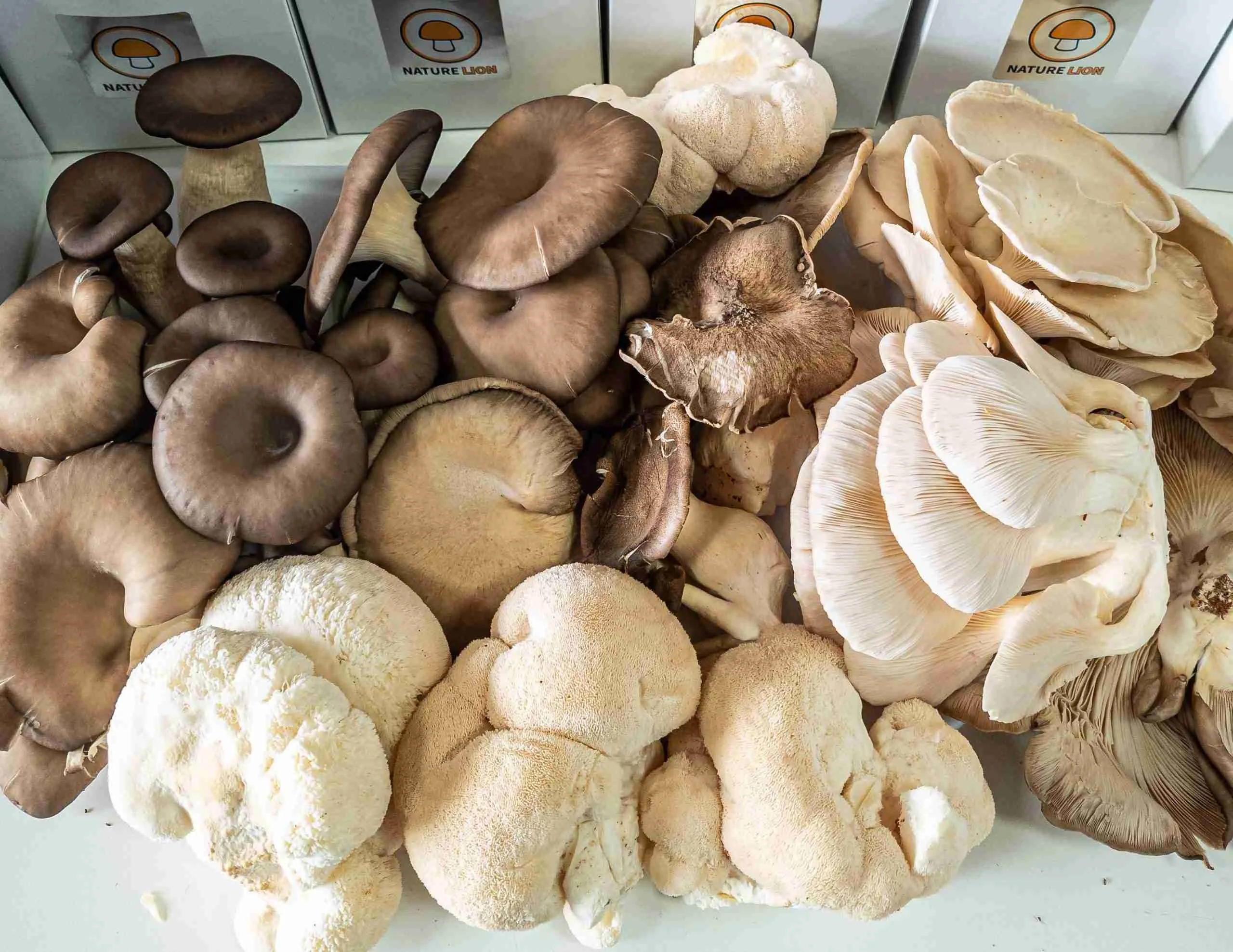
The setup was basic. A spare room converted into a small mushroom farm — plastic sheeting on the walls, blue oyster and lion's mane as the main crops, with some black oyster in the mix. Already, Andrew was experimenting with tissue cultures and cloning, trying to build something beyond just a side hustle.
The local response was overwhelming. People turned out every week to support Canadian growers. It was driven by a genuine love for fresh food and a sense of community that COVID had amplified.
More from Andrew: Thinking of taking the same first step? Our full guide to selling mushrooms at farmers markets in Canada breaks down booth fees, pricing, what sells, and the regulations every new vendor needs to know — written from years of weekend markets across Ontario.
The Kickstarter That Changed Everything
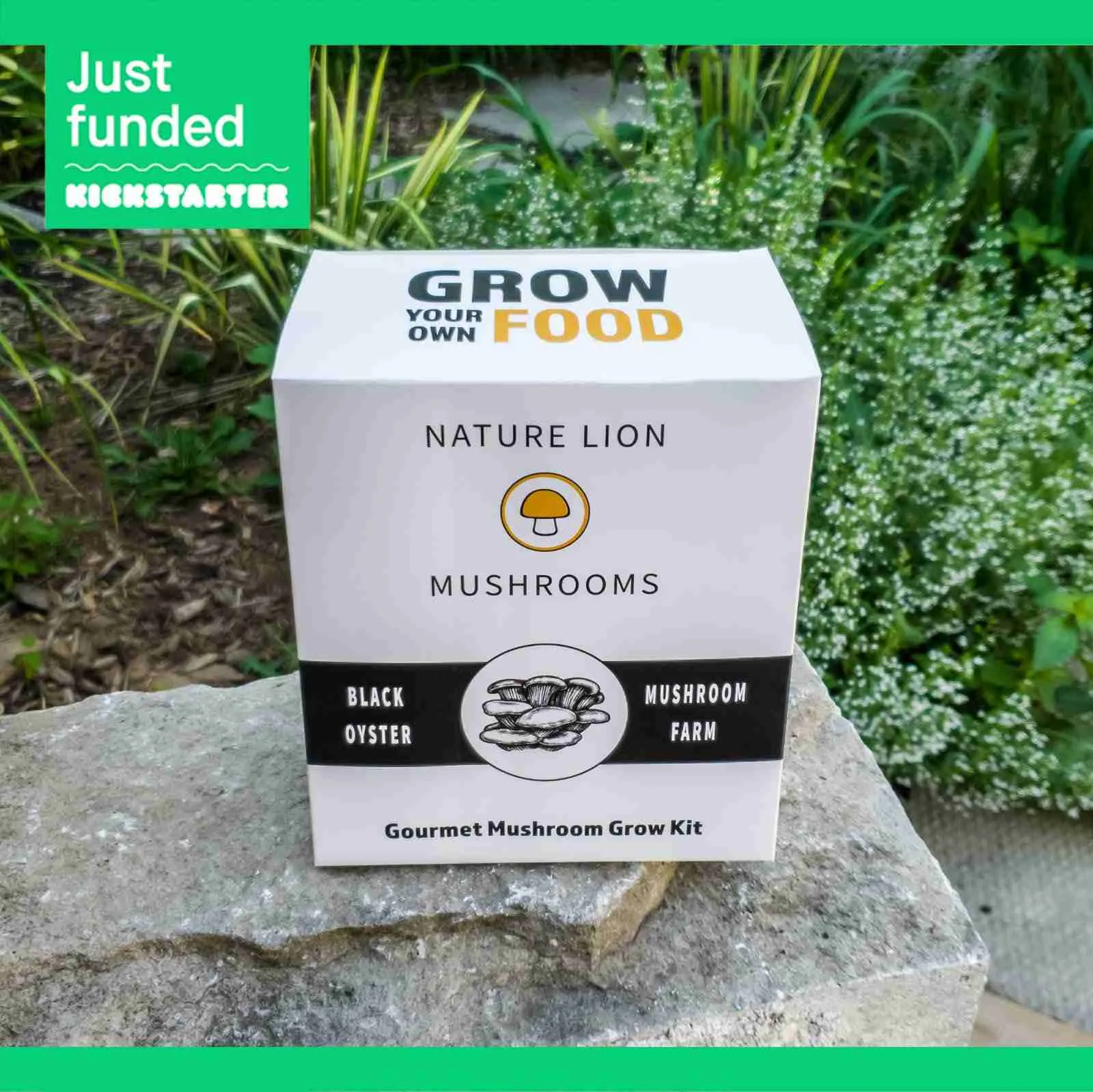
The real validation came from an unexpected place. Andrew launched a Kickstarter campaign for grow-your-own mushroom kits — the same concept he had started with, packaged for other people to experience at home.
The campaign hit its funding goal and then some. Suddenly, six or seven thousand dollars was coming in from an idea that had not existed a year earlier.
"It was a scramble for sure, but we got it done. Christmas of 2020."
Think about that timeline. Amazon kit to funded Kickstarter in less than a year. During a pandemic. From a basement.
After fulfilling the Kickstarter, farmers markets became the bread and butter. A website was built too, but markets were where the real money came in — reliable, face-to-face, community-driven sales.
"We doubled down on markets in 2021, expanded the grow kit line, and soon we started getting bigger than our basement could handle."
The $60,000 Buildout (DIY Edition)
Outgrowing the basement forced the first truly scary decision: a commercial lease at $3,400 per month.
"Financially it was scary and probably out of my league honestly. That was going to be a lot of mushrooms."
Family and friends invested early to make it sustainable. The space needed everything — a 40x30 foot walk-in cooler, a laboratory, multiple grow rooms, sterilization equipment, and more shelving than Andrew cares to admit.
Total buildout cost: approximately $60,000. But that number only worked because almost nothing was contracted out.
"Myself and a few friends and family built everything. The freezer panel manufacturer wanted another $30,000 just to install the $25,000 worth of panels. Then I found a YouTube video — in Chinese — but after watching it I understood how to build it and we began."
Learning to build a commercial walk-in cooler from a foreign-language YouTube video is not in any business textbook. But it saved tens of thousands of dollars and is exactly the kind of resourcefulness that separates mushroom farms that survive from those that do not.
The lessons came fast. Buy better shelves or weld the wheels onto the cheaper ones. Multiple sterilizer setups failed before the right one was dialled in. And regulations? Those had not even been considered yet.
"A bit of a mistake, but we got through."
The Inspector at the Farmers Market
The compliance wake-up call came without warning.
Andrew was approached to attend a farmers market in Cambridge. What he did not know was that an Ontario government inspector would be visiting his booth.
"Where did you dry these mushrooms?" the inspector asked.
"At our farm."
"Do you have a licensed commercial kitchen?"
"No. We're a farm."
That answer did not matter. What followed was months of work — building inspectors, business permits, fire sprinklers, rewiring all the electrical. All because he had dried a couple of mushrooms that would have otherwise spoiled.
"That's the government for you."
It is a cautionary tale that every aspiring mushroom farmer needs to hear. One dried mushroom at a market booth can trigger a compliance cascade that costs thousands and takes months to resolve. The advice is simple: understand your local food safety regulations before you sell your first product. Not after.
The CFIA License Nobody Understood
The CFIA (Canadian Food Inspection Agency) license finally came through in 2023. At first, Andrew did not grasp what he had.
"I thought, oh good, now I can dry my mushrooms and export fresh mushrooms out of province."
But the real value of that license revealed itself when the Canadian government tightened import regulations on food products. Suddenly, the barriers that had frustrated Andrew as a startup became a competitive advantage.
"Most startups are at the mercy of co-packers. We were the co-packer."
That single realization transformed Nature Lion from a mushroom farm into a platform. The CFIA license meant they could develop, produce, and package their own products — dried mushroom powders, the SHYNE mushroom coffee line, and eventually private label products for other brands.
"It really opened our eyes to the possibilities that our license opened up for us."
The Costs Nobody Talks About
Ask YouTube how much it costs to start a mushroom farm and you will get clean numbers in a spreadsheet. The reality is messier.
Crop loss. Contamination happens. Entire batches of substrate can go green with Trichoderma, and there is nothing to do but compost it and start over. Early on, before your sterilization process is dialled in, contamination rates can be brutal.
Equipment failures. Boilers fail. Humidifiers fail. And they always fail at the worst possible time. Budget for replacements and redundancy.
The learning curve has a price tag. Dialling in your substrate recipe, your sterilization cycle, your fruiting conditions — all of this takes trial and error. Every failed batch is money lost.
Shelf space is at a premium. You will never have enough. And every shelf needs to be on wheels that actually work.
Ingredients for food products. If you expand into value-added products like mushroom coffee or powders, ingredients cost money, take time to arrive, and are not always easy to source. International supply chains are complex.
Utilities. If you are running electric boilers and air conditioning, expect hydro to cost about 10% of your overall operating costs.
Employees. "It's not cheap, even at $20 an hour. On top of everything, that adds up and the government always wants their share."
Software and services. "It's easy to get carried away with expenses like software and things that are supposed to make your business easier. Those expenses really add up and they are not always worth your money. Sometimes you have to live and learn."
Permits, permits, permits. Building permits, business licenses, stamped drawings, plumbing fittings, fire safety systems, electrical upgrades. Every municipality is different, and none of them are cheap.
What He Would Do Differently
Two things. Both simple. Both hard.
Focus on one thing.
"Do it better than anyone else. The money will come. Doing 15 different things is a great way to burn yourself out, and I did. Learned the hard way and had to reevaluate the entire business."
This is the most common mistake in mushroom farming. New growers want to sell fresh oysters at the market, dried lion's mane online, spawn to other growers, grow kits to consumers, and tinctures to health food stores — all at once. Each product line has its own production requirements, packaging, marketing, and customer base. Spreading across all of them means doing none of them well.
Pick one. Master it. Expand from a position of strength, not desperation.
Think big from the beginning.
"Pretend you have all these expenses when you are doing it for next to nothing in your basement. Because if you can't function with money going out constantly, you won't survive. Things keep revolving and you have to go with the flow. Think big."
This means pricing your product as if you had commercial rent, employees, and insurance — even when you are growing in a spare room. If your business model only works with zero overhead, it will collapse the moment you scale.
Is It Still Worth It?
Yes. But not for the reasons most people think.
"The mushroom industry is tough if you spread yourself too thin. Laser focus is needed and you have to be thick skinned. You may have landed a restaurant for $12 a pound and the next guy comes and takes your business for $6 a pound. Is it worth fighting for? Probably not."
The market is competitive. Margins on fresh mushrooms are tight. Undercutting on price is a race to the bottom that nobody wins.
"But it's still worth it. If you know your market and where your strengths lie, then you can carve your own path out and write an epic story — just like we have done at Nature Lion."
The farms that thrive are the ones that find their angle. For Nature Lion, it was the CFIA license that turned a mushroom farm into a food production platform. For you, it might be something else entirely — the best oyster mushrooms at your local market, the only spawn supplier in your province, the farm that supplies every restaurant in your city.
Find your thing. Do it better than anyone else. The money will come.
Resources for Getting Started
If you are serious about starting a mushroom farm in Canada, here is where to begin:
Learn to grow first:
- Complete Guide to Growing Mushrooms in Canada
- How to Grow Oyster Mushrooms — the best species to start with commercially
- Mushroom Substrate Guide — understanding your growing medium
- How to Make Mushroom Spawn — producing your own spawn saves thousands
Understand the business side:
- Mushroom Spawn Ratio Guide — the math behind production planning
- How to Use Grow Bags — essential for commercial production
Get your supplies:
- Grain Spawn — 13 varieties, CFIA-licensed production
- Liquid Cultures — for farms that produce their own spawn
- Agar Plates — for culture work and strain isolation
- Grow Bags — autoclavable bags for substrate blocks
- Substrate — pre-sterilized, ready to inoculate
For established farms looking to expand:
- Wholesale Program — supply your retail customers with Nature Lion products
- Private Label — create your own branded mushroom products using our CFIA-licensed facility
Andrew Langevin is the founder of Nature Lion Inc and a contributing author of Chapter 29 in Mushroomology, a scientific textbook published by Brill and edited by Prof. Jianping Xu of McMaster University. Nature Lion operates out of a CFIA-licensed facility in Brantford, Ontario.
Have a mushroom-growing question? Ask Dr. MycoTek for AI help with your grow. Sign in to use your free monthly allowance.