
Shaggy mane (Coprinus comatus) might be the most democratic wild mushroom in Canada. It doesn't hide in old-growth forest or demand a four-hour drive to a secret patch — it pops up on suburban lawns, gravel road shoulders, school yards, and freshly disturbed soil from Victoria to St. John's. It is unmistakable, delicious, and has one of the safest identification profiles in the entire mushroom kingdom.
It also comes with the strangest catch in foraging: the mushroom dissolves itself. Within hours of maturing — or of being picked — a shaggy mane begins digesting its own cap into black ink. This guide covers how to identify it, the two lookalikes worth knowing, why the clock matters so much, and how to cook (and even grow) this odd, excellent mushroom.
What Is a Shaggy Mane?
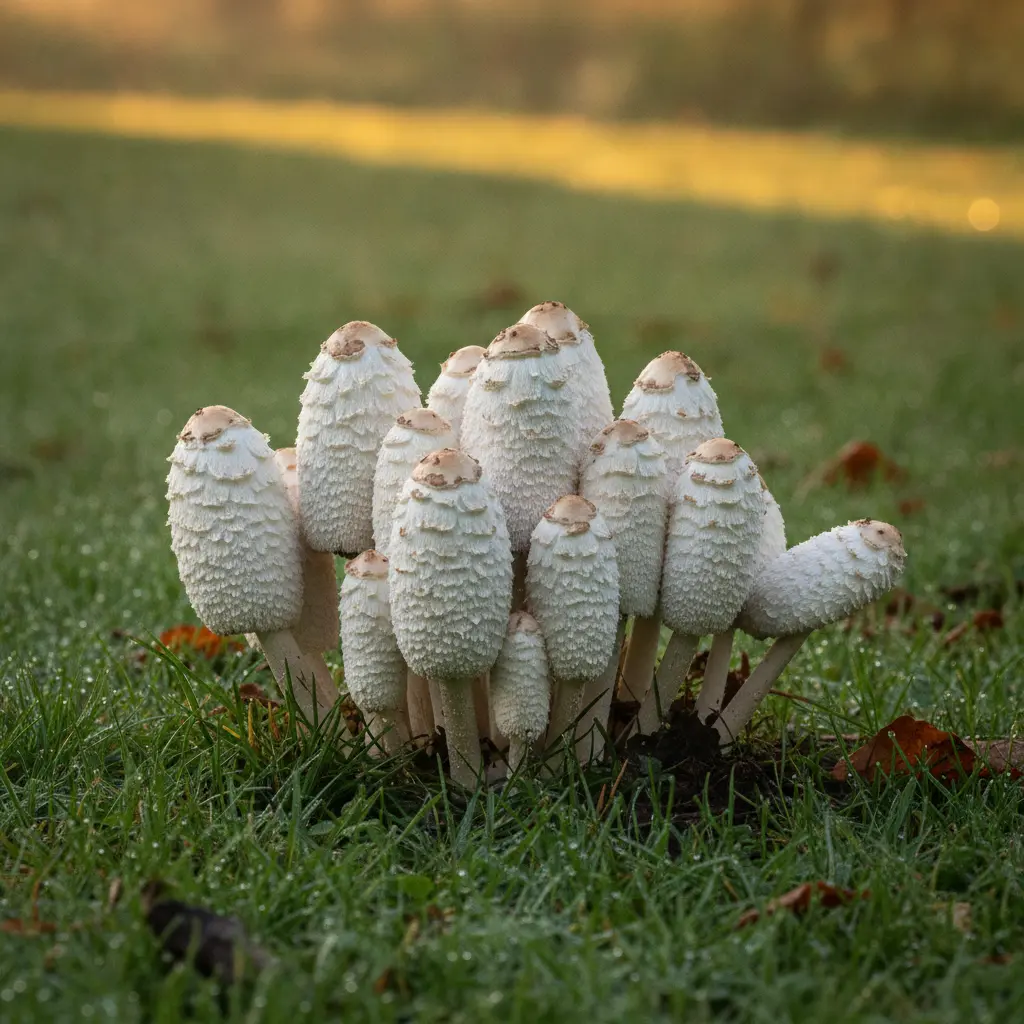
Shaggy mane is a member of the ink cap family, mushrooms that mature by deliquescence — literally liquefying their own gills to release spores. The young mushroom stands 10–35 cm tall with a distinctive elongated, cylindrical white cap covered in shaggy, upturned scales, looking a bit like a lawyer's wig (an old common name is exactly that: lawyer's wig).
| Factor | Detail |
|---|---|
| Species | Coprinus comatus |
| Season in Canada | May–June, then a bigger flush August–October |
| Habitat | Lawns, roadsides, gravel, disturbed and enriched soil |
| Edibility | Choice — when young and cooked promptly |
| Shelf life | Hours, not days |
| Difficulty | One of the safest beginner IDs |
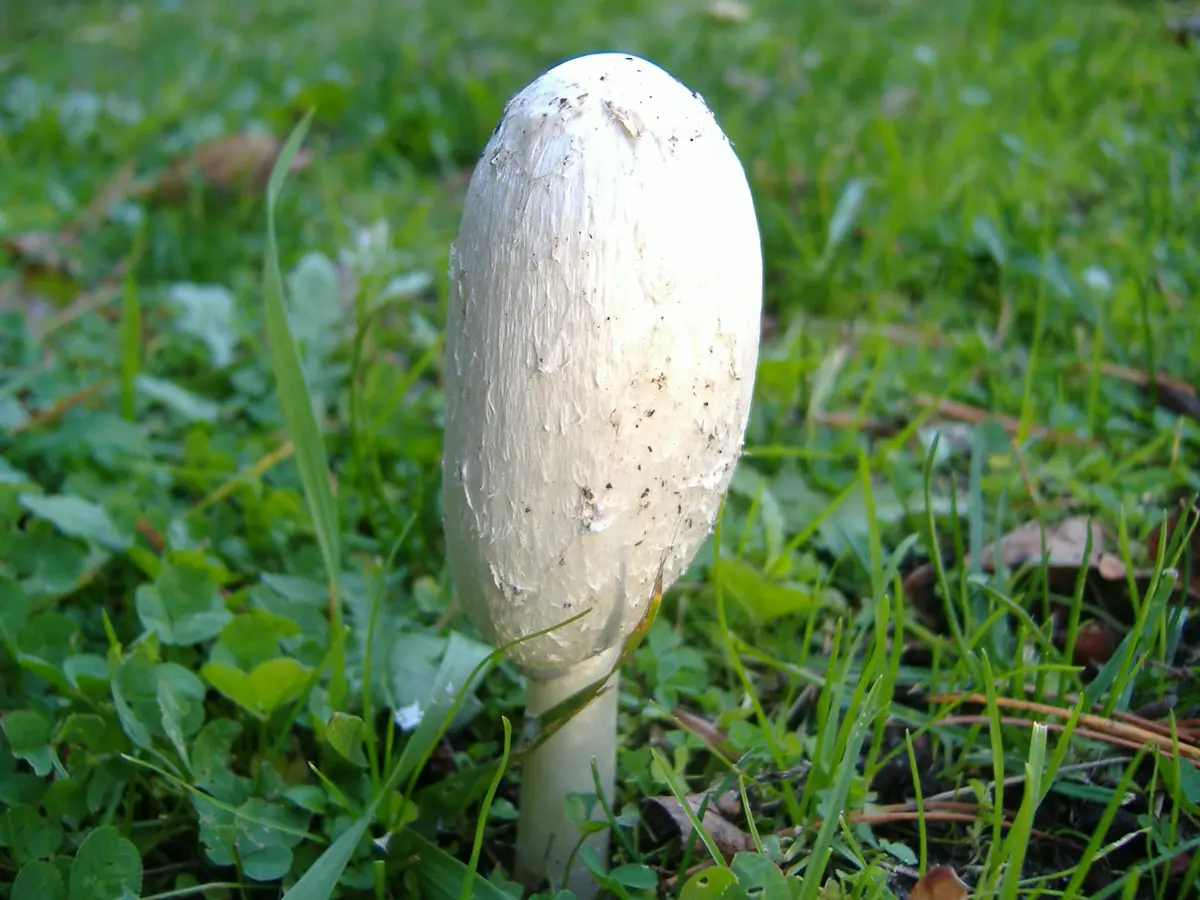
Photo: Tim Sage, CC BY-SA 3.0, via Mushroom Observer. Shoreline, Washington.
What to take with you
Foraging needs very little kit, and the three things that matter each do a different job: carry the find without crushing it, cut it without damaging what is left behind, and clean it dry.
How to Identify Shaggy Mane
Look for all of these features together:
- Tall, cylindrical (not round) white cap that hugs the stem like a closed umbrella, 4–15 cm tall before it opens.
- Shaggy, upturned white-to-brownish scales covering the cap surface — the "mane."
- Growing from soil in open, disturbed ground — lawns, road edges, gravel pads, pastures — often in groups or lines, never on wood.
- Crowded white gills that turn pink, then grey, then ink-black from the bottom edge of the cap upward as it matures.
- The ink. Older specimens visibly dissolve into a dripping black goo from the cap margin up. No other tall white lawn mushroom does this.
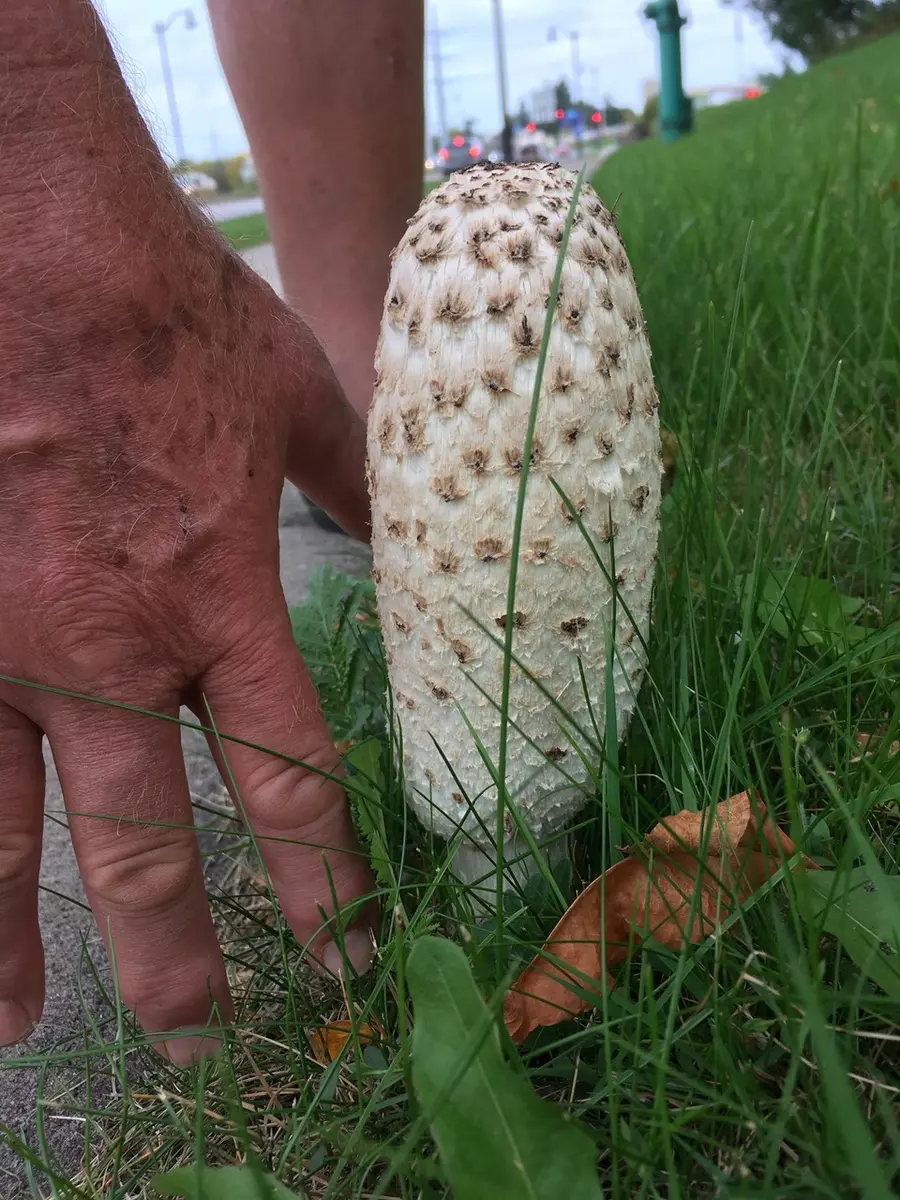
Photo: Sharon Milliken, CC BY-SA 3.0, via Mushroom Observer. Ashland, Wisconsin.
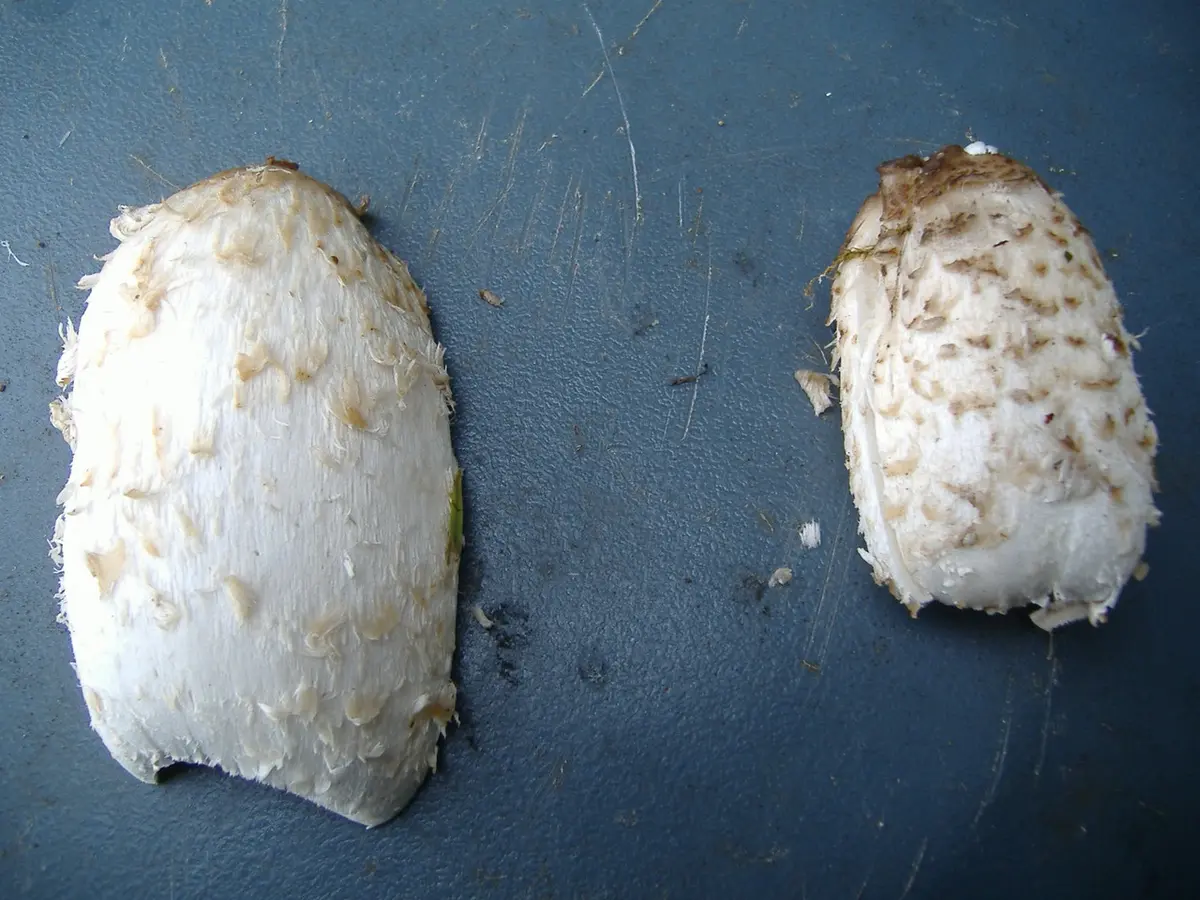
Photo: Tim Sage, CC BY-SA 3.0, via Mushroom Observer. Shoreline, Washington.
That fifth feature is the gift: if you find a colony where the older mushrooms are melting into ink, you have positively confirmed the younger ones next to them. Harvest the young, fully closed white ones and leave anything showing pink or grey gills.
Lookalikes to Know
Shaggy mane's lookalikes are few, and the deliquescing habit separates it from almost everything — but two are worth memorising.
Common ink cap (Coprinopsis atramentaria) — Also deliquesces into black ink, but the cap is smooth grey-brown and bell-shaped, without the shaggy white scales. Here's why it matters: the common ink cap contains coprine, a compound that causes a genuinely unpleasant reaction — flushing, racing heart, nausea — when consumed within a few days of drinking alcohol. It's edible for a teetotaller and a trap for everyone else. If your "shaggy mane" is smooth and grey rather than white and shaggy, leave it, and never mix ink cap species with a glass of wine.
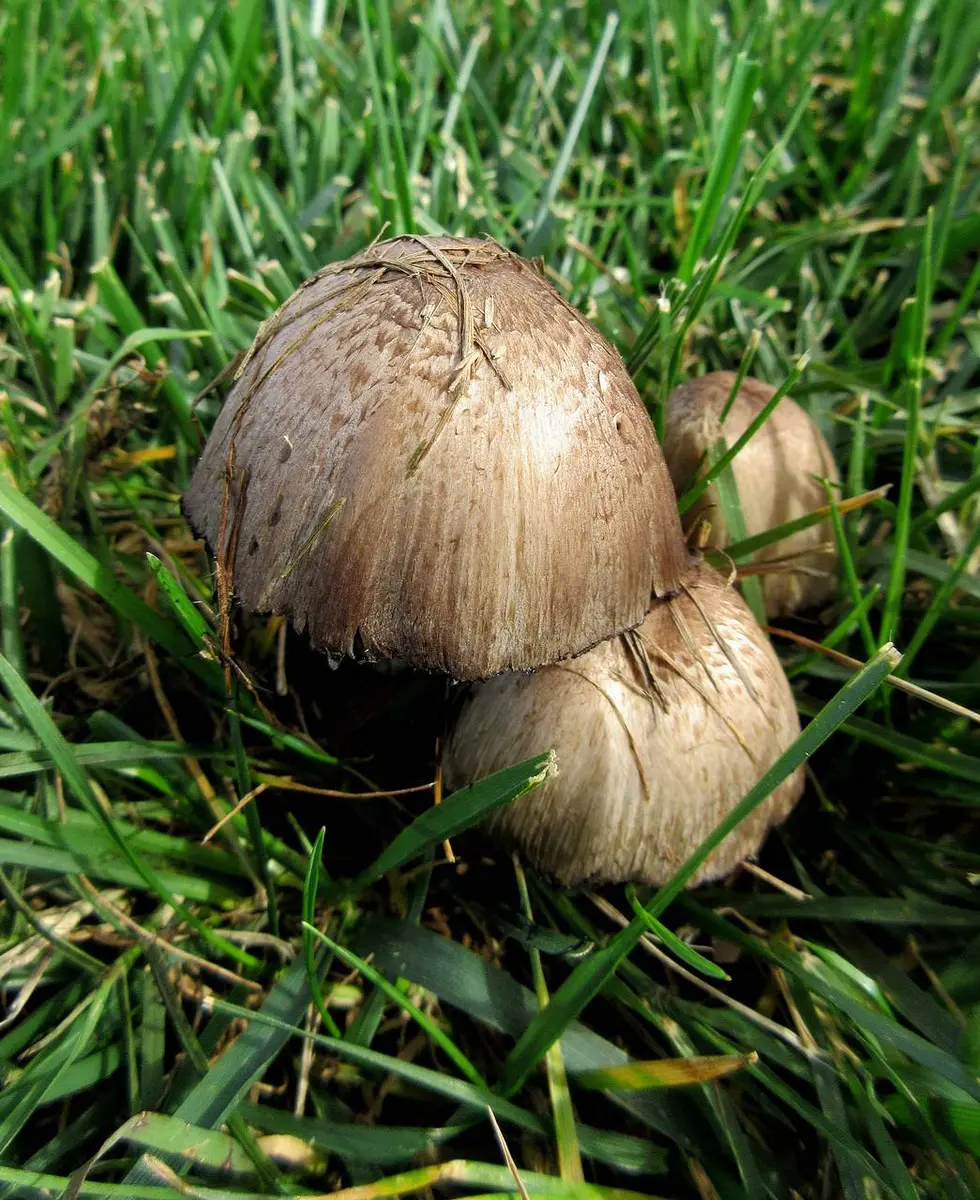
Photo: Judi Thomas, CC BY-SA 3.0, via Mushroom Observer. Chesterfield, Missouri.
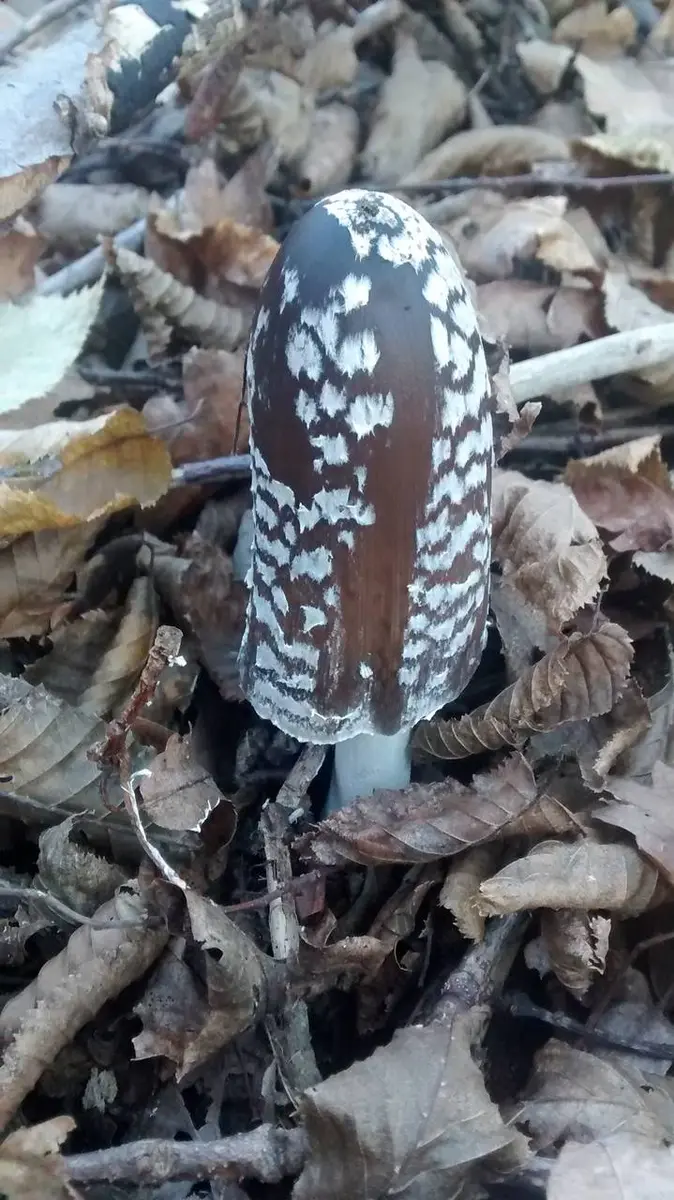
Photo: Tavi, CC BY-SA 3.0, via Mushroom Observer. Sibiu, Romania.
Green-spored parasol (Chlorophyllum molybdites) — The most common cause of serious mushroom poisoning in North America, and the reason you check gill colour. It's a large white lawn mushroom, but its cap is broad and round (not cylindrical), it never turns to ink, and its mature gills go greenish-grey with a green spore print. It causes violent gastrointestinal illness. It is more common in warmer regions and appears in southern Canada in hot summers. The cylindrical shaggy cap and the self-inking habit rule it out — but this is why you confirm every feature, every time.
Magpie inkcap (Coprinopsis picacea) — A woodland ink cap that deliquesces just like shaggy mane but wears the opposite outfit: a dark brown-black conical cap broken up by white felty patches, like a magpie's plumage. It is never all-white and never shaggy, and it grows in leaf litter and hardwood forest rather than open lawns. It's reported to cause stomach upset when eaten, which makes it a leave-it species — easy enough, since a "shaggy mane" found deep in the woods should already have you re-checking your ID.
Here's the whole cast side by side:
| Feature | Shaggy mane | Common ink cap | Magpie inkcap | Green-spored parasol |
|---|---|---|---|---|
| Cap shape | Tall cylinder, hugs the stem | Smooth grey-brown bell | Dark conical bell | Broad and round when open |
| Cap surface | White with shaggy upturned scales | Smooth, no scales | White felty patches on dark ground | Flat brownish scales on white |
| Gill colour change | White → pink → grey → black | Grey → black | White → grey → black | White → greenish-grey |
| Dissolves into ink? | Yes | Yes | Yes | Never |
| Spore print | Black | Black | Black | Green |
| Habitat | Lawns, roadsides, disturbed soil | Stumps, buried wood, lawns | Woodland leaf litter | Warm lawns |
Young puffballs might confuse someone at a distance, but a puffball has no gills, no stem structure, and slices into solid white flesh throughout. Our Ontario foraging guide covers the broader beginner-safe species list.
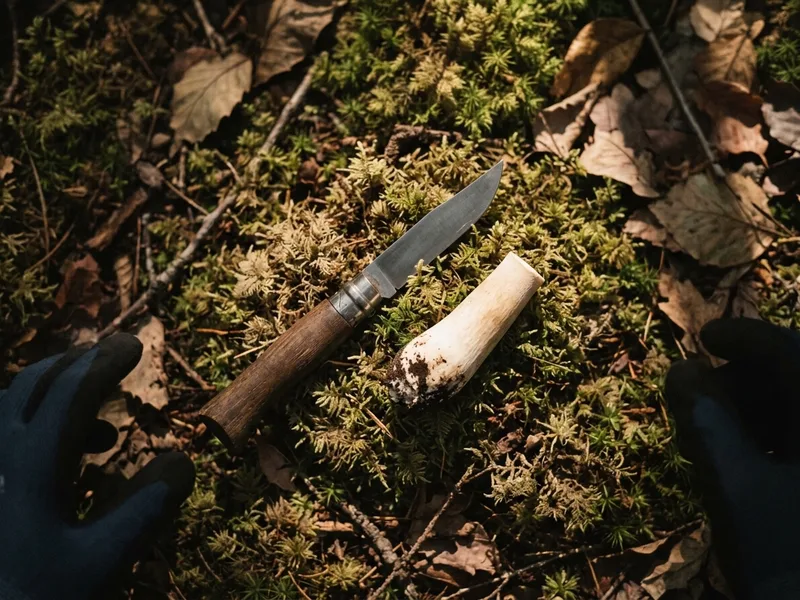
Opinel No. 08 Mushroom Knife
A curved blade cuts the stem cleanly at the base instead of tearing the mycelium out with it, and the boar bristle brush is set into the handle so cleaning happens in the field rather than at the sink.
When you buy through our links, it supports our mycology research at no extra cost to you.
The Clock: Why Shaggy Manes Can't Wait
Deliquescence doesn't stop when you pick the mushroom. A basket of perfect white shaggy manes left on the counter overnight becomes a basket of black soup by morning. This is the whole game with this species:
- Pick only young, closed, all-white specimens. Any pink or grey at the gills means the melt has begun.
- Cook them the same day — ideally within hours. Refrigeration slows the process slightly; it does not stop it.
- Don't bother drying them whole. They liquefy before they dehydrate. If you want to preserve a big flush, sauté and freeze, or simmer into a stock. (A dehydrator earns its keep on sturdier species like oysters and shiitake — just not this one.)
- They don't travel. This is a mushroom you eat because you found it, not one you'll ever see fresh in a grocery store — which is exactly what makes it a forager's mushroom.
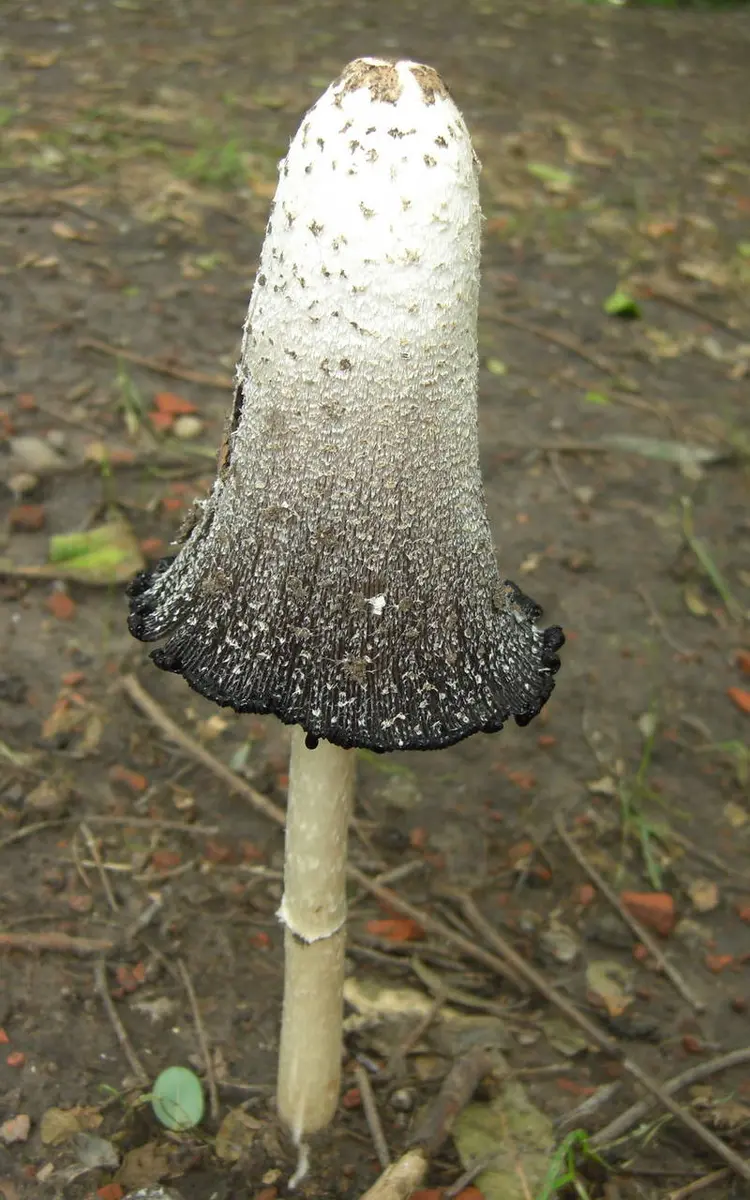
Photo: Jason Hollinger, CC BY-SA 3.0, via Mushroom Observer. Buenos Aires.
The Four-Hour Clock: From Patch to Pan
The section above covers why the clock runs. This is the workflow that beats it.
Pick young. Cap still closed and cylindrical, hugging the stem, all white, with no pink or grey at the base of the gills.
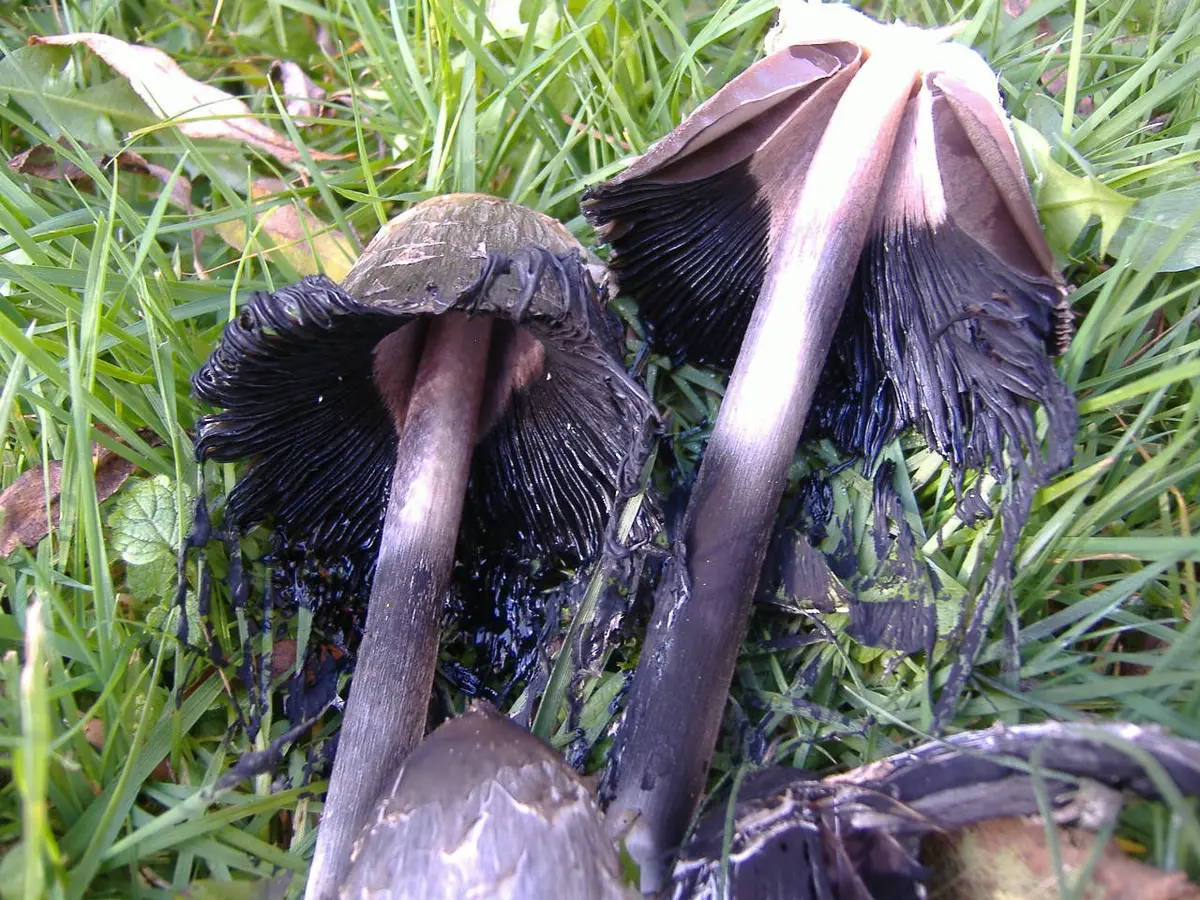
Photo: Tim Sage, CC BY-SA 3.0, via Mushroom Observer. Lynnwood, Washington.
Carry them upright in a rigid container. A basket or a shallow plastic tote, never a bag. This is the single most-missed step, and it matters more than anything you do at the stove: a crushed cap inks from the bruise outward, and a bagged pile sweats and warms itself.
Refrigerate immediately, uncovered or loosely covered. Cold slows deliquescence, it does not stop it, and a sealed container traps the moisture the caps are already giving off. Cook the same day.
Cook, then decide. For this species preservation starts in a pan, not in a storage container, so cook the whole haul the day you pick it and make the keep-or-freeze call afterwards.
| Elapsed since picking | What the mushroom is doing | Still worth cooking? |
|---|---|---|
| 0 to 1 hour | Firm, white, closed | Yes, best case |
| 1 to 2 hours | Cap still closed, gills may pink at the edge | Yes |
| 2 to 4 hours | Gills darkening, cap starting to flare | Yes, cook now |
| 4 to 8 hours | Ink forming at the cap margin, texture softening | Trim the inked edge and cook the stems and upper cap |
| 8 to 12 hours | Cap largely black and wet | Marginal, flavour is muddy |
| Overnight | Black liquid | No, compost it |
Once the pan has done its work, two routes keep: sauté in butter and freeze in portions, or cook a soup base down and freeze that. Drying is a poor fit for the reason given in the bullet above, they liquefy before they dehydrate. For technique on a species that keeps, see our oyster mushroom recipes.
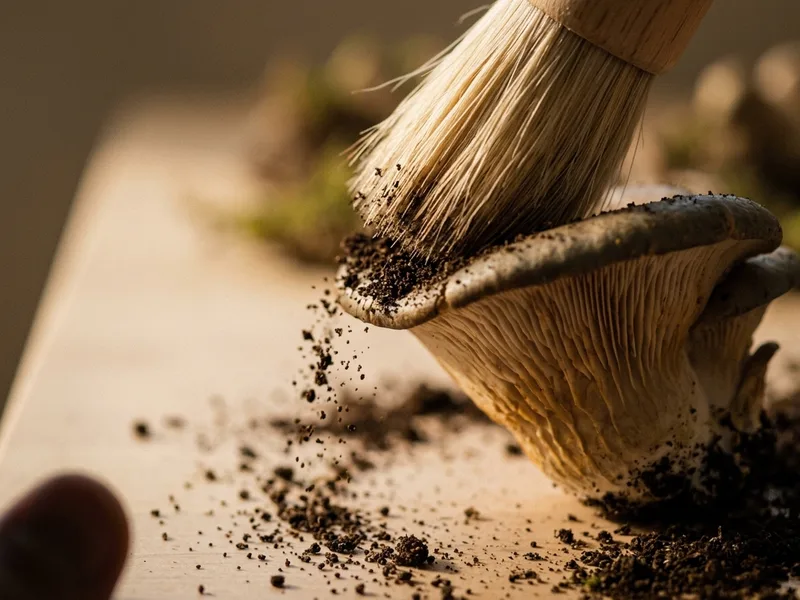
Redecker Natural Pig Bristle Mushroom Brush
Soft enough to take soil off a cap without tearing the skin. Mushrooms absorb water, so brushing dry beats rinsing every time, and anything you plan to dry has to be cleaned this way.
When you buy through our links, it supports our mycology research at no extra cost to you.
Where and When to Find Shaggy Manes in Canada
Shaggy manes love disturbed, enriched soil, which is why they thrive around people: lawn edges, boulevards, gravel driveways, construction backfill, manured pastures, and campground clearings. They fruit coast to coast — they're a signature species of the prairie provinces, where they erupt along grid roads and shelterbelts after rain. Our Alberta, Saskatchewan, and Manitoba foraging guides all rank them among the best beginner species.
The season has two acts: a modest late-spring flush (May–June) and the main event from August through October, when cool nights and fall rains can carpet a roadside with them. They often return to the same spots for years.
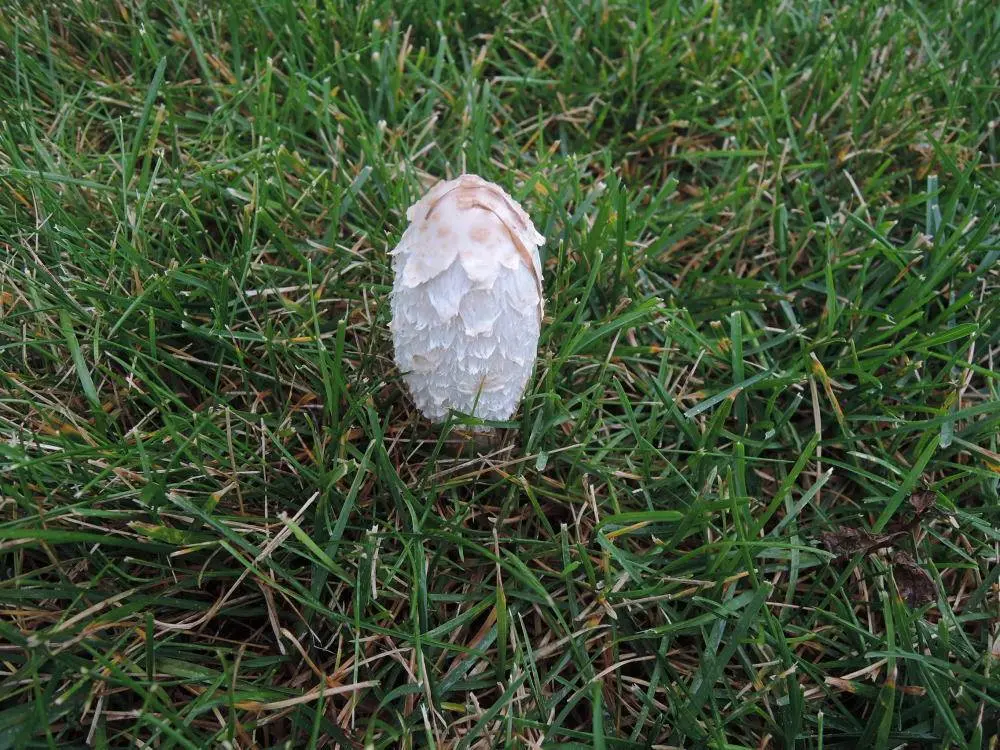
Photo: Eva Skific, CC BY-SA 3.0, via Mushroom Observer. Turkey Point, Ontario, October.
One caution that matters more for this species than most: shaggy manes are aggressive accumulators of whatever is in their soil. Skip specimens growing on golf courses, sprayed lawns, industrial ground, or busy highway shoulders, and pick from clean back roads, pastures, and yards you know.
Province-by-Province Fall Timing
The fall flush lands at slightly different times across the country. Wherever you are, watch for it two to four days after a soaking rain, once nights start dipping below about 10°C:
- Ontario & Quebec: early September to late October; the first big flush typically follows the first cool September rains.
- British Columbia: late August in the interior, while the coast keeps fruiting into November until a hard frost shuts it down.
- Prairies (Alberta, Saskatchewan, Manitoba): late August to early October — the most abundant flushes in the country, ending abruptly with the first hard freeze.
- Atlantic Canada: mid-September to early November; damp maritime autumns give a long, steady season.
September is also peak season for chicken of the woods — the two make a natural beginner's fall pairing.
When Shaggy Manes Fruit Across Canada
The table below breaks the same picture down region by region.
| Region | Typical First Flush | Peak Window | Season Ends |
|---|---|---|---|
| BC coast | Late August | Mid-September to early November | First hard frost, often late November |
| BC interior | Mid to late August | Early to late September | Early to mid-October |
| Alberta | Mid-August | Late August to late September | First hard freeze, usually early October |
| Saskatchewan | Mid-August | Late August to late September | First hard freeze, late September to mid-October |
| Manitoba | Late August | Early to late September | First hard freeze, early to mid-October |
| Southern Ontario | Early September | Mid-September to mid-October | Late October to early November |
| Northern Ontario | Late August | Early September to early October | Early to mid-October |
| Quebec | Early September | Mid-September to mid-October | Mid to late October |
| Maritimes (NB, NS, PEI) | Mid-September | Late September to late October | Early November |
| Newfoundland | Mid-September | Late September to mid-October | Late October |
Two things drive all of it: cool nights and a soaking. Watch for flushes two to four days after real rain once nights drop below about 10°C, and expect a warm dry September to push every row later.
They fruit in waves rather than once, so a patch that gave you a dozen last week can give you thirty after the next rain. Hard frost is what ends the season, which is why the prairie rows stop abruptly while the BC coast runs weeks longer.
Treat every date above as a week or two either way from one year to the next. Our Ontario and British Columbia foraging guides cover what else is fruiting alongside them.
Where to Actually Look
Shaggy mane is a disturbed-ground specialist, and that one fact is why it is the only choice wild mushroom most Canadians can find without leaving town. It has no interest in old forest. It wants soil that has recently been mown, graded, packed, manured or turned over, which describes most of the ground within walking distance of a front door. Look for a line or an arc rather than a scatter, because shaggy manes tend to follow a buried edge, a mower track, or the seam where two surfaces meet.
| Habitat | How reliable | What to watch for |
|---|---|---|
| Mown lawns and boulevards | Very reliable | Check edges and strips along walkways where the mower misses |
| Gravel road shoulders and laneways | Very reliable | Stay well back from salted or sprayed stretches |
| Sports fields and school grounds | Reliable | Often maintained turf, ask about spray programmes |
| New sod and fresh landscaping | Very reliable in year one | Best flushes come the first autumn after the ground is worked |
| Wood-chip margins and mulch beds | Moderate | Look where chips meet soil rather than deep in the mulch |
| Construction backfill and disturbed edges | Moderate | Skip anything near fill of unknown origin |
| Pasture and manured ground | Reliable | Classic habitat, get permission first |
| Campground clearings and picnic areas | Moderate | Worth a walk after rain on any packed, grassy ground |
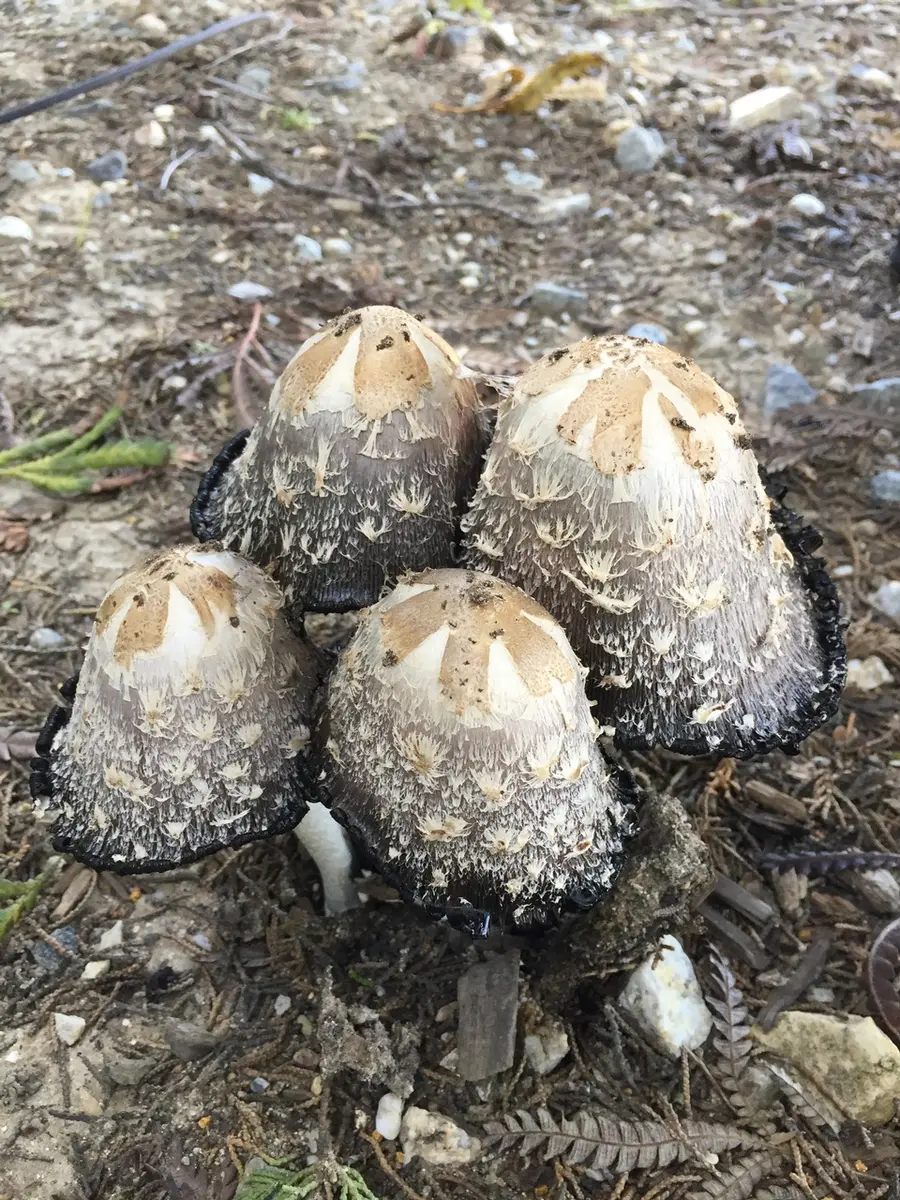
Photo: Hector Borjas, CC BY-SA 3.0, via Mushroom Observer. Santa Cruz, California.
Go in the morning two to four days after rain, and walk the margins of open ground rather than the middle.
Two specifics to add to the soil caution above. Road salt accumulates in shoulder soil season after season, so a gravel laneway set well back from a plowed route beats the shoulder itself. Herbicide-treated lawns are the other one, because a treated lawn looks like prime habitat and often is, so ask before picking ground that is not yours.
For crown land, municipal rules and access questions, our Ontario foraging guide and British Columbia foraging guide set out where you can legally pick.

Growing Gourmet and Medicinal Mushrooms
Most people who forage for a season start wondering whether they can grow the same species deliberately. This is the standard cultivation reference, with substrate, spawn and fruiting conditions worked through species by species. A different book from a field guide and worth owning alongside one.
When you buy through our links, it supports our mycology research at no extra cost to you.
Cooking Shaggy Manes
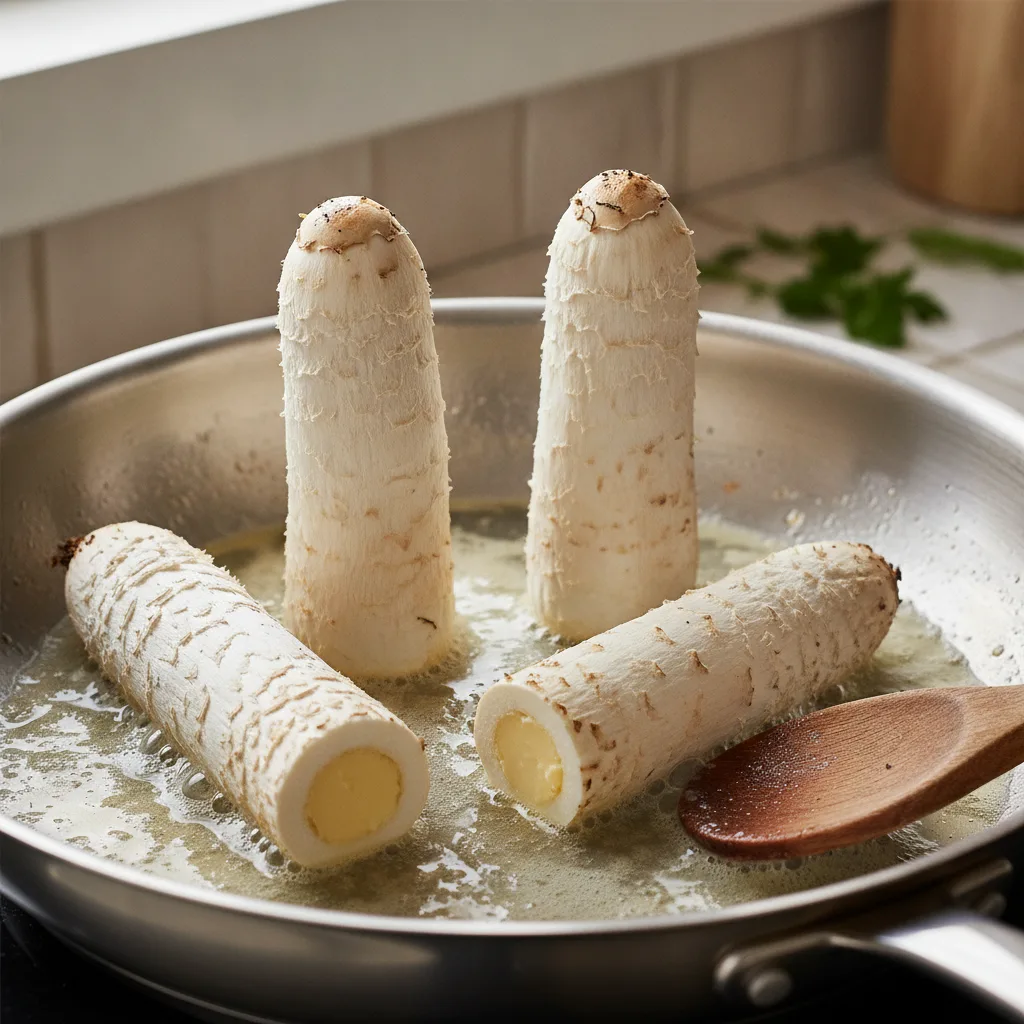
Young shaggy manes are a genuinely fine edible — delicate, slightly sweet, with a tenderness closer to asparagus than to a portobello.
- Clean them dry. Brush off grit rather than soaking; the caps are fragile and absorbent.
- Halve them lengthwise to check for insects and to help them cook evenly.
- Sauté gently in butter. They release a lot of water — let it cook off, then let them turn golden. High, fast heat toughens them.
- Keep the seasoning quiet. Salt, pepper, a little cream or soft scrambled egg. Their flavour is subtle and easily buried.
- Classic preparation: shaggy mane soup — sweat shallots in butter, add halved caps, cook down, add stock and a splash of cream, blend. The mushroom's own texture makes it velvety.
And to be clear on the obvious question: shaggy mane itself has no alcohol interaction. That reputation belongs to its smooth-capped cousin, the common ink cap. Identify correctly and pair your shaggy mane soup with whatever you like.
Sautéed Shaggy Manes on Toast
The only shaggy mane recipe you need the first time: it takes less time than the mushrooms would take to start inking in the fridge, and it shows you exactly what the texture is like, which is delicate, a little like a very tender oyster mushroom, with a mild flavour that butter and a little salt bring out. Young caps that are still closed and white are the ones to use; anything with a black rim goes in the pan first and on its own.
Details
- Prep time: 10 minutes
- Cook time: 8 minutes
- Total time: 18 minutes
- Servings: 2
- Difficulty: Easy
Ingredients
- 250 g young shaggy manes, caps still closed and white, picked within the last few hours
- 2 tbsp butter
- 1 small shallot, finely chopped
- 1 clove garlic, minced
- 2 thick slices sourdough or country bread, toasted
- Fine salt and black pepper
- A squeeze of lemon and a few snipped chives or parsley leaves, to finish
Instructions
Step 1: Clean them dry.
Brush grit from the caps with a soft brush or a dry paper towel and trim the base of each stem. Do not rinse: the caps are absorbent and fragile. Halve any mushroom thicker than your thumb lengthwise so it cooks through.
Step 2: Melt the butter and soften the shallot.
Put the butter in a wide pan over medium heat. When it foams, add the shallot with a pinch of salt and cook for 2 minutes until soft but not coloured. Add the garlic for the last 30 seconds.
Step 3: Cook the shaggy manes.
Lay the mushrooms in the pan in a single layer and leave them alone for 2 minutes so the cut sides take some colour. Turn, season with salt and pepper, and cook another 2 to 3 minutes. They give off a little liquid; keep the heat up so it cooks away rather than boiling them. They are done when tender all the way through and lightly browned at the edges.
Step 4: Finish and serve.
Take the pan off the heat, add a squeeze of lemon and the herbs, and spoon the mushrooms and every bit of butter over the hot toast. Eat straight away. Shaggy manes do not reheat well, and a cooked batch will not keep past the next day.
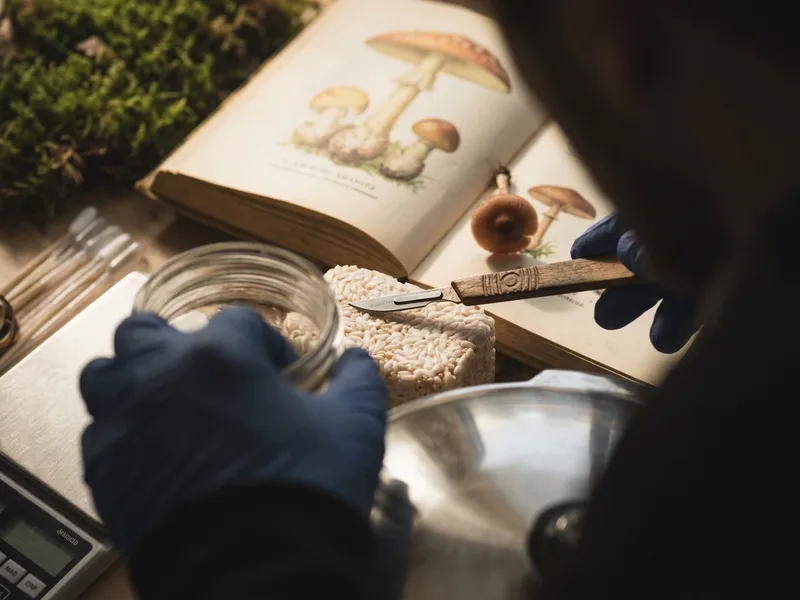
National Audubon Society Field Guide to North American Mushrooms
The broadest single-volume reference for North America, with photographic plates arranged by shape and colour. Heavier than a pocket guide, so most foragers keep it at home and carry something smaller.
When you buy through our links, it supports our mycology research at no extra cost to you.
Can You Grow Shaggy Manes?
Yes — shaggy mane is one of the few choice wild species that takes readily to backyard cultivation, because it wants exactly what it gets in the wild: rich, disturbed, compost-heavy soil. Indoor fruiting is impractical (the mushrooms self-destruct too fast for any commercial-style schedule), but an outdoor bed is a plant-and-forget project:
- Build a bed of well-rotted manure or finished compost mixed with soil and straw, 15–20 cm deep, in a shaded or semi-shaded spot — the same materials covered in our manure-based substrate guide.
- Inoculate with shaggy mane grain spawn or a verified culture from a specialty culture bank, worked through the top layer. Sterile technique matters far less outdoors; the species is a vigorous colonizer of rough substrate.
- Keep it moist through the first summer and top-dress with fresh compost each spring.
- Wait for the fall flush. Established beds fruit each autumn for years, and often expand into surrounding lawn.
It's the same low-effort logic as our log-grown mushroom method, just aimed at a compost-loving species instead of a wood-loving one. If you're starting your first cultures, our spawn-making guide covers the process from agar to grain.
And since shaggy mane will never give you a mushroom you can store or buy fresh, there's a simpler route to homegrown gourmet mushrooms: a ready-to-fruit grow kit of oyster or lion's mane fruits on your counter in a few weeks — no compost bed, and no race against the ink.
You Cannot Buy Shaggy Mane Spawn. Here Is What You Can Grow.
Worth stating plainly, because it comes up every autumn: shaggy mane is not sold as a reliable commercial spawn product in Canada, and that includes us. There is no shaggy mane item anywhere in the Nature Lion catalogue and none on our liquid culture page. The species is the reason: it wants disturbed outdoor ground, it fruits erratically on its own schedule, and it will not colonise and fruit predictably on a standard indoor block, so no supplier can stock it as something that does what the label promises. The outdoor bed above is still worth building, you just source the culture from a specialty culture bank or from an established patch rather than off a shelf.
If the real goal is fresh gourmet mushrooms at home through the winter, three species do that indoors reliably: oyster, lion's mane and chestnut.
- Ready-to-fruit grow kits to start
- Pink Oyster, the fastest and most forgiving
- Lion's Mane Kit for something to sear or shred
- Grain spawn once you are scaling past a kit
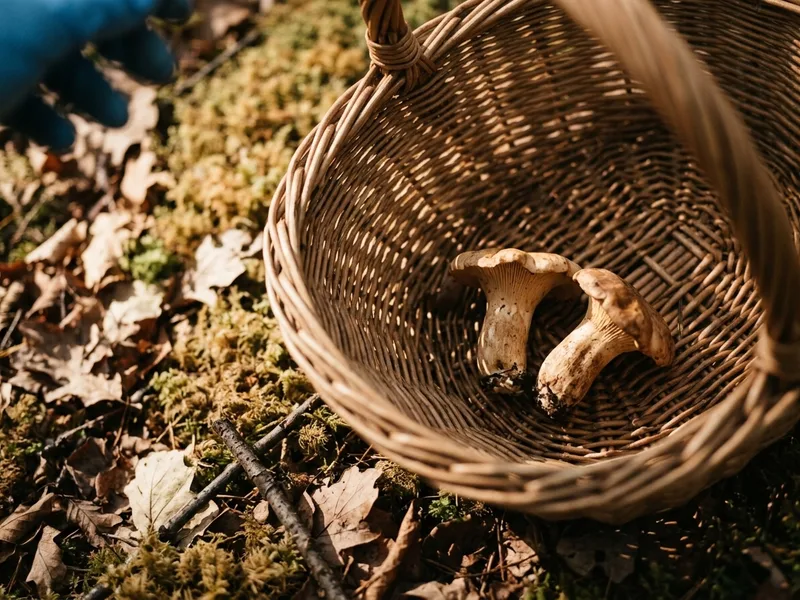
Wicker Foraging Basket
An open weave lets spores drop back through as you walk, which a plastic bag does not, and it stops a soft cap being crushed under everything picked after it. Size it to the walk, not the best day you have ever had.
When you buy through our links, it supports our mycology research at no extra cost to you.
Frequently Asked Questions
Are shaggy mane mushrooms safe to eat?
Yes — young, all-white, cooked shaggy manes are a choice edible with an excellent safety profile, because the deliquescing ink-cap habit and shaggy cylindrical cap are so distinctive. The rules: confirm every ID feature, harvest only closed white specimens, cook them the same day, and never eat any wild mushroom raw.
Can you drink alcohol with shaggy mane mushrooms?
Shaggy mane (Coprinus comatus) has no alcohol interaction. The warning you've heard applies to the common ink cap (Coprinopsis atramentaria), a smooth grey-capped relative containing coprine, which causes flushing, nausea, and a racing heart when combined with alcohol — even alcohol consumed a day or two after eating it. This is exactly why you learn to tell the two apart.
Why do shaggy manes turn black?
It's called deliquescence: the mushroom digests its own gills into a black, spore-laden liquid as its method of spreading spores. The process starts at maturity and continues after picking, which is why shaggy manes must be cooked within hours of harvest and why you'll never find them fresh in stores.
When is shaggy mane season in Canada?
There's a small flush in late spring (May–June) and a much larger one from August through October, triggered by rain and cooling nights. They fruit in every province, most abundantly on the prairies, and reappear in the same lawns, road edges, and pastures year after year.
Can you freeze shaggy mane mushrooms?
Not raw — they will turn to ink before they freeze. The working method is to sauté them in butter the day you pick them, cool, and freeze in portions; or cook them into soup and freeze that. Whole-mushroom drying also fails for this species (they liquefy first), which is why every preservation route for shaggy mane starts with a pan.
Are shaggy manes safe for beginners to pick?
Yes, and they are one of the few wild mushrooms worth recommending for a first pick. A tall cylindrical white cap with upturned shaggy scales, growing from open disturbed soil rather than wood, beside older neighbours visibly melting into black ink, is very hard to mistake. Confirm all five features every time and leave anything you cannot name.
How long will shaggy manes keep in the fridge before they ink?
Hours, not days. A closed all-white specimen picked in the morning and put straight into the fridge in a rigid, loosely covered container is usually still worth cooking that evening, but by the next morning you will most likely have a tray of black liquid. Anything already showing pink at the gill edge when you picked it gets there faster.
Can you eat shaggy manes that have started to ink?
Partly. A cap with ink forming at the margin is not dangerous, just past its best, so trim the blackened edge away and cook the firm white stem and upper cap within the hour. Once the cap is largely black and wet the flavour turns muddy, and once it is liquid it belongs in the compost. Taste, not safety, sets the cutoff.
What is the difference between shaggy mane and the common inky cap?
Shaggy mane has a tall cylindrical white cap covered in shaggy upturned scales, while the common ink cap (Coprinopsis atramentaria) has a smooth grey-brown bell with no scales. Both dissolve into black ink, so the ink alone does not separate them. The difference matters because the common ink cap contains coprine, which reacts badly with alcohol, while shaggy mane itself has no alcohol interaction at all.
Can I transplant a shaggy mane patch to my own yard?
Often, yes, and with no spawn on the market it is the most practical route to a patch of your own. Two methods work: lift a spadeful of soil from the base of an established patch, with permission, and bury it in a compost-rich bed at home, or collect fully inked caps in a bucket of water, let the slurry stand overnight, and pour it over freshly turned compost ground. Neither is reliable first time and nothing will fruit before the following autumn, so seed two or three spots and be patient.
The Mushroom That Won't Wait
Shaggy mane teaches the forager's best habit: act on what the day gives you. Learn the five ID features and the two lookalikes, keep your picks young and white, and get them into a buttered pan before sunset. Better yet, seed a compost bed this fall and let them come to you.
Have a mushroom-growing question? Ask Dr. MycoTek for AI help with your grow. Sign in to use your free monthly allowance.